
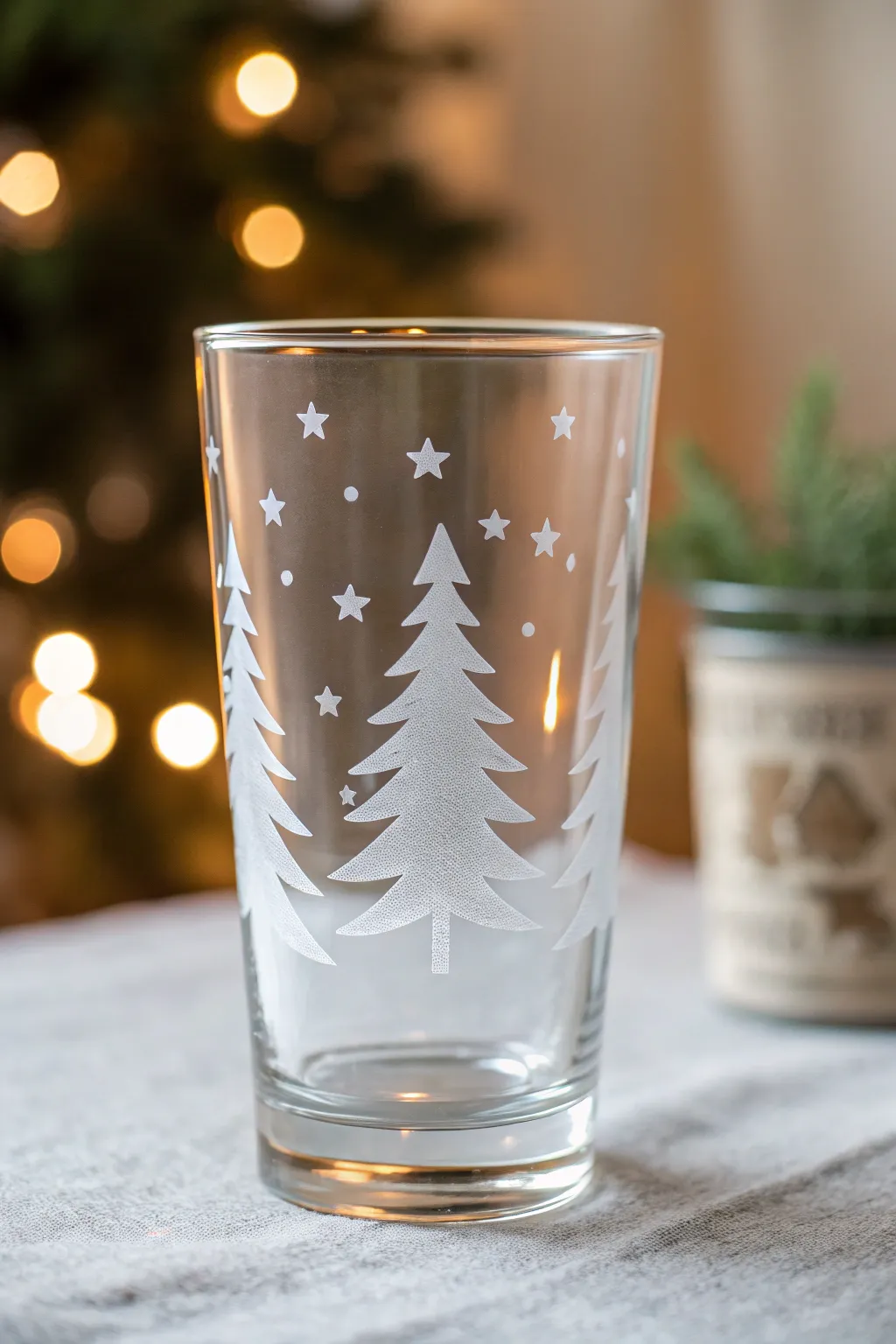
Glass is such a satisfying surface for Christmas painting—one or two simple shapes can look instantly festive with the light shining through. These ideas are all about easy techniques and classic holiday motifs you can pull off on everyday glassware without stressing over perfect drawing.
Snowflake Silhouette Tumblers
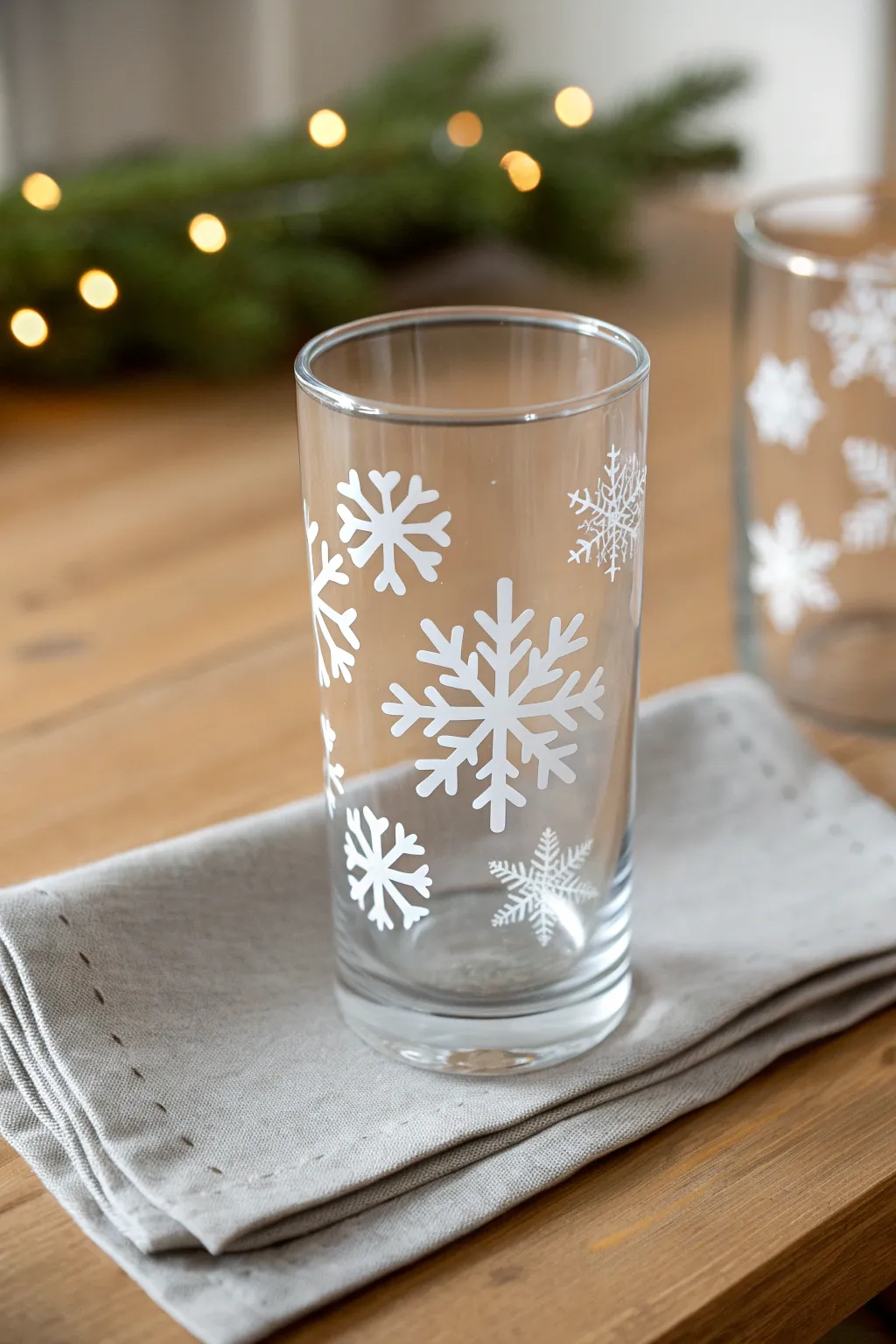
Transform plain glassware into a festive snowy scene with these elegant snowflake silhouette tumblers. The crisp white designs pop beautifully against the clear glass, creating a sophisticated yet cozy look perfect for holiday entertaining.
Step-by-Step
Materials
- Clear glass tumblers (highball style)
- Rubbing alcohol
- Cotton pads
- White enamel craft paint (specifically for glass)
- Fine detail paintbrushes (sizes 0 and 00)
- Small flat brush (optional, for larger flakes)
- Paper plate or palette
- Paper towels
- Cotton swabs (for cleanup)
- Oven (for curing, if using bake-on paint)
Step 1: Preparation
-
Clean the surface:
Begin by washing your tumblers thoroughly with soap and warm water to remove any sticker residue or dust. -
Degrease the glass:
Moisten a cotton pad with rubbing alcohol and wipe down the entire exterior surface of the glass where you plan to paint. This step is crucial because oils from your fingers can prevent the paint from adhering properly. -
Allow to dry:
Let the alcohol evaporate completely for a minute or two. Avoid touching the painting area with your bare hands from this point forward.
Clean Lines Only
Use the edge of a credit card or craft knife to gently scrape away dried paint if your lines aren’t crisp. Works best after the paint is fully dry but before baking.
Step 2: Painting the Large Snowflakes
-
Plan your layout:
Visualize where your largest snowflakes will go. Aim for 2-3 large focal points scattered at different heights around the glass. -
Start the center:
Dip your fine detail brush into the white enamel paint. For a large flake, paint a simple vertical line about an inch long. -
Create the cross:
Paint a horizontal line crossing through the center of your vertical line, trying to keep the lengths equal. -
Add diagonal rays:
Paint two diagonal lines through the center intersection, creating an eight-pointed star shape. -
Add the details:
On the large flakes, add small ‘V’ shapes or little branches extending from each arm of the star. I find it helps to rotate the glass as you work around the snowflake to keep your hand position comfortable.
Frosty Effect
Dab a tiny bit of silver glitter paint onto the center of the wet snowflakes for a subtle sparkle, or sponge frosted glass medium at the rim for an icy look.
Step 3: Adding Variety and Fillers
-
Paint medium flakes:
In the empty spaces, paint slightly smaller snowflakes. You can vary the design here—maybe just a six-pointed star without the extra ‘V’ details. -
Create simplified stars:
For variety, paint a few simple asterisks (three intersecting lines) to represent smaller, distant flakes. -
Add tiny accents:
Using the very tip of your smallest brush or a toothpick, add tiny dots of white paint scattered randomly between the flakes to look like falling snow. -
Check spacing:
Step back and look at the glass from a distance. If a spot looks too empty, add another small asterisk or dot. -
Clean up edges:
If any lines look messy or you made a mistake, quickly dampen a cotton swab with a little water or rubbing alcohol and wipe away the error while the paint is wet.
Step 4: Finishing Touches
-
Initial drying:
Let the paint dry to the touch, usually about one hour, before handling the glass too much. -
Inspect the opacity:
Hold the glass up to the light. If the white looks streaky or too transparent, carefully paint a second coat over the existing lines once the first layer is dry. -
Full cure time:
Follow the manufacturer’s instructions on your specific paint bottle. Most glass enamels require 21 days of air drying to become dishwasher safe, or an oven-curing method. -
Oven curing (optional):
If your paint allows, place the glass in a cool oven, set the temperature to 350°F (175°C), and bake for 30 minutes. Turn the oven off and let the glass cool completely inside before removing it.
Now you have a set of custom winter glassware ready for your favorite holiday beverages
Falling Snow Dot Pattern
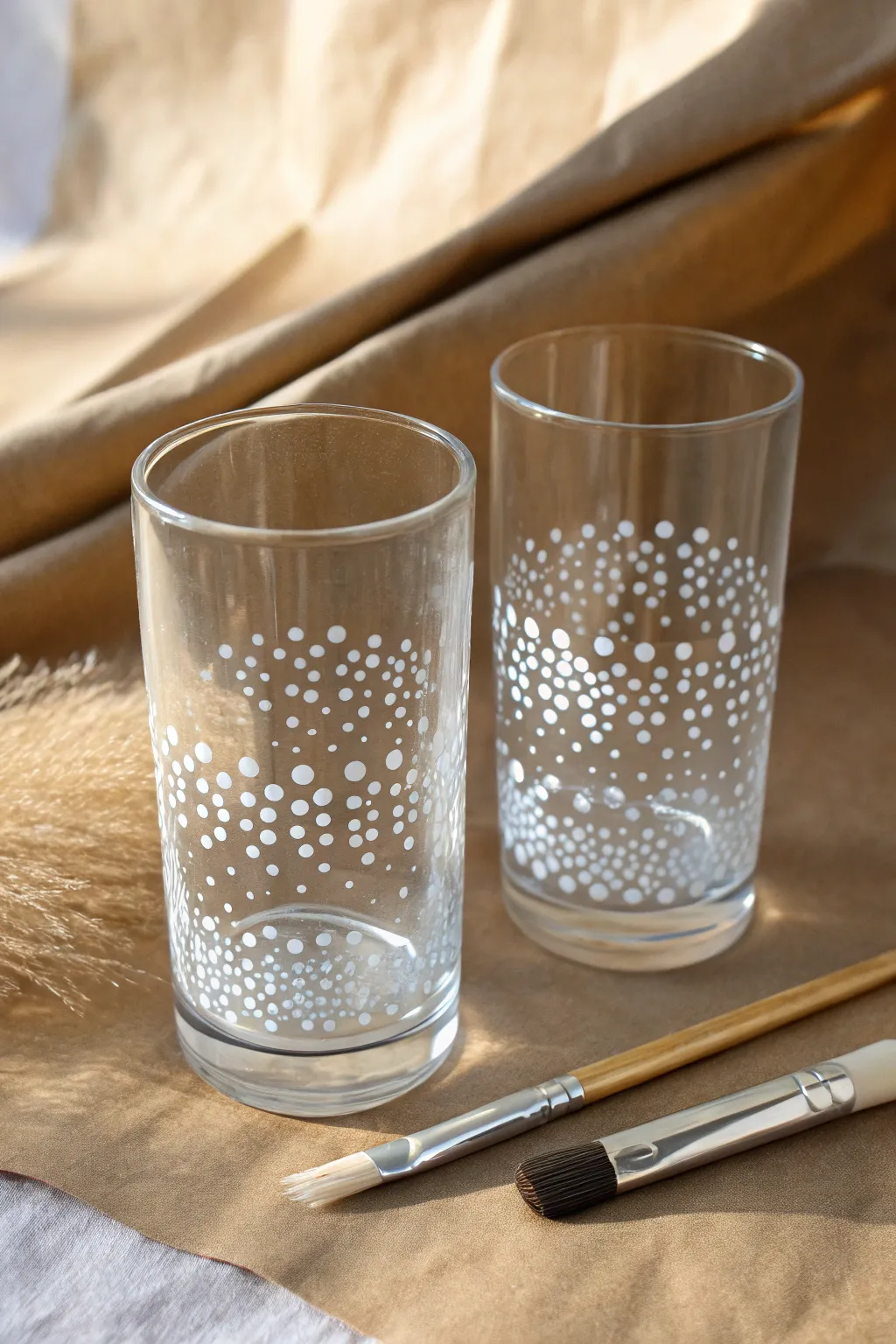
Capture the serene beauty of a gentle snowfall with these minimalist glass tumblers. By simply varying the density and size of white dots, you can create a sophisticated gradient effect that looks like snow piling up at the bottom of the glass.
Step-by-Step Tutorial
Materials
- Clear highball glasses or tumblers
- Rubbing alcohol
- Cotton pads
- White enamel craft paint (suitable for glass)
- Small round paintbrushes (sizes 0 and 2)
- Dotting tools or wooden skewers (optional)
- Paper plate or palette
- Oven (for curing)
Step 1: Preparation
-
Clean the Surface:
Before you begin painting, it is crucial to remove any oils or fingerprints from the glass. Wipe the entire exterior surface thoroughly with rubbing alcohol and a cotton pad. -
Dry Completely:
Let the alcohol evaporate completely. Avoid touching the area where you plan to paint to ensure the best adhesion. -
Prepare Your Palette:
Squeeze a small amount of white enamel glass paint onto your paper plate or palette. I find it helpful to only dispense a little at a time so it doesn’t dry out while you work.
Step 2: Creating the Base Snow
-
Start at the Bottom:
Using your medium-sized round brush or a large dotting tool, begin applying dots around the very bottom edge of the glass. -
Build Density:
Create a dense concentration of dots in the bottom half-inch of the glass. Overlap them slightly or keep them very close together to simulate settled snow. -
Vary sizes:
Mix larger dots with medium ones in this lower section to add texture and visual interest. -
Move Upward:
Begin working your way up the glass, about one to two inches from the bottom. Start spacing the dots out slightly more than you did at the base.
Paint sliding down?
If your dots are dripping, your paint application is too thick. Try using less paint on the brush, or allow the first layer of dots to tack up slightly before adding more nearby.
Step 3: Fading the Gradient
-
Switch Tools:
Swap to your smallest brush, a toothpick, or the small end of a dotting tool for the middle section. -
Create the Mid-Section:
Add dots in the middle area of your design, ensuring there is more clear glass visible between each white speck than at the bottom. -
Feather the Top Edge:
As you reach the highest point of your design (around the middle or upper-third of the glass), make the dots very sparse. -
Randomize Placement:
Try to place the upper dots randomly rather than in rows. This irregularity mimics the natural way snowflakes fall. -
Review the Gradient:
Step back and look at the glass from a distance. The transition from heavy white at the bottom to clear glass at the top should look smooth. -
Fill in Gaps:
If you see any awkward empty patches in the denser lower section, go back and fill them with tiny dots to smooth out the gradient.
Add some sparkle
While the white paint is still wet, sprinkle a tiny pinch of ultra-fine clear or iridescent glitter onto the densest part of the ‘snow’ at the bottom for a magical, frosty shimmer.
Step 4: Curing and Finishing
-
Clean Up Edges:
If any paint smudged or a dot looks misshapen, use a damp cotton swab or toothpick to gently scrape it away while wet. -
Initial Drying:
Allow the glasses to air dry for at least one hour, or according to your specific paint bottle instructions. The paint must be dry to the touch before baking. -
Load the Oven:
Place the glasses onto a baking sheet and put them into a cold oven. Do not preheat the oven, as sudden temperature changes can crack the glass. -
Bake to Cure:
Set the oven temperature to 350°F (175°C) and bake for 30 minutes. Once the timer creates a beep, turn the oven off. -
Cool Down:
Leave the glasses inside the oven until they cool down completely to room temperature. This gradual cooling process ensures the durability of your design.
Now fill your new custom glassware with a festive drink and enjoy the winter vibes
Holly Sprig and Berry Corners
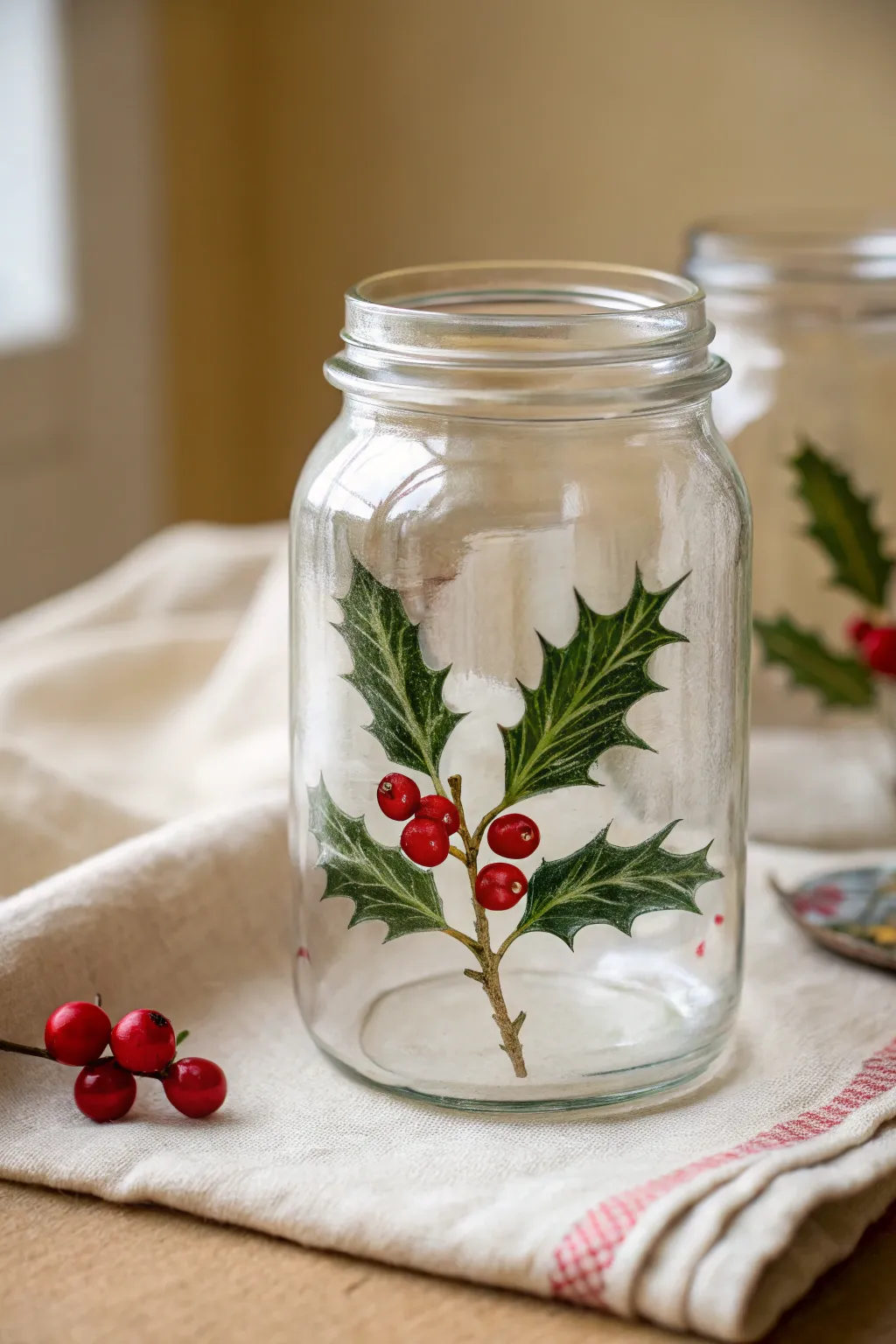
Capture the essence of a classic Christmas with this elegant holly sprig design painted directly onto a clear mason jar. The semi-translucent leaves and vibrant red berries create a festive yet sophisticated centerpiece perfect for holding candies or a candle.
Step-by-Step Guide
Materials
- Clear glass mason jar (smooth sided preferred)
- Rubbing alcohol and cotton pads
- Glass paint: Dark Green, Light Green, Bright Red, Deep Red, Brown
- Small round paintbrush (size 2 or 3)
- Fine liner paintbrush (size 0 or 00)
- Paper plate or palette
- Paper towels
- Oven (optional, check paint instructions for curing)
Step 1: Preparation & Stem Structure
-
Clean surface:
Before dipping your brush, wipe the exterior of the jar thoroughly with rubbing alcohol and a cotton pad. This removes oily fingerprints that could prevent the paint from adhering properly. -
Plan placement:
Decide where you want your main sprig. It looks best centered on a smooth section of the glass, avoiding embossed logos if possible. -
Mix stem color:
Mix a small amount of brown paint with a tiny dot of green on your palette to create a natural, earthy bark tone. -
Paint main stem:
Using the fine liner brush, paint a slightly curved central stem starting from the bottom upward. Keep the line thin and slightly jagged to mimic real wood texture. -
Add branches:
Paint two or three small off-shoot branches coming from the main stem. These will serve as anchors for your holly leaves.
Step 2: Painting the Foliage
-
Outline leaves:
Switch to your small round brush. Using the dark green paint, lightly outline the classic spiky shape of three main holly leaves attached to your branches. -
Fill base coat:
Fill in the leaf outlines with the dark green paint. Don’t worry about perfect opacity; slightly uneven coverage can add realistic texture to the leaf surface. -
Add highlights:
While the dark green is still slightly wet, dip just the tip of your brush into light green. Gently stroke this color onto the center and tips of the leaves to create dimension. -
Detailing veins:
Once the base green is tacky or dry, use the fine liner brush with a very light green or even a mix of white and green to draw the central vein and side veins on each leaf. -
Sharpen edges:
Go back with your dark green using the liner brush to crisp up the distinct sharp points of the holly leaves if they became blurry during filling.
Clean Lines Hack
Use a dry toothpick to gently scratch away paint to refine the sharp points of the holly leaves. It works like an eraser on glass.
Step 3: Berries & Finishing Touches
-
Place berries:
Identify the junction where the leaves meet the stem. This is the perfect spot for your berry cluster. -
Paint berry circles:
Using the round brush, dab three or four distinct circles using Bright Red paint. I like to group them tightly so they overlap slightly. -
Add berry depth:
Mix a tiny bit of brown with your red to create a shadow color. Paint a small crescent shape on the bottom of each berry to make them look round rather than flat. -
Berry highlights:
Using a clean liner brush and a tiny dot of white or very light pink, add a small ‘reflection’ dot on the top right of each berry. This makes them look glossy. -
Cleanup:
If you made any mistakes or smears, use a damp cotton swab to wipe away the stray paint before it cures. -
Curing:
Let the jar sit for at least 24 hours. If your paint requires baking to become dishwasher safe, follow the specific temperature and time instructions on the bottle.
Frosty Effect
Sponge a thin layer of translucent white or glitter paint inside the jar before painting the outside to create a snowy, winter backdrop.
Place a battery-operated tea light inside to see your festive holly glow warmly every evening
Mini Christmas Tree Trio
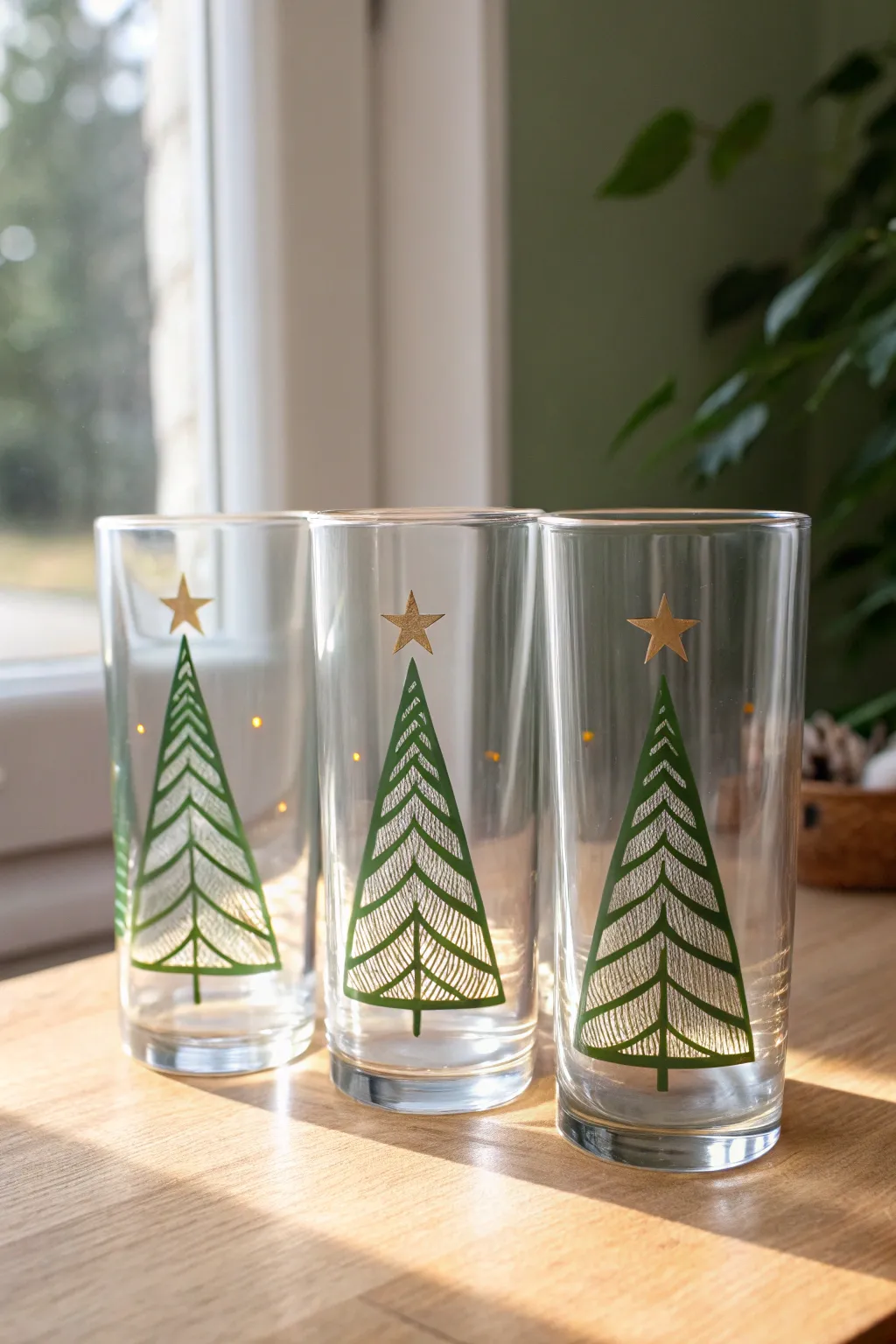
These elegant tumblers feature a minimalist Christmas tree design topped with a shining gold star, perfect for adding a festive touch to your holiday table setting. The geometric evergreen pattern looks sophisticated but is surprisingly simple to achieve with basic glass lines.
Detailed Instructions
Materials
- Three tall, clear glass tumblers (highballs or Collins glasses)
- Rubbing alcohol and cotton pads
- Green glass paint marker (fine tip) or glass liner paint
- Gold glass paint marker (medium tip) or liquid glass paint
- Pencil and paper
- Scissors
- Tape (masking or washi)
- Ruler
- Oven (for curing, if required by your paint brand)
Step 1: Preparation & Template
-
Clean surface:
Before you begin any painting, thoroughly wipe down the exterior of the glasses with rubbing alcohol on a cotton pad. This removes invisible oils or fingerprints that prevent paint from adhering properly. -
Sketch the triangle:
On a piece of paper, use your ruler to draw a tall, narrow isosceles triangle. This will be the main body of your tree. Aim for about 3-4 inches in height depending on your glass size. -
Add the trunk:
Draw a small vertical line extending from the center of the triangle’s base to act as the tree trunk. -
Cut out templates:
Cut out the paper triangle shape. You can either make one and reuse it, or create three identical templates to work on all glasses simultaneously. -
Secure the guide:
Roll the paper template slightly and insert it *inside* the glass. Tape it against the inner wall so the design faces outward. This gives you a perfect guide to trace without obstructing your painting surface.
Step 2: Painting the Tree Structure
-
Trace the outline:
Using your green glass paint marker, carefully trace the outer triangle shape and the small trunk at the bottom directly onto the glass surface. -
Draw the center spine:
Draw a straight vertical line from the peak of the triangle down to the base, effectively splitting the tree in half. -
Create the branches:
Starting from the top, draw downward-curving lines on both sides of the center spine. These should look like ribs or veins of a leaf, angling down towards the bottom corners. -
Add texture lines:
Between your main branch lines, sketch very fine, scratchy vertical or angled hatching lines. This creates the ‘needle’ texture and fills the empty space without making it a solid block of color. -
Repeat the process:
Move on to the second and third glasses, repeating the outline and filling steps. I find doing them in a batch helps keep the style consistent across the set. -
Dry the green layer:
Allow the green paint to dry completely according to the manufacturer’s instructions (usually 15-30 minutes) before adding the gold elements to avoid smudging.
Star Placement Tip
Draw your star on the paper template inside the glass first. This ensures it’s perfectly centered above the tree tip before you commit with permanent paint.
Step 3: Adding the Gold Star
-
Position the star:
locate the very tip of your green tree. You want the star to hover just a few millimeters above the peak. -
Draw the star shape:
With your gold marker, draw a simple five-point star. It doesn’t need to be geometrically perfect; a hand-drawn look adds charm. -
Fill with gold:
Color in the star completely with the gold paint so it is opaque and catches the light. -
Check for gaps:
Hold the glasses up to the light to check for any translucent spots in the green lines or gold stars, and touch up if necessary. -
Final cure:
Follow your specific paint brand’s instructions for curing. This often involves baking the glassware in a cool oven that heats up gradually to 350°F (176°C) for 30 minutes to make the design dishwasher safe.
Winter Wonderland
Use a white paint marker to add tiny dots falling around the tree to simulate a gentle snowfall or add a rim of ‘frost’ at the top of the glass.
Enjoy your custom festive glassware with your favorite holiday beverage
BRUSH GUIDE
The Right Brush for Every Stroke
From clean lines to bold texture — master brush choice, stroke control, and essential techniques.
Explore the Full Guide
Reindeer Face on the Bowl
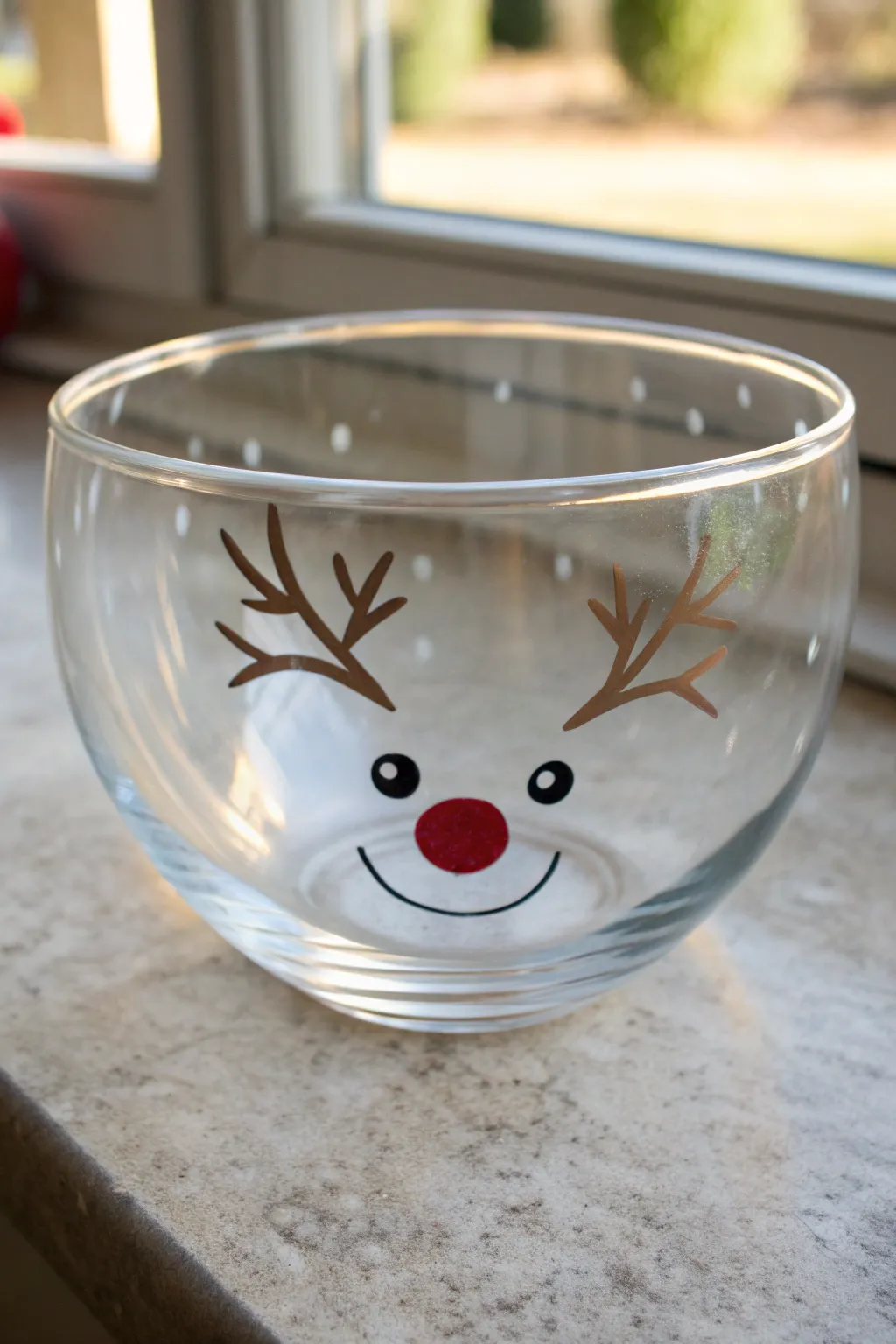
Transform a plain glass bowl into a cheerful holiday centerpiece with just a few strokes of paint. This simple reindeer design features charming antlers, a bright red nose, and a welcoming smile that’s perfect for holding holiday candies or snacks.
Step-by-Step Tutorial
Materials
- Clear glass bowl (rounded shape works best)
- Rubbing alcohol
- Cotton pads or paper towel
- Glass paint markers or multi-surface acrylic paint (Gold/Bronze, Black, Red)
- Fine-point paintbrush (if not using markers)
- Q-tips (for cleanup)
- Gloss varnish or sealant (optional for longevity)
- Oven (if using heat-set paints)
Step 1: Preparation
-
Clean the Surface:
Before you begin, wash the glass bowl thoroughly with warm soapy water and dry it completely. Oils from your hands can prevent paint from adhering properly. -
Degrease with Alcohol:
Wipe the exterior surface where you plan to paint with rubbing alcohol using a cotton pad. This ensures the glass is perfectly clean and ready to bond with the paint. -
Plan placement:
Visualize where the face will sit. The nose should be centrally located near the bottom third, with antlers spreading upwards toward the rim.
Oops! Runny Paint?
Using a marker on a curved surface can be tricky. If paint runs, wipe it immediately with alcohol. Store markers tip-up between strokes to control flow.
Step 2: Painting the Antlers
-
Start the Left Antler:
Using your gold or bronze glass paint marker (or a fine brush), draw a curved main branch starting from the upper left side of the bowl, angling it slightly inward. -
Add Tines:
Draw three smaller branches (tines) extending from the main line. Make the top one point up, and the lower two point outward to the left. -
Mirror the Right Antler:
Repeat the process on the right side. Draw the main branch mirroring the left one, angling inward. -
Complete the Right Tines:
Add the three small tines on the right antler, ensuring they balance with the left side. Don’t worry about perfect symmetry; natural antlers are rarely identical. -
Thicken the Lines:
Go over your antler lines a second time to ensure the color is opaque and vibrant against the transparent glass.
Make it Snonderful
Use a white paint pen to add small white dots around the upper rim or scattered between the antlers to mimic falling snow for a winter wonderland vibe.
Step 3: Creating the Face
-
Position the Nose:
Locate the center point directly between the two antlers but lower down on the bowl’s curve. -
Paint the Nose:
Using red glass paint, create a solid, filled-in oval for the nose. I find that dabbing the paint on rather than brushing helps build a nice, rich texture. -
Add the Eyes:
With a black paint marker or fine brush, paint two small circles slightly above and to the sides of the nose. -
Detail the Pupils:
Leave a tiny negative space unpainted in the eyes for a highlight, or go back later with a dot of white paint to create that ‘twinkle’ effect. -
Paint the Smile:
Draw a thin, simple black curve underneath the nose. Keep the line smooth and upward-curving at the ends for a happy expression. -
Add Cheeks (Optional):
If you want extra cuteness, define the ends of the smile with tiny perpendicular tick marks.
Step 4: Finishing Touches
-
Clean Up Edges:
Use a damp Q-tip to wipe away any smudges or straighten up wobbly lines while the paint is still tacky. -
Let it Cure:
Allow the paint to air dry according to the manufacturer’s instructions. This usually takes at least 24 hours. -
Bake to Set (If Applicable):
If your specific glass paint requires heat setting, place the bowl in a cold oven, set the temperature to usually 350°F (176°C), bake for 30 minutes, and let it cool completely in the oven.
Fill your new reindeer bowl with colorful wrapped candies and enjoy the festive spirit you’ve added to your decor
Santa Belt Wrap Design
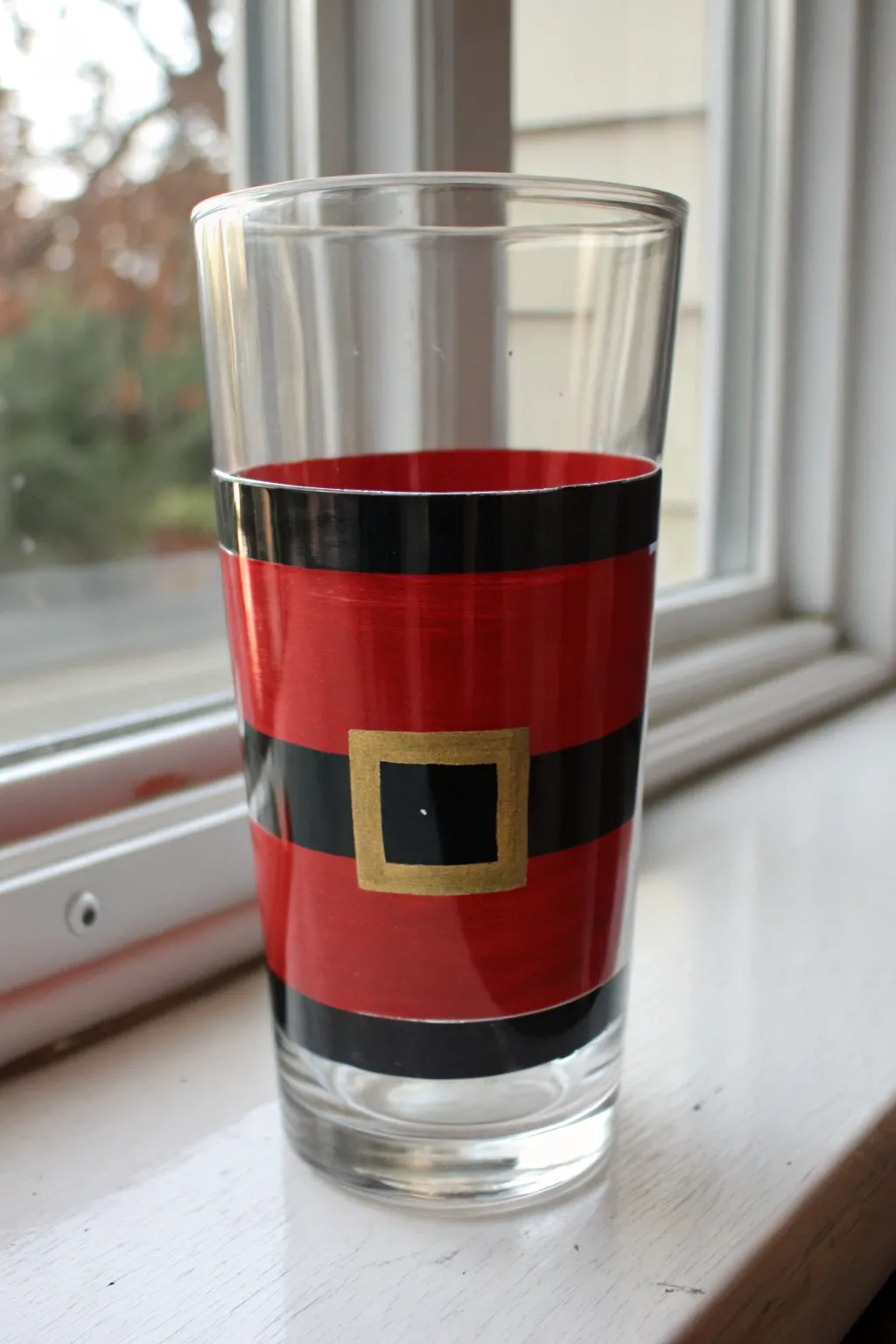
Transform a plain drinking glass into a festive holiday vessel with this Santa-inspired design. The bold red suit, contrasting black belt, and shimmering gold buckle create a recognizable and cheerful look perfect for holiday parties.
Detailed Instructions
Materials
- Tall, clear drinking glass (thoroughly cleaned)
- Rubbing alcohol
- Cotton balls or paper towel
- Enamel craft paint (Red, Black, Metallic Gold)
- Painter’s tape or masking tape (1/4 inch and standard width)
- Flat paintbrush (medium width)
- Small square detail brush
- Palette or paper plate
- Oven (optional, for curing)
Step 1: Preparation & Masking
-
Clean surface:
Begin by wiping down the entire exterior of the glass with rubbing alcohol on a cotton ball. This removes oils and fingerprints, ensuring the paint adheres properly. -
Define top border:
Apply a ring of painter’s tape horizontally around the glass, positioning it about 2 inches down from the rim. Press the edges down firmly to prevent paint bleed. -
Define bottom border:
Place a second ring of tape around the bottom of the glass, leaving about an inch of glass exposed at the very base. This defines the lower boundary of your painting area.
Step 2: Base Coat
-
Apply red base:
Using your medium flat brush, paint the entire area between the two tape lines with red enamel paint. Work in smooth, horizontal strokes. -
Dry first coat:
Let this first red layer dry for about 20-30 minutes. It will likely look streaky, which is normal. -
Second coat:
Apply a second coat of red paint to get solid, opaque coverage. If you hold the glass up to the light and see thin spots, a third light coat might be necessary once dry. -
Remove tape:
Carefully peel off the top and bottom tape lines while the final coat is still slightly tacky to ensure a crisp edge. Let the red block dry completely for at least an hour.
Fixing Bleeds
If paint seeps under the tape, wait until it’s barely dry, then dampen a Q-tip with rubbing alcohol or use a toothpick to gently scrape the excess away for a sharp line.
Step 3: Painting the Belt
-
Tape the belt:
Once the red paint is fully hard to the touch, place two strips of painter’s tape horizontally across the red section. Leave a gap of about 3/4 inch between them where the black belt will go. -
Paint the black strip:
Fill in the space between your new tape lines with black enamel paint. Use a steady hand, but rely on the tape to keep your lines straight. -
Add top & bottom accents:
While you have the black paint out, carefully freehand a black band at the very top edge of the red section and the very bottom edge. Alternatively, you can re-tape these areas if you prefer exact precision. -
Reveal the belt:
Gently remove the tape strips from the middle section. You should now have a distinct black belt running through the center of the red suit.
Add Sparkle
While the paint is wet, lightly sprinkle ultra-fine red glitter onto the red sections or gold glitter onto the buckle for a shimmering finish that catches holiday lights.
Step 4: The Buckle & Finishing
-
Outline the buckle:
Dip your small square detail brush into the metallic gold paint. Paint a square outline directly over the center of the black belt line. -
Thicken the buckle:
Go over the gold square again, slightly thickening the lines so the buckle looks substantial. The black belt should be visible inside the square. -
Touch ups:
Check your edges. If any red or black paint bled, use a toothpick to gently scrape away the excess while it creates a clean line. -
Curing:
Allow the glass to air dry for 21 days for a full cure, or follow the specific instructions on your paint bottle for oven-curing (usually baking at 350°F for 30 minutes) to make it dishwasher safe.
Now you have a charming custom glass ready to hold your favorite festive beverage

PENCIL GUIDE
Understanding Pencil Grades from H to B
From first sketch to finished drawing — learn pencil grades, line control, and shading techniques.
Explore the Full Guide
Christmas Light Bulb Garland
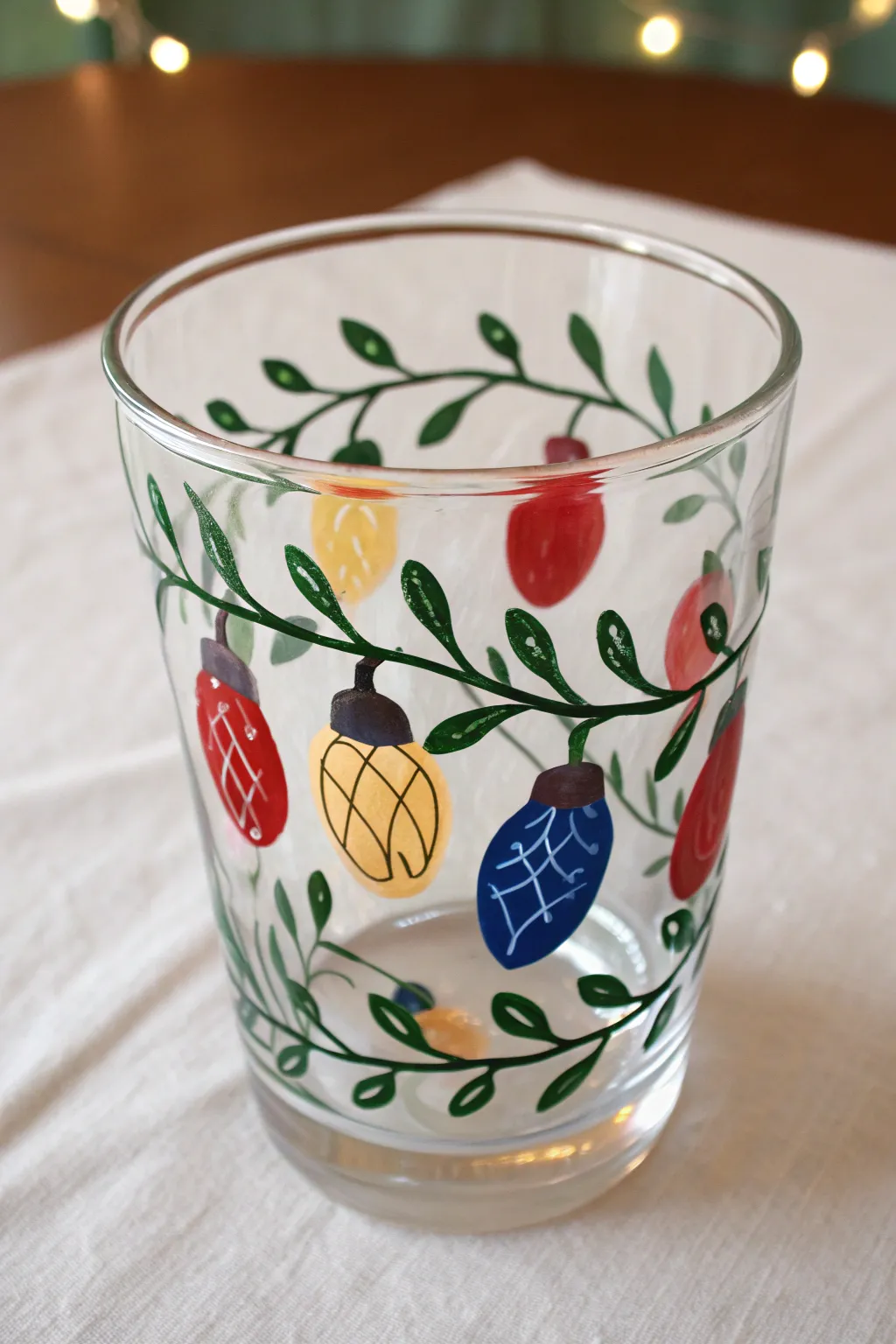
Transform a plain tumbler into festive drinkware with this charming painted garland design. The winding vine pattern dotted with colorful, retro-style lightbulbs adds a touch of vintage holiday warmth to your table setting.
How-To Guide
Materials
- Plain clear glass tumbler (thoroughly cleaned)
- Rubbing alcohol
- Cotton pads
- Glass enamel paints (Forest Green, Red, Yellow, Blue, Dark Brown/Black)
- Fine detail paintbrush (size 0 or 00)
- Regular round brush (size 1 or 2)
- Oven for baking (optional, depending on paint brand)
- Paper towels
- Palette or small plate
Step 1: Preparation & Vines
-
Clean surface:
Before you unscrew a single cap of paint, wipe the entire exterior of the glass with rubbing alcohol on a cotton pad to remove invisible oils and fingerprints. -
Plan the flow:
Mentally visualize two swooping curves wrapping around the glass, one near the rim and one near the base. You won’t be drawing guide lines, so just aim for a loose, organic wavy motion. -
Paint the main vine:
Load your fine detail brush with Forest Green paint. carefully paint a thin, continuous wavy line around the circumference of the glass. Keep your hand steady but allow for natural variation in line thickness. -
Add leaves:
Using the same green and brush, add small, almond-shaped leaves branching off the main vine. Alternate the direction of the leaves (some pointing up, some down) to create a natural, leafy look. -
Leaf detailing:
While the paint is wet, you can lift your brush slightly at the tip of each leaf to create a tapered point. Ensure the leaves are spaced out enough to leave room for the bulbs. -
Dry time:
Let this green layer dry completely to the touch—usually about 15-20 minutes—so you don’t accidentally smudge your vines while adding the lights.
Paint Consistency Tip
If your paint feels too slippery on the glass, dab it on with a sponge brush instead of stroking. This stippling texture grabs the glass better and reduces streaks.
Step 2: Light Bulbs
-
First bulb shape:
Switch to your size 2 round brush. Choose your first color (e.g., Red) and paint a teardrop shape that hangs ‘off’ the vine, leaving a tiny gap between the bulb and the vine for the socket. -
Alternate colors:
Continuing around the glass, paint more teardrop shapes in alternating colors—Yellow, then Blue, then Red again. Spacing them irregularly makes the garland feel more authentic. -
Second coat:
Glass paint can be translucent. If the colors look streaky, let the first layer dry and add a second coat for opacity, especially with the yellow. -
Paint the sockets:
Once the bulbs are dry, use the Dark Brown or Black paint with the fine detail brush to paint a small rectangle or trapezoid connecting the bulb to the green vine leaf. -
Socket detail:
Ensure the socket overlaps the top of the colorful bulb slightly to look realistic, as if the bulb is screwed in.
Make It Glow
Mix a pinch of fine matching glitter into the wet paint for each bulb. It won’t light up, but it will sparkle beautifully under your dining room chandelier.
Step 3: Final Details
-
Add highlights:
For that shiny glass look, mix a tiny drop of white (or use the scratched-out method). Paint fine, intersecting curved lines on the bulb bodies to represent filaments or reflections. -
Highlight technique:
I find that using a very light hand here creates a subtle ‘etched’ look on the paint surface, mimicking the old-school incites of C9 bulbs. -
Clean up edges:
If any paint has strayed, use a toothpick or a clean brush dipped in alcohol to tidy up the edges of your leaves or bulbs before the paint fully cures. -
Curing:
Follow the manufacturer’s instructions for your specific glass paint. Most require air drying for 21 days or baking in a cool oven that heats up to 350°F for 30 minutes to make them dishwasher safe.
Fill your new festive glass with eggnog or iced tea and enjoy the holiday cheer you created by hand
Evergreen Branch Border
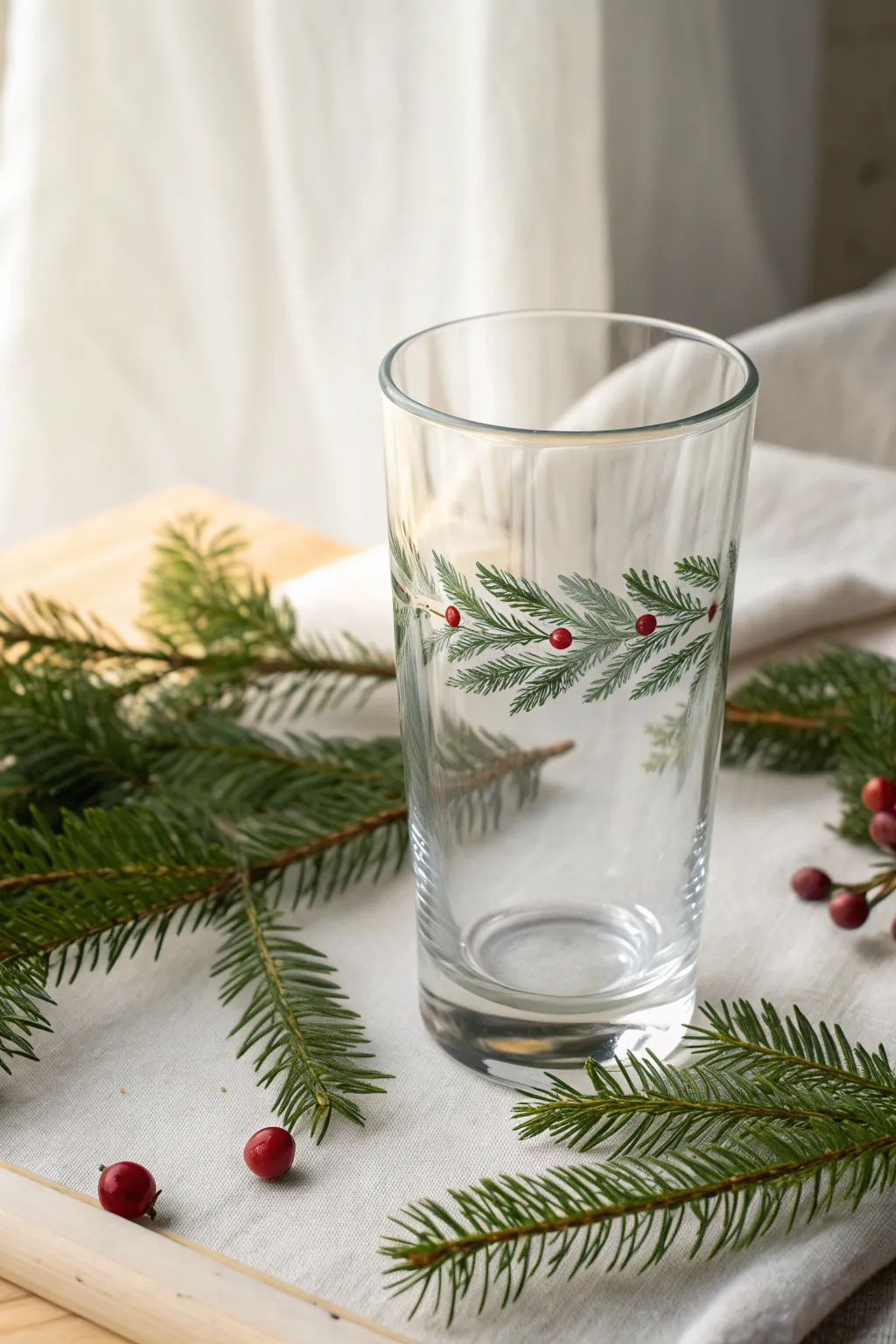
Transform plain glassware into festive holiday decor with this delicate evergreen design. The translucent green needles and bright red berries create a wreathed effect that looks sophisticated yet is wonderfully simple to paint.
Step-by-Step Guide
Materials
- Clear glass tumbler or highball glass
- Rubbing alcohol and cotton pads
- Enamel glass craft paint (Forest Green)
- Enamel glass craft paint (Holly Red or Bright Red)
- Fine liner brush (size 0 or 00)
- Small round brush (size 1)
- Palette or paper plate
- Paper towels
- Water cup
- Oven (for curing, optional)
Step 1: Preparation
-
Clean surface:
Begin by thoroughly cleaning the outside of your glass with warm soapy water to remove any stickers or residue. -
Degrease glass:
Wipe the area where you will be painting with rubbing alcohol on a cotton pad. This removes invisible oils and fingerprints, ensuring the paint adheres permanently. -
Plan position:
Decide on the height of your border. For this look, aim for the upper middle section of the glass, leaving enough rim space for drinking comfortably.
Needle Perfection
For the wispiest pine needles, add a tiny drop of water or thinning medium to your green paint on the palette. This helps the paint flow off the liner brush smoothly.
Step 2: Painting the Branches
-
Load brush:
Squeeze a small amount of forest green enamel paint onto your palette. Thoroughly load your fine liner brush, but roll the tip so it stays sharp. -
Paint main stem:
Starting at one point on your chosen circumference, paint a thin, slightly curved horizontal line. This will be the ‘spine’ of your first branch. -
Curve flow:
Continue painting these spine lines around the glass. connect them gently so they flow into one another, creating a slight wave rather than a rigid straight line. -
Start needles:
Using the very tip of your liner brush, begin adding needles to the top of the stem. Use quick, flicking motions outward and slightly forward in the direction the branch helps grow. -
Lower needles:
Repeat this flicking motion on the bottom side of the stem. I like to make the bottom needles slightly longer than the top ones to mimic the weight of real pine branches. -
Vary density:
Don’t make the needles perfectly uniform. Let some overlap and leave tiny gaps in other spots to keep the texture looking organic and airy. -
Check opacity:
The paint should be semi-translucent to look like delicate glass art. If it’s too thick, blot your brush slightly; if too thin, do a second delicate pass over the same needles once the first layer is tacky. -
Connect branches:
Ensure the points where your branch segments meet are covered with extra needles so the transition looks seamless all the way around the glass.
Oops, a smudge?
If you make a mistake or a line gets too thick, use a wet Q-tip or a toothpick to gently scrape away the wet paint. Wipe clean with alcohol before re-painting that spot.
Step 3: Adding Berries and Finishing
-
Prepare red paint:
Clean your brush or switch to the small round brush (or the handle end of a brush) and dip it into the bright red enamel paint. -
Place berries:
Dot small red berries sporadically along the branch line. Place them singly rather than in clusters to match the minimalist style of the example image. -
Refine shape:
If using a brush, gently swirl the tip to make the dot perfectly round. If using the handle end, simply press and lift straight up. -
Dry time:
Allow the paint to air dry for at least one hour before handling. The paint needs to skin over completely. -
Curing process:
For a dishwasher-safe finish, follow the manufacturer instructions on your paint bottle. This usually involves baking the glass in a non-preheated oven at 350°F for 30 minutes.
Now you have a custom piece of winter glassware ready for holiday entertaining


Starry Night Window Glass
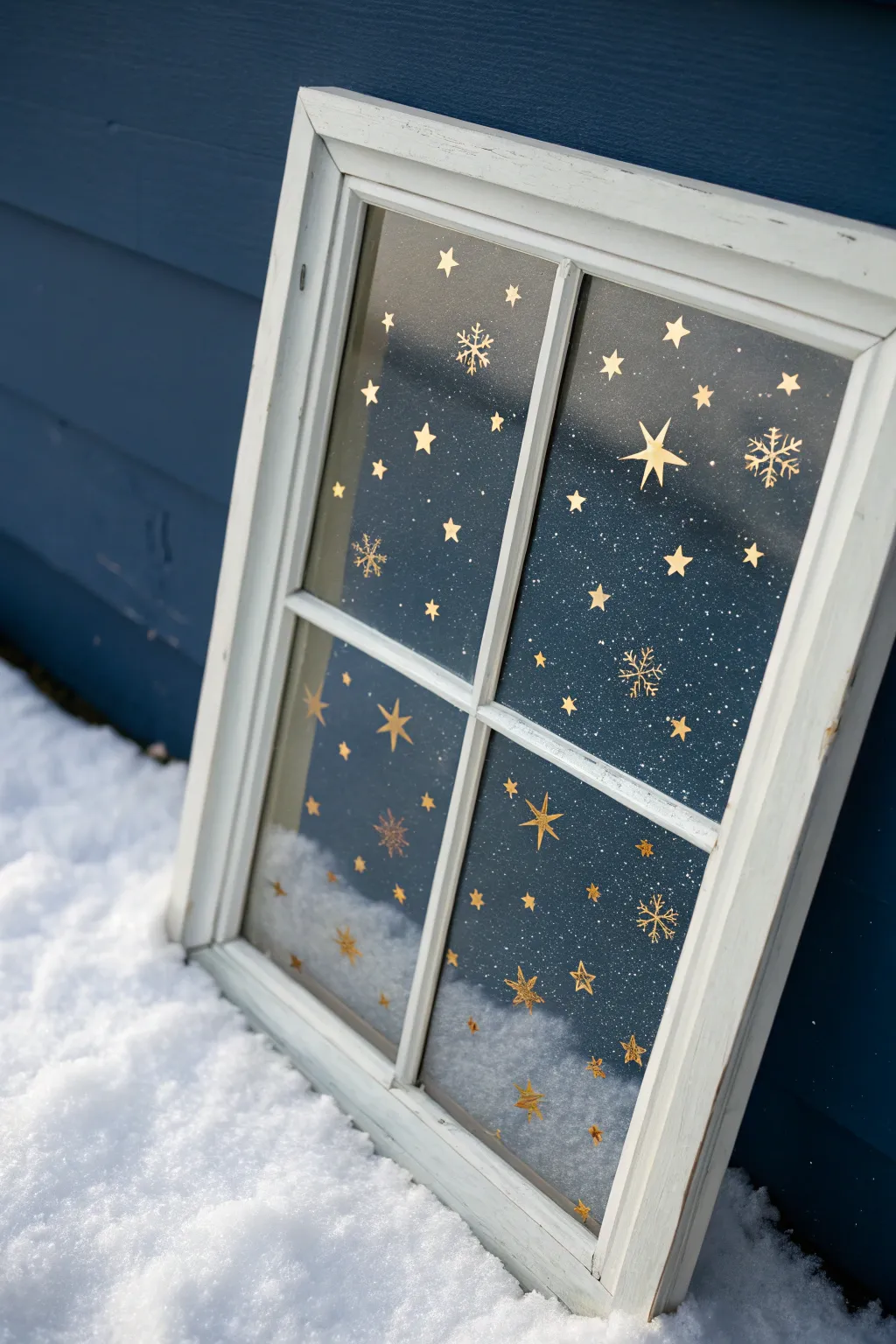
Transform an old window or frame into a magical portal overlooking a starry winter sky using transparent glass paints and metallic accents. This project captures the deep blue serenity of a snowy evening, punctuated by twinkling golden stars that catch the light beautifully.
Detailed Instructions
Materials
- Old wooden window frame with glass panes
- Glass cleaner and lint-free cloth
- Dark blue glass paint (transparent or semi-opaque)
- Wide, flat synthetic paintbrush
- White acrylic paint or glass paint
- Old toothbrush or stiff bristle brush
- Gold adhesive vinyl sheets or gold glass paint pens
- Star and snowflake paper punches (if using vinyl)
- Scissors or craft knife
- painter’s tape
Step 1: Preparation and Background
-
Clean surface:
Begin by thoroughly cleaning the glass on both sides. Even a small fingerprint can repel the paint, so wipe it down well with glass cleaner and ensure it is completely dry. -
Protect the frame:
Apply painter’s tape to the inner edges of the wooden frame where it meets the glass. This will give you crisp edges and keep paint off the wood. -
Apply base color:
Squeeze a generous amount of dark blue glass paint onto a palette. Using your wide flat brush, apply the paint to the glass in long, vertical strokes. -
Smooth the texture:
While the paint is still wet, lightly drag the brush from top to bottom one last time to smooth out any heavy brushstrokes. You want a consistent, semi-transparent blue wash. -
Check opacity:
Let this first coat dry according to the manufacturer’s instructions. If it looks too pale, apply a second thin coat to deepen the night sky effect, but ensure some light can still pass through. -
Create the galaxy effect:
To mimic distant stars or snow, dip an old toothbrush into a small amount of white paint. Run your thumb across the bristles to flick tiny speckles of paint across the blue glass. -
Vary the spray:
Focus the white speckles more heavily in the corners or the bottom of the panes to create depth, letting the center remain clearer. -
Dry completely:
Allow the blue background and white speckles to dry completely. This is crucial before moving on to the metallic elements to prevent smudging.
Step 2: Adding Celestial Details
-
Prepare gold shapes:
If using gold adhesive vinyl, use paper punches to cut out a variety of stars and snowflakes. I find that mixing sizes creates a more natural, whimsical look. -
Cut freehand shapes:
For variety, use scissors to cut a few unique, elongated four-point stars or larger snowflakes that might be too intricate for a standard punch. -
Layout planning:
Before sticking anything down, lay your cutouts gently on the glass to plan your composition. Balance the larger shapes with plenty of negative space. -
Apply vinyl stars:
Peel the backing off your vinyl shapes and press them firmly onto the dry painted glass. Smooth them down from the center outward to remove air bubbles. -
Alternative: Paint pen:
If you prefer drawing, use a gold oil-based paint marker to hand-draw the stars and snowflakes. Shake the pen well and test the flow on paper first. -
Draw connectors:
Using the paint pen, you can add tiny dots or faint lines to suggest constellations between your larger vinyl stars. -
Add detail:
Draw tiny cross-hatches or smaller dots in any large empty areas to fill out the sky without overcrowding it. -
Remove tape:
Once all decorative elements are applied and dry, carefully peel away the painter’s tape at a 45-degree angle. -
Final clean:
If any paint seeped under the tape, gently scrape it away with a craft knife or a damp cotton bud for a pristine finish.
Sticky Situation?
If your vinyl stars aren’t sticking to the painted surface, the glass paint might be too textured. Press firmly with a soft cloth or add a dot of clear craft glue.
Starry Depth Trick
Apply the blue paint on the back side of the glass and the gold stars on the front. This creates a shadowbox effect with real physical depth between the layers.
Place your finished window near a light source to see your winter sky glow warmly in the evening
Mix-and-Match Character Set
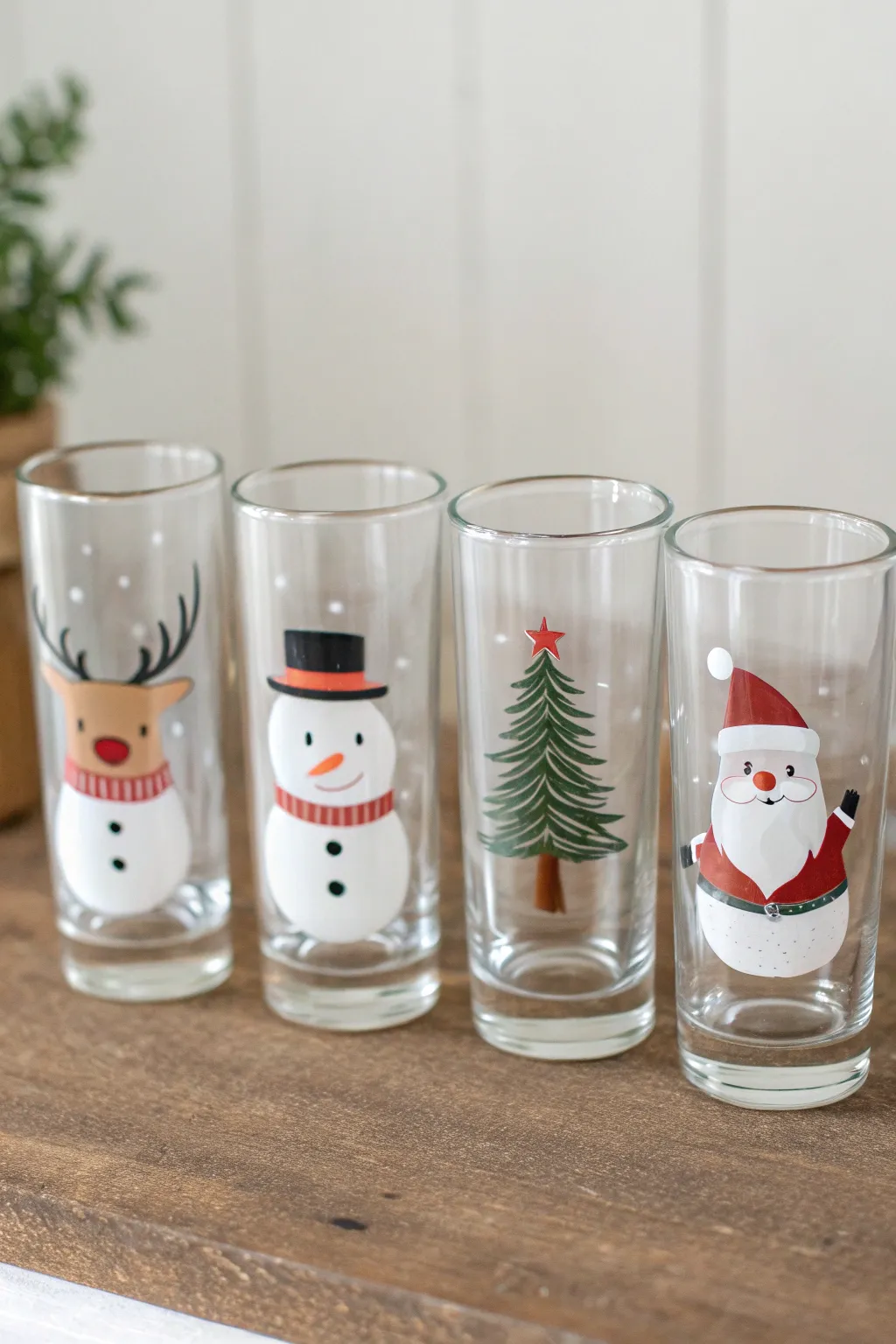
Transform plain tall shot glasses into a charming holiday collection featuring four distinct characters: a reindeer, snowman, Christmas tree, and Santa. This project uses simple shapes and clean lines to create a cohesive set perfect for holiday parties or milk-and-cookie shots.
Detailed Instructions
Materials
- 4 tall, clear shot glasses or slim tumblers
- Rubbing alcohol and cotton pads
- Enamel glass craft paints (White, Black, Red, Green, Brown, Orange, Beige/Tan)
- Small flat shader brush
- Fine liner brush (size 0 or 00)
- Small dotting tool or toothpick
- Palette or small plate
- Oven for curing (optional, depending on paint brand)
- Paper towels
Step 1: Preparation & Base Layers
-
Clean surface:
Begin by thoroughly wiping down the exterior of all four glasses with rubbing alcohol. This removes any oils or fingerprints that could prevent the paint from adhering properly. -
Map out the shapes:
Visualize where the center of each design will sit. Since these are simple shapes, you won’t need complex tracing, but aim to keep the bottom of each character aligned at the same height across all four glasses. -
Paint the reindeer head:
On the first glass, use your flat brush and beige/tan paint to create a rounded oval shape for the reindeer’s head. Add a larger white circle below it for the body. -
Paint the snowman base:
For the second glass, paint two stacked white circles. Make the bottom circle slightly larger and flatter than the head circle on top. -
Paint the Santa base:
On the third glass, paint a large white circle for Santa’s beard/body area. Leave space at the top for his hat later. -
Paint the tree shape:
For the final glass, use green paint to create a simple triangle shape. Don’t worry about the jagged edges yet; just establish the solid green base layer.
Step 2: Adding Character Details
-
Refine the tree:
Go back to your green tree. Using the fine liner brush, add small, sweeping strokes extending outward from the center triangle to mimic pine branches. Add a small brown rectangle at the bottom for the trunk. -
Dress the snowman:
Paint a black top hat on the snowman’s head. Use red paint to create a simple striped scarf between the two white circles. -
Add Santa’s suit:
Paint a red curved shape at the top for Santa’s hat and two red sections on the sides of the white circle for his suit jacket. Add a small white pom-pom to the hat tip. -
Reindeer features:
Using the liner brush and black paint, draw antlers branching up from the beige head. Paint a red collar or scarf around the neck area where the head meets the white body.
Paint sliding off?
If the paint streaks or separates, the glass is too slick. Use a pouncer sponge instead of a brush for the first layer to create ‘tooth’ for subsequent coats.
Step 3: Fine Details & Finishing
-
Santa’s face:
Paint a small beige oval in the center of the upper white area for Santa’s face. Once dry, add a tiny white mustache shape over the bottom of the beige oval. -
Facial expressions:
Use your finest liner brush or a toothpick to add tiny black dots for eyes on the reindeer, snowman, and Santa. I find a toothpick offers the most control for these tiny dots. -
Noses and accessories:
Add a red dot nose for Santa and the reindeer. Paint a small orange triangle nose for the snowman. Add a red star to the top of the Christmas tree. -
Button details:
Dip your dotting tool in black paint to add two or three vertical buttons on the snowman’s body and the reindeer’s white body. -
Snowy accents:
Using the back of a paintbrush or a large dotting tool, add random white dots around the background of the reindeer, snowman, and tree glasses to simulate falling snow. -
Tree texture:
Add very thin, lighter green or white highlights to the tips of the tree branches to give it dimension. -
Final cure:
Let the glasses dry for at least 24 hours. Check your paint manufacturer’s instructions for baking the glass in the oven to make the design dishwasher safe.
Clean Edges Trick
Keep a Q-tip dipped in rubbing alcohol nearby while working. You can instantly wipe away any smudges or reshape lines before the paint begins to set.
Now you have an adorable custom set ready to serve up holiday cheer
Name Tags and Year Keepsakes
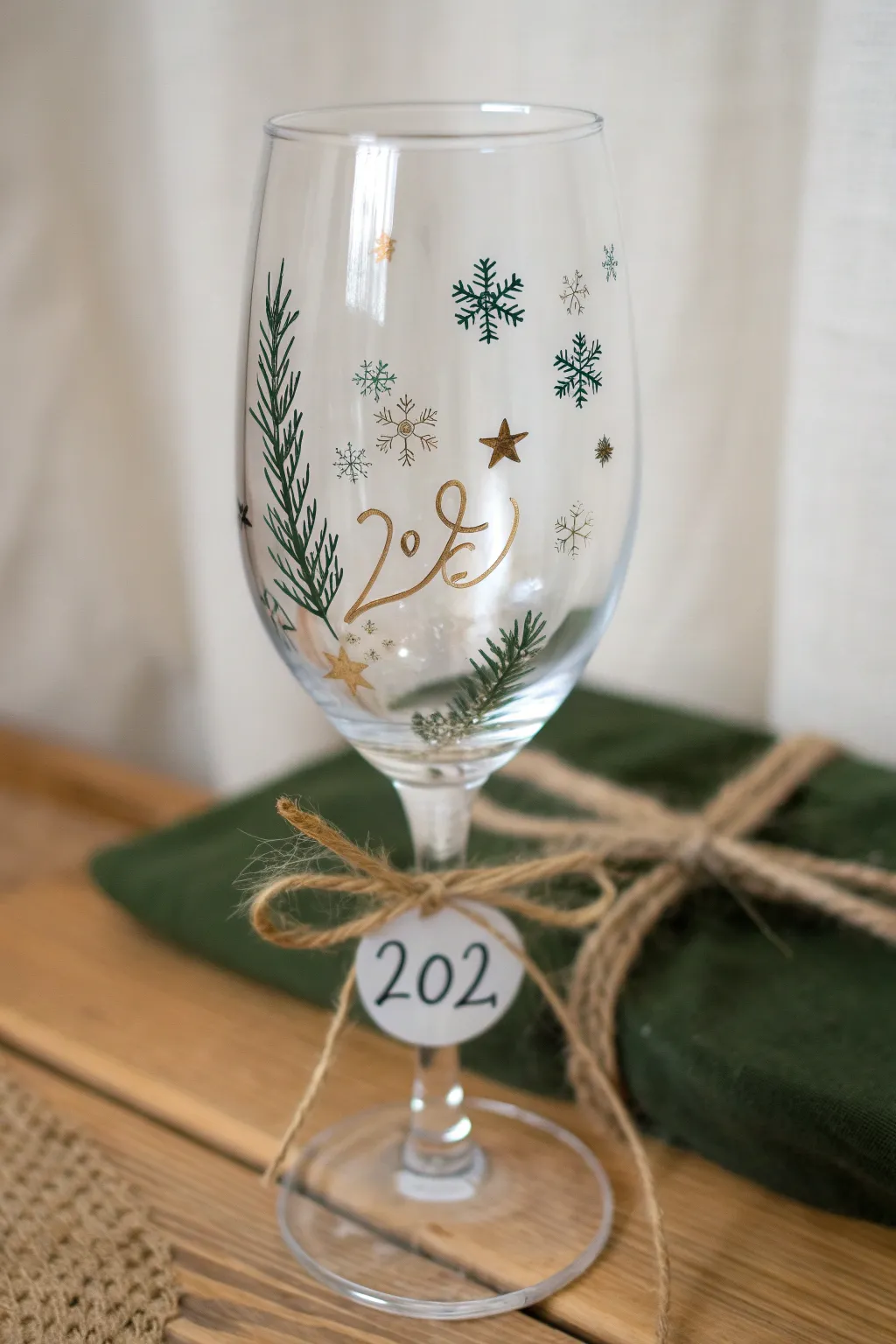
Capture the memory of a specific holiday season with this delicate painted wine glass featuring festive greenery, floating snowflakes, and golden accents. The addition of a rustic twine tag makes this piece double as a charming keepsake or a personalized place setting for your Christmas table.
Step-by-Step Guide
Materials
- Clear wine glass
- Rubbing alcohol and cotton pad
- Acrylic enamel paints (forest green, gold metallic, white)
- Fine liner brush (size 00 or 0)
- Small round brush (size 1 or 2)
- White cardstock or heavy paper
- Jute twine
- Black fine-tip marker or pen
- Scissors
- Hole punch
- Oven (for curing, if paint requires)
Step 1: Preparing the Glass Canvas
-
Clean the surface:
Before making a single stroke, wipe down the entire exterior of the wine glass with rubbing alcohol on a cotton pad. This removes oils and fingerprints that prevent paint from sticking. -
Plan the composition:
Visualize where your main elements will go. The large pine branch works best curving up one side, while the year date sits prominently in the center.
Clean Lines Tip
If you make a mistake while painting, simply wipe it away immediately with a wet Q-tip or a toothpick before the paint begins to set.
Step 2: Painting the Greenery
-
Start the main branch:
Dip your fine liner brush into the forest green enamel paint. Draw a long, thin, slightly curved line starting near the base of the bowl and extending upward about halfway up the glass. -
Add pine needles:
Using the very tip of the liner brush, make short, quick flicks outward from the main stem. Keep these strokes angled upward and slightly varied in length to mimic natural pine needles. -
Layer the needles:
Go back over the branch and add a second layer of needle strokes, filling in gaps to make the branch look lush. -
Create a lower sprig:
Paint a shorter, smaller pine sprig near the bottom curve of the bowl, angling it horizontally to frame the future text.
Step 3: Adding Metallic Accents
-
Paint the year:
Load your liner brush with metallic gold paint. In the open space near the center, carefully script the year (e.g., ‘2025’) in a loose, elegant cursive style. -
Draw the star:
Near the top of the date, paint a simple five-pointed star using the gold paint. You can fill it in completely or leave it as an outline. -
Add scattered details:
Paint tiny gold plus signs or small dots randomly around the greenery to represent distant stars or magic dust.
Make It Sparkle
While the gold paint is still wet, lightly sprinkle a pinch of ultra-fine gold glitter over the stars for a textured, shimmering 3D effect.
Step 4: Snowflakes and Finishing Touches
-
Paint green snowflakes:
Using the green paint again, draw simple asterisk shapes (*) in the upper empty spaces of the glass. -
Detail the snowflakes:
Add tiny ‘V’ shapes to the end of each arm of the asterisks to turn them into proper snowflakes. -
Incorporate delicate white flakes:
Switch to white enamel paint. Using a very light touch, add smaller, finer snowflake shapes and tiny dots between the larger green and gold elements for depth. -
Cure the paint:
Allow the glass to dry for at least one hour. Then, follow the manufacturer’s instructions on your paint bottle to cure the glass, usually by baking it in a cool oven that heats up gradually.
Step 5: Creating the Tag
-
Cut the tag:
Cut a small circle, about 1-1.5 inches in diameter, out of white cardstock or sturdy paper. -
Punch a hole:
Use a hole punch to create a small opening near the very top edge of the circle. -
Write the date:
Using a black fine-tip marker, write the year clearly in the center of the tag. -
Attach the twine:
Cut a lengthy piece of jute twine. Thread it through the tag hole, wrap it around the stem of the wine glass, and tie it securely in a simple bow.
Once the paint is cured and the tag is tied, your festive glass is ready to toast the season
Stencil-Inside-the-Glass Trick
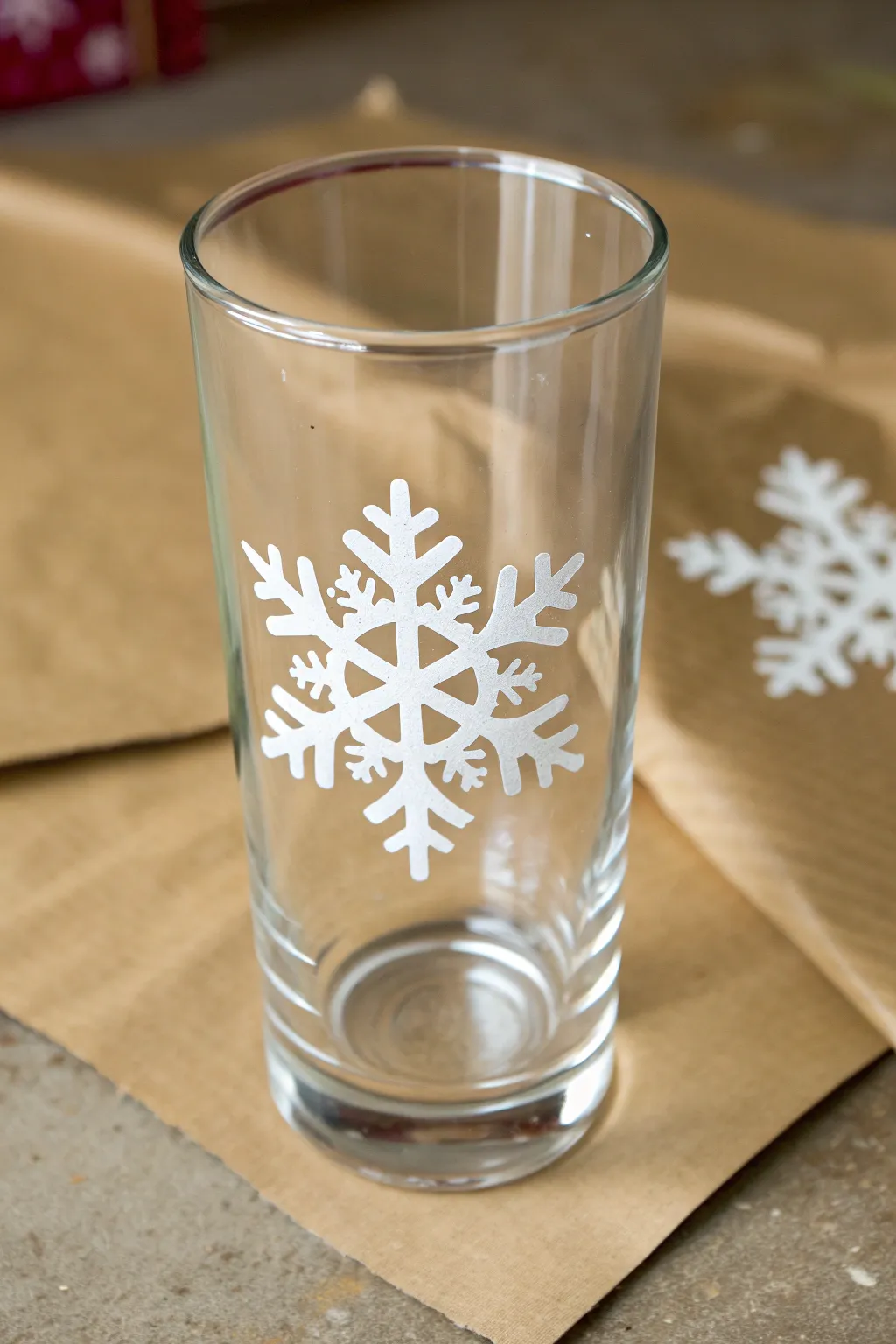
Transform a simple highball glass into winter drinkware with this crisp, frosty snowflake design using a clever insider trick. The result is a clean, professional-looking motif that looks like etched glass but is far easier to achieve at home.
How-To Guide
Materials
- Tall clear glass tumbler or highball glass
- Paper
- Pencil
- Scissors or craft knife
- Tape (painter’s tape or masking tape)
- Rubbing alcohol
- Lint-free cloth
- Fine-tip white multisurface paint pen (oil-based works best)
- White glass paint (frosted effect optional)
- Small flat synthetic brush (size 2 or 4)
Step 1: Preparation & Template
-
Clean the surface:
Begin by thoroughly cleaning your glass with warm soapy water to remove any factory stickers or dust. -
Degrease with alcohol:
Wipe the exterior surface where you plan to paint with rubbing alcohol and a lint-free cloth. This removes oils from your fingertips that prevent paint adhesion. -
Source your design:
Find a snowflake clipart image you love online and print it out, ensuring the size fits comfortably on your glass without wrapping too far around the curve. -
Cut the template:
Trim the paper around the snowflake design, leaving a small border so it’s easy to handle. -
Insert the template:
Roll the paper slightly and place it inside the glass, with the printed design facing outward. -
Secure the design:
Adjust the paper until the snowflake is perfectly centered. Use a piece of tape or a dry sponge stuffed inside the glass to press the paper firmly against the glass wall so it doesn’t shift.
Smudge Control
Work from the top of the design down (or left to right if right-handed) to avoid dragging your hand through wet paint.
Step 2: Painting the Snowflake
-
Prime the paint pen:
Shake your white paint pen vigorously and depress the nib on a scrap piece of paper until the paint flows smoothly. -
Trace the outline:
Carefully trace the outer edges of the snowflake design directly onto the glass. I like to stabilize my hand by resting my pinky finger on a dry part of the glass. -
Refine the points:
Pay special attention to the tips of the snowflake arms and the smaller crystalline branches, keeping the lines crisp and sharp. -
Outline interior details:
Don’t forget to trace the inner geometric shapes, such as the hexagon in the center of the snowflake. -
Initial drying:
Let the outline dry for about 5 to 10 minutes to prevent smudging while you fill it in. -
Add the fill:
Using either the paint pen or a small brush dipped in white glass paint, fill in the outlined areas. Use thin, even strokes. -
Check opacity:
Hold the glass up to the light. If the white looks streaky or translucent, let the first coat dry completely (usually 1 hour) before adding a second coat.
Winter Flurry
Add tiny white dots of varying sizes around the main snowflake to create a gentle falling snow effect across the whole glass.
Step 3: Finishing Touches
-
Remove the template:
Once the paint is tacky but not fully cured, gently pull the paper template out of the glass to check your work against a plain background. -
Clean up edges:
If any lines went astray, use a damp cotton swab or a toothpick to gently scrape away excess paint while it is still relatively fresh. -
Cure the paint:
Follow the manufacturer’s instructions for your specific paint. Most glass paints require 21 days of air curing or baking in a home oven (usually 350°F for 30 minutes) to become dishwasher safe.
Now you have a custom piece of winter glassware ready for holiday entertaining
Tea Light Jar Winter Glow
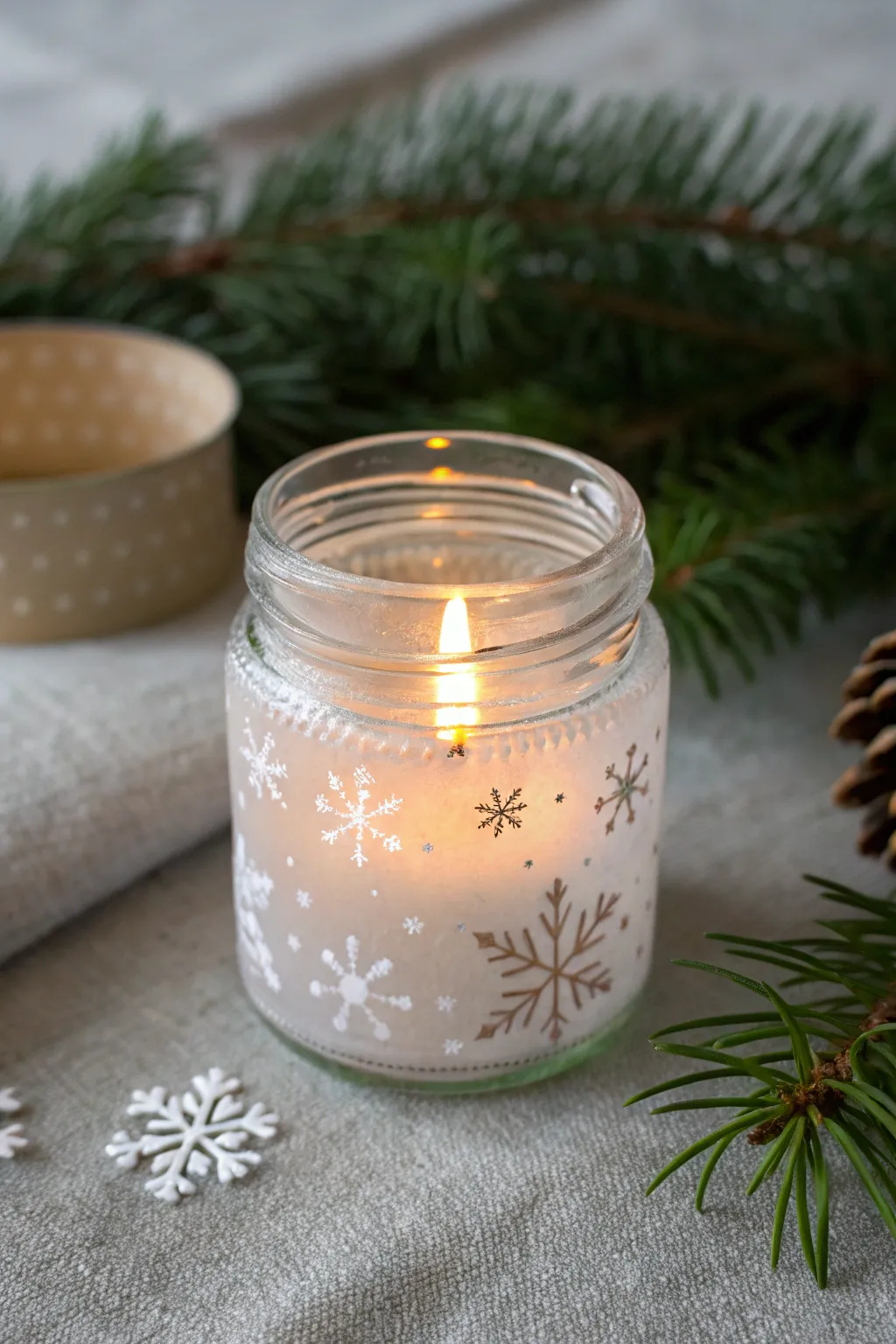
Transform a simple glass jar into a cozy winter lantern that glows warmly with soft light. By combining a frosty base coat with delicate metallic and white snowflakes, you’ll create a sophisticated piece of seasonal decor that looks beautiful both lit and unlit.
Step-by-Step
Materials
- Clean, small glass jar (recycled jam or baby food jar)
- White tissue paper (plain)
- Mod Podge (matte finish)
- Sponge brush or soft flat brush
- Metallic gold or bronze paint pen (fine tip)
- White acrylic paint or puffy paint
- Small liner brush (if using acrylic paint)
- Detail scissors
- Rubbing alcohol
- Tea light candle
Step 1: Preparing the Frosty Base
-
Clean the glass:
Start by thoroughly washing your jar to remove any labels or adhesive residue. Wipe the exterior with rubbing alcohol on a paper towel to remove oils, ensuring a perfect bonding surface. -
Tear tissue strips:
Take a sheet of white tissue paper and tear it into small, manageable strips or irregular shapes. Tearing rather than cutting creates softer edges that blend better for the frosted look. -
Apply adhesive base:
Using a sponge brush, apply a thin, even layer of Mod Podge to a section of the jar’s exterior. -
Layer tissue paper:
Gently press the torn tissue paper pieces onto the wet adhesive. Overlap them slightly to cover the clear glass completely, creating a translucent ‘frosted’ skin. -
Seal the texture:
Once the jar is covered in tissue, gently brush another layer of Mod Podge over the top to seal it. Be careful not to tear the damp paper; a dabbing motion often works best. -
Dry partially:
Allow the jar to dry until it is tacky but no longer wet to the touch. This creates a stable surface for painting designs.
Step 2: Adding the Snowflake Designs
-
Plan your placement:
Visualize where your larger snowflakes will go. Aim for a random, falling snow pattern rather than perfectly aligned rows. -
Paint metallic flakes:
Using a metallic gold or bronze paint pen, draw the larger, six-pointed snowflakes directly onto the dry tissue surface. Start with a simple cross and add diagonals. -
Add metallic details:
Enhance the metallic flakes by adding small V-shapes or dots at the end of each arm to mimic crystallization. -
Create white flakes:
Use a fine liner brush with white acrylic paint to add smaller, delicate white snowflakes interspersed between the metallic ones. -
Vary size and shape:
Ensure variety by painting some tiny, simple asterisks and others as more complex, multi-branched stars. -
Add drift details:
For a subtle effect around the rim or base, you can dab a tiny amount of extra white paint to simulate gathered snow.
Rim Detail Tip
Add a thin line of glitter glue or white puffy paint just under the jar’s rim to mimicking an icy ridge where frost gathers naturally.
Step 3: Finishing Touches
-
Dry completely:
Let the jar sit undisturbed for several hours. The Mod Podge needs to cure fully so the frosting becomes durable and translucent properties emerge. -
Clean the rim:
If any Mod Podge or tissue paper extended over the screwing threads of the jar rim, carefully wipe or scrape it away for a clean top edge. -
Add small accents:
I find that adding tiny metallic dots randomly around the snowflakes adds a magical shimmer when the light hits them. -
Insert candle:
Place a tea light inside the jar. A battery-operated LED candle is safest, but a real flame will flicker nicely against the frosted texture.
Sparkle Upgrade
While the top coat of Mod Podge is still wet, lightly sprinkle ultra-fine iridescent glitter over the jar for a shimmer that catches the candlelight.
Light your new luminary and enjoy the serene winter atmosphere it brings to your room
Frosted Negative Space Designs
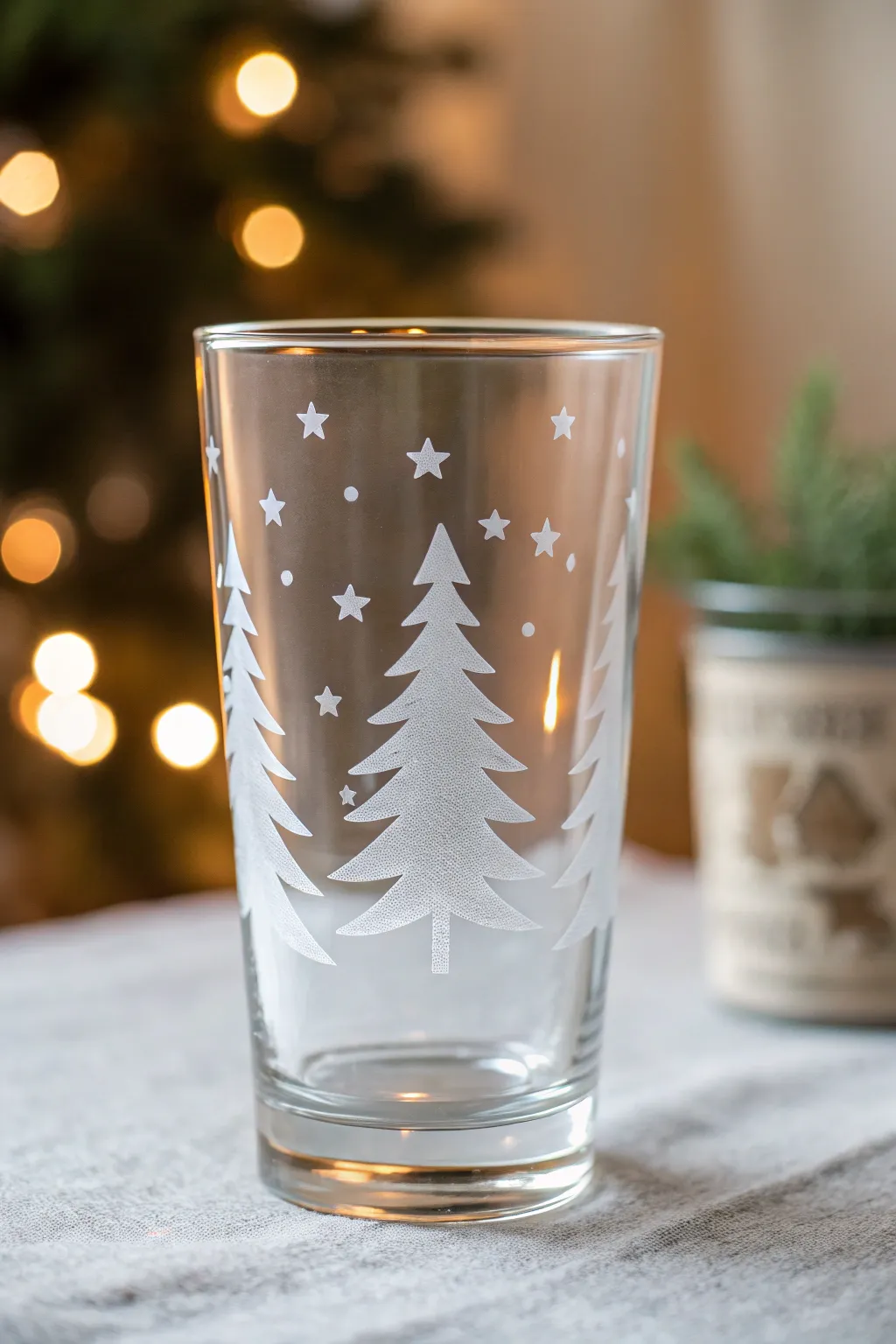
Elegance meets simplicity in this stunning glassware project that transforms plain tumblers into a winter wonderland. Using frosted glass paint or etching cream, you can create delicate, snowy Christmas trees and stars that catch the light beautifully.
How-To Guide
Materials
- Plain glass tumbler (tall, cylindrical shape works best)
- Rubbing alcohol and paper towels
- Adhesive stencil film or vinyl sheets
- Craft knife or stencil cutter (like a Cricut)
- Self-healing cutting mat
- Transfer tape (optional but helpful)
- Frosted glass spray paint OR glass etching cream
- Painter’s tape
- Small weeding tool or tweezers
- Cardboard or drop cloth (for spray painting)
Step 1: Preparation and Stencil Creation
-
Clean the surface:
Begin by thoroughly wiping down the outside of your glass tumbler with rubbing alcohol and a paper towel. This removes any oils or fingerprints that could prevent your stencil from sticking or the frost from adhering properly. -
Design your forest:
Sketch out a simple Christmas tree shape. The design in the image uses distinct, jagged branches that flare out at the bottom. You can also find free vector ‘pine tree’ silhouettes online. -
Cut the main stencil:
If using a cutting machine, load your design and cut it out of adhesive vinyl. If you are cutting by hand, place your vinyl sheet on the cutting mat and carefully use your craft knife to trace and cut out the tree shape. -
Create star accents:
Don’t forget the celestial details. Cut out several small 5-point stars and a few tiny circles to act as distant snowflakes. Varying the sizes adds depth to the scene. -
Determine the method:
Technically, you can achieve this look in two ways: reverse stenciling (applying the tree sticker and spraying over it) or positive stenciling (using a stencil with a tree-shaped hole). The image shows white trees on clear glass, so we need a stencil with a tree-shaped *hole* cut out of it. -
Prepare the negative stencil:
Weed out the tree shape from your vinyl, leaving the rectangular surrounding material intact. This rectangle with the tree-shaped hole is your stencil.
Step 2: Applying the Design
-
Position the main tree:
Carefully apply the vinyl stencil to the glass. Center the tree vertically, leaving some clear glass at the top rim and bottom base. Smooth it down firmly, especially near the cut edges of the branches. -
Repeat for multiple trees:
To recreate the full forest look, apply 2-3 tree stencils around the circumference of the glass. I like to space them evenly so the glass looks good from every angle. -
Add the stars:
For the stars, use the same negative stencil method. Place small pieces of vinyl with star-shaped holes cut out of them in the empty spaces above and between the trees. -
Mask off the rest:
Cover every single bit of exposed glass that you *don’t* want frosted with painter’s tape and paper. Paint particles travel everywhere, so be thorough.
Fuzzy Edges?
If paint bleeds under the stencil, scratch it off gently with a toothpick while it’s still semi-soft. For etching cream, unfortunately, sharp edges are vital from the start.
Step 3: Frosting and Finishing
-
Prepare the area:
Move to a well-ventilated area and set up your cardboard protection. Shake your can of frosted glass spray paint vigorously for at least one minute. -
Apply the first coat:
Hold the can roughly 10-12 inches away from the glass. Spray a very light, misty coat over the stencil openings. Do not overspray, or the paint might run under the stencil edges. -
Layering:
Let the first coat dry for about 5-10 minutes until it looks matte. Apply a second light coat to increase the opacity and ‘snowy’ density. -
Alternative: Etching Cream:
If you chose etching cream instead of spray paint, apply a thick layer over the stencil openings with a brush. Let it sit for the time recommended on the bottle (usually 5-15 minutes), then rinse off with water before removing stencils. -
Dry time:
If using spray paint, allow the final coat to dry for at least 30 minutes before handling. -
The reveal:
Carefully peel away the painter’s tape first. Then, slowly lift the vinyl stencils. Use a weeding tool or tweezers to grab the corner of the vinyl if it’s tricky to lift with fingernails. -
Clean up edges:
If you have any jagged edges where the paint bridged the gap, you can very gently scrape them away with a craft knife or a toothpick while the paint is still curing. -
Final cure:
Allow the glass to cure fully according to the paint manufacturer’s instructions (often 24 hours) before using or washing lightly by hand.
Level Up: Ombré Snow
Spray the bottom of the trees slightly heavier than the tops to create a gradient effect, making the ‘snow’ look denser near the ground.
Now you have a custom piece of winter decor that looks professionally etched and pairs perfectly with a warm holiday drink
Have a question or want to share your own experience? I'd love to hear from you in the comments below!