
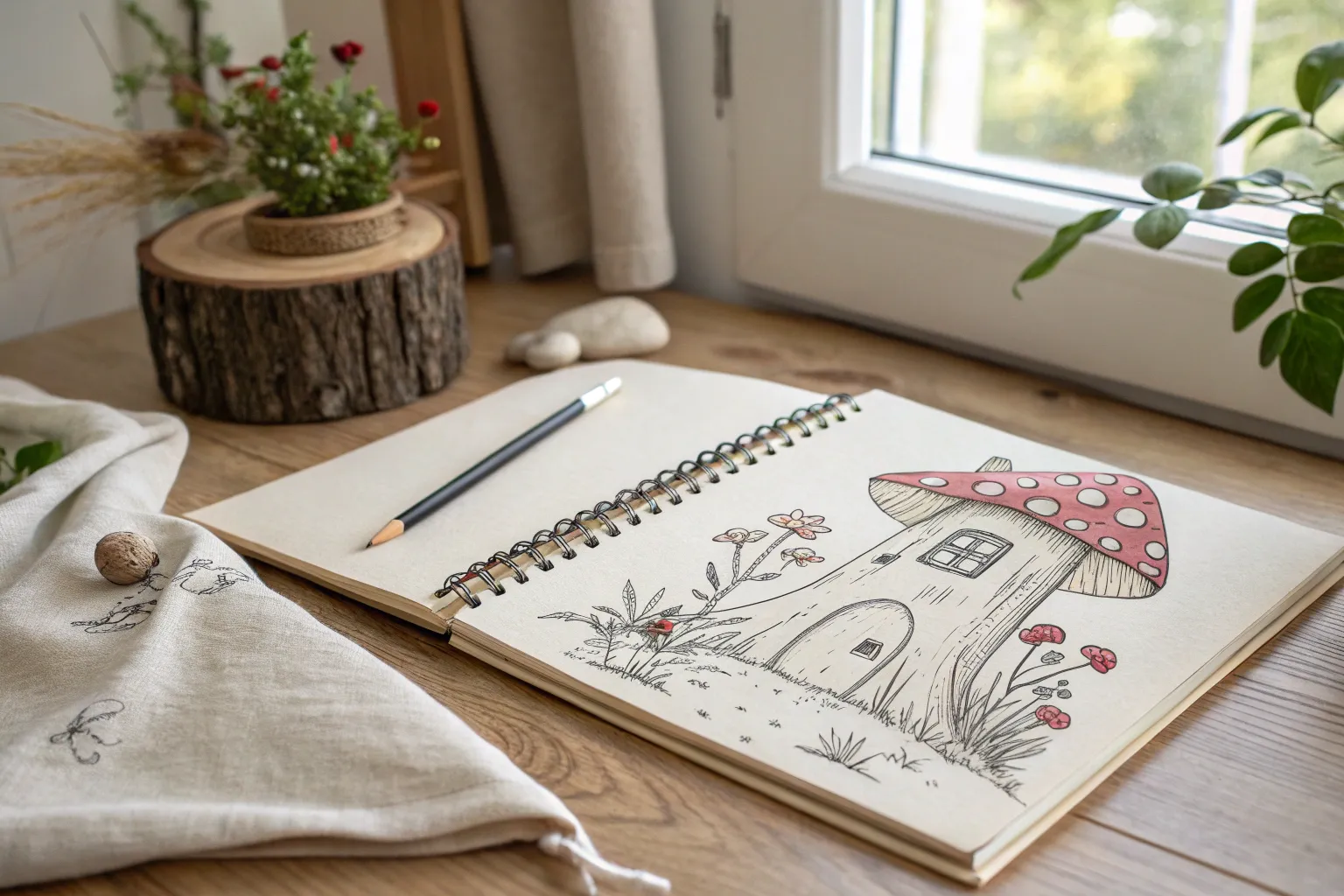
If you love drawing tiny worlds, a fairy house is the perfect excuse to mix whimsical architecture with cozy, nature-made details. Here are my go-to fairy house drawing ideas, starting with the classic forest favorites and drifting into more playful, unexpected designs.
Hollow Tree Door Hideaway
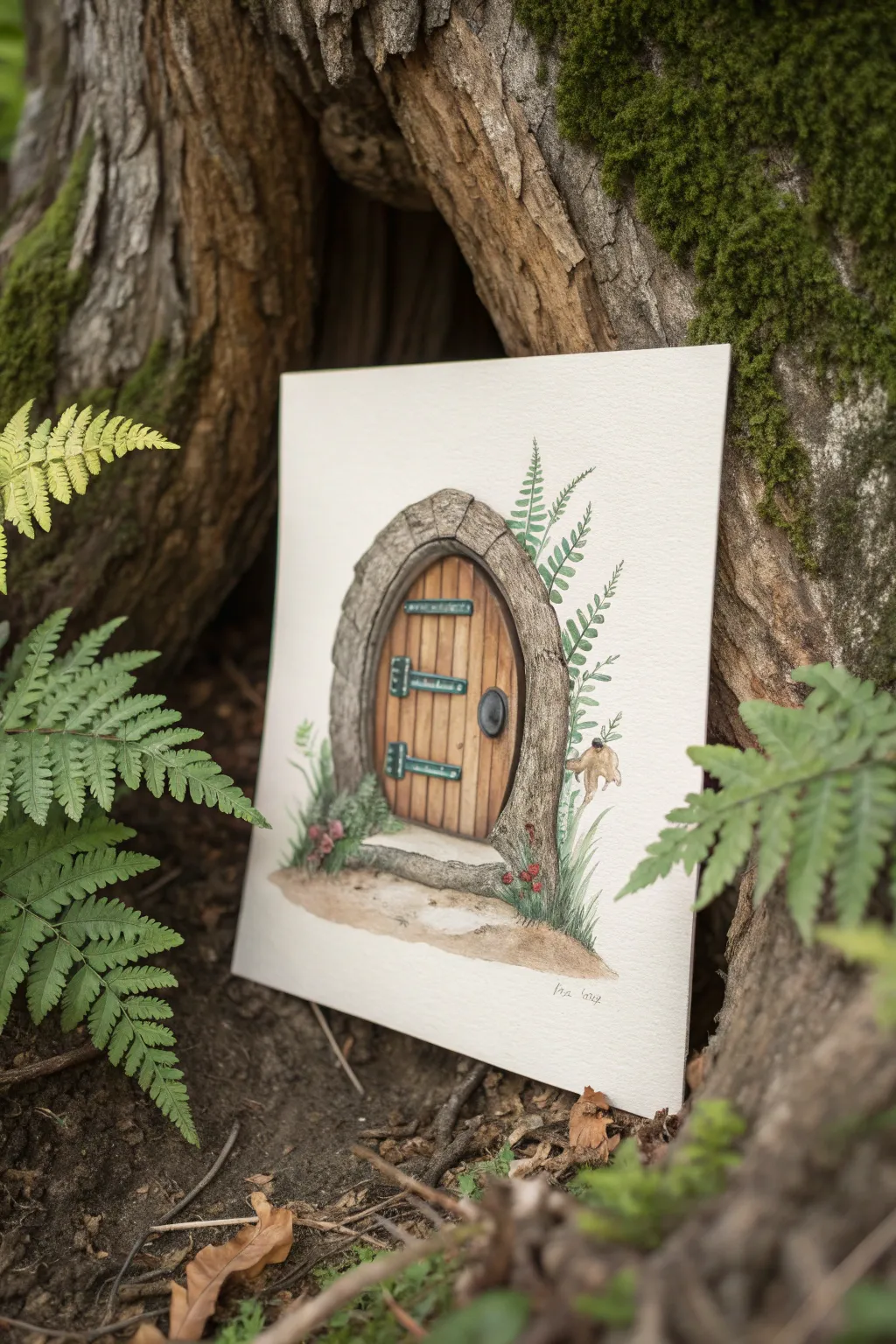
Nestled into the roots of an ancient tree, this whimsical round door illustration captures the secret magic of fairy life. Using a blend of watercolor and fine liner pens, you will create a textured, organic portal that looks ready to swing open for tiny visitors.
How-To Guide
Materials
- High-quality watercolor paper (cold press creates nice texture)
- Pencil (HB) and eraser
- Waterproof fine liner pens (0.1mm and 0.3mm, black or sepia)
- Watercolor paints (shades of brown, green, grey, and ochre)
- Small round brushes (size 2 and 4)
- White gel pen or gouache for highlights
- Paper towels and water cup
Step 1: Sketching the Structure
-
Outline the door:
Begin by lightly sketching a wide, vertical oval shape in the center of your paper. This will be the wooden door itself. Don’t worry about making it perfectly symmetrical; organic shapes feel more natural. -
Add the stone arch:
Draw a thick border around the oval door to represent the stone frame. Make the top slightly thicker and arched, narrowing towards the bottom where the threshold lies. -
Adding texture details:
Lightly sketch vertical lines on the door for wooden planks. Mark out where the horizontal hinges will go—two on the left side and a round handle on the right. -
Surrounding foliage:
Sketch wispy fern shapes and grass blades sprouting from the base and climbing up the sides of the stone arch. Keep these lines very faint so they don’t show through the paint later.
Muddy Colors?
If your wood grain is blending too much with the stone color, ensure the first area is bone-dry before painting the touching section. Patience prevents bleeding.
Step 2: Inking the design
-
Define the wood:
Using a 0.1mm fine liner, trace over the vertical plank lines. Add small imperfections like knots or grain lines to make the wood look aged and weathered. -
Texture the stone:
Ink the outline of the stone arch. Use broken, shaky lines rather than straight smooth ones to suggest rough rock texture. Add a few cracks here and there. -
Hardware details:
Switch to a 0.3mm pen to outline the hinges and doorknob, giving them a bit more weight and prominence against the wood grain. -
Inking the greenery:
Carefully ink the ferns and grass. Use quick, upward flicking motions for the grass blades to keep them looking sharp and energetic.
Step 3: Painting the Door
-
Base wood layer:
Mix a warm ochre or light sienna watercolor wash. Paint the entire wooden door area, letting the color vary slightly between planks to create depth. -
Adding shadows:
Once the base is damp (but not soaking), drop a darker burnt umber color along the edges of the planks and under the hinge areas. This emphasizes the separate boards. -
Stone frame base:
Apply a wash of diluted nice grey or brownish-grey to the stone arch. Keep this layer pale; stone often has subtle color variations. -
Stone texture:
While the stone wash is still wet, dab in spots of darker grey and touches of mossy green, especially near the bottom and sides where moss would naturally grow. I like to let these colors bleed together softly.
Pro Tip: Texture Trick
Sprinkle a tiny pinch of salt onto the wet grey paint of the stone arch. As it dries, the salt absorbs pigment, creating a fantastic, natural rock texture.
Step 4: Refining Details
-
Painting the hardware:
Paint the hinges a deep teal or oxidized copper green. Use a concentrated dark grey or black for the round doorknob, leaving a tiny white spot unpainted for a reflective highlight. -
Greenery layers:
Paint the ferns and grass with a vibrant sap green. Once dry, add a second layer of darker forest green to the lower parts of the leaves to create dimension. -
Deepening the shadows:
Mix a dark cool brown or payne’s grey. Carefully paint a thin shadow line right where the door meets the stone frame to make the door look recessed. -
Ground and soil:
Add a sandy brown wash at the very bottom beneath the threshold, fading it out into the white of the paper to ground the illustration. -
Final highlights:
Once everything is perfectly dry, use a white gel pen to add tiny highlights to the tops of the rivets on the hinges and the curve of the handle.
Now you have a charming little portal ready to be framed or hidden on a bookshelf for someone to discover

Flower-Petal Roof Hut
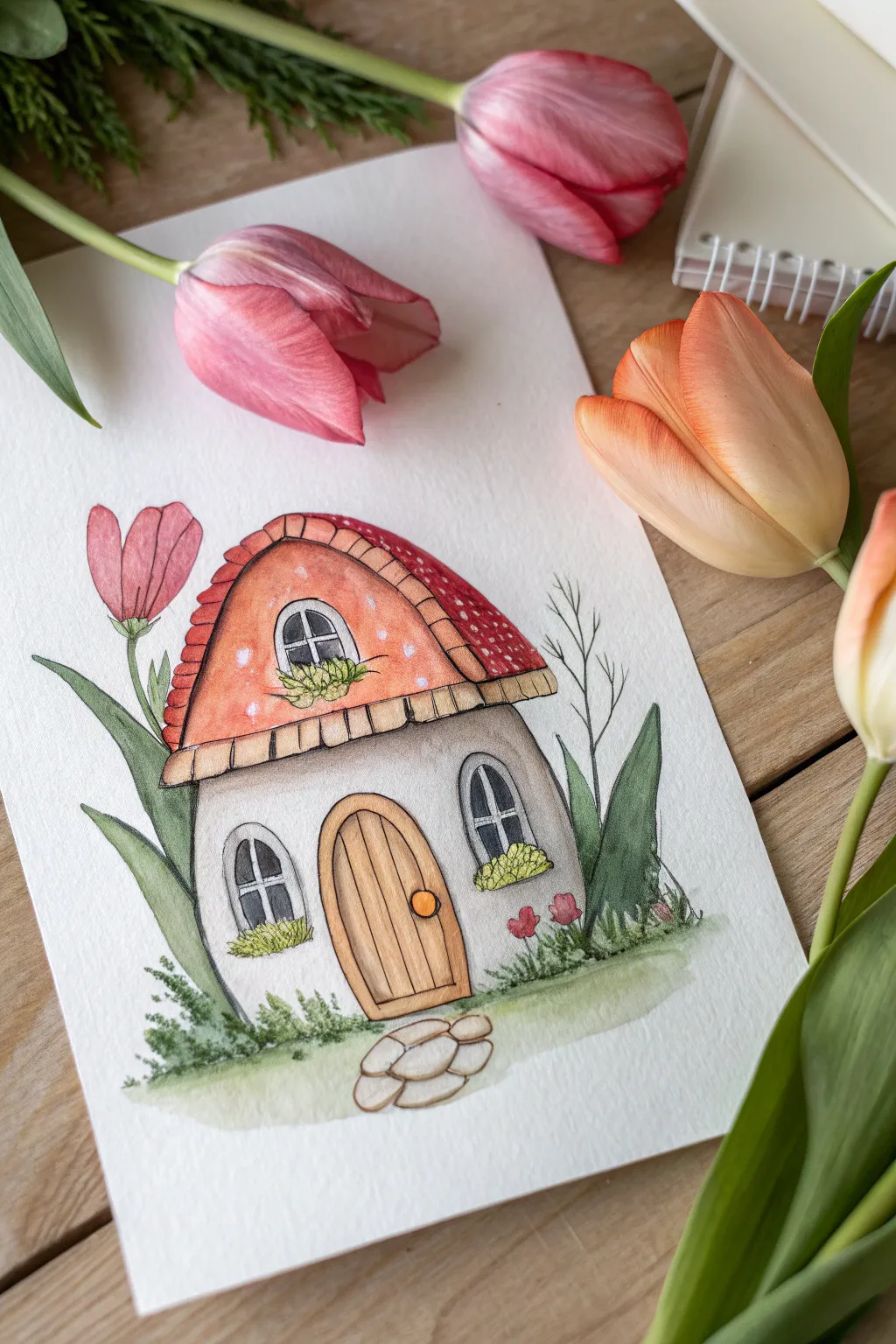
Capture the magic of a hidden garden with this delightful watercolor and ink illustration of a cozy mushroom-style fairy house. The soft, layered petals of the roof and warm wooden door create an inviting little home that feels plucked straight from a storybook.
Step-by-Step
Materials
- Cold press watercolor paper (300 gsm)
- Pencil (HB or H for light sketching)
- Kneaded eraser
- Waterproof fineliner pens (black, sizes 0.1 and 0.3)
- Watercolor paints (Vermilion, Burnt Sienna, Yellow Ochre, Sap Green, Paine’s Gray, Shadow Violet)
- White gouache or white gel pen
- Round watercolor brushes (sizes 2, 4, and 6)
- Paper towel
- Water jars
Step 1: Sketching the Foundation
-
Outline the main shape:
Start by lightly sketching the base of the house. Draw a rounded, bulbous shape that sits heavily at the bottom, like a gentle mound of clay. -
Add the roof:
Place a triangular, slightly curved shape on top of the base. Curve the bottom edge of the roof so it overhangs the walls significantly, creating eaves. -
Draw the details:
Sketch a sturdy arched door in the center. Add two arched windows on either side of the door and a smaller dormer window nestled into the roof. Don’t forget the stone path leading to the entrance. -
Sketch the foliage:
Frame the house with simple, elongated leaves rising from the sides. I like to add a single tall tulip-like flower on the left to give the house scale.
Step 2: Inking the Lines
-
Trace the main lines:
Using a 0.3 waterproof fineliner, go over your pencil lines. Keep your hand relaxed; slightly wobbly lines add to the organic, whimsical feel. -
Add texture details:
Switch to a thinner 0.1 pen for finer details like the wood grain on the door, the stone cracks, and the delicate muntins in the windows. Add small vertical lines under the roof eaves to suggest timber beams. -
Erase pencil marks:
Once the ink is completely dry—give it a few minutes to be safe—gently erase all visible pencil sketches with a kneaded eraser.
Wet-on-Wet Magic
For soft, dreamy roof shading, wet the paper inside the roof outline with clean water first, then drop in your red paint. It blends itself!
Step 3: Bringing it to Life with Color
-
Paint the roof base:
Mix a warm vermilion with a touch of burnt sienna. Apply a wash to the roof, keeping the center lighter to show a highlight. While wet, drop in slightly more saturated red near the edges. -
Color the door:
Use a diluted yellow ochre for the door. Once that layer is dry, glaze over it with a light burnt sienna to deepen the wood tone. -
Shade the walls:
The walls should remain mostly white. Create a very pale mix of Paine’s gray or shadow violet and lots of water. Paint shadows under the roof eaves and along the bottom edges of the house to create volume. -
Paint the greenery:
Mix sap green with a little gray for a natural tone. Paint the tall leaves and grassy tufts at the base. Use a lighter, yellowish-green for the window boxes. -
Detail the windows:
Fill the window panes with a very light wash of gray-blue, leaving tiny white spaces for reflections. -
Add the flower accents:
Paint the tall flower on the left with a soft pink or coral wash. Add tiny dabs of red or pink for the small flowers in the grass. -
Ground the house:
Paint a loose, horizontal wash of green under the house to suggest grass. Let it fade out softly at the edges. -
Paint the stones:
Use a warm beige or light gray for the stepping stones. Drop a slightly darker shade on one side of each stone for dimension.
Make It a Season
Change the palette to customize the season. Use oranges and browns for autumn, or icy blues and glitter for a winter frost cottage.
Step 4: Final Touches
-
Add roof texture:
Once the red roof is totally dry, use white gouache or a white gel pen to add small dots or speckles, giving it that classic toadstool look. -
Enhance shadows:
Do a final pass with your fineliner or a dark paint mix to deepen the darkest crevices, like the space between the door and the frame or under the window boxes. -
Highlights:
Add tiny touches of white gel pen to the door handle and the tops of the leaves for a bit of sparkle.
You’ve now built a charming little abode ready for any passing sprite to move right in
Root-Wrapped Arched Door
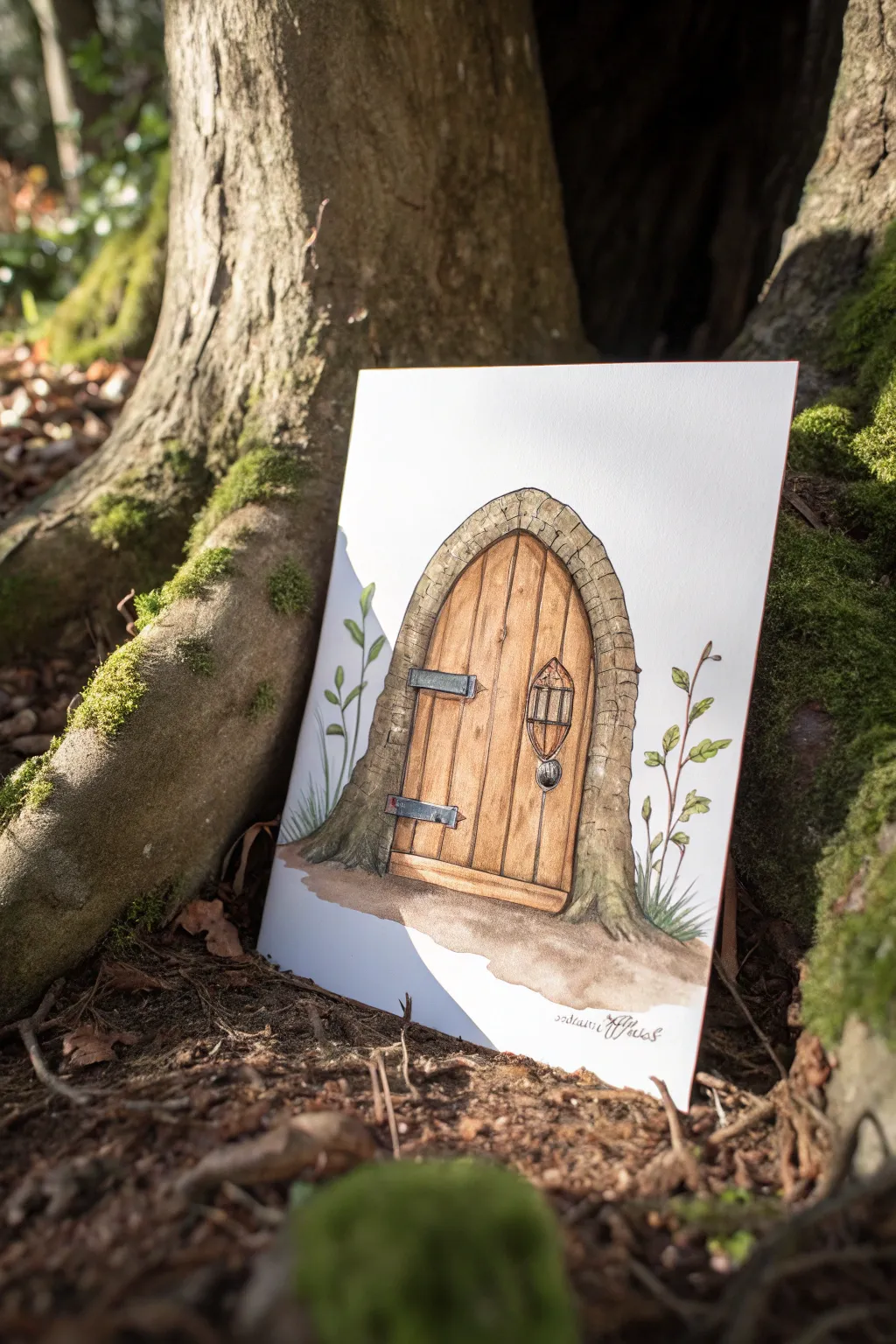
Capture the magic of an enchanted forest with this delightful ink and watercolor illustration. By blending organic textures with solid architectural elements, you’ll create a charming portal that looks like it grew naturally right out of the paper.
Step-by-Step Tutorial
Materials
- Cold press watercolor paper (300 gsm)
- Waterproof fine liner pens (0.1, 0.3, and 0.5 sizes)
- Watercolor paint set
- Small round paintbrush (size 2 or 4)
- Pencil (HB or 2H)
- Kneaded eraser
- Ruler
- Jar of clean water
- Paper towels
Step 1: Sketching the Structure
-
Draft the Door Shape:
Begin by lightly sketching a vertical rectangle with an arched top in the center of your paper. This will be the main body of your door. -
Add the Frame:
Draw a parallel line around the top arch and sides to create the stone or wood frame casing. Keep the bottom edge flat for the ground line. -
Sketch the Planks:
Divide the inner door area into vertical strips to represent wooden planks. Don’t use a ruler here; slightly wavy hand-drawn lines make the wood look aged and organic. -
Position Hardware:
Sketch two horizontal strap hinges on the left side of the door. On the right, draw a simple oval shape for the door handle hardware. -
Root the Door:
At the base of the frame, sketch outward-curving lines that extend into the ground, suggesting that the door frame is morphing into tree roots. -
Add Greenery:
Draw simple stems with leaf shapes rising up on either side of the door to frame the composition naturally.
Step 2: Inking the Outlines
-
Outline the Door:
Using a 0.3 waterproof pen, trace over your main door shape and the frame. Use a slightly shaky hand for the planks to emphasize the wood grain texture. -
Detail the Frame:
Switch to a 0.1 pen to add texture to the frame. Draw small, irregular ovals and broken lines to mimic bark or rough stone texture. -
Ink the Hardware:
Carefully outline the hinges and handle with the 0.3 pen. Add tiny circles for the nails or rivets on the hinges. -
Refine the Foliage:
Trace the plant stems and leaves. Draw a few grass blades near the roots using quick, upward flicks of the pen for a tapered look. -
Erase Sketches:
Wait at least 5-10 minutes to ensure the ink is completely dry, then gently remove all pencil lines with your kneaded eraser.
Wet-on-Wet Magic
For realistic rust on hinges, drop a tiny speck of burnt sienna paint into the grey hardware while it’s still wet.
Step 3: Watercolor Painting
-
Base Layer for Wood:
Dilute a warm yellow ochre or raw sienna and wash it over the entire wooden door area. Keep it light and watery. -
Shadowing the Planks:
Once the base is damp but not soaking, take a slightly darker brown (like burnt sienna) and run it along the vertical lines between planks to add dimension. -
Painting the Frame:
Mix a greyish-brown using sepia and a touch of blue. Paint the surrounding frame, dabbing color unevenly to create a mossy stone or bark effect. -
Coloring Hardware:
Use a diluted payne’s grey or a mix of black and blue for the metal hinges and handle. Leave tiny white highlights unpainted to suggest metallic shine. -
Painting the Foliage:
Paint the leaves with a fresh sap green. I prefer to vary the green shade slightly between leaves to keep it from looking flat. -
Grounding the Scene:
Wash a light brown color under the door for the dirt path. Soften the edges with clean water so it fades gently into the white paper. -
Deepening Shadows:
Mix a dark brown (burnt umber) and apply it strictly to the deepest crevices: under the hinges, the bottom of the door, and the right side of the planks.
Inky Smudges?
If your waterproof pen smudges when you paint, it needs longer to cure. Wait 20 mins or blast it briefly with a hairdryer.
Step 4: Final Touches
-
Enhance Wood Grain:
Once the paint is bone dry, use your 0.1 pen to add very fine wood grain lines on the door planks. -
Darken Frame Texture:
Add extra stippling (dots) or small hatch marks to the shadowed side of the frame to increase contrast.
Sign your name near the roots and you have a charming secret entrance ready for display
Round Windows and Curvy Walls
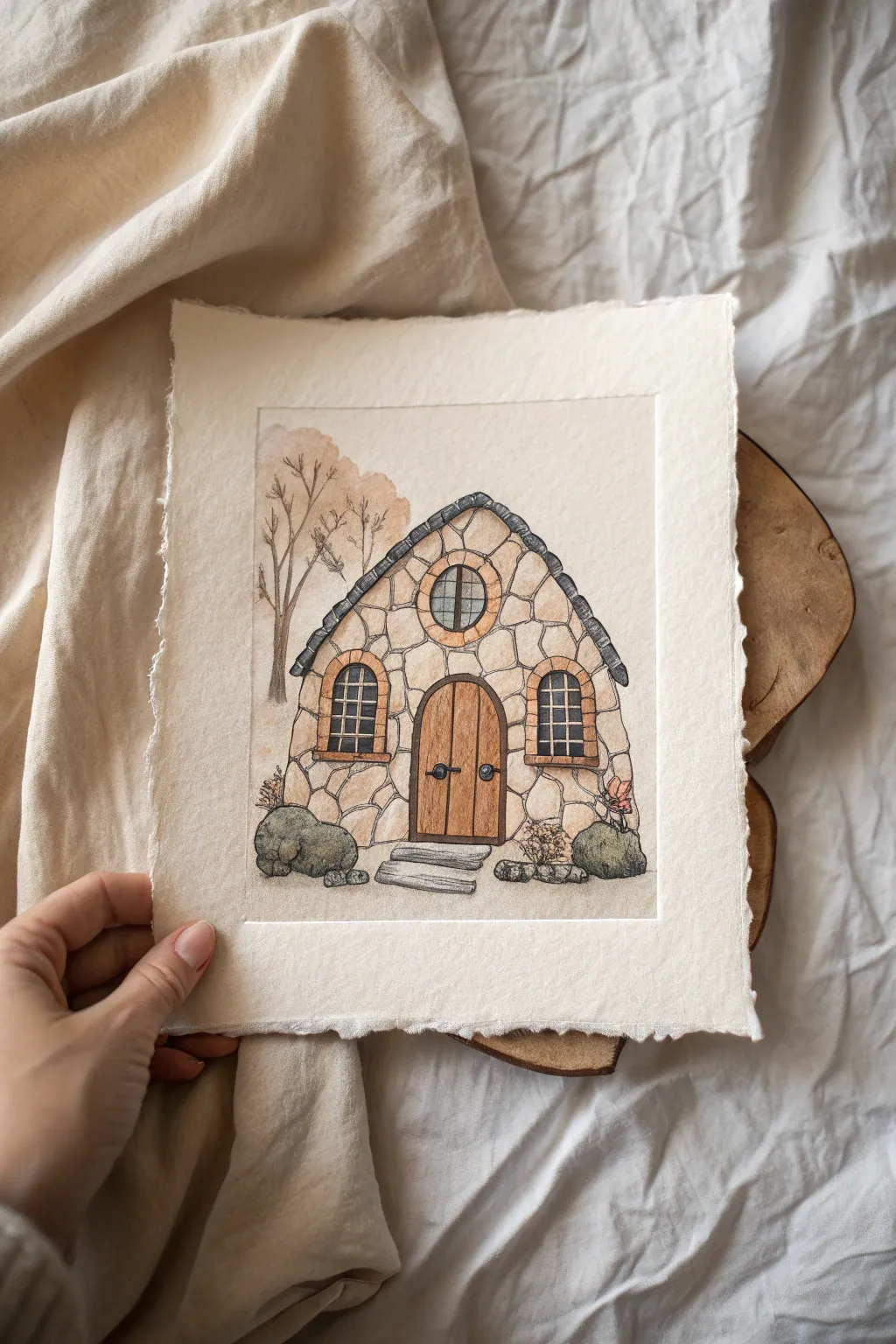
Capture the charm of a hidden woodland home with this detailed pen and watercolor illustration. This project features a delightful stone facade, rounded architectural details, and soft, earthy tones painted on beautiful deckle-edge paper.
Step-by-Step Guide
Materials
- Heavyweight watercolor paper (deckle-edge preferred, 300gsm)
- Fine liner pens (sizes 005, 01, and 03, waterproof/archival black ink)
- Watercolor paint set (earth tones: ochre, burnt sienna, sepia, payne’s gray, sap green)
- HB pencil and kneaded eraser
- Small round watercolor brushes (sizes 2 and 4)
- Ruler (optional, though freehand adds character)
- Cup of water and paper towels
Step 1: Sketching the Structure
-
Outline the main shape:
Begin by lightly sketching the main silhouette of the house using your HB pencil. Draw a triangle with slightly curved, bulging sides to create a soft, rounded A-frame shape rather than a rigid geometric triangle. -
Place the door and steps:
Center a large arch at the bottom for the door. At the base of the door, sketch two rectangular slabs to form the stone steps leading up to the entrance. -
Add window placements:
Sketch two smaller arched windows on either side of the door. Above the door, centered near the peak of the roof, draw a perfect circle for the attic window. -
Detail the stonework:
Lightly map out the concept of the stones. You don’t need to draw every single rock perfectly yet, but sketch irregular, interlocking shapes to fill the wall space around the windows and door.
Stone Texture Tip
Don’t color every stone perfectly uniform. Leave some white paper showing on the top edges of rocks to simulate sunlight hitting the textured surface.
Step 2: Inking the Lines
-
Outline the roof and frames:
Switch to your 03 fine liner. Carefully trace the roofline, adding small overlapping tiles along the edge. Bolt the door hinges and outline the thick wooden frames around the windows and door. -
Draw the window panes:
Using a finer 01 pen, draw the grid patterns inside the arched windows and the cross pattern in the circular attic window. Keep your hand relaxed so lines aren’t too stiff. -
Define the stone wall:
With the 01 pen, ink the irregular stone shapes you sketched earlier. Vary the size of the stones, making them fit together like a puzzle. Leave small gaps between them for mortar. -
Add wood grain texture:
Switch to the ultra-fine 005 pen. Draw vertical, slightly wavy lines on the door to simulate wood grain. Add tiny dots or scratches on the window frames for an aged texture. -
Ink the foliage:
Sketch the lumpy shapes of the mossy rocks at the base of the house using a jittery, textured line. Off to the left, draw the thin, bare branches of a dormant tree using the 005 pen. -
Erase pencil guides:
Once the ink is completely dry—give it a few minutes to be safe—gently erase all visible pencil marks with your kneaded eraser.
Level Up: Ivy Details
After the paint dries, use a green fine liner or colored pencil to draw tiny vines creeping up one side of the stone wall for an overgrown look.
Step 3: Watercolor Painting
-
Paint the door and frames:
Mix a warm golden-brown using yellow ochre and a touch of burnt sienna. Paint the door and the window frames. Let the color pool slightly at the bottom of the door for a natural shadow gradient. -
Wash the stone walls:
Create a very dilute wash of sand or cream color. Apply this over the entire stone wall area. While wet, drop in tiny touches of light grey or brown onto random individual stones to create variety. -
Darken the roof and windows:
Use a dark grey or charcoal mix (Payne’s gray works well) to paint the roof tiles. Use this same dark color for the window panes to make it look like the interior is dim and cozy. -
Color the base stones:
Mix a muted green with a bit of brown for the mossy rocks at the base. Paint them loosely, dabbing the brush to suggest texture. -
Add background atmosphere:
For the tree and background foliage on the left, use a very watery mix of light brown or sepia. Paint a soft, amorphous shape behind the inked tree branches to suggest distant autumn leaves. -
Final shading touches:
Once the base layers are dry, take a slightly darker brown mixed with grey. Paint thin shadow lines under the roof overhang and along the edges of the door frame to give the house dimension.
Now you have a charming little dwelling ready to be framed or gifted to a fantasy-loving friend
BRUSH GUIDE
The Right Brush for Every Stroke
From clean lines to bold texture — master brush choice, stroke control, and essential techniques.
Explore the Full Guide
Stone Pathway to the Door
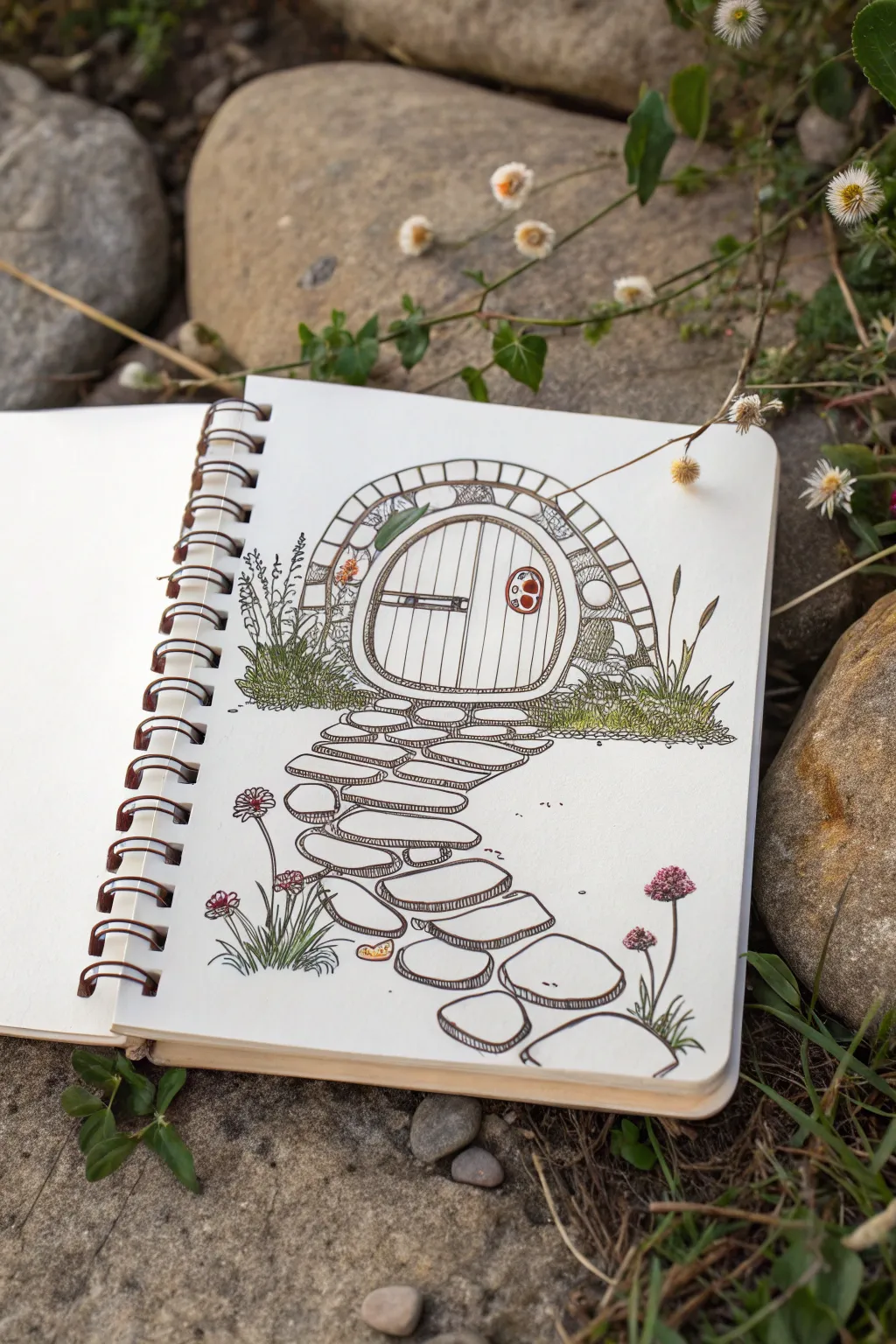
Transport yourself to a magical realm by sketching this charming round door and winding stone pathway. The illustration combines precise ink linework with soft, earthy washes of color to create a peaceful garden scene right in your sketchbook.
Step-by-Step
Materials
- Sketchbook with mixed media or heavyweight paper
- HB pencil and eraser
- Fine liner pens (0.1mm, 0.3mm, and 0.5mm, waterproof)
- Watercolor paints or alcohol markers (muted greens, browns, pinks, grey)
- Small round paintbrush (size 2 or 4)
- Ruler (optional)
Step 1: Penciling the Structure
-
Map out the door:
Begin by lightly sketching a large circle in the upper center of your page for the door frame. Inside this, sketch a slightly smaller concentric circle to create the width of the door jamb. -
Add the arch:
Draw an arched shape over the top half of the circle, extending slightly wider than the door itself. Subdivide this arch into stone blocks using brick-like patterns. -
Draft the pathway:
Starting from the bottom of the door frame, lightly sketch a winding path that widens as it comes toward the bottom of the page. Instead of straight lines, draw individual irregular stone shapes that fit together like a puzzle to form the walkway. -
Place the foliage:
Roughly indicate where clumps of grass will sit on either side of the door and the path. Add simple stems for the two flower clusters: one on the left and one on the right in the foreground.
Ink Smudging?
If your ink bleeds when painting, ensure your pens are labeled ‘waterproof’ or ‘archival.’ If not, do the watercolor wash first, let it dry completely, and then draw the ink lines on top.
Step 2: Inking the Details
-
Outline the wooden door:
Switch to your 0.3mm fine liner. Draw the vertical wood planks inside the inner circle. Add a horizontal bar for the hinge strap and a small circle for the knob plate. -
Ink the stone arch:
Trace your pencil lines for the archway stones. Use slightly wobbly lines rather than perfect curves to give the stones an aged, rustic texture. -
Define the pathway stones:
Ink the individual paving stones on the path. Give them rounded edges and vary their sizes. I like to add tiny cracks or chips to a few stones for extra realism. -
Add depth to the stones:
Using a 0.1mm pen, add hatching or stippling (small dots) to the bottom right edges of the pathway stones and the archway blocks to suggest shadow and volume. -
Draw grassy textures:
Use quick, upward flicking motions with your finest pen to create grass blades around the base of the door and the edges of the path. Vary the height and direction of the blades. -
Detail the flowers:
carefully ink the tall wildflowers in the foreground. Draw small, tight clusters for the flower heads and long, slender leaves at the base. -
Erase pencil guides:
Wait for the ink to become completely touch-dry, then gently erase all your underlying pencil sketches.
Level Up: Hidden Details
Add personality by hiding tiny details in the scene. Try drawing a small letter in the mailbox, a key hidden under a stone, or a tiny ladybug climbing one of the flower stems.
Step 3: Adding Color
-
Wash the grass:
Dilute an olive green paint or use a light green marker. Apply color loosely to the grassy areas around the door and path, letting some white paper show through for highlights. -
Tint the door:
Use a warm brown to color the wooden planks of the door. If using watercolor, keep the wash very sheer so the ink lines remain crisp and clear. -
Color the archway:
Apply a pale beige or grey wash to the stones in the arch. You can dab a darker grey into the corners of the stones while they are still damp to create natural shading. -
Highlight the metalwork:
Use a tiny dot of reddish-brown or dark grey for the door hinges and the round knob plate. -
Paint the flowers:
Using a dusty pink or mauve color, dab the paint onto the flower heads in the foreground. Keep the color concentrated at the top of the stems. -
Shade the path:
The pathway stones can be left largely white, or given a very faint grey wash. Add a slightly darker line of grey or brown along the right vertical edge of each stone to emphasize the 3D effect created by your hatching earlier.
Close your sketchbook knowing you’ve created a little doorway to adventure that you can revisit anytime
Hanging Lanterns on Branches

Capture the magic of an enchanted forest with this delicate watercolor and ink illustration. This project combines simple architectural lines with dangling lanterns and soft greenery to create a cozy, storybook atmosphere.
How-To Guide
Materials
- Spiral-bound mixed media or watercolor sketchbook
- Fine liner pens (sizes 005, 01, and 03, waterproof/archival black ink)
- Watercolor paints (shades of sap green, moss green, burnt sienna, yellow ochre, warm yellow)
- Small round watercolor brush (size 2 or 4)
- Pencil (HB) and eraser
- Gold gel pen or metallic watercolor (optional for details)
- Clean water and paper towel
Step 1: Sketching the Structure
-
Outline the house shape:
Begin with a light pencil sketch of the cottage. Draw a tall, narrow house shape with a steeply pitched roof. Add a slightly curved bottom line to ground the structure. -
Add architectural details:
Sketch a rounded arched door in the center. Add two tall, narrow arched windows on either side of the door and a smaller arched window in the triangular gable space of the roof. -
Draw the branch above:
Starting from the left edge of your paper, sketch a thick, curved branch reaching out over the house. Let it split into two or three thinner offshoots as it extends to the right. -
Position the lanterns:
Draw vertical lines hanging down from the branch tips. At the end of each line, sketch small cylindrical lanterns with domed tops and wire grid details. -
Add foliage elements:
Lightly pencil in leafy sprigs growing from the branch tips and some bushier greenery at the base of the house. Add tall stems with leaves flanking the cottage to frame it.
Step 2: Inking the Lines
-
Ink the main outlines:
Using a size 01 fine liner, trace over your pencil lines for the house walls, roof, and branch. Keep your hand loose to give the lines a slightly organic, hand-drawn feel rather than using a ruler. -
Detail the lanterns and windows:
Switch to a finer 005 pen for delicate details. Draw the grid lines inside the windows and the tiny wire cages of the hanging lanterns. Add small circles for the door knob and lantern tops. -
Texture the roof and wood:
Use the 005 pen to add texture. Draw scalloped lines or small U-shapes on the roof to mimic shingles. Add faint, broken lines on the branch to suggest bark texture. -
Refine the greenery:
Ink the leaves with simple, fluid strokes. I like to make sure the leaves closer to the branch tips are smaller for a natural look. Erase all pencil marks once the ink is fully dry.
Uneven Watercolors?
If your roof wash looks blotchy, re-wet the entire shape with clean water and drop in more pigment while it’s wet to let it spread evenly.
Step 3: Watercolor Washes
-
Paint the roof:
Mix a watery wash of soft teal or blue-green. Apply this to the roof area, letting the color pool slightly at the bottom edges of the shingles for natural shading. -
Color the leaves:
Using a sap green or moss green, carefully paint the leaves on the branch and the plants flanking the house. Use the tip of your brush to stay within the small shapes. -
Add contrast with bushes:
For the bushes at the very base of the house, use a darker, more saturated green to create depth and ground the illustration. -
Paint the branch:
Dilute a burnt sienna or light brown and paint the tree branch. Keep the color semi-transparent so the ink texture still shows through. -
Illuminate the windows:
Load your brush with warm yellow or yellow ochre. Paint the insides of the windows and the lantern cages to make them look like they are glowing with candlelight.
Glow Effect
Make the lanterns pop by leaving a tiny spec of white paper unpainted in the center of the yellow flame area.
Step 4: Final Touches
-
Add decorative dots:
Dip your brush tip or use a marker to place small yellow or gold dots scattered around the scene. These represent fireflies or magical floating lights. -
Detailed patterns:
Once the house wall is dry, you can use your finest pen to draw a delicate pattern or decorative trim just under the roofline for extra charm. -
Ground shadow:
Apply a very faint wash of grey or diluted green underneath the house and bushes to anchor them to the ground so they aren’t floating in space.
Now you have a charming little fairy dwelling ready to brighten up your sketchbook pages

PENCIL GUIDE
Understanding Pencil Grades from H to B
From first sketch to finished drawing — learn pencil grades, line control, and shading techniques.
Explore the Full Guide
Crooked Chimney and Curling Smoke
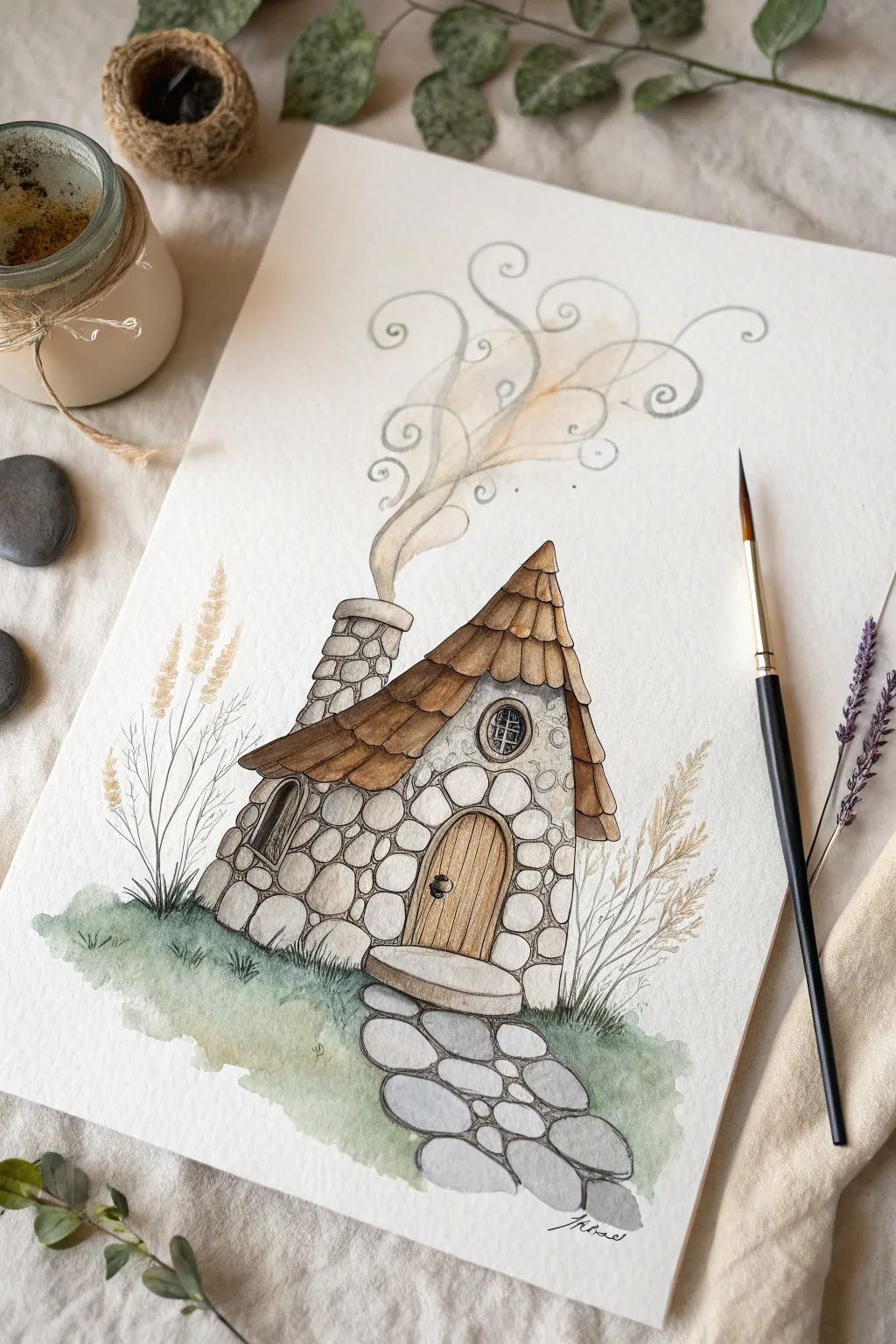
Capture the charm of a hidden woodland dwelling with this delicate watercolor and ink illustration. You’ll combine structured pen work with soft, flowing washes to bring this crooked chimney and its magical curling smoke to life.
Step-by-Step
Materials
- Hot press watercolor paper (smooth texture preferred)
- Fine liner pens (sizes 005, 01, and 03)
- Watercolor paints (Cobalt Blue, Burnt Sienna, Yellow Ochre, Sepia)
- Round watercolor brush (size 4 or 6)
- Pencil (HB) and kneadable eraser
- jar of water
- Paper towels
Step 1: Sketching and Inking
-
Sketch the basic shapes:
Begin with a light pencil sketch. Draw a sloping triangle for the roof and a rounded, bulbous shape for the main stone structure. Let the lines be slightly wonky and organic. -
Add architectural details:
Sketch the crooked chimney on the left side, slightly tilting away from the house. Add an arched door at the center and a small circular window near the roofline. -
Define the stonework:
Lightly map out large, rounded stones for the walls and the chimney. Vary their sizes, fitting smaller pebbles into the gaps between larger rocks for a natural look. -
Sketch the smoke swirls:
Draw loose, decorative swirls rising from the chimney. Think of these as ornamental flourishes rather than realistic clouds, with spiraling ends reaching upward. -
Ink the main outlines:
Using an 03 fine liner, trace the main outline of the house, the roof, and the pathway stones. Use a shaky, deliberate hand to give the lines a rustic texture. -
Detail the stones and shingles:
Switch to an 01 pen to ink the individual wall stones and the wooden roof shingles. Don’t close every shape perfectly; broken lines add character. -
Add fine texture:
With an 005 pen, add wood grain texture to the door and tiny stippling dots to the stones to suggest roughness. Ink the delicate swirls of smoke with smooth, confident curves.
Ink Bleed Alert
Check that your pens are waterproof before painting. If not, outline everything at the very end after the paint dries to avoid smearing black ink into your colors.
Step 2: Watercolor Washes
-
Paint the roof:
Mix Burnt Sienna with a touch of Sepia for a warm brown. Apply a wash to the roof shingles, dropping in slightly darker pigment at the shadowed edges of each shingle while wet. -
Create the stone color:
Dilute a mix of Cobalt Blue and a tiny bit of Burnt Sienna to create a cool, pale grey. Wash this over the stone walls and chimney, keeping the center of the stones lighter. -
Warm up the door:
Use a translucent wash of Yellow Ochre for the wooden door. Once dry, deepen the color around the edges and the door frame. -
Paint the pathway:
Paint the stones leading to the door with a slightly darker version of your grey mix. I like to vary the intensity on different stones so they don’t look uniform. -
Add the grassy base:
Mix a muted green using Cobalt Blue and Yellow Ochre. Paint a loose, jagged wash at the base of the house, flicking the brush upward to suggest grass blades. -
Paint the decorative smoke:
Using very diluted, watery paint (a mix of grey and faint ochre), gently fill in the smoke shapes. Keep this extremely transparent to maintain an airy feel. -
Enhance the foliage:
Add tall, dried grass stalks on either side of the house using fine strokes of Yellow Ochre mixed with brown. Keep these lines wispy and delicate.
Swirly Confidence
Draw the smoke swirls from your shoulder, not your wrist. Practicing the motion in the air a few times helps you get a smooth, non-jittery curve.
Step 3: Final Touches
-
Deepen shadows:
Once everything is fully bone-dry, use your smallest brush to add thin shadows under the roof eaves and the door frame using a Sepia wash. -
Add highlights:
If any highlights were lost, you can use a white gel pen to add tiny accents to the window glass or the top of the curve on the door handle. -
Final ink reinforcement:
Go back over any lines specifically around the base or the darkest shadows with your 03 pen if the watercolor has dulled them too much.
Now you have a charming little fairy home ready to frame or gift to a friend
Mini Fence and Garden Gate
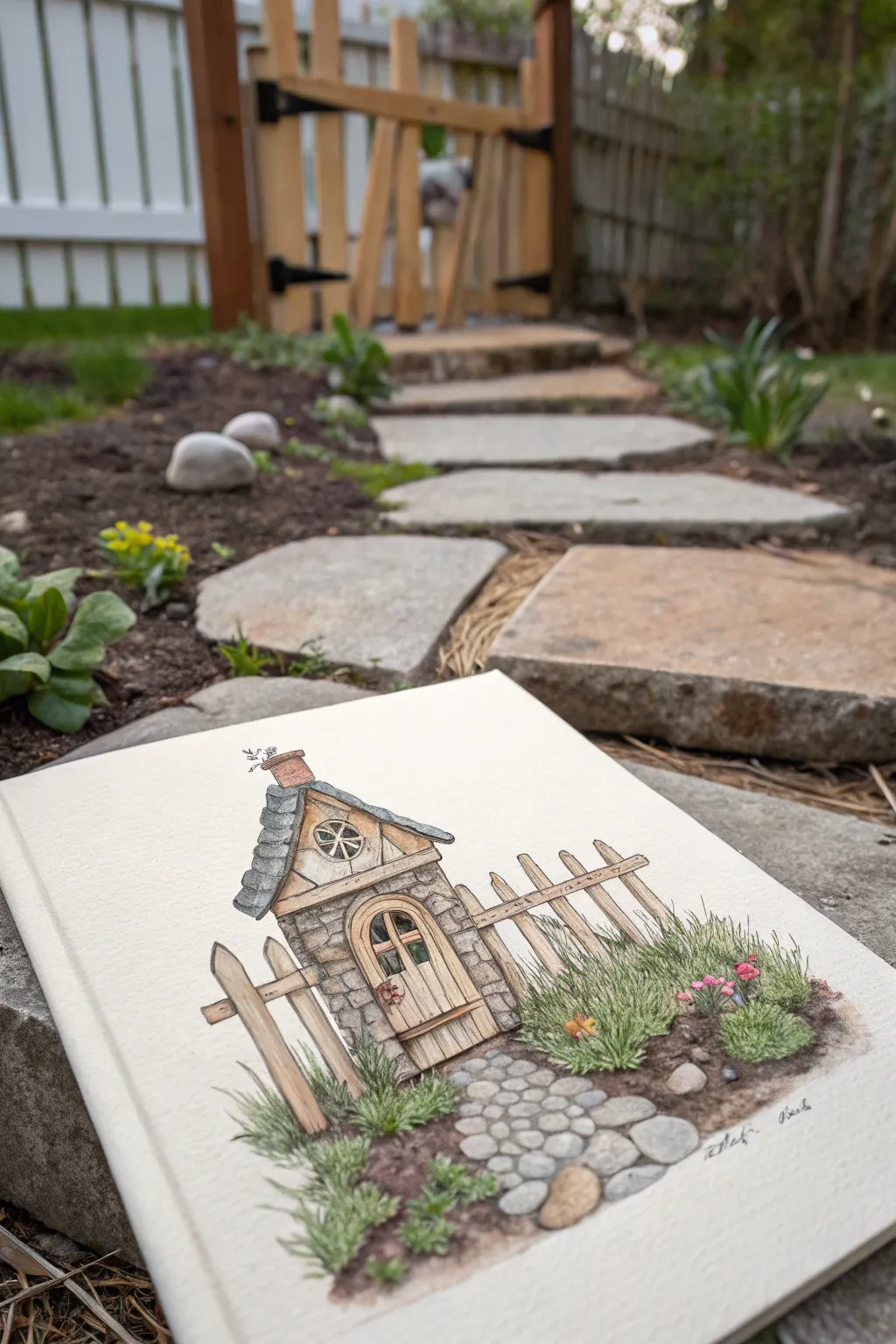
Capture the charm of a hidden world with this delicate illustration of a stone fairy cottage nestled behind a rustic picket fence. This project combines precise ink lines with soft watercolor washes to create an inviting, storybook atmosphere perfect for a sketchbook or greeting card.
Detailed Instructions
Materials
- Heavyweight watercolor paper or mixed media sketchbook (smooth or cold press)
- Waterproof technical pen (0.1mm and 0.3mm nibs, black or sepia)
- Watercolor paints (pan set or tubes)
- Small round watercolor brushes (size 0, 2, and 4)
- Graphite pencil (HB or 2H) and kneaded eraser
- jar of clean water
- Paper towels
Step 1: Planning and Sketching
-
Rough layout:
Begin with a light pencil sketch to place your composition. Draw a central rectangle for the cottage facade and a triangle on top for the roof line. Don’t worry about details yet; just focus on centering the structure on your page. -
Define the door:
Sketch a prominent arched doorway in the center of the cottage. Make it slightly oversized to give it a fantastical feel, then frame it with stone blocks. -
Add the fence line:
Draw the picket fence extending from both sides of the house. Angle the fence posts slightly outward rather than perfectly vertical to give them a handmade, rustic appearance. Vary the heights of the pickets slightly. -
Garden details:
Sketch low clumps of grass and foliage hugging the fence line and the base of the cottage. Outline a winding stone path leading up to the door.
Step 2: Inking the Structure
-
Outline the stonework:
Using a 0.1mm waterproof pen, ink the main structural lines. For the stone walls, draw irregular, rounded rectangular shapes, leaving small gaps between them for mortar. -
Detail the wood:
Ink the door and fence posts. Add vertical lines inside the door shape to suggest wood planks. On the fence rails, add tiny knots or wood grain lines for texture. -
Roof texture:
Draw the roof tiles using overlapping ‘U’ shapes or irregular rectangles. Add a small chimney on the left slope with a tiny wisp of smoke or a sprout of greenery coming out. -
Ground cover:
Use quick, upward flicks of the pen to ink the grass clumps. Don’t outline every blade; just suggest the texture at the base and tips. Ink the individual stones of the garden path. -
Cleanup:
Allow the ink to dry completely, then gently erase all visible pencil marks with your kneaded eraser.
Bleeding Ink?
If your black lines smudge when you paint, your pen isn’t fully waterproof. Test pens on scrap paper first, or do the painting first and add ink lines only after the paper is 100% dry.
Step 3: Adding Color
-
Base wash for stones:
Mix a watery, pale grey-brown (try Burnt Umber mixed with a touch of Ultramarine Blue). Paint a light wash over the stone walls and the path stones, keeping it uneven to create natural variation. -
Wooden warmth:
Using a diluted Yellow Ochre or Raw Sienna, paint the door, the door frame, and the wooden fence. Let the color pool slightly at the bottom of the planks for shading. -
Roof painting:
Paint the roof tiles with a cooler grey or slate blue tone. Once dry, dab a slightly darker shade on the bottom edge of some tiles to give them dimension. -
Greenery base:
Apply a light wash of Sap Green to the grass areas. While the paint is still wet, drop in tiny touches of a darker green near the roots of the grass clumps. -
Floral accents:
Using the tip of your size 0 brush, dot in tiny pink or red flowers among the green foliage on the right side. Keep these loose and organic.
Magical Moss
Mix a tiny amount of white gouache with light green watercolor. While dry, stumble this opaque mix onto the roof tiles and stone crevices to create realistic, fuzzy moss patches.
Step 4: Final Details & Shading
-
Deepening shadows:
Mix a darker grey-brown. Paint thin shadow lines under the roof eaves, under the window ledge, and in the cracks between the path stones. -
Refining the wood:
Use a fine brush with Burnt Umber to accentuate the wood grain on the door and fence. I prefer to use a ‘dry brush’ technique here for a weathered look. -
Window glass:
Paint the small circular window with a very pale blue. Leave a tiny sliver of white paper unpainted to represent a reflection. -
Grounding the scene:
Add a wash of dark brown earth tone around the base of the grass and between the path stones to ground the structure and add contrast. -
Final touches:
Once everything is bone dry, determine if any ink lines need re-strengthening, particularly around the main outline of the cottage.
Now you have a charming little dwelling ready to welcome imaginary inhabitants


Crystal Cave Fairy House
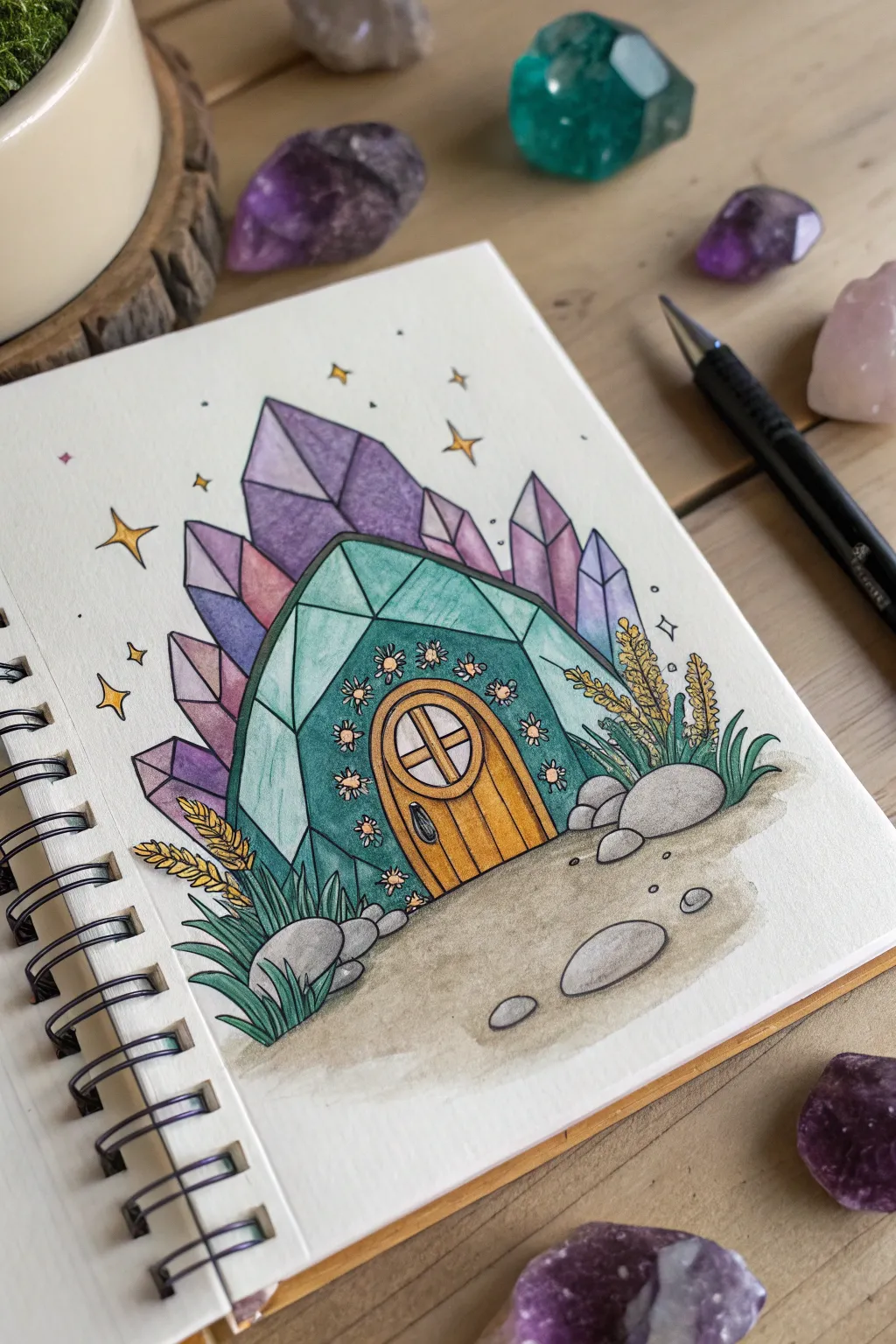
Blend geology and fantasy with this charming illustration of a fairy home built directly into a crystal cluster. This tutorial guides you through sketching the geometric shapes, layering vivid colors, and adding magical details to create a cozy, crystallized abode.
Step-by-Step Tutorial
Materials
- Sketchbook with mixed media or heavy drawing paper
- Pencil (HB or 2H)
- Eraser
- Fine liner pens (black, sizes 0.1 and 0.3)
- Alcohol-based markers or watercolors (purple, teal/aqua, warm yellow/gold, brown, grey)
- White gel pen
Step 1: Structural Sketching
-
Outline the main geode:
Start by drawing a large, rounded-off pentagon shape in the center of your page. This will be the main ‘body’ of the house. Don’t make the lines perfectly straight; give them a slight bowed curve to suggest volume. -
Add the crystal facets:
Inside your main shape, draw a smaller, similar shape for the front face of the house. Surround this inner face with geometric triangles and trapezoids connecting to the outer edge to create the faceted crystal look. -
Place the door:
In the center of the front face, sketch an arched doorway. Draw a thick frame around it for the door casing, and add a small circle window in the upper third. -
Background crystals:
Behind the house, sketch tall, jagged spikes rising up. Make them vary in height and width, clustering them tightly so they look like a natural formation growing around the home. -
Grounding elements:
Draw loose, uneven ovals at the base of the house for rocks. Add tufts of grass poking out from behind the rocks and some wheat-like stalks on the sides to frame the structure.
Uneven Color?
If your marker strokes look streaky, try coloring in small circles rather than straight lines, or switch to alcohol markers which blend seamlessly together.
Step 2: Inking the Lines
-
Main outlines:
Using a 0.3mm fine liner, trace over your pencil lines. Use confident strokes for the crystals to keep edges sharp. For the wooden door and rocks, you can be a bit sketchier to imply texture. -
Detail work:
Switch to a finer 0.1mm pen. Add wood grain lines to the door, small circles around the door frame (these will be flowers later), and subtle cracks or texture lines on the rocks. -
Clean up:
Once the ink is completely dry—give it a minute to avoid smudges—gently erase all your underlying pencil sketches.
Make it Sparkle
Once the drawing is dry, apply a very thin layer of clear glitter glue or metallic watercolor paint over the crystal facets for a genuine shimmer effect.
Step 3: Adding Color
-
Base layer for the house:
Color the faceted walls of the house with a light teal or mint green. I prefer to color each geometric facet individually to control the saturation, rather than washing over the whole thing at once. -
Deepening the facets:
Go back over the edges of the geometric shapes with a darker teal or add a second layer of marker. This creates a shadow effect that makes the crystal look three-dimensional. -
Background crystals:
Color the tall spikes behind the house in shades of lavender and purple. Use a lighter purple for the tops and a darker shade near the base to add weight and depth. -
Wooden door:
Fill in the door and its frame with a warm golden-brown or mustard yellow. If you have a darker brown, add tiny strokes over the wood grain lines you inked earlier. -
Ground and nature:
Color the rocks light grey. Use a sandy beige for the dirt ground, fading it out softly at the edges. Fill the grass with deep green and the wheat stalks with yellow.
Step 4: Magical Finishes
-
Flower details:
Color the small circles around the door white or pale yellow. Using your fine liner, add tiny stems or leaves between them to define them as a climbing floral vine. -
Atmospheric stars:
Draw small four-pointed stars and dots floating around the roof and crystals using yellow or gold. This adds that essential whimsical fairy vibe. -
Highlights:
Use a white gel pen to add sharp highlights. Place straight white lines along the edges of the crystal facets and small dots on the rocks and door handle to make everything shine.
Now your crystal fairy house is complete and ready to welcome its tiny inhabitants
Have a question or want to share your own experience? I'd love to hear from you in the comments below!