
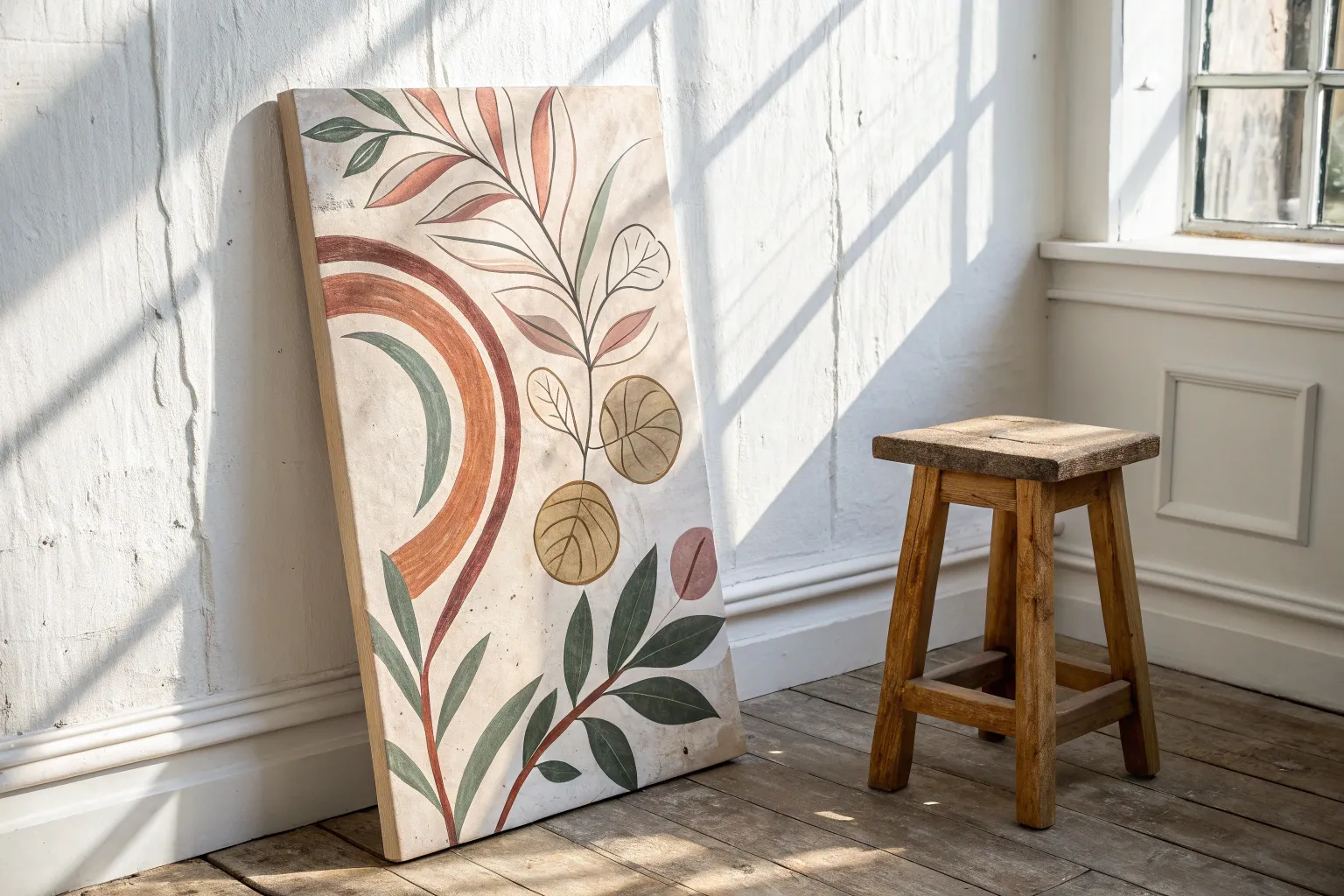
Staring at a pristine white surface can feel equal parts exciting and intimidating, but the right inspiration is often all you need to pick up a brush with confidence. Whether you want to create a calming botanical piece for your bedroom or experiment with bold textures for the living area, these creative prompts will help you unleash your inner artist.
The Classic Ombré Sunset Silhouette
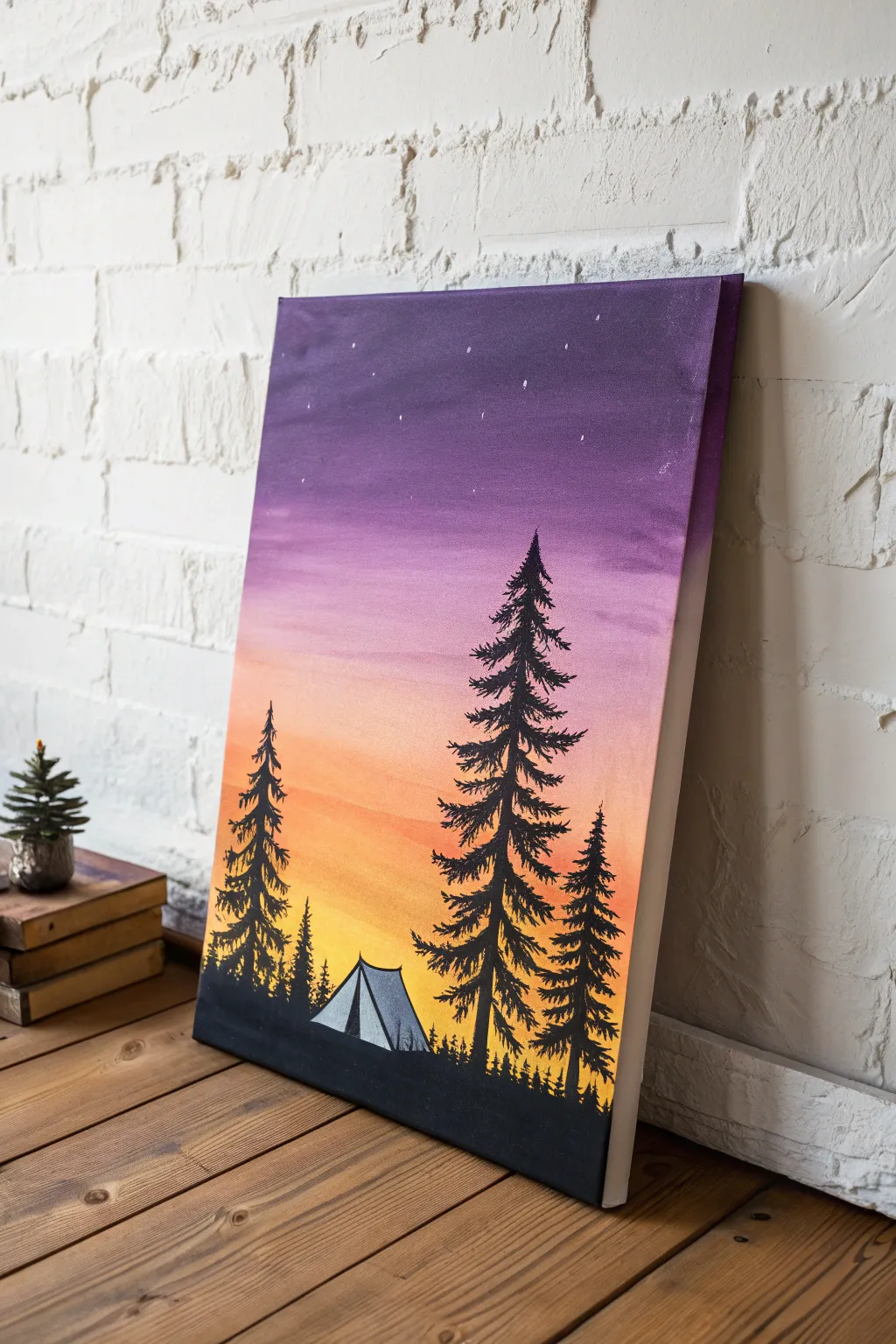
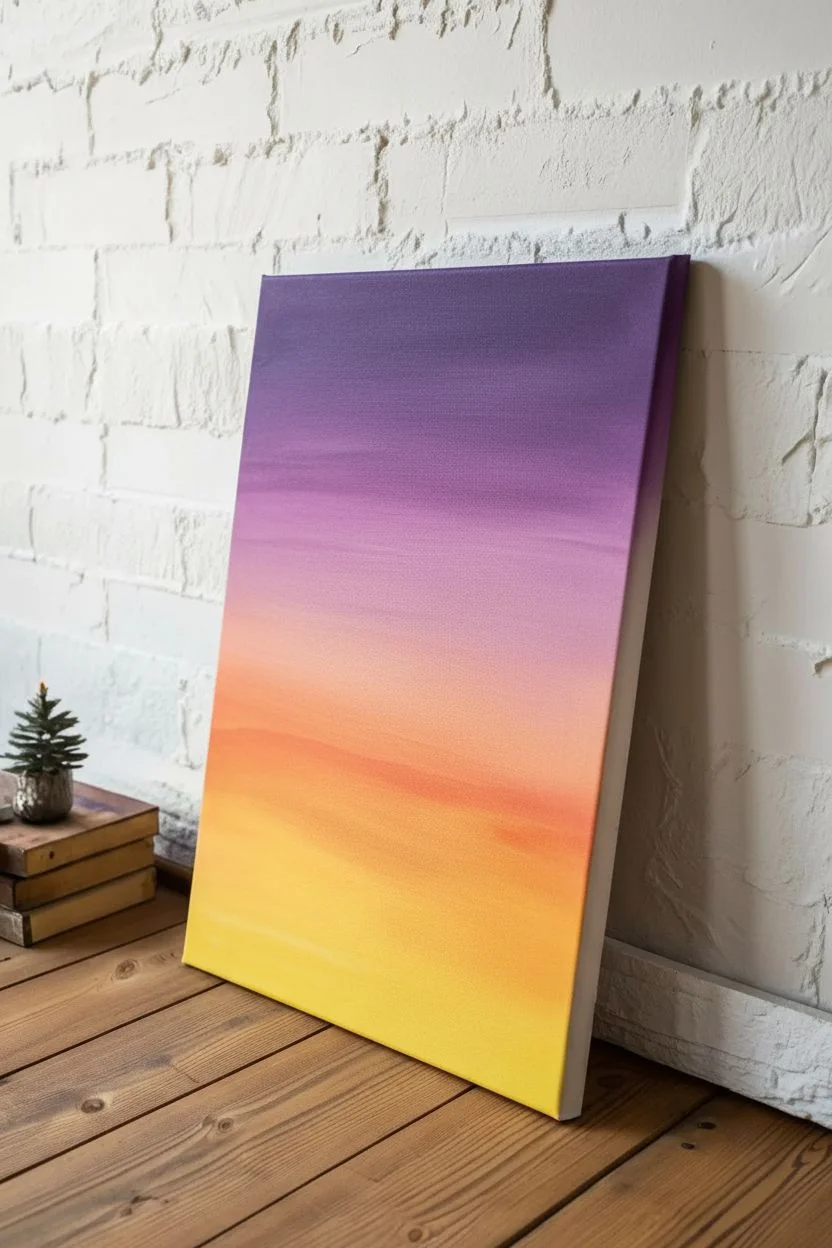
Capture the serenity of the great outdoors with this vibrant gradient landscape featuring a classic camping silhouette. This project focuses on mastering wet-on-wet blending for the sky and steady brush control for the crisp black details.
Step-by-Step Guide
Materials
- Stretched canvas (e.g., 11×14 inches)
- Acrylic paints: Deep Violet, Magenta, Cadmium Orange, Lemon Yellow, Mars Black, Titanium White
- Large flat paintbrush (1-inch width)
- Small round detail brush (size 0 or 1)
- Medium flat brush
- Palette and water cup
- Paper towels
Step 1: Painting the Ombré Sky
-
Prepare the palette:
Squeeze out generous amounts of violet, magenta, orange, and yellow paint onto your palette so they are ready for rapid blending. -
Start with purple:
Using the large flat brush, apply a horizontal band of deep violet across the top quarter of the canvas. -
Add the pink layer:
Without washing the brush, pick up the magenta paint and apply it directly below the violet strip. -
Blend the transition:
Move the brush back and forth horizontally where the colors meet to create a soft, blurry transition between the purple and pink. -
Clean and continue:
Wipe the excess paint off your brush firmly with a paper towel, then load it with orange paint. -
Blend the orange:
Paint the next section down, blending the orange upward into the bottom edge of the pink layer until smoother. -
Finish with yellow:
Fill the remaining bottom space with lemon yellow, blending it gently into the orange above to complete the sunset gradient. -
Let it dry:
Allow the background to dry completely to the touch; I prefer to wait about 20 minutes to ensure the black silhouette lines stay crisp. -
Add starlight:
Dip the very tip of your smallest brush or a toothpick into white paint and gently dot a few stars into the upper purple section.
Pro Tip: Mist it Up
Keep a spray bottle of water handy. If your acrylics dry too fast while blending the sky, a very fine mist directly on the canvas helps keep the paint workable for smoother gradients.
Step 2: Creating the Silhouettes
-
Establish the ground:
Switch to pure black paint and the medium flat brush to paint a solid, slightly uneven horizon line across the bottom of the canvas. -
Base the tent:
Mix a light grey using white with a tiny dot of black, then paint a small triangular prism shape resting on the ground line on the left side. -
Outline the tent:
Using the fine detail brush and black paint, carefully outline the tent and draw a vertical line down the center to define the flaps. -
Map the trees:
With the detail brush and black paint, draw a thin vertical line where you want the trunk of the largest pine tree to stand on the right side. -
Detail the branches:
Starting at the top of tone trunk, use a dabbing or tapping motion to create jagged branches, making them wider as you move down the tree. -
Add varying trees:
Repeat the tree creation process for two smaller trees to the right of the main one, and a medium-sized tree on the left side. -
Anchor the trees:
Thicken the clear trunk space at the very bottom of the trees where they meet the ground to show stability. -
Add grasses:
Switch back to the fine liner brush and flick tiny, quick upward strokes along the black ground line to mimic wild grass blades. -
Final touchups:
Check for any gaps in the black paint and fill them in to ensure the silhouette is solid and opaque.
Level Up: Lantern Light
Mix a tiny drop of yellow into the white paint used for the tent. This creates a warm glow, making it look like there is a lantern lit inside the tent for the evening.
Hang your masterpiece on the wall and enjoy the peaceful vibe of a permanent sunset.
Geometric Patterns with Tape Resist
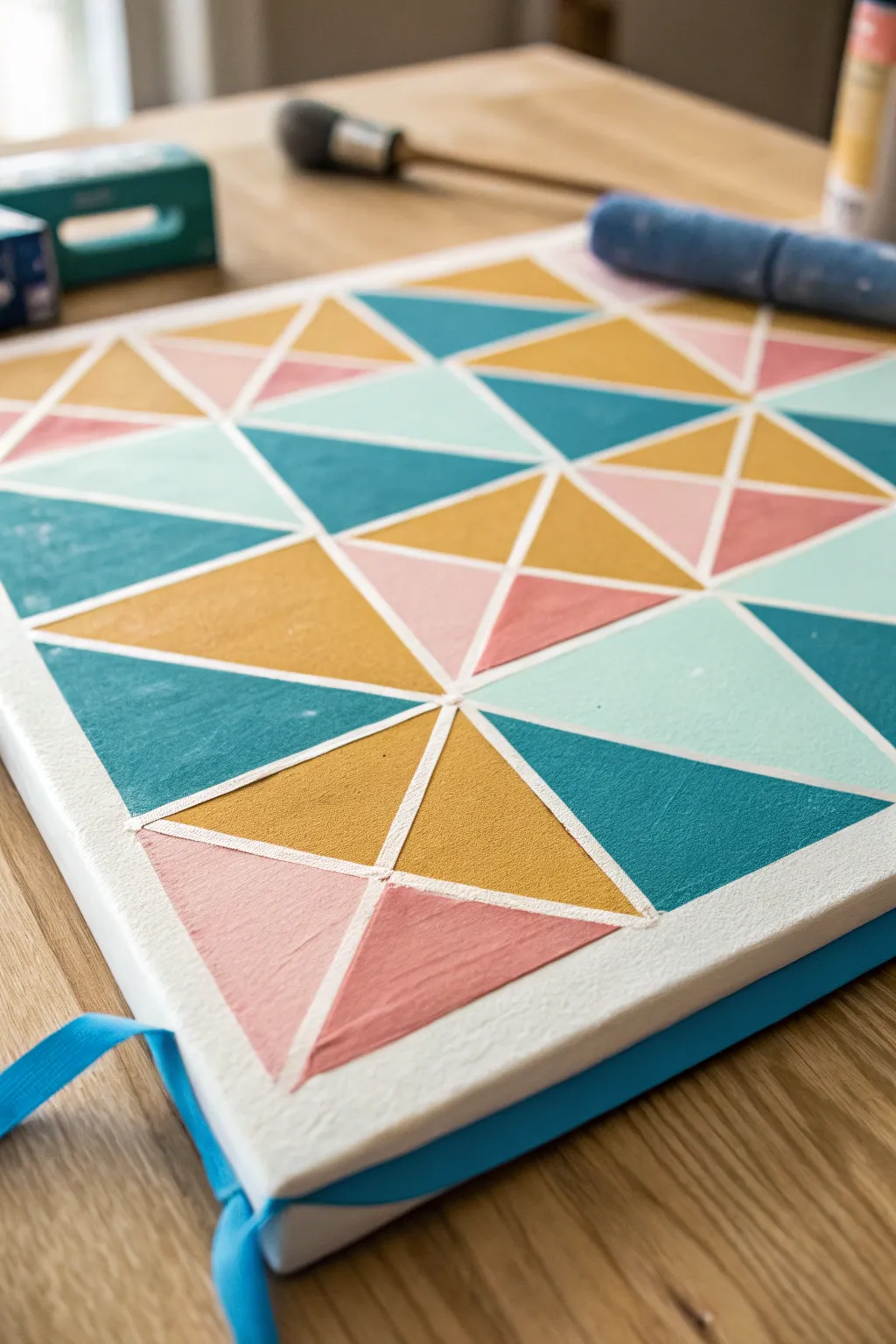
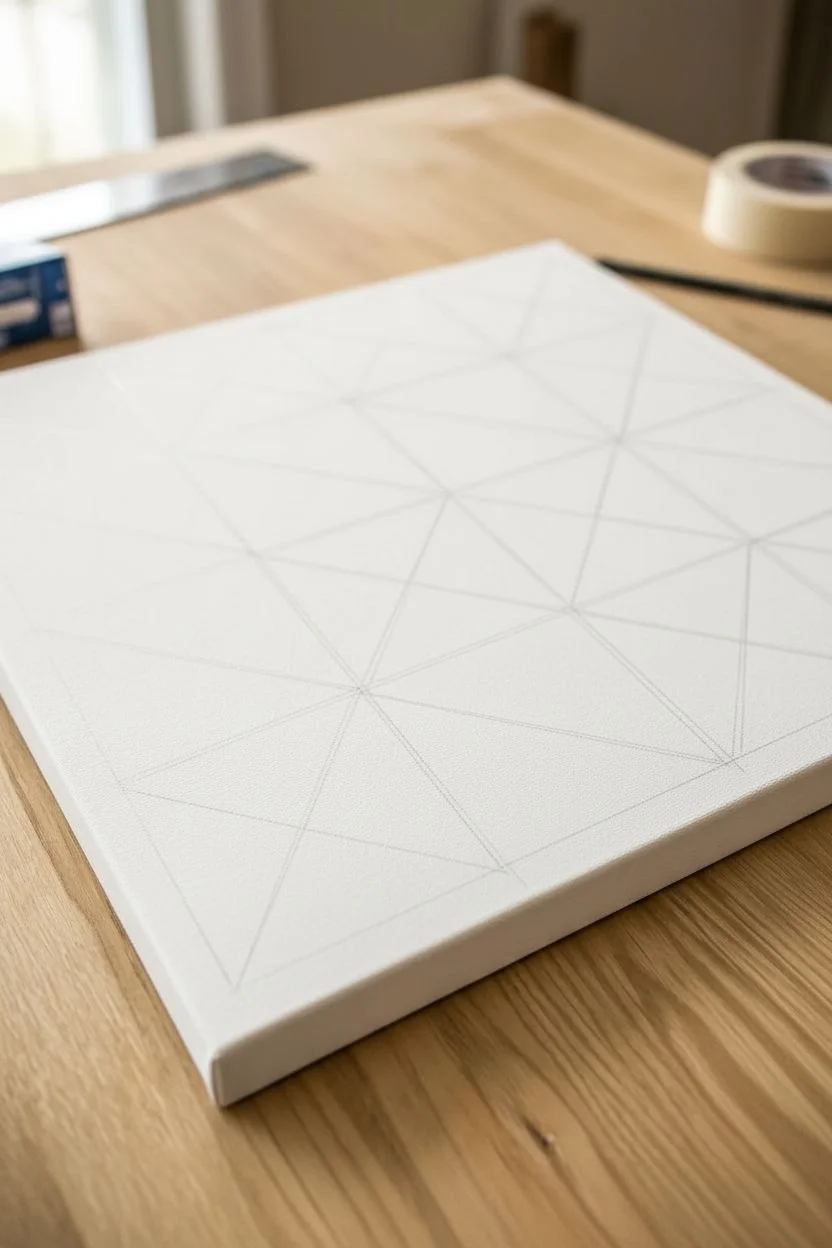
Transform a plain canvas into a vibrant modern art piece using nothing but paint and masking tape. This method creates satisfyingly crisp lines and allows you to play with a bold palette of mustard, teal, pink, and mint.
Detailed Instructions
Materials
- Square stretched canvas (e.g., 12×12 or 16×16 inches)
- Acrylic paints (White, Teal, Mustard Yellow, Dusty Pink, Mint Green)
- Painter’s tape (0.25 inch width recommended for best proportions)
- Ruler or yardstick
- Pencil
- Flat paintbrushes (medium width)
- Credit card or burnishing tool
- Palette or paper plate
Step 1: Planning the Grid
-
Prime the surface:
If your canvas isn’t pre-primed, apply a coat of white gesso or acrylic paint to create a bright, even base. Let this dry completely. -
Measure the squares:
Using your ruler, measure and mark even intervals along all four sides of the canvas to create a grid (for example, a 3×3 or 4×4 layout depending on canvas size). -
Sketch the guides:
Lightly connect your marks with a pencil to form a grid of squares. Don’t worry about the lines being perfect; they are just guides for the tape. -
Add diagonal guides:
Inside each penciled square, lightly draw an ‘X’ from corner to corner, dividing every square into four distinct triangles.
Crisp Line Secret
Don’t skip the ‘sealing’ step with white paint! Painting the base color over the tape edges first creates a barrier that prevents your colored paints from bleeding underneath.
Step 2: Taping the Pattern
-
Apply vertical tape:
Place strips of painter’s tape along your vertical pencil lines first, extending the tape over the edges of the canvas to hold it secure. -
Apply horizontal tape:
Lay down the horizontal tape strips, crossing over the vertical ones. Run your finger over the intersections to secure them. -
Tape the diagonals:
Carefully place tape along the diagonal ‘X’ lines you drew earlier. This creates the intricate geometric triangle look. -
Burnish the edges:
Use the edge of a credit card or a spoon to rub firmly over all the tape strips. I find this step essential for ensuring the tape bonds tightly to the canvas texture. -
The sealing trick:
Paint a thin layer of white acrylic paint directly over the tape edges. This fills any microscopic gaps with white paint instead of color, guaranteeing razor-sharp lines later. -
Let the seal dry:
Wait 15 to 20 minutes for the white sealing layer to become fully dry to the touch.
Sticky Situation?
If the tape pulls up paint when you peel it, your paint layer might be too thick. Try scoring the edge of the tape very lightly with a craft knife before peeling to break the seal.
Step 3: Painting and Reveal
-
Plan your palette:
Squeeze your teal, mustard, pink, and mint paints onto a palette. It helps to have a rough idea of color distribution before you start. -
Start with Teal:
Paint selected triangles with your dark teal color. Try to space them out so no two teal shapes touch each other directly. -
Apply Mustard tones:
Fill in another set of triangles with the mustard yellow. This warm tone provides a great contrast to the cool teal. -
Add soft colors:
Fill the remaining spaces with dusty pink and mint green. I like to step back every few minutes to ensure the color balance feels right. -
Second coat:
Acrylics can be translucent, especially the lighter colors. Apply a second coat to any triangles that look streaky or uneven. -
Remove tape while damp:
Wait until the paint is ‘touch dry’ but not fully cured (about 30 minutes). Slowly peel the tape at a 45-degree angle, starting with the diagonals. -
Remove grid tape:
Continue peeling the horizontal and vertical tape strips. Reveal the crisp white lines separating your colorful triangles. -
Clean up:
If there are any tiny bleeds, use a small liner brush with white paint to touch up the dividing lines. -
Erase markings:
Once the painting is 100% dry, gently use an eraser to remove any visible pencil marks that might be showing in the white intersections.
Hang your new geometric masterpiece in a well-lit spot to enjoy the modern pop of color and structure
Dreamy Pastel Cloudscapes
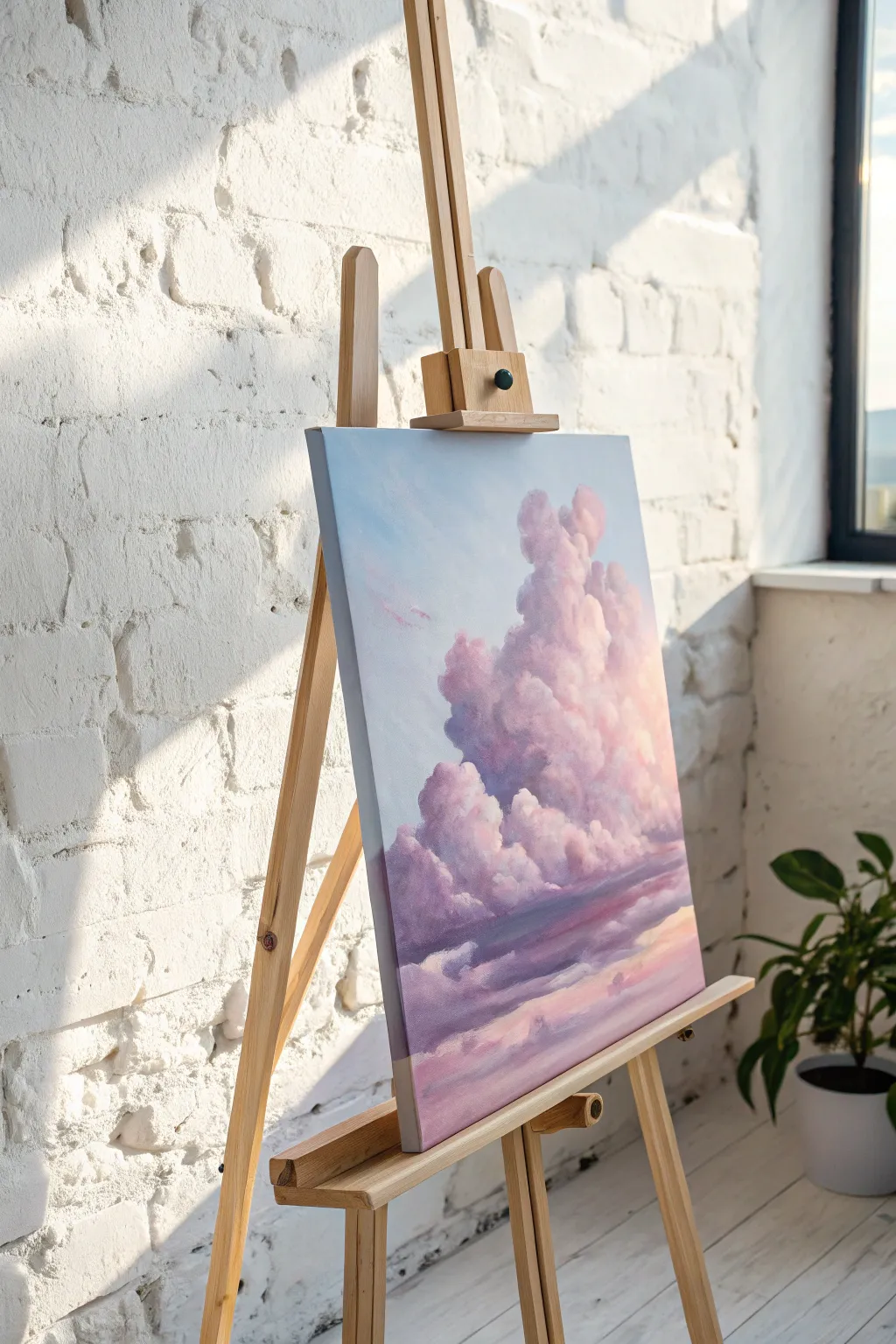
Capture the ethereal beauty of towering cumulus clouds bathed in sunset light with this vertical acrylic painting project. You will learn to layer soft pastels to create a dimensional, fluffy cloud formation that feels peaceful and dreamy.
Step-by-Step Guide
Materials
- Stretched canvas (rectangular vertical orientation, e.g., 16×20″)
- Acrylic paints (Titanium White, Ultramarine Blue, Alizarin Crimson, Cadmium Yellow, Dioxide Purple)
- Large flat brush (for the background)
- Filbert brushes (sizes 6 and 10)
- Small round brush (for details)
- Blending brush (soft synthetic or mop brush)
- Palette and water cup
- Paper towels
Step 1: Setting the Atmosphere
-
Mix the sky color:
Combine a large amount of Titanium White with a tiny dot of Ultramarine Blue to create a very pale, crisp sky blue. -
Apply the gradient:
Paint the entire canvas with this pale blue. For added depth, mix a slightly darker blue for the top left corner and blend it downwards into the paler shade. -
Dry completely:
Ensure the background is 100% dry before proceeding. This prevents the cloud colors from mixing with the sky and becoming muddy.
Muddy Colors?
If your pink highlights turn grey when touching the shadows, stop! Let the purple layer dry completely before applying the warm highlight colors on top.
Step 2: Building the Cloud Structure
-
Mix a shadow tone:
Create a soft lavender by mixing White, a touch of Dioxide Purple, and a speck of Alizarin Crimson. -
Block in the shape:
Using a filbert brush, map out the large, towering cumulus shape. Keep the composition weighted to the right side, rising vertically like a mountain. -
Add horizontal strata:
Paint horizontal bands of clouds near the bottom of the canvas using a slightly darker purple-grey mix to ground the composition. -
Establish volume:
Identify the ‘cauliflower’ bumps of the cloud. Paint the shadowed undersides of these bumps with your lavender mix, focusing on the left side of the forms. -
Deepen the shadows:
Mix a deeper violet and apply it to the darkest crevices between the cloud billows to create separation and 3D form.
Cloud Texture
Use a round brush and apply paint in a circular, dabbling motion to mimic the bubbly, organic texture of cumulus clouds naturally.
Step 3: Illuminating the Clouds
-
Mix the sunset glow:
Clean your brush and mix a warm peach tone using White, a little Cadmium Yellow, and a touch of Alizarin Crimson. -
Apply initial highlights:
Paint the top and right-facing curves of the cumulus clouds where the sunlight would hit. Overlap the shadow areas slightly for a smooth transition. -
Introduce pink tones:
Modify your peach mix with a bit more Crimson to make a soft pink. Apply this to the transition zone between the bright highlights and the purple shadows. -
Blend the transitions:
While the paint is tacky, use a dry, soft brush to gently pat the areas where pink meets purple to soften the harsh lines.
Step 4: Fluffing and Refining
-
Brightest peaks:
Use almost pure Titanium White with a thick consistency to dab onto the very highest points of the cloud tower. -
Scumble the edges:
I like to take a nearly dry brush with a tiny bit of white and scrub it safely in circles along the outer edges to effect a wispy, vaporous look. -
Soften the base:
Use a horizontal sweeping motion to blend the bottom cloud strata, ensuring they look like flat layers rather than puffy balls. -
Add floating wisps:
Paint tiny, detached fragments of cloud floating away from the main mass into the blue sky to add movement. -
Final glaze:
If needed, apply a very watery wash of pink over the bottom section to unify the colors once the underlayers are dry.
Step back and admire your soft, illuminated sky that brings a sense of calm to any room.
Starry Galaxy Night Skies
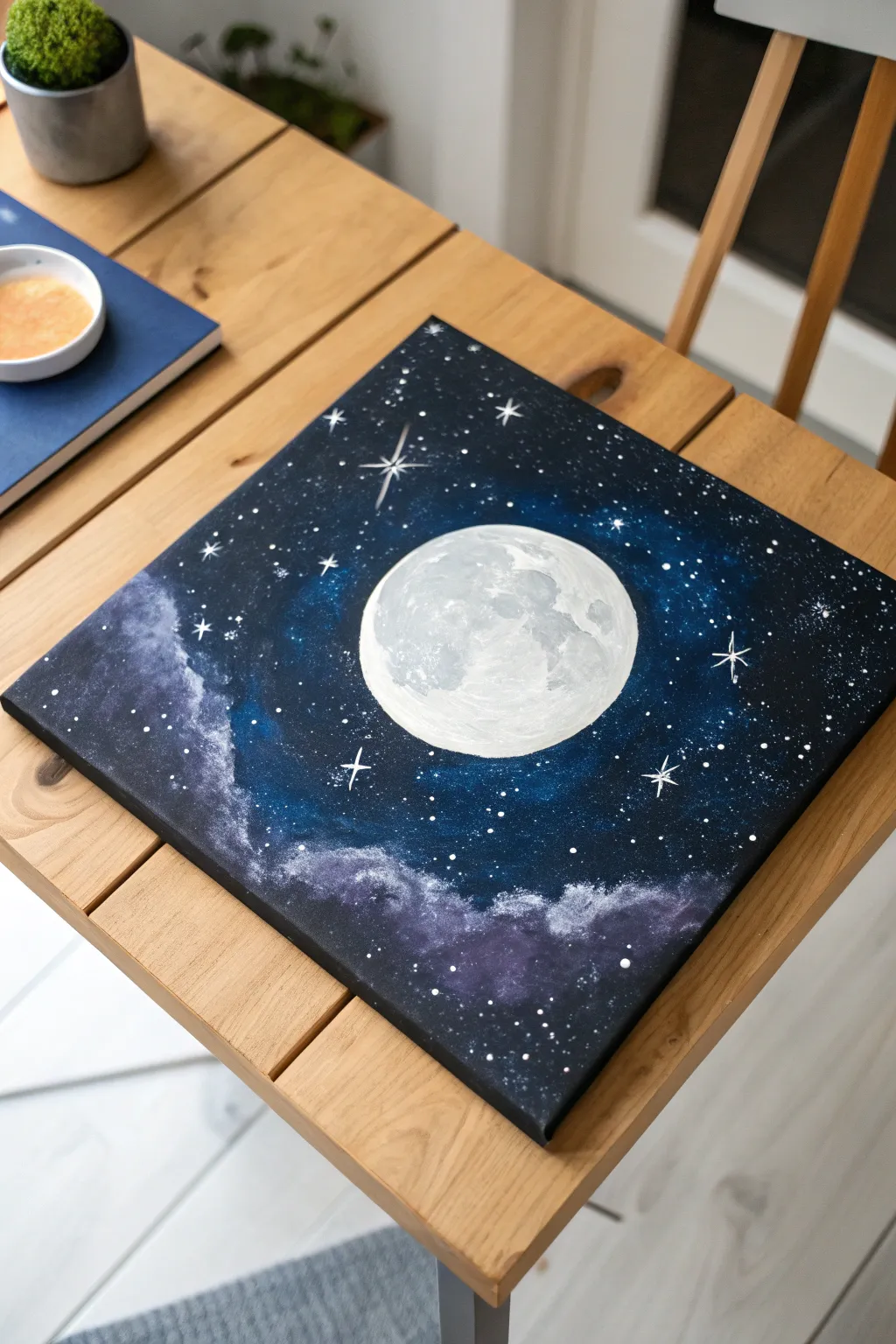
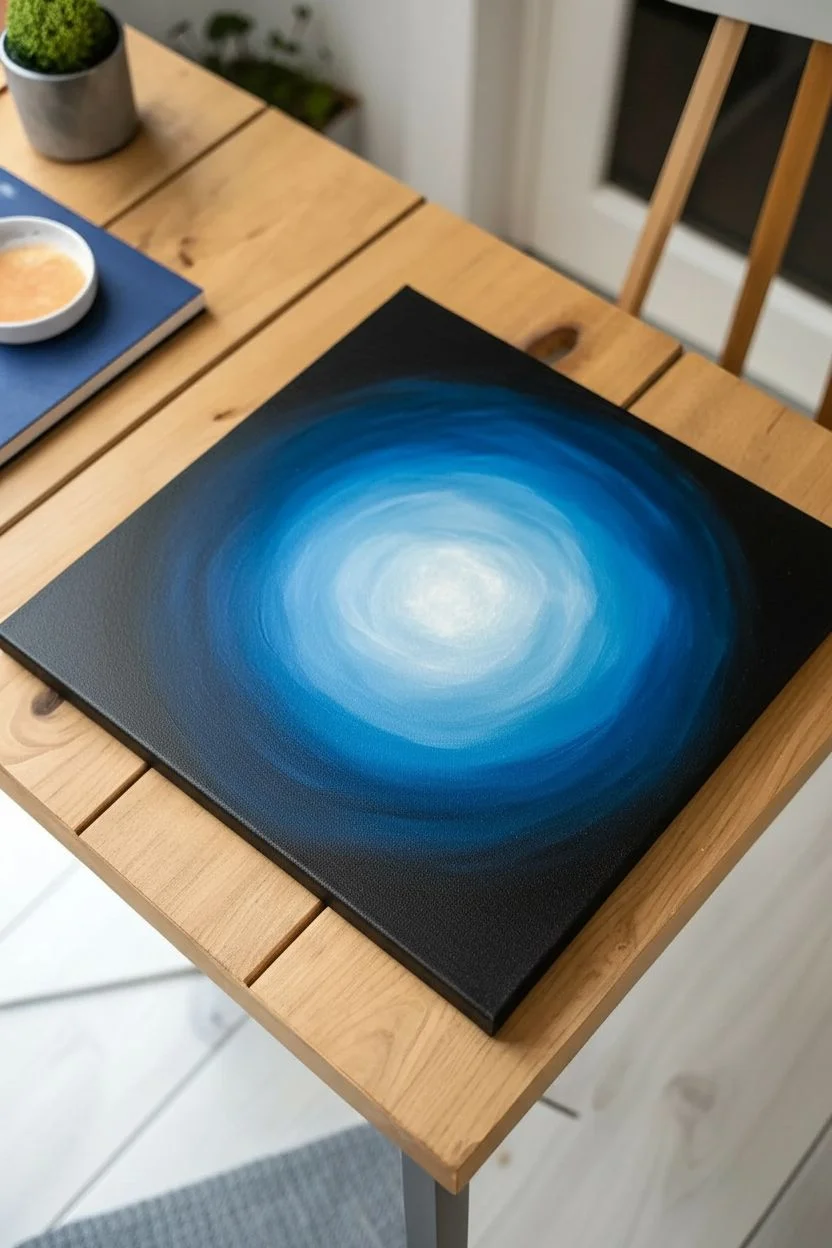
Capture the mystic beauty of a clear night sky with this dramatic galaxy painting. You will create a highly textured, glowing lunar surface surrounded by deep space blues and dreamy purple nebulas.
Step-by-Step
Materials
- Square canvas (approx. 12×12 inches)
- Acrylic paints (Mars Black, Titanium White, Phthalo Blue, Dioxazine Purple, Neutral Grey)
- Wide flat brush (1 inch)
- Small round brush
- Fine liner brush
- Sea sponge or scruffy old brush
- Palette and water cup
- Circular object for tracing (like a small bowl)
Step 1: Setting the Galaxy Stage
-
Darken the edges:
Begin by painting the four corners and outer edges of your canvas with pure Mars Black acrylic paint. -
Add deep blue depth:
Mix a small amount of Phthalo Blue into your black and paint a wide ring just inside your pure black edges, blending them while wet. -
Create the inner atmosphere:
Switch to pure Phthalo Blue and paint further inward, leaving a roughly 4-inch empty circle in the very center of the canvas. -
Paint the halo:
Mix Titanium White with Phthalo Blue to make a light blue. Fill the center spot with this color, blending it outwards into the darker blue to create a glowing halo effect. -
Smooth the transitions:
While the paint is still damp, use a clean, dry flat brush to gently sweep back and forth over the color boundaries to create a seamless gradient from black to light blue.
Fixing Wobbly Circles
If your moon outline looks uneven, wait for the moon paint to dry fully. Then, take your black/blue background mix and carefully paint over the lumpy edges to refine the circle.
Step 2: Forming the Nebula
-
Apply the purple base:
Load a sponge or a dry, scruffy brush with Dioxazine Purple. Lightly dab cloudy, irregular shapes starting from the bottom left corner and drifting upward. -
Add misty volume:
Mix the purple with a little Titanium White to create a lavender shade. Dab this sparingly over the darkest purple areas to create fluffy volume within the clouds. -
Blend the nebula:
Use a dry brush to gently feather the edges of your purple clouds into the black background so they look wispy rather than stamped on. -
Balance the composition:
Add a few very faint, small dabs of purple haze in the top right area of the sky to balance out the large nebula in the bottom left.
Make It Glow
For a magical touch, mix phosphorescent (glow-in-the-dark) medium with your white paint for the stars and the moon’s highlights so your galaxy truly shines when the lights go out.
Step 3: Painting the Moon
-
Outline the shape:
Once the background is completely dry, place your circular object in the center of the halo and lightly trace a circle with a pencil. -
Fill the base:
Paint the entire moon circle with a mix of Titanium White and a tiny drop of Neutral Grey to create an off-white base. -
Map the craters:
While the base is still slightly wet, mix a darker grey and use a small round brush to dab in irregular patches (maria) to mimic the moon’s surface. -
Texturize the surface:
I like to use a dry brush with pure Titanium White here to stipple over the grey patches, softening the edges and creating a cratered texture. -
Add dimensional highlights:
Paint bright, pure white highlights on the upper left edges of the moon and the crater rims to suggest a light source.
Step 4: Stars and Sparkles
-
Prepare splatter paint:
Dilute a small amount of Titanium White with water until it reaches an ink-like consistency. -
Create distant stars:
Load a brush with the watery paint and tap the handle against another brush over the canvas to spray tiny speckles across the dark sky. -
Place bright stars:
Use a fine liner brush with undiluted white paint to distinctively place larger dots randomly around the galaxy. -
Draw twinkle stars:
Paint thin crosses with long vertical tails to create twinkling stars. Taper the lines so they fade to a point at the ends. -
Final sparkle:
Add a tiny dot of concentrated white in the very center of your cross-shaped stars to make them look like they are shining brightly.
Hang your masterpiece on the wall and enjoy the peaceful vibe of your personal galaxy.
BRUSH GUIDE
The Right Brush for Every Stroke
From clean lines to bold texture — master brush choice, stroke control, and essential techniques.
Explore the Full Guide
Simple Greenery and Botanical Fronds
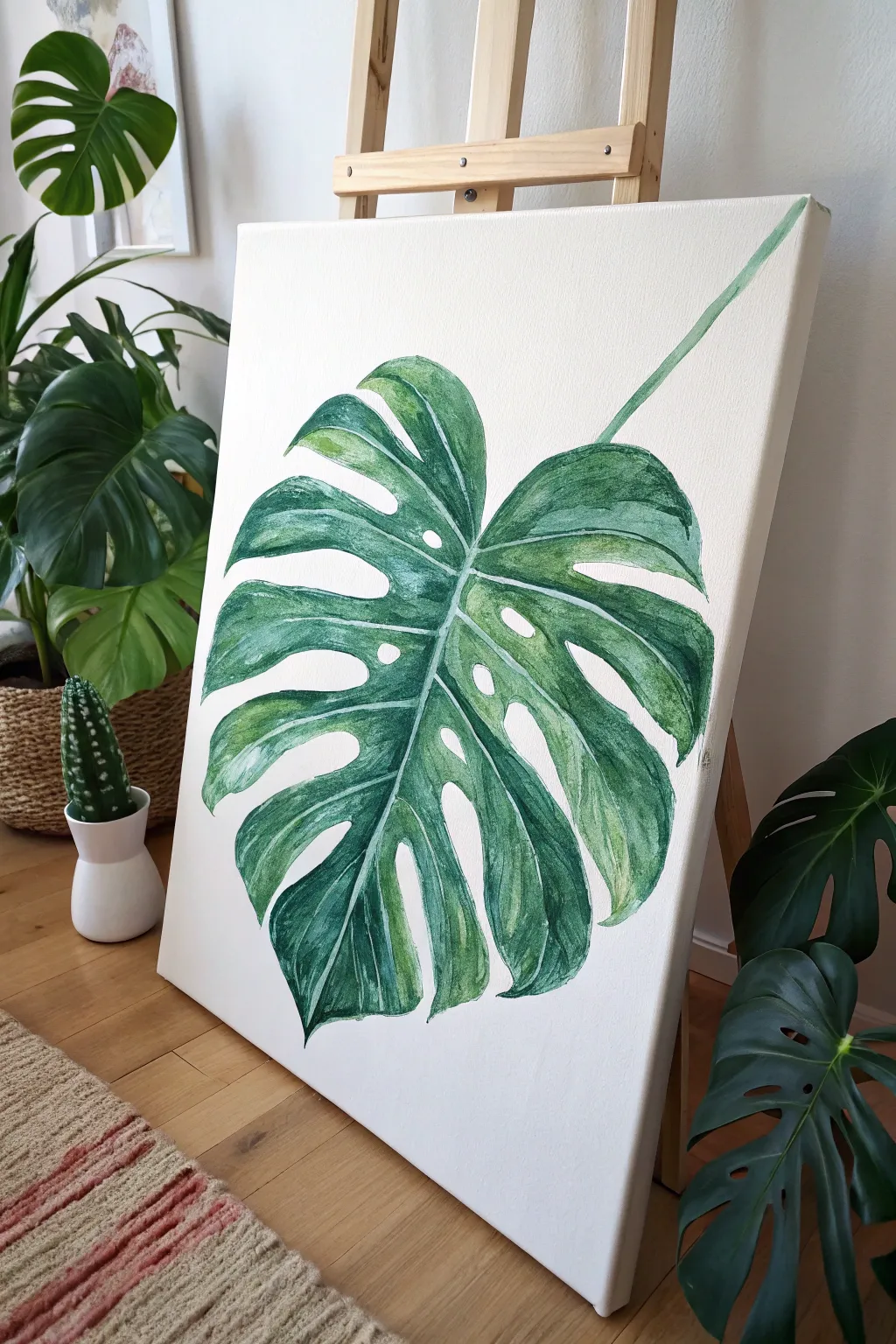
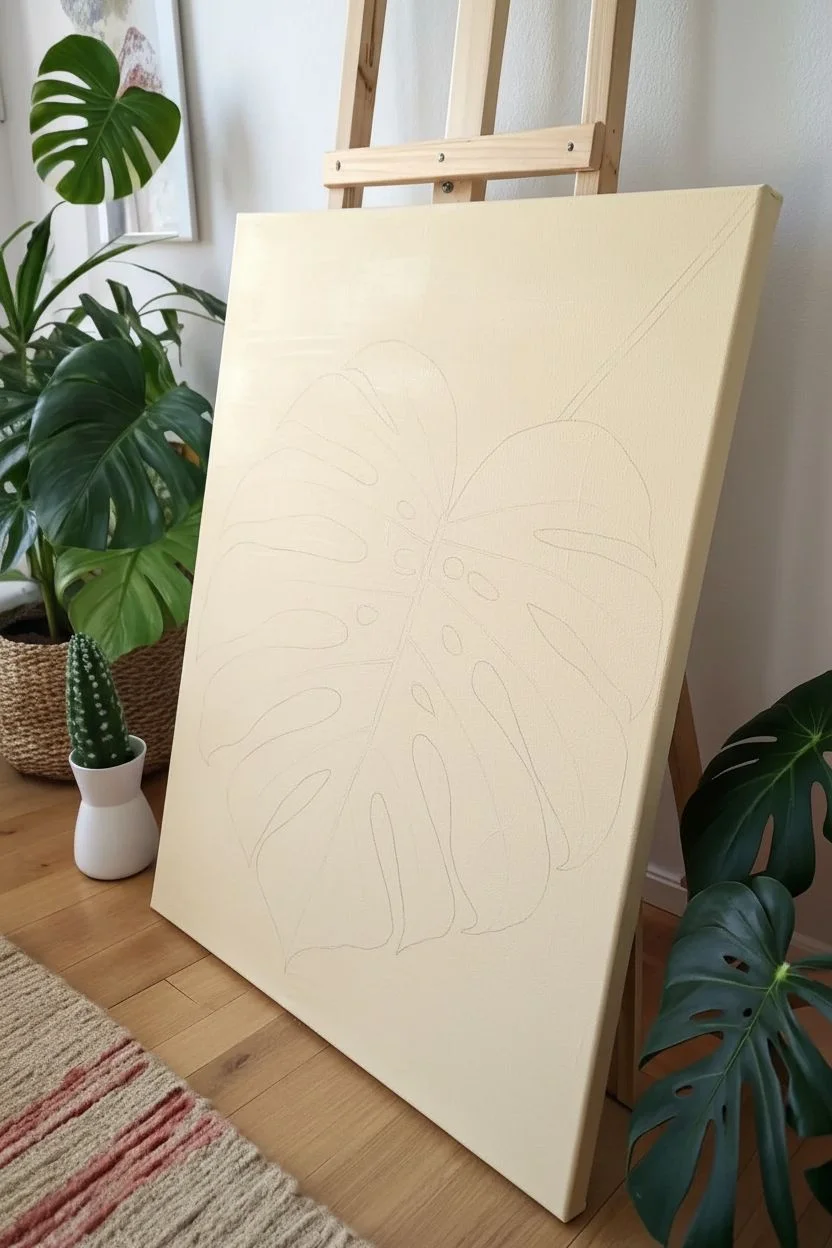
Bring the calming influence of nature indoors with this stunningly realistic botanical painting. This project focuses on capturing the waxy texture and vibrant verdant tones of a Monstera Deliciosa leaf using acrylics on canvas.
Detailed Instructions
Materials
- Stretched canvas (16×20 recommended)
- Acrylic paints: Titanium White, Unbleached Titanium (cream), Sap Green, Phthalo Green, Cadmium Yellow, Mars Black
- Brushes: 1-inch flat wash, #6 filbert, #4 round, #0 fine liner
- HB Pencil and eraser
- Palette and water cup
- Paper towels
Step 1: Background and Sketching
-
Prime the Background:
Squeeze out a generous amount of Unbleached Titanium. Using the large flat brush, coat the entire canvas in horizontal strokes. We want a warm, creamy off-white base rather than stark white. -
Let it Dry:
Allow the background layer to dry completely to the touch before moving to the sketching phase. -
Outline the Basic Shape:
Lightly sketch a large, tilted heart shape that fills most of the canvas. Draw a single line extending from the top notch of the heart to the upper right corner for the stem. -
Add Fenestrations:
Draw deep V-shaped notches cutting into the sides of the leaf to create the Monstera’s signature splits. Add a few oval holes (fenestrations) inside the leaf body near the center vein. -
Clean Up Lines:
Erase the original outer heart line where the deep notches now exist, leaving you with the final jagged leaf outline.
Step 2: Blocking and Base Layers
-
Mix the Base Green:
On your palette, mix Sap Green with a touch of Phthalo Green to create a rich, medium jungle green. Add a drop of water to improve flow. -
Paint the Stem:
Using the #4 round brush, paint the stem extending from the leaf to the canvas edge. -
Fill the Leaf:
Switch to the filbert brush and fill in the entire leaf shape using your base green. Be careful to work around the oval holes you sketched—keep the background color visible there. -
Establish the Midrib:
While the paint is still slightly damp, use the tip of your brush to lift a little paint out of the center line, or simply mark it mentally; this is the central vein or ‘midrib’ running down the leaf.
Smooth Blending Tip
Acrylics dry fast! Keep a spray bottle of water nearby to lightly mist your canvas. This keeps the paint workable longer, allowing for smoother gradients between your light and dark greens.
Step 3: Shading and Highlighting
-
Mix a Shadow Shade:
Combine Phthalo Green with a tiny dot of Mars Black and a touch of Sap Green. You want a deep, cool forest green. -
Apply core shadows:
Paint this dark shadow color along one side of the central midrib vein. Also, add shadows to the lower edges of the individual leaf segments where they would naturally curve away from the light. -
Mix a Highlight Tone:
Clean your brush. Mix Sap Green with Cadmium Yellow and a little Titanium White to create a vibrant yellow-green. -
Paint the High Points:
Apply this lighter green to the areas between the veins, specifically on the side of the leaf opposite your shadows. This creates the illusion of a convex / rounded surface. -
Blend the Transitions:
Use a clean, slightly damp filbert brush to gently soften the edges where the dark, mid-tone, and light greens meet. I like to use a soft sweeping motion here to create a smooth gradient. -
Add Secondary Veins:
Using the fine liner brush and the highlight mixture (add more white if needed), paint thin lines fanning out from the center midrib toward the edges of each leaf segment.
Level Up: Glossy Finish
Once the painting is cured (wait 24 hours), apply a high-gloss varnish only to the green leaf area, leaving the background matte. This perfectly mimics the waxy sheen of a real plant.
Step 4: Final Details
-
Intensify Highlights:
Mix a very pale green using mostly White and a tiny dot of Yellow and Sap Green. Apply this sparingly to the very tops of the leaf ridges to make them look glossy and waxy. -
Deepen Contrast:
Go back in with your darkest green mixture and a liner brush to sharpen the central vein and the edges of the holes for crisp definition. -
Clean Edges:
If any green paint went outside the lines, use your background Unbleached Titanium color to ‘cut in’ around the leaf, making the silhouette sharp and professional.
Hang your new botanical artwork in a bright spot to enjoy fresh greenery that never needs watering
Abstract Gold Leaf Accents
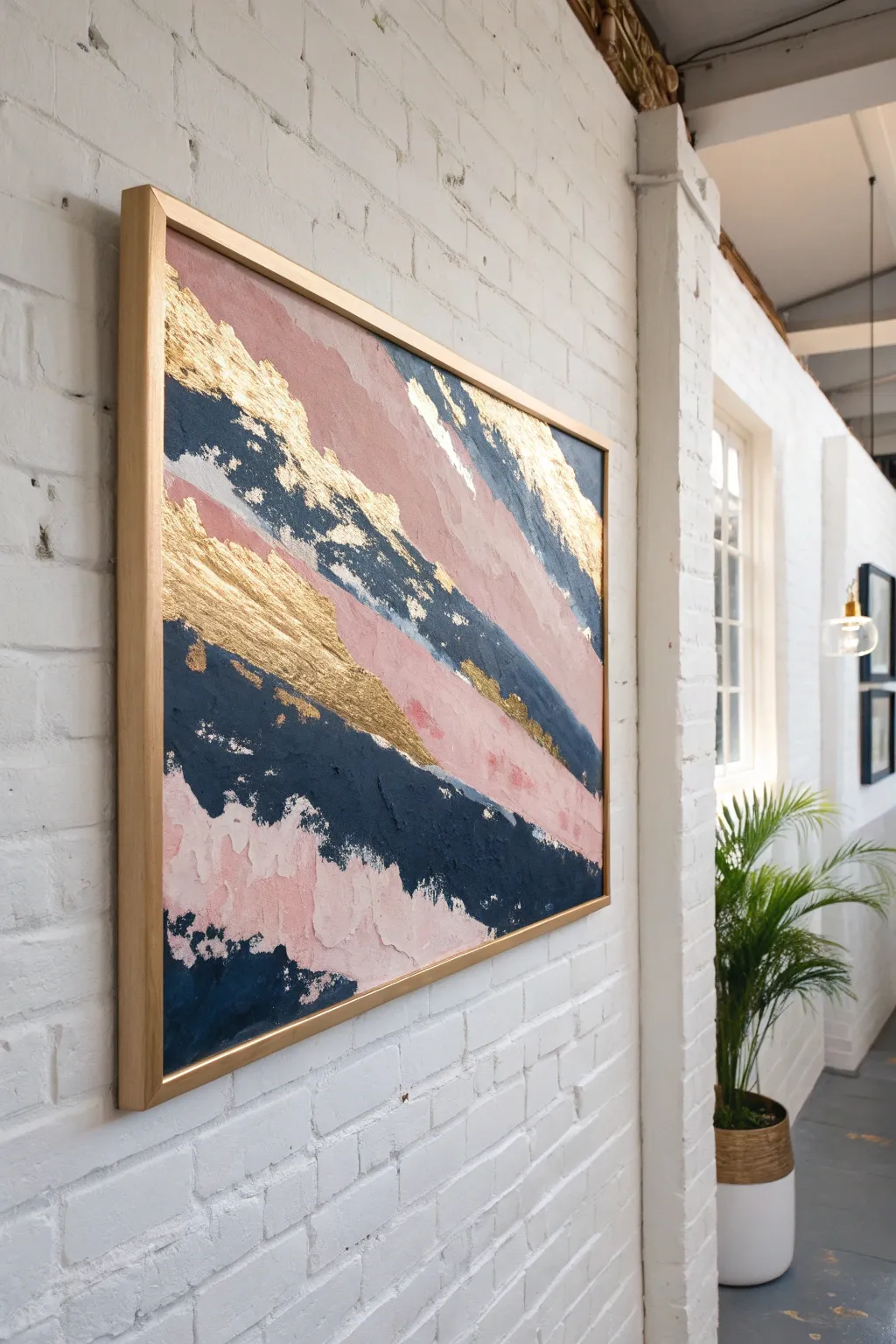
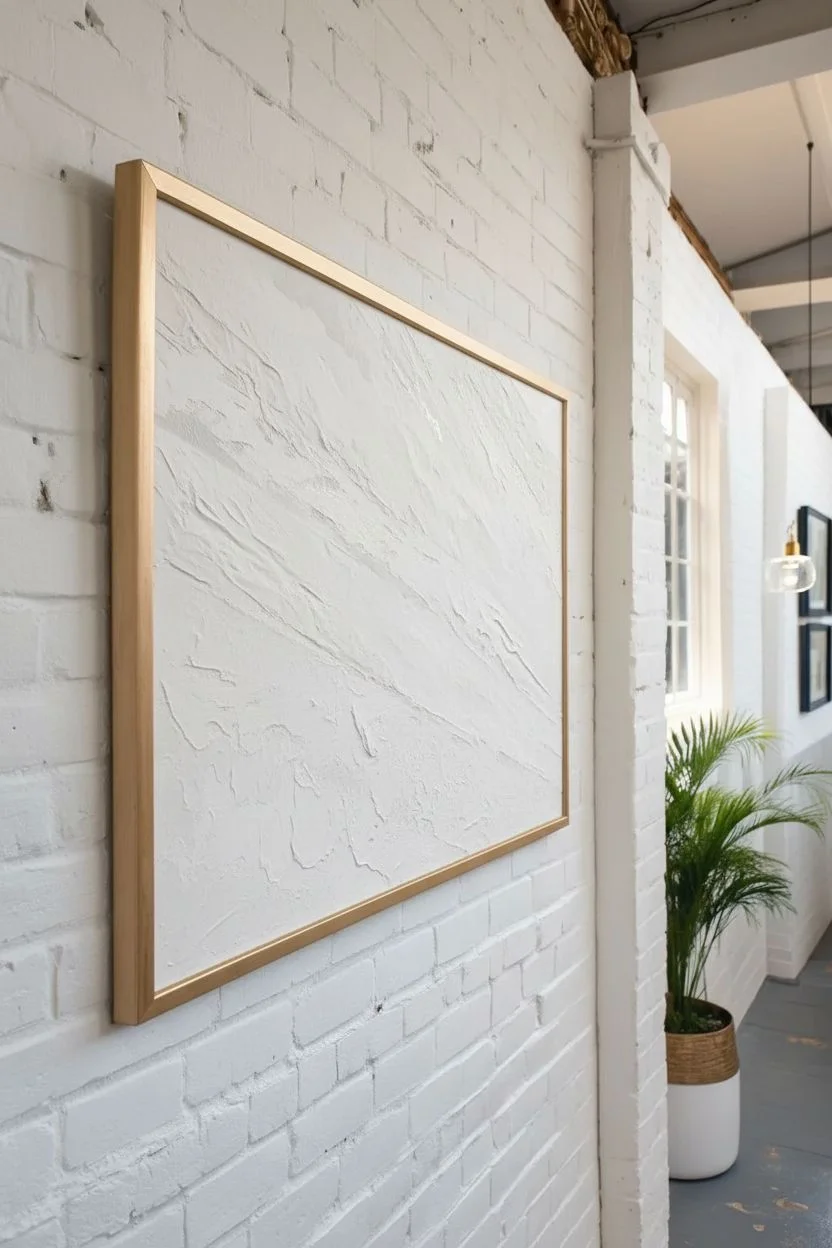
This project combines rich, moody tones with the luxurious shimmer of metallic accents to create a statement piece for any room. By layering thick texture with diagonal sweeps of color and gold leaf, you will achieve a gallery-worthy look that feels both modern and organic.
How-To Guide
Materials
- Large stretched canvas (24×36 or larger)
- Modeling paste (flexible)
- Heavy body acrylic paints: Navy Blue, Blush Pink, Titanium White
- Gold leaf sheets (imitation or real)
- Water-based metal leaf adhesive (size)
- Large palette knife or trowel
- Soft synthetic brush (for sizing)
- Clean, dry soft brush (for gold leaf removal)
- Gloss varnish
- Gold floating frame (optional)
Step 1: Building the Foundation
-
Protect your workspace:
Lay down a drop cloth or old newspaper on a flat table. This project involves sticky adhesive and loose gold flakes, so a clean space is essential. -
Prepare the texture medium:
Scoop a generous amount of flexible modeling paste onto a palette or paper plate. You want the consistency of thick frosting. -
Apply the diagonal ridge:
Using your large palette knife, apply a thick band of modeling paste diagonally across the canvas. Mimic the composition in the photo by moving from the bottom left roughly toward the top right. -
Create surface variation:
Don’t smooth the paste out perfectly. Use the edge of the knife to create ridges, peaks, and valleys. This texture will catch the gold leaf beautifully later. -
Allow to cure:
Let the modeling paste dry completely. Depending on the thickness, this can take 12 to 24 hours. Ensuring the paste is hard is crucial before painting.
Sticky Situation?
If the gold leaf isn’t sticking, the size might have dried too much or not enough. It must be tacky. If you missed the window, simply reapply a thin layer of size and wait 15 minutes.
Step 2: Applying Color
-
Mix the navy tone:
Squeeze out your Navy Blue acrylic. If it feels too bright, I like to mix in a tiny dot of black or dark green to deepen it into a moody indigo. -
Paint the dark sections:
With the palette knife or a firm brush, apply the blue to the bottom left corner and a thick diagonal strip through the center. Let the paint drag over the texture naturally. -
Apply the blush pink:
Load a clean knife with Blush Pink. Apply this in thick bands adjacent to the blue, filling the upper right area. Don’t worry about perfect lines; rough edges look better here. -
Blend the transition:
Mix a little Titanium White into the pink to create a pale quartz color. Apply this near the bottom transition area to add depth and lightness. -
Dry the paint layer:
Allow the acrylics to dry fully to the touch. Heavy body paint may take a few hours to set completely.
Level Up: Gallery Depth
Paint the sides of the canvas in the Navy Blue tone before framing. This creates a shadow gap effect inside the floating frame, making the artwork look professionally finished.
Step 3: Gilding the Art
-
Apply adhesive size:
Identify the ridges where the blue and pink meet. Using a soft brush, paint the metal leaf adhesive (size) onto these transition areas in jagged, organic strips. -
Wait for the tack:
This is the most important step: Wait for the adhesive to turn from milky to clear. It should feel sticky, like the back of clear tape, but not wet on your finger. -
Lay the gold leaf:
Gently lift a sheet of gold leaf and press it directly onto the tacky areas. Repeat this until all adhesive areas are covered. -
Buff the excess:
Take a clean, dry, soft brush and gently swirl it over the gold areas to remove the loose bits that didn’t stick to the glue. -
Seal the artwork:
Once you are happy with the gold coverage, apply a coat of gloss varnish over the entire painting to protect the gold from tarnishing and pop the colors. -
Frame the piece:
Place the canvas into a gold floating frame. Secure it from the back according to the frame instructions to replicate the finished look in the photo.
Step back and admire how the light catches the gold ridges on your new abstract masterpiece

PENCIL GUIDE
Understanding Pencil Grades from H to B
From first sketch to finished drawing — learn pencil grades, line control, and shading techniques.
Explore the Full Guide
Mini Canvas Magnet Collections
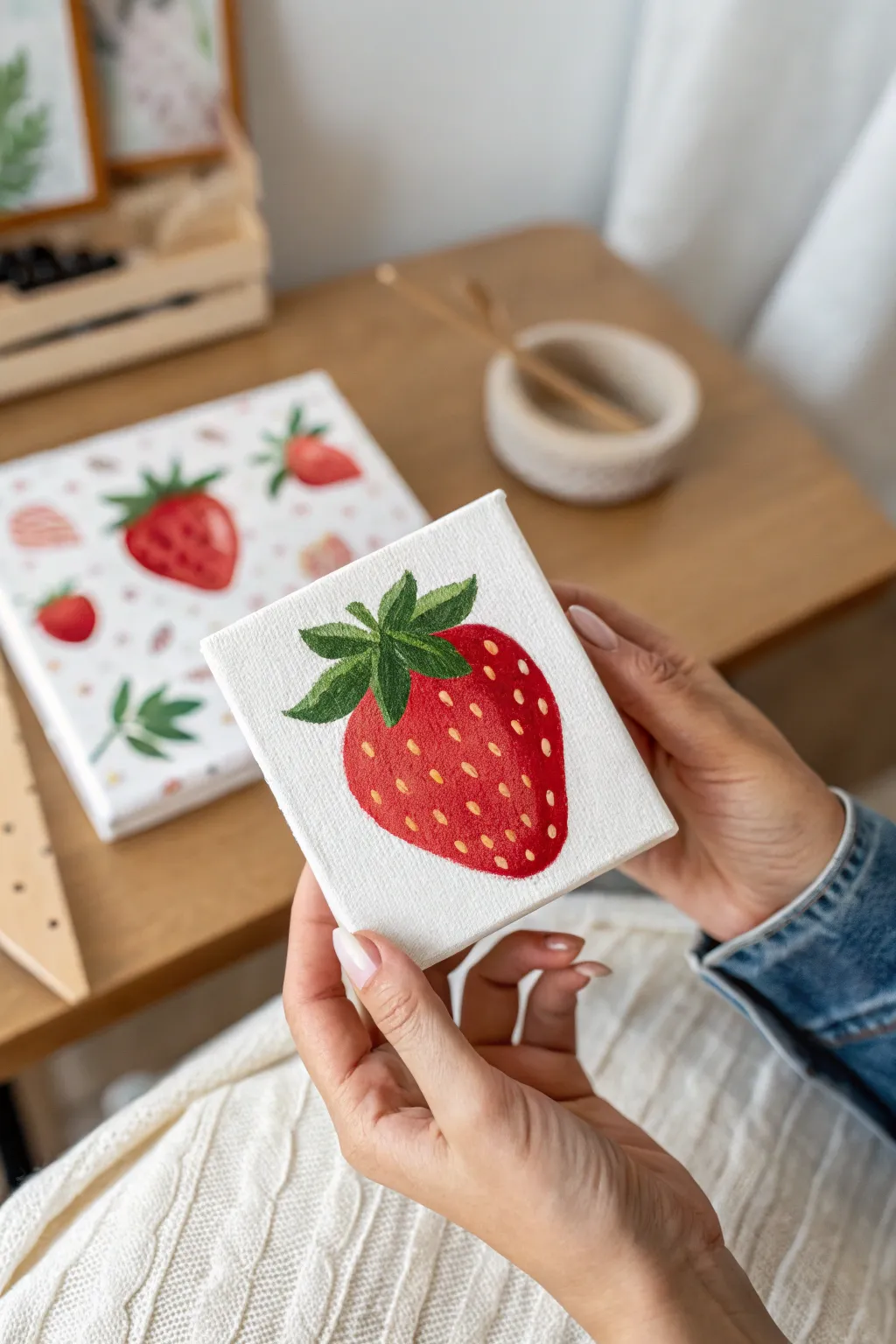
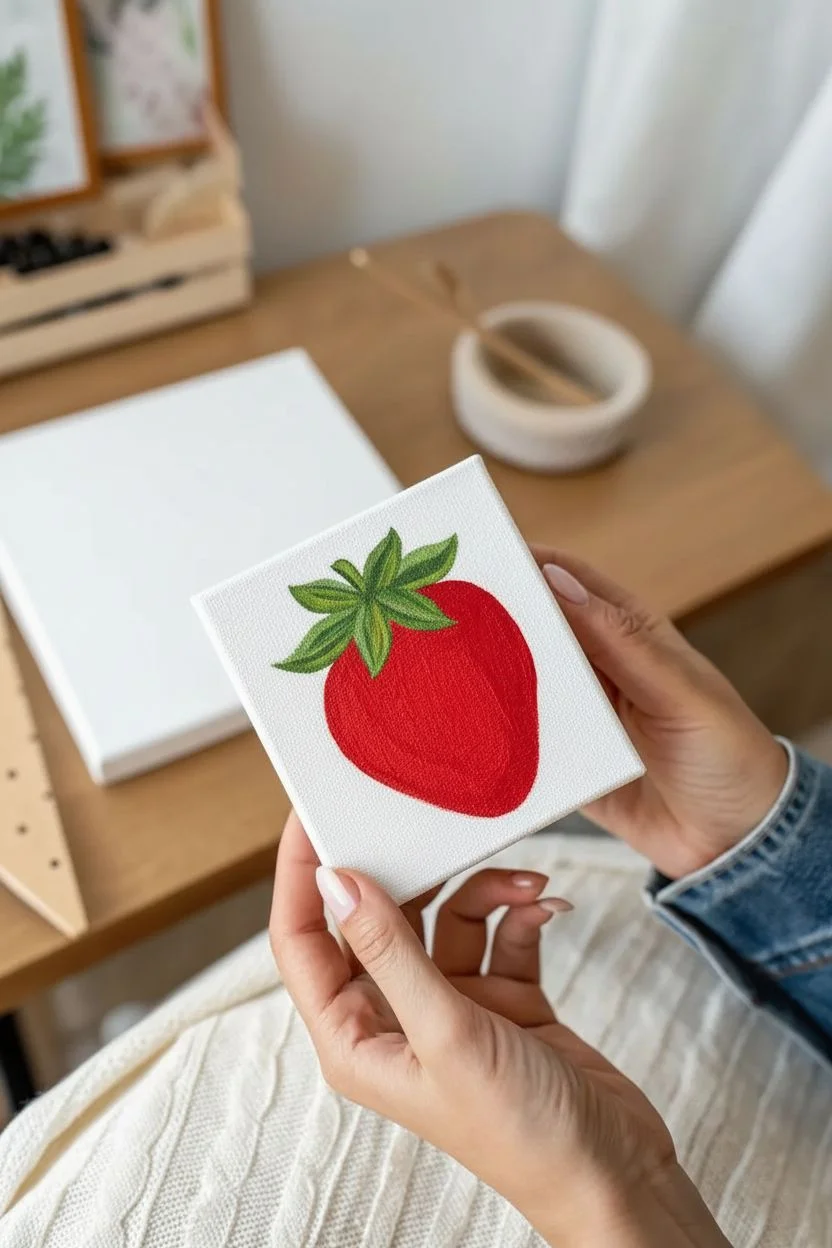
Capture the freshness of summer with this delightful mini canvas project perfectly sized for a magnet. Using simple acrylic blending techniques, you’ll create a vibrant, realistic strawberry that pops against a crisp white background.
Step-by-Step
Materials
- Mini stretched canvas (3×3 or 4×4 inch)
- Acrylic paints: Titanium White, Bright Red, Deep Burgundy, Forest Green, Lime Green, Yellow Ochre
- Small flat brush
- Small round brush
- Fine detail liner brush
- Pencil and eraser
- Strong round magnet and glue
- Palette and water cup
Step 1: Preparation & Base Layers
-
Prime the surface:
Start by coating the entire front and sides of the mini canvas with Titanium White. This smooths out the fabric texture and ensures a bright, opaque background. -
Sketch the outline:
Once the white is dry, lightly sketch a rounded triangular shape for the berry body in the center. -
Add the crown:
Draw the leafy top, consisting of several jagged, star-like leaves that fan out from the center top of the berry. -
Base coat the berry:
Using your round brush, fill in the strawberry shape with Bright Red. Avoid the leaf area to keep your green colors clean later. -
Double check coverage:
Red paint can sometimes be translucent, so apply a second coat if you can still see the canvas texture through the paint.
Seed Spacing
Don’t arrange the seeds in perfect rows. Stagger them diagonally and curve the rows slightly near the edges to follow the round shape of the fruit.
Step 2: Shading & Volume
-
Create the shadow:
While the red is slightly damp, mix a tiny bit of Deep Burgundy with Bright Red. Paint this along the bottom right curve of the berry to create a rounded, 3D effect. -
Blend the gradient:
With a clean, slightly damp brush, gently smooth the transition where the dark red meets the bright red so there are no harsh lines. -
Fill the leaves:
Paint the leaves with a solid coat of Forest Green using a small round brush. -
Add leaf depth:
I prefer to dab a little dark brown or diluted black right where the leaves meet the red fruit to lift them off the surface visually. -
Leaf texture:
Using the liner brush and Lime Green, paint thin veins or highlights on the upper edges of the leaves to suggest texture and light.
Level Up
Create a matching set by painting a second mini canvas with a repeating pattern of tiny strawberries to display alongside your main artwork.
Step 3: Seeds & Fine Details
-
Paint seed indentations:
Mix a dark red or reddish-brown color. Use the liner brush to paint small, tear-drop shaped specks scattered across the berry. -
Add the seeds:
Once the dark specks are dry, use Yellow Ochre to paint tiny dots inside the top portion of each dark teardrop. This creates the illusion that the seeds are sitting inside little dimples. -
Highlight the fruit:
Mix Titanium White with a touch of red (making a pale pink) or use pure white. Paint a soft, curved reflection on the upper left side of the berry. -
Add high-gloss shine:
Place tiny, sharp white dots near the highlight area and potentially on the tips of a few seeds to make the fruit look wet and juicy. -
Clean up the background:
Use your flat brush and Titanium White to carefully touch up the background around the edges of the strawberry, covering any accidental smudges for a crisp finish. -
Varnish and mount:
Once completely dry, apply a gloss varnish to protect the paint. Finally, glue a strong magnet to the back of the canvas frame.
Now you have a sweet piece of art ready to brighten up your fridge or magnetic board
Fluid Art with Acrylic Pouring
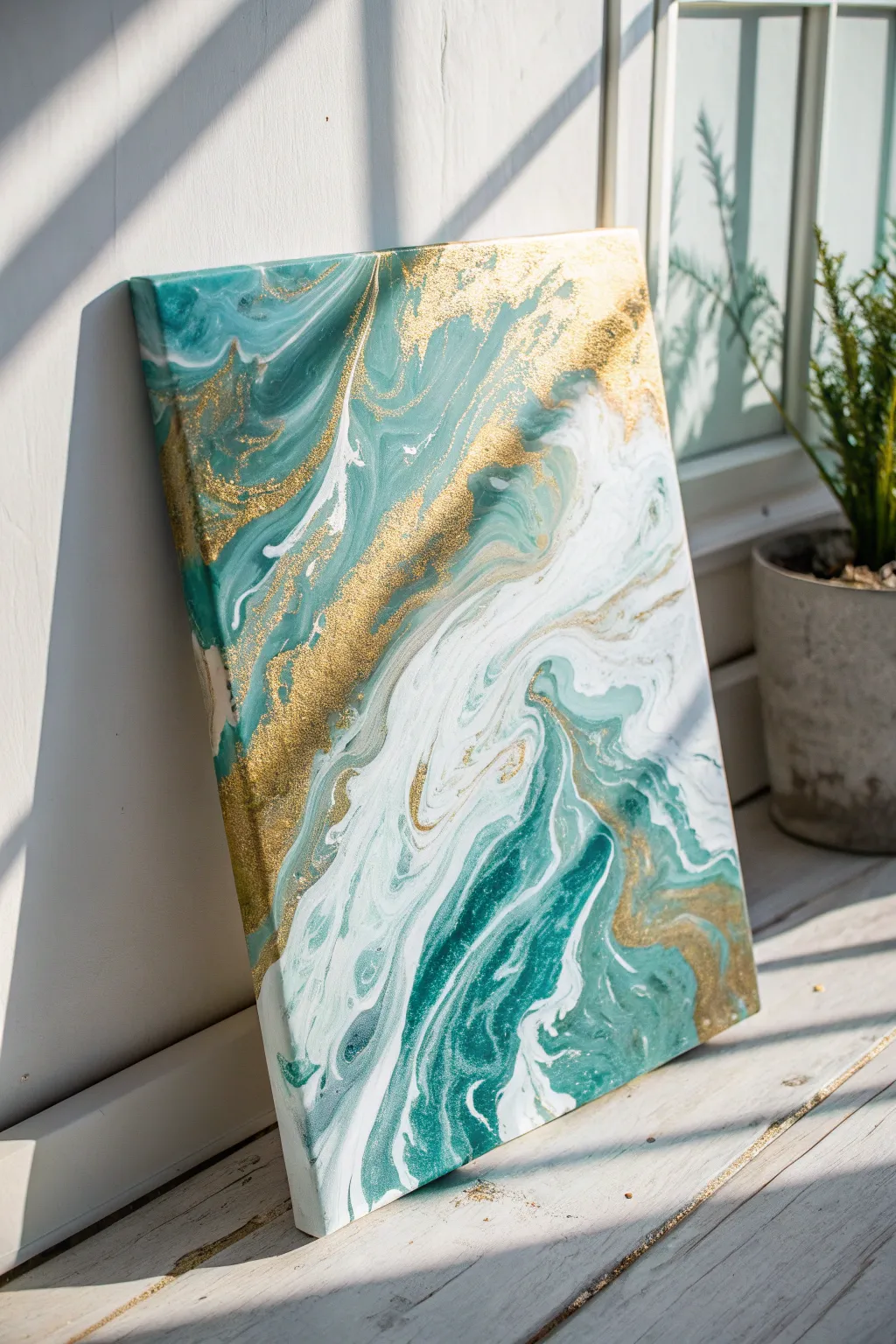
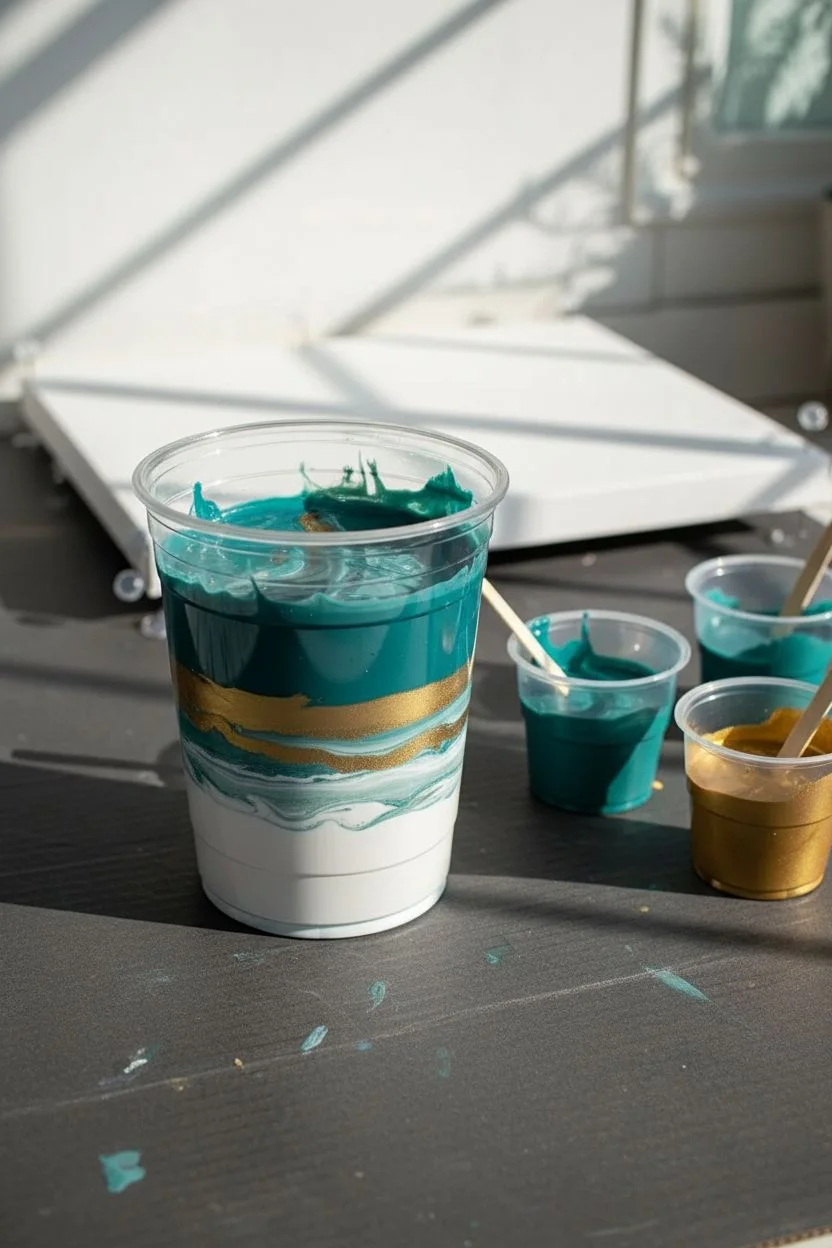
Capture the elegance of natural marble with this stunning fluid art project that blends cool emerald tones with striking metallic gold veins. This technique creates a glossy, high-end abstract piece that looks complicated but relies on a simple ‘dirty pour’ method.
Detailed Instructions
Materials
- Stretched canvas (12×16 or similar)
- Acrylic paints: Teal/Emerald Green, Titanium White, Metallic Gold
- Pouring medium (Floetrol or Liquitex)
- Silicone oil (treadmill lubricant)
- Plastic cups (one large, three small)
- Craft sticks for stirring
- Kitchen torch or lighter
- Push pins (for elevating canvas)
- Drop cloth or cardboard
Step 1: Preparation & Mixing
-
Prepare the workspace:
Cover your entire work surface with a drop cloth or heavy cardboard, as fluid art is messy. Insert push pins into the four corners of the back of your canvas to elevate it off the table. -
Mix the pouring medium:
In your small cups, mix each paint color with your chosen pouring medium. A common ratio is 1 part paint to 2 parts medium, but check the manufacturer’s instructions. -
Check consistency:
Stir each cup thoroughly. The consistency is crucial; the paint should flow like warm honey off the stick, creating a small mound in the cup before disappearing. -
Add separation agent:
Add 2-3 drops of silicone oil to the Teal and Emerald cups only. Do not add silicone to the Metallic Gold or White if you want them to remain solid ribbons. -
Light mixing:
Stir the silicone-infused colors very gently—just one or two turns. Over-mixing will break the oil into too many tiny cells rather than the large organic shapes we want.
Fixing Muddy Colors
If your teal and gold turn brown, you likely over-tilted or mixed paints too thin. Stop tilting as soon as the canvas is covered to keep lines crisp.
Step 2: The Dirty Pour Layering
-
Start the layering:
Take your large clean cup. Pour a generous amount of Titanium White into the bottom to establish a base. -
Add color layers:
Pour the Teal gently down the side of the cup so it rests on top of the white rather than plunging to the bottom. -
Introduce the gold:
Pour a layer of Metallic Gold. Repeat the layering process (White, Teal, Gold) until the cup is roughly full, depending on your canvas size. -
The pour technique:
Starting at one corner of the canvas, pour the contents of the cup in a slow, diagonal wavy line across to the opposite corner. This is often called a ‘traveling ring pour’. -
Empty the cup:
Continue pouring until the cup is empty. You should see distinct stripes of color sitting on the center of the canvas.
Step 3: Tilting & Finishing
-
Initial tilt:
Gently lift the canvas and tilt it slowly in a circular motion to start expanding the puddle of paint towards the edges. -
Cover the corners:
Tilt the canvas toward one corner until the paint flows just over the edge, then bring the weight of the paint back to the center before moving to the next corner. -
Refine the composition:
Watch your gold veins closely. I like to stop tilting a moment before I think I’m done to prevent the gold lines from stretching too thin or breaking apart. -
Check the edges:
Ensure all sides of the canvas are coated. You can use your finger to dab drippings onto any bare woven spots on the corners. -
Pop air bubbles:
Immediately run a kitchen torch quickly over the surface (keep it moving!) to pop trapped air bubbles and bring up small cells. -
Clean the underside:
Run a craft stick along the underside edge of the canvas frame to remove hanging drips, which prevents the paint from continuing to pull off the canvas as it dries. -
Drying process:
Let the painting dry in a dust-free area for at least 24-48 hours. The surface must remain perfectly level during this time.
Gold Preservation Pro-Tip
Mix your Metallic Gold slightly thicker than the other colors. This prevents it from sinking and keeps that shimmering vein sitting on top.
Once fully cured and varnished, your custom marble masterpiece is ready to bring a touch of luxury to your wall


Real Leaf Spray Paint Resist
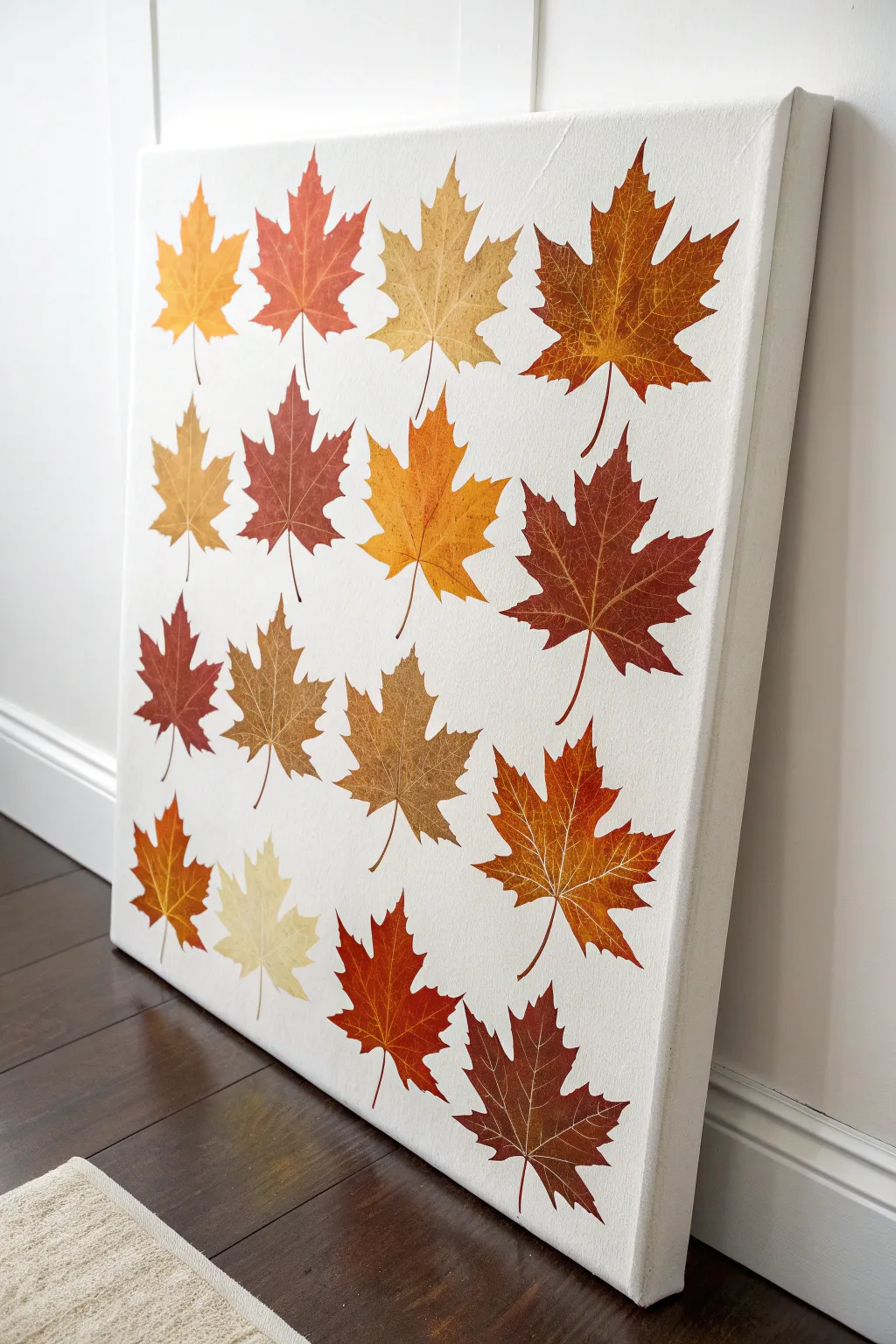
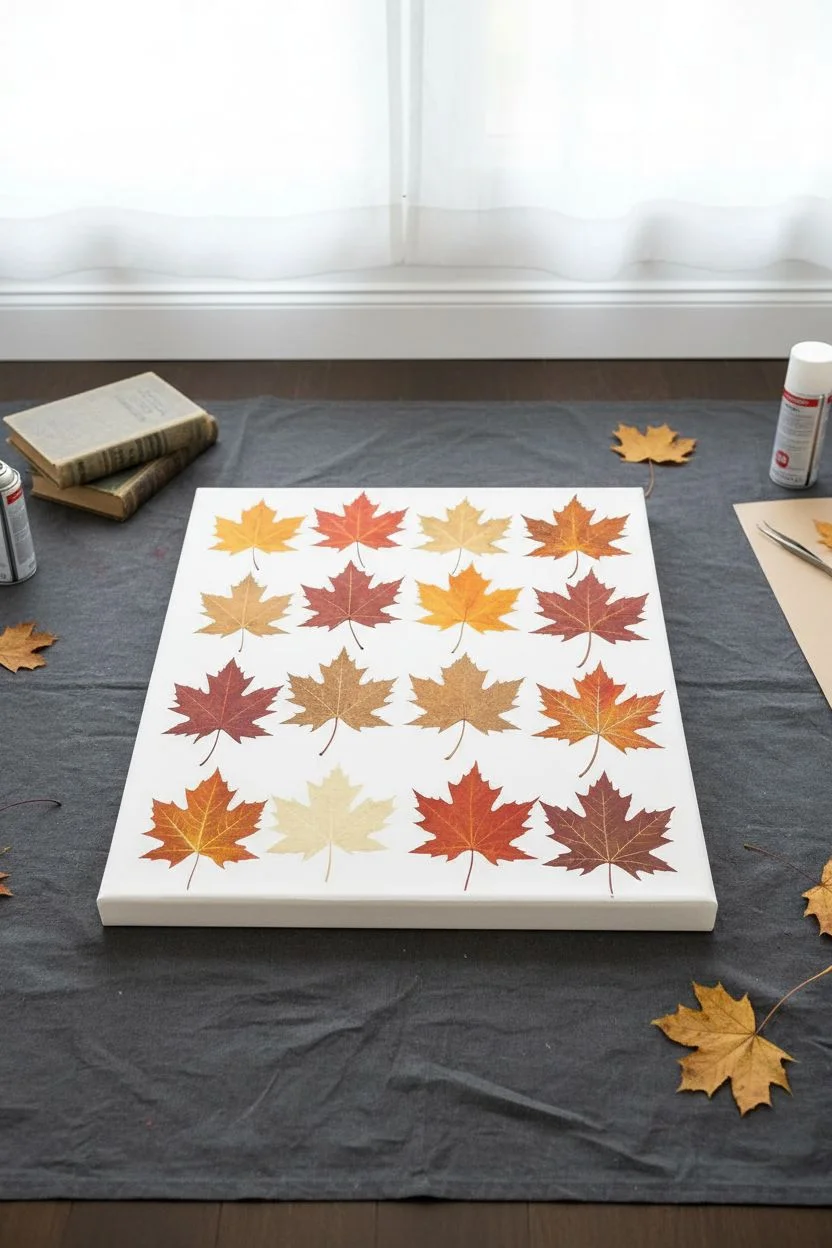
Capture the vibrant transition of autumn with this clever ‘reverse’ spray paint technique. Instead of painting around the leaves, we’ll reveal colorful silhouettes beneath a crisp white topcoat for a clean, modern gallery look.
Step-by-Step Guide
Materials
- Large stretched canvas (16×20 or larger)
- Real maple leaves (variety of sizes)
- Heavy books (for pressing)
- Spray paint in fall colors (burgundy, gold, orange, brown)
- Matte white spray paint (high coverage)
- Repositionable spray adhesive
- Tweezers
- Fine-tip white paint pen or gel pen
Step 1: Preparation and Pressing
-
Gather foliage:
Collect a variety of maple leaves in different sizes. Look for leaves with interesting shapes but ensure they are not too brittle or dry. -
Flatten the leaves:
Place your fresh leaves between sheets of parchment paper inside a heavy book. pressing them for at least 24 hours makes them much easier to use as stencils. -
Prepare the workspace:
Set up in a well-ventilated area, preferably outdoors or in a garage. Lay down a drop cloth to protect your floor from overspray.
Clean Lines Troubleshooting
If your leaf edges look fuzzy, the leaf wasn’t pressed flat enough. Next time, iron the leaves flat between parchment paper on low heat before applying adhesive.
Step 2: The Color Layer
-
Map the colors:
Visualize a grid on your canvas where the leaves will eventually sit. You want different autumn shades in specific spots, rather than a muddy mix. -
Spray the base colors:
Spray patches of your fall-colored paints directly onto the white canvas. Don’t worry about neatness; just ensure the colored areas are slightly larger than the leaves you plan to place there. -
Blend edges:
I allow the colors to overlap slightly at the edges to create a natural, gradient transition between the red, orange, and gold zones. -
Let it cure:
Allow this base layer of colored paint to dry completely. If it’s tacky, the leaves might stick permanently.
Level Up: Texture
Before the final white coat, splatter droplets of masking fluid on the colored layer. Rub them off at the end to create speckled ‘imperfections’ on the leaves.
Step 3: Creating the Resist
-
Apply adhesive:
Take your pressed leaves to a separate cardboard box. Spray the back of each leaf with a light coat of repositionable spray adhesive. -
Wait a moment:
Let the adhesive sit for about 30–60 seconds so it becomes tacky rather than overly wet, which prevents residue on the canvas. -
Arrange the pattern:
Place the leaves onto the canvas over your dried colored patches. Arrange them in a grid formation or natural scatter, depending on your preference. -
Seal the edges:
Gently press down on the edges of every leaf with your finger. This step is crucial to prevent the white topcoat from seeping underneath and ruining the silhouette.
Step 4: The Whiteout and Reveal
-
Shake the white paint:
Shake your matte white spray paint can vigorously for at least one minute to ensure the pigment is evenly mixed. -
First light pass:
Spray a very light, misty coat of white over the entire canvas. I find doing multiple light coats is better than one heavy coat to stop paint from pooling around the leaves. -
Second coat:
Apply a second coat of white paint until the colored background is completely covered and the canvas looks uniformly white (except for the raised leaf shapes). -
Partial drying:
Wait until the white paint is dry to the touch but not fully cured—usually about 15 to 20 minutes. -
Remove the leaves:
Carefully lift the stem of a leaf with tweezers and peel it away. The colorful base layer underneath will be revealed in the perfect shape of the leaf. -
Add intricate details:
To recreate the realistic look in the photo, use a fine-tip white paint pen to hand-draw the delicate veins inside the colored leaf silhouettes. -
Clean up edges:
If any white mist seeped under a leaf, you can gently scrape it away with a craft knife or touch it up with a matching marker.
Hang your new masterpiece and enjoy the warmth of autumn colors against a crisp, modern background.
Pop-Art Everyday Objects
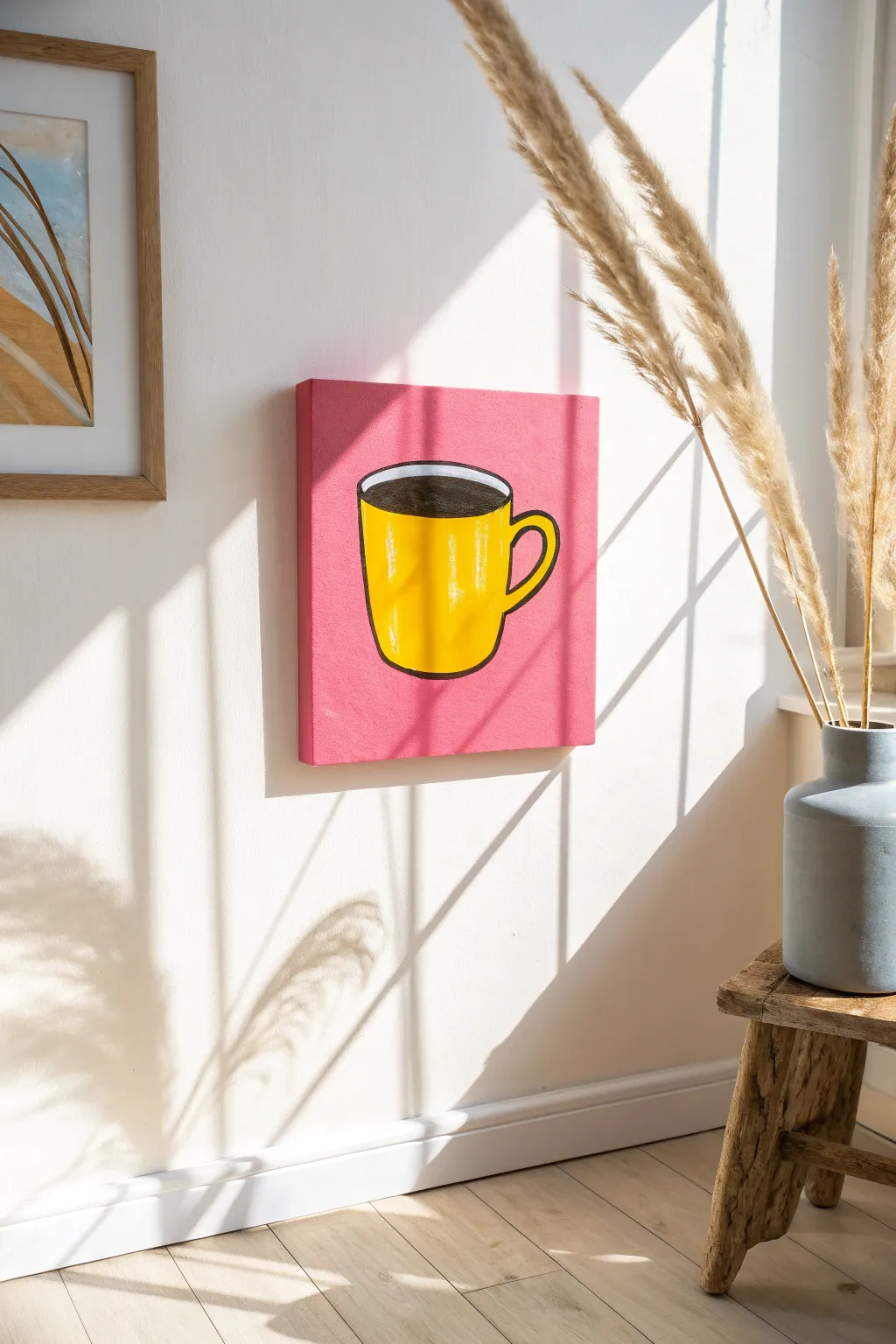
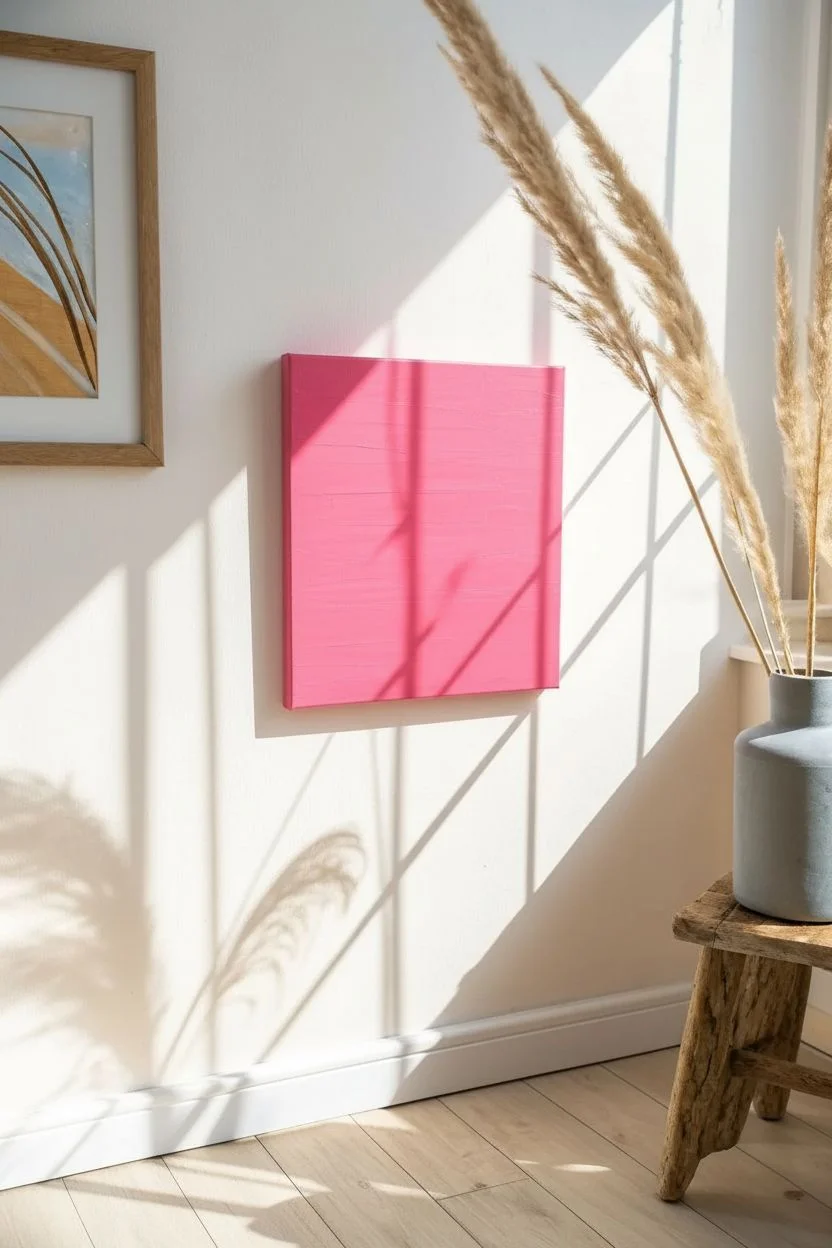
Bring a burst of morning energy to your wall with this vibrant, comic-book style painting. Using bold flat colors and thick, illustrative outlines, you will create a striking piece of pop art that celebrates the simple joy of coffee.
Detailed Instructions
Materials
- Square stretched canvas (approx. 12×12 inches)
- Acrylic paints: Hot Pink, Cadmium Yellow, Mars Black, Titanium White
- Wide flat synthetic brush (1 inch)
- Medium flat or filbert brush
- Fine liner brush (size 1 or 2)
- HB Pencil and eraser
- Palette and water cup
Step 1: The Vibrant Backdrop
-
Base coat application:
Squeeze a generous amount of Hot Pink acrylic onto your palette. Using the wide flat brush, apply the paint to the canvas using long, horizontal strokes to ensure a smooth, even texture. -
Don’t forget the edges:
Carry the pink paint over the sides of the canvas edges. This gallery-wrap technique gives the finished piece a polished look without needing a frame. -
Solidify the saturation:
Acrylics often dry darker or slightly streaky. Once the first layer is touch-dry, apply a second coat of pink to achieve that solid, opaque ‘bubblegum’ background.
Step 2: Sketching the Object
-
Positioning the mug:
Ensure the background is completely dry before touching it with graphite. Lightly sketch a wide oval (ellipse) near the top center of the canvas to form the opening of the mug. -
Drawing the body:
Draw two vertical lines coming down from the widest points of the oval, tapering them slightly inward as you go down. Connect them at the bottom with a curved line that mirrors the bottom curve of your top oval. -
Adding the handle:
Sketch a ‘C’ or ear shape on the right side of the body. Make sure to draw both the inner and outer curve to give the handle thickness.
Pro Tip
Since yellow paint is often transparent, paint the mug shape with white acrylic first. Let it dry, then paint the yellow on top. This makes the yellow pop instantly against the pink.
Step 3: Color Blocking
-
Painting the mug body:
Switch to your medium brush and load it with Cadmium Yellow. Carefully fill in the body of the mug and the handle, painting right over your pencil lines. -
Building opacity:
Yellow pigment is notoriously translucent. I usually let the first layer dry fully and apply a second or even third coat until no pink background shows through. -
Pouring the coffee:
Clean your brush thoroughly, then pick up Mars Black. Paint the inside of the oval at the top of the mug to represent the dark black coffee.
Level Up
Create a Warhol-style triptych by painting this same design on three small canvases. Keep the yellow mug identical on all three, but change the background color to creating a contrasting set.
Step 4: The Pop-Art Outline
-
Preparing the ‘ink’:
Pop art relies on bold lines. Mix a small amount of water into your black paint until it has the consistency of heavy cream; this helps the paint flow smoothly off a thin brush. -
Outlining the rim:
Using the fine liner brush, trace the oval rim of the mug. Don’t worry about making it mechanically perfect—a slight wobble adds to the hand-drawn comic aesthetic. -
Defining the shape:
Outline the sides, bottom, and handle of the mug with a thick black line. You can vary the pressure on your brush to make lines slightly thicker in some areas, creating visual weight. -
Refining the details:
Go back over your black outline if needed to ensure it is opaque and solid. The contrast between the black line and the bright yellow is the key to this style. -
Adding highlights:
Clean your medium brush and dry it well so it’s barely damp. Dip just the tip into Titanium White and drag it dryly vertically down the center-left of the mug to create a ‘reflection’ scratch. -
Final shine:
Add smaller white hatch marks on the handle and the rim to simulate a glossy ceramic surface.
Hang your bold new artwork in the kitchen or breakfast nook to start every day with a splash of color
Whimsical Button Tree Art
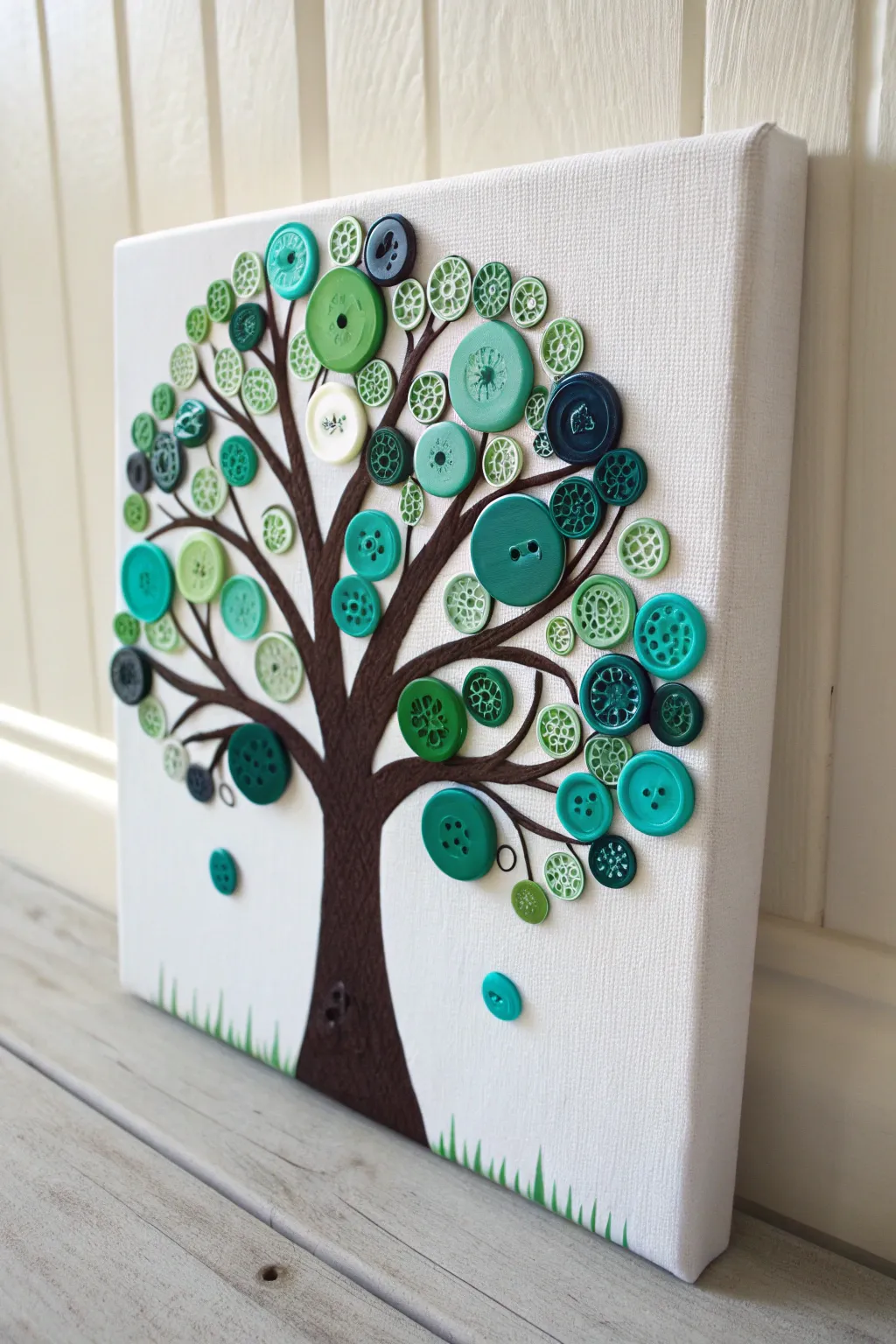
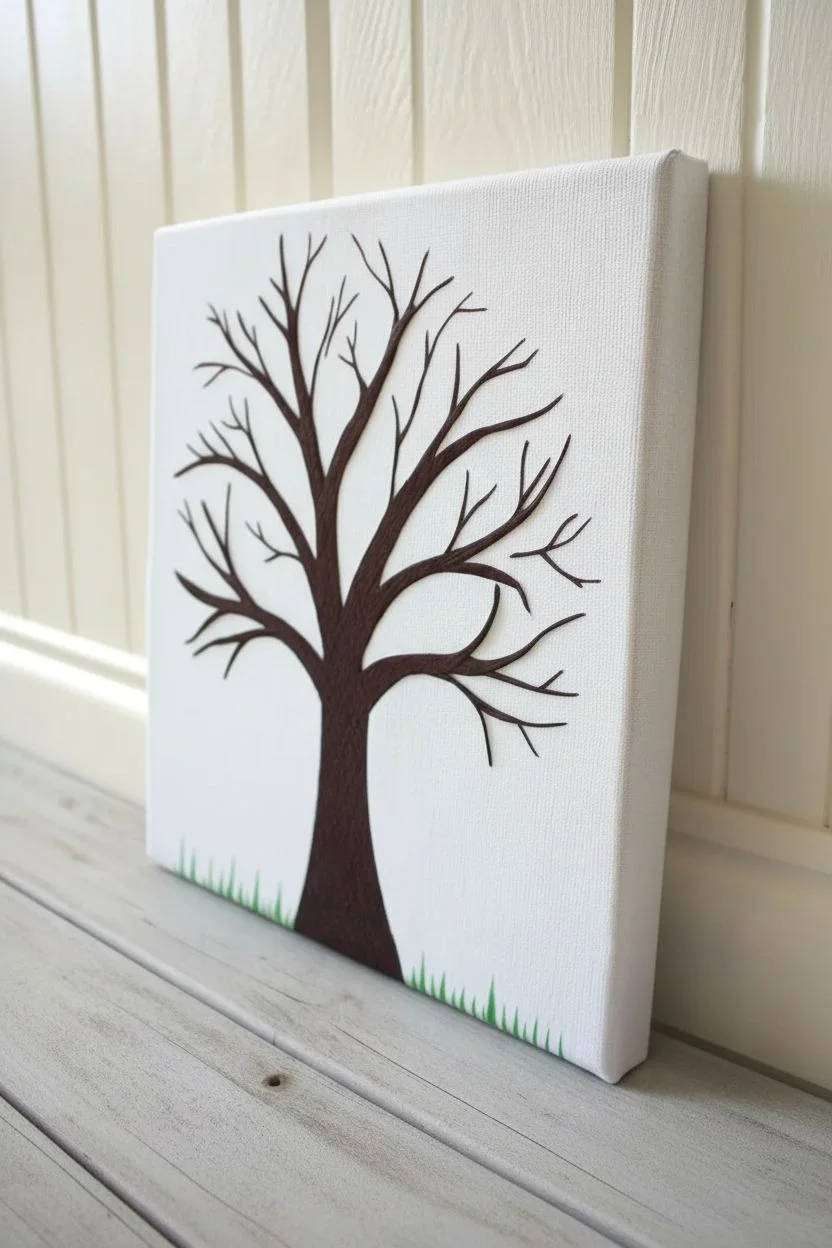
Transform a plain white canvas into a textured masterpiece using a collection of green buttons and acrylic paint. This mixed-media project combines simple painting techniques with 3D collage to create a vibrant tree that practically pops off the wall.
How-To Guide
Materials
- Square stretched canvas (approx. 12×12 inches)
- Acrylic paint: Dark brown/Burnt Umber
- Acrylic paint: Bright grass green
- Assorted green buttons (various sizes, shades like teal, olive, and lime)
- Small flat paintbrush
- Fine liner paintbrush
- Tacky glue or clear-drying craft glue
- Pencil and eraser
- Paper plate or palette
Step 1: Painting the Structure
-
Sketch the Trunk:
Lightly sketch the tree trunk on the canvas with a pencil, starting wide at the bottom and tapering inward as you go up. -
Outline Branches:
Draw several main branches extending from the top of the trunk, curving them outward toward the edges of the canvas. -
Add Twigs:
Sketch smaller sub-branches and twigs coming off the main branches to create a full, spreading skeleton for your canopy. -
Paint the Trunk:
Using the dark brown acrylic paint and the small flat brush, fill in the main trunk area, ensuring opaque coverage. -
Detail the Branches:
Switch to your fine liner brush to paint the thinner branches, carefully following your pencil lines. -
Taper the Ends:
As you paint the tips of the twigs, lift the brush pressure slightly to create sharp, delicate points. -
Paint Grass Blades:
Dip the liner brush into the bright green paint and create the grass at the bottom using quick, upward flicking motions. -
Let it Cure:
Allow the paint to dry completely to prevent smudging; I usually give this about 20 minutes before handling the buttons. -
Erase Marks:
Once the paint is fully dry, gently erase any visible pencil sketch lines that weren’t covered by the paint.
Step 2: Creating the Canopy
-
Sort Your Buttons:
Organize your buttons by size and shade; having them separated makes it easier to balance the colors later. -
Plan the Layout:
Without glue, place your largest buttons around the ends of the branches to visualize the main shape of the tree crown. -
Glue Anchor Buttons:
Apply a dab of tacky glue to the back of the large buttons and press them firmly onto the canvas at the ends of the main branches. -
Add Medium Buttons:
Fill in the spaces between the large anchors with medium-sized buttons, mixing up the shades of green to create depth. -
Fill with Small Buttons:
Glue the smallest buttons, including tiny shirt buttons, onto the delicate twig tips to make the tree look lush and full. -
Check for Balance:
Step back and look for any large gaps or clusters of identical colors, adding more buttons where necessary to even it out. -
Create Falling Leaves:
Glue two or three buttons in the plenty space below the branches to simulate leaves falling mid-air. -
Ground the Scene:
Place one final small button on top of the painted grass area to look like a leaf that has already landed. -
Clean Up:
Check for any stringy glue residue or excess adhesive around the buttons and gently remove it with tweezers or your fingers. -
Final Dry:
Lay the canvas flat in a safe area and allow the glue to cure overnight to ensure all buttons are permanently set.
Sliding Buttons?
If buttons slide down while wet, keep the canvas flat on a table during the gluing phase. Alternatively, use a hot glue gun for an instant hold.
Add Dimension
Make the tree even more 3D by gluing tiny buttons directly on top of larger flat buttons to create layers and varied texture height.
Display your new textured artwork on a wall where natural light can highlight the different sheens and patterns of the buttons
Abstract Scraper or Squeegee Art
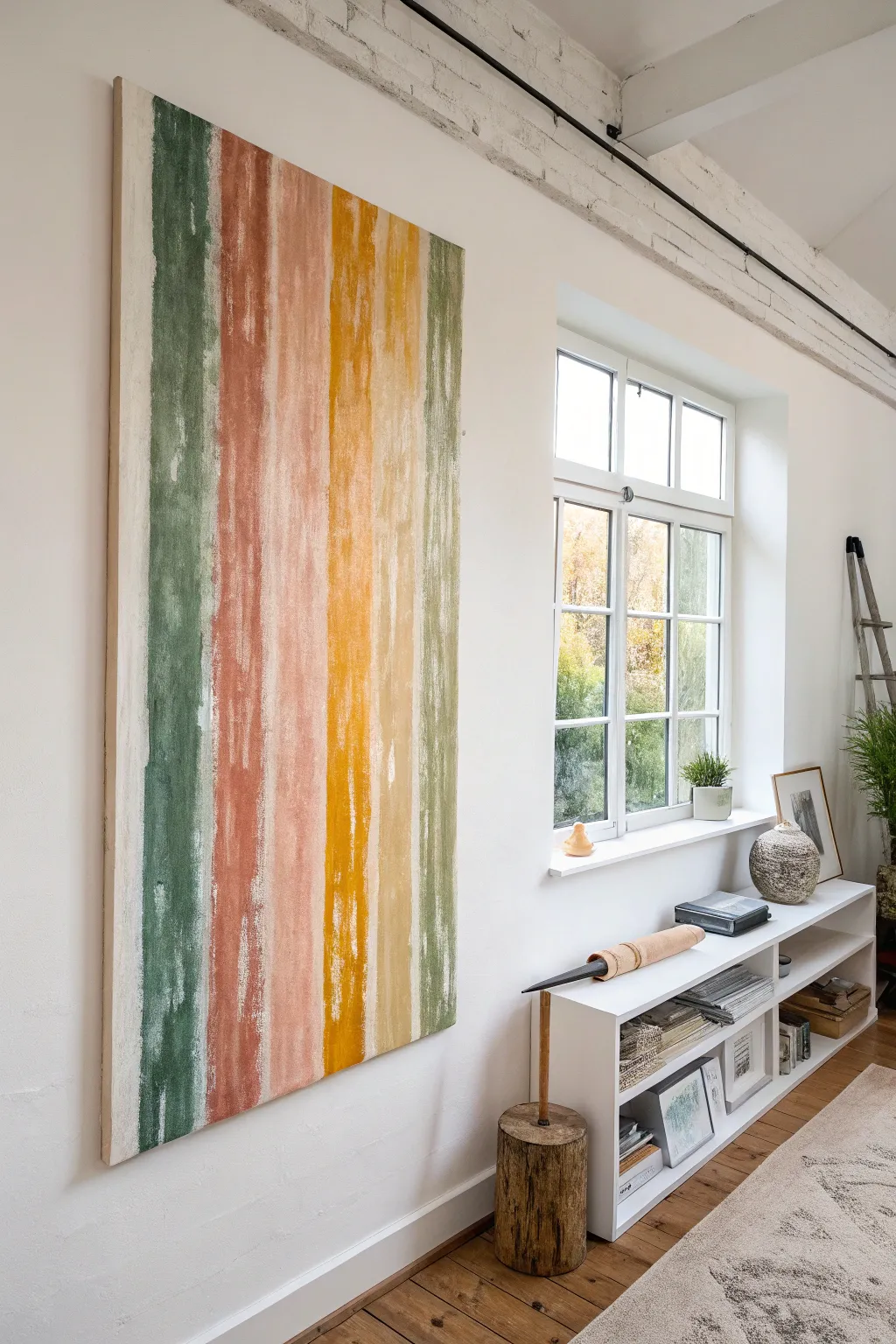
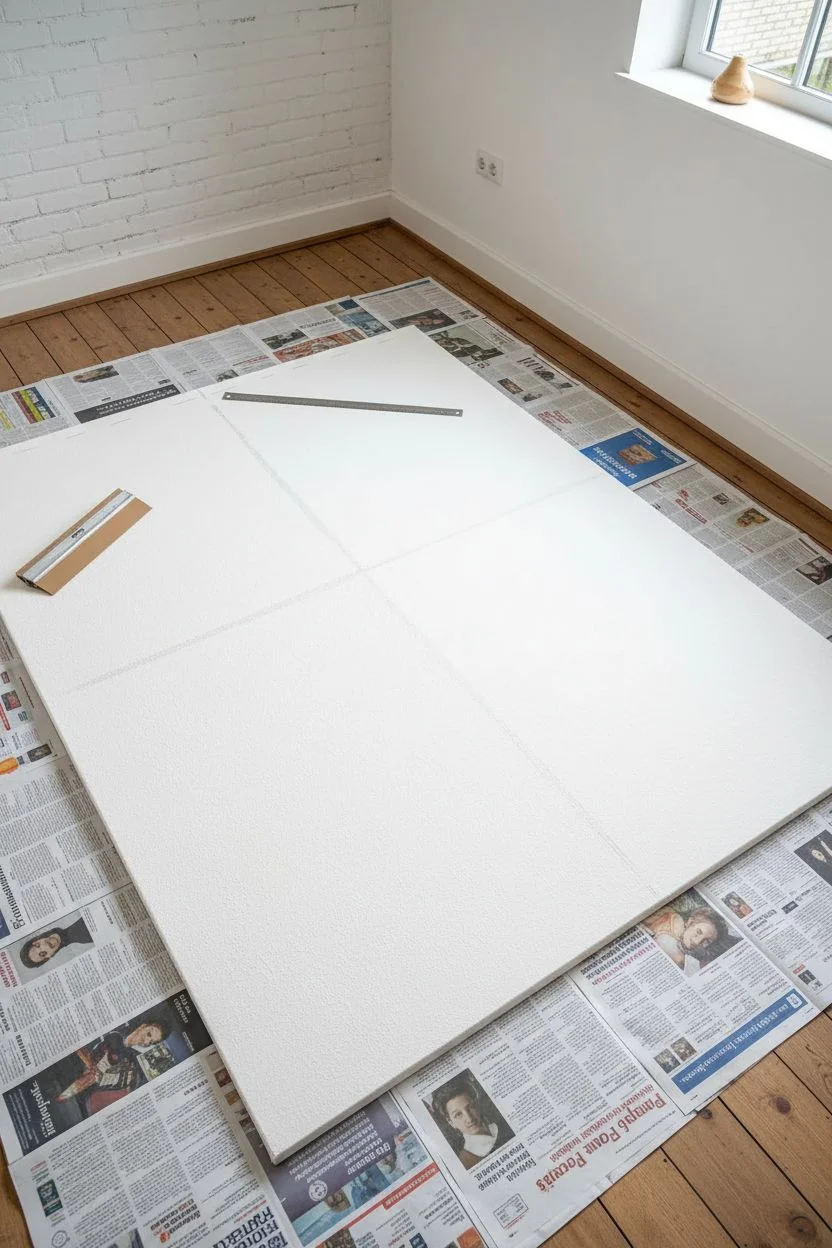
Recreate the sophisticated look of high-end abstract art with this satisfying scraping technique. This project produces long, vertical bands of color featuring a beautiful, weathered texture where the canvas grain naturally peeks through.
Step-by-Step Tutorial
Materials
- Large rectangular canvas (gallery wrapped)
- Heavy body acrylic paints (Sage Green, Rust/Terracotta, Mustard Yellow, Pale Olive)
- Large spreading tool (squeegee, large taping knife, or rigid cardboard)
- Pencil
- Ruler or tape measure
- Drop cloth or newspapers
- Paper towels for cleanup
Step 1: Preparation & Setup
-
Prepare the workspace:
Lay down a drop cloth on a large, flat surface like the floor or a sturdy table. -
Position the canvas:
Place your canvas flat on the surface; working horizontally gives you much better control over gravity and pressure than painting on an easel. -
Mark the lanes:
Using a pencil and ruler, lightly mark the top edge of the canvas to divide the width into four roughly equal sections for your stripes. -
Prepare the tool:
Ensure your squeegee or cardboard scraping tool is clean and the edge is perfectly smooth to avoid unwanted scratches.
Step 2: Mixing & Application
-
Mix the first color:
Squeeze out a generous amount of Sage Green acrylic paint; aim for a consistency that is thick but spreadable. -
Apply paint at the start line:
Spoon or squeeze several dollops of the green paint directly onto the canvas along the very top edge of the first marked lane. -
Position the squeegee:
Place your scraping tool just above the line of paint dollops, holding it at a 45-degree angle to the canvas surface. -
Execute the drag:
Pull the tool steadily downward towards yourself, applying firm, even pressure to drag the paint down the full length of the canvas. -
Create the texture:
I like to vary my pressure slightly as I pull; lighter pressure leaves more paint, while harder pressure reveals the canvas grain. -
Lift and clean:
Lift the tool away once you reach the bottom edge and immediately wipe all paint off the squeegee with paper towels. -
Prepare the second color:
Mix your Rust or Terracotta shade, ensuring it is distinct from the green but similar in tone. -
Apply the second row:
Place the paint dollops at the top of the second lane, positioning them close enough to the first stripe that they might slightly touch. -
Drag the second stripe:
Pull the paint down just as before; don’t worry if the edge slightly overlaps the green stripe, as this adds an organic feel. -
Clean the tool:
Thoroughly clean the scraping edge again to prevent muddying the next color.
Too Solid?
If your stripes look too opaque and lack that distressed look, press harder with the squeegee on the next pass. The friction causes the paint to skip over the canvas tooth.
Step 3: Finishing the Series
-
Apply the yellow stripe:
Repeat the process with the Mustard Yellow paint in the third lane, keeping the movement confident and continuous. -
Apply the final stripe:
Finish with the Pale Olive or light beige color on the far right edge of the canvas. -
Assess the coverage:
Look closely at the texture; if a stripe stopped halfway down, you can add a little paint at the stoppage point and drag again carefully. -
Enhance texturing:
If the paint looks too thick in spots, take a clean, dry scraper and lightly drag over the wet area to remove excess and reveal the white texture. -
Clean edges:
Wipe away any drips that may have pooled at the very bottom edge of the canvas frame. -
Dry flat:
Allow the painting to dry completely while lying flat, which prevents the paint from running or dripping further.
DIY Scraper Tool
Don’t have a professional art squeegee? A sturdy piece of rigid cardboard, a cut piece of mat board, or even a wide plastic taping knife from the hardware store works perfectly.
Once dry, hang your new masterpiece to bring a calm, earthy grounding to your living space.
Geometric Paint Chip Mosaics
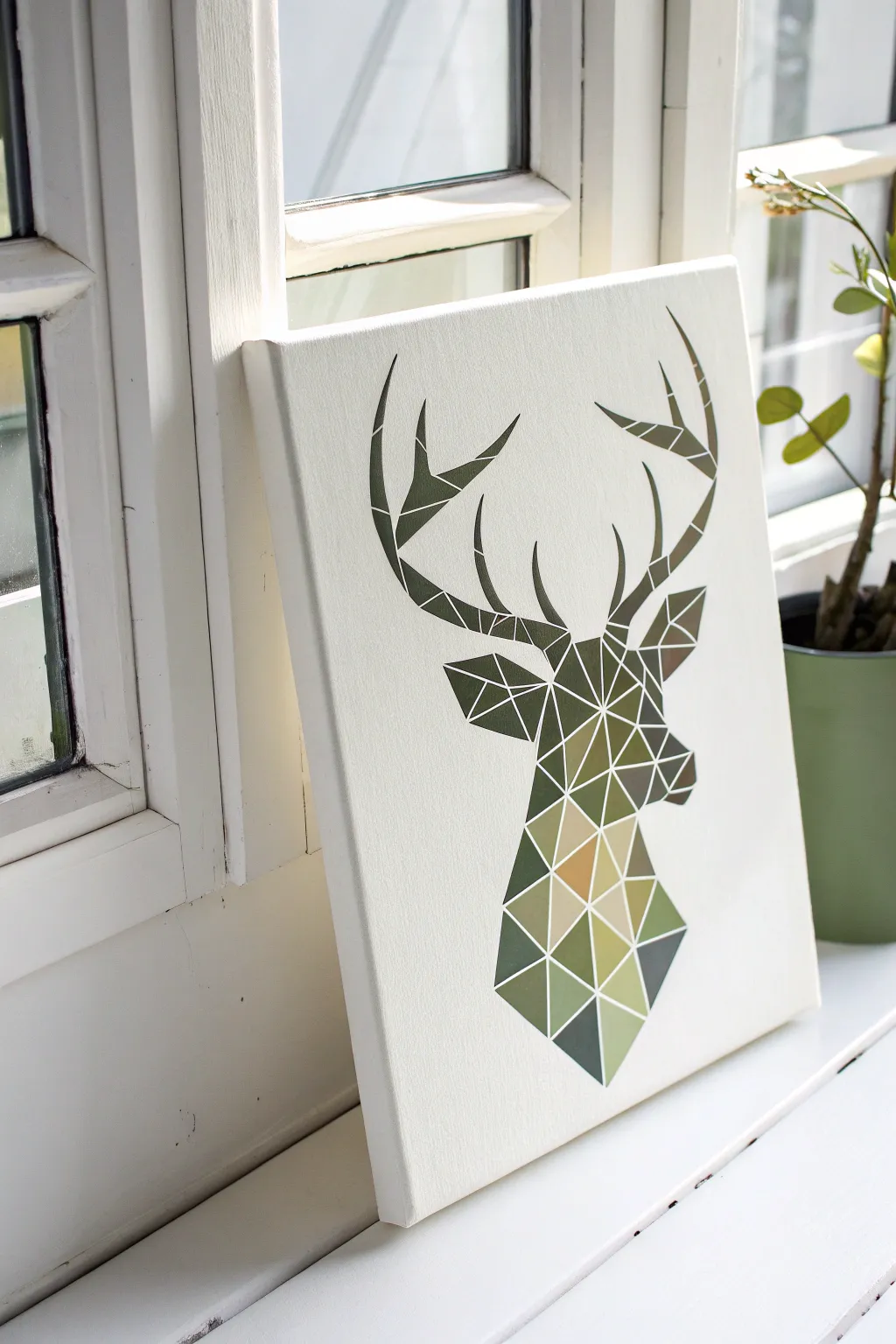
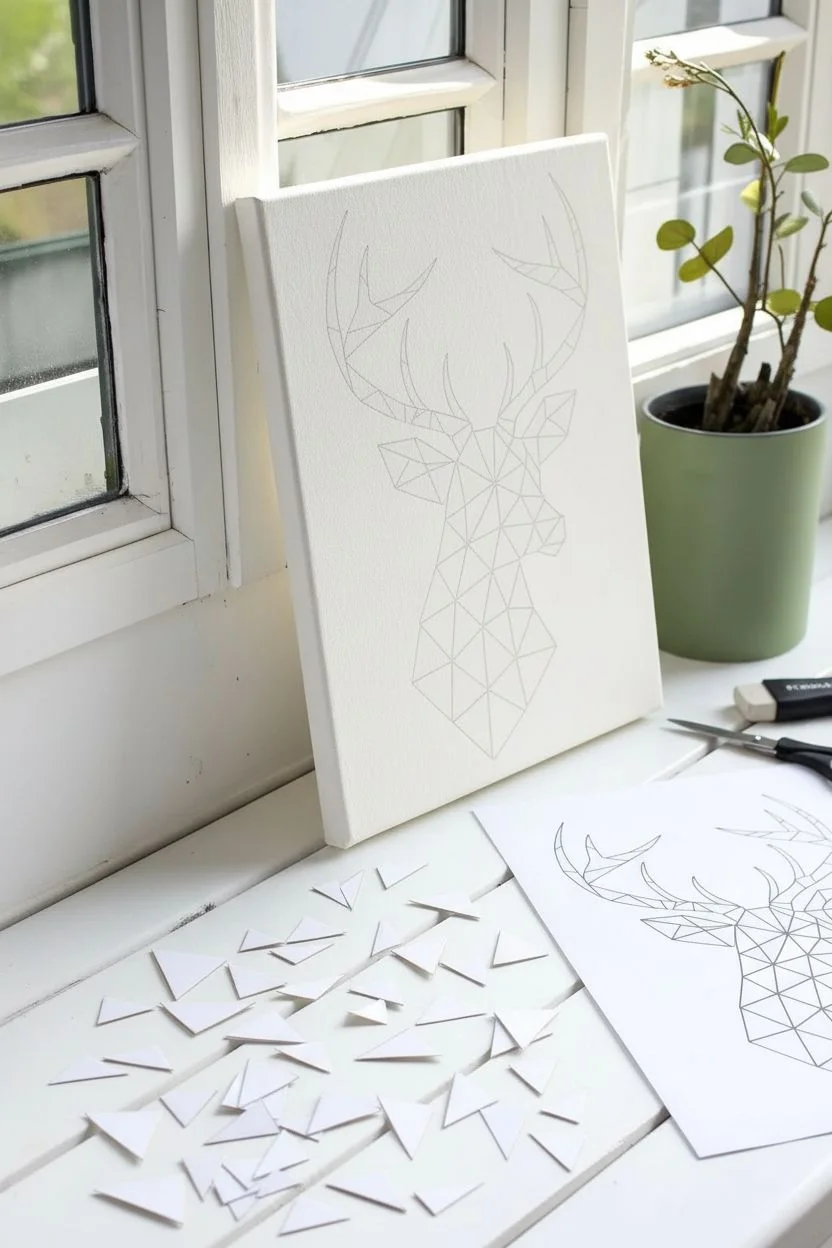
Bring the outdoors in with this modern, low-poly style artwork that uses a gradient of colors to create depth. By arranging simple geometric shapes cut from paint chips or cardstock, you can assemble a striking deer silhouette with a sophisticated mosaic effect.
Step-by-Step
Materials
- Square stretched canvas (e.g., 12×12 inches)
- Paint chips or heavy cardstock (various shades of green, one metallic gold)
- Printed geometric deer head template
- Sharp scissors
- Craft knife and cutting mat
- Clear-drying craft glue or decoupage medium
- Pencil
- Tweezers
- Eraser
Step 1: Preparing the Template
-
Source your design:
Find a ‘geometric deer head’ or ‘low poly stag’ line drawing online to serve as your pattern. Resize it on your computer so it fits comfortably in the center of your canvas with distinct white space around the detailed antlers. -
Print distinct copies:
Print two copies of the design on standard printer paper. Keep one copy intact to use as a visual reference map during assembly. -
Cut the master shapes:
Take the second printed copy and carefully cut out the entire deer silhouette along the outer perimeter. -
Trace the boundary:
Place the paper silhouette onto the center of your canvas and lightly trace around the outside with a pencil. This creates a boundary line to ensure your final mosaic doesn’t drift off-center. -
Create individual stencils:
Cut your paper silhouette apart along the interior, separating it into all the individual triangles and polygons that make up the design.
Uneven Gaps?
Keep a couple of toothpicks handy. While the glue is still tacky, you can gently nudge the pieces around with the toothpick to even out the spacing between the geometric shapes.
Step 2: Cutting the Palette
-
Organize your shades:
Lay out your green paint chips or cardstock. Arrange them from darkest forest green to lightest sage. Select a metallic gold or bronze chip for the chest area to add the highlight seen in the example. -
Assign colors to shapes:
Using your reference map, decide which sections will be dark (usually the snout, back of the neck, and lower antlers) and which will be light (top of the head and chest). -
Trace onto chips:
Place each small paper stencil onto the chosen color card. Remember to place the paper *face down* if you are tracing on the back of the cardstock so the shape is oriented correctly when cut. -
Cut with precision:
Use scissors for larger shapes and a sharp craft knife with a ruler for the smaller, intricate triangles. Straight lines are crucial for that clean geometric look. -
Keep organized:
I prefer to place the cut colored pieces directly onto the intact reference map as I work, so I don’t lose track of which small triangle belongs to the antler tip.
Step 3: Assembling the Mosaic
-
Begin at the base:
Start gluing the pieces at the bottom of the neck. Apply a thin layer of glue to the back of the first shape and press it into place within your pencil boundary. -
Establish the spacing:
Place the adjacent shape next to the first one, leaving a consistent gap of about 1-2 millimeters. This white ‘grout line’ is the canvas showing through and defines the mosaic style. -
Work upwards:
Continue building the neck and face, switching between your dark greens, lighter olives, and the metallic gold accents in the center chest area. -
Tackle the antlers:
For the delicate antlers, use tweezers to position the tiny shards of paper. These pieces are small, so use a very small dot of glue to prevent oozing. -
Clean the edges:
Once all pieces are glued, gently erase any visible pencil marks from your initial outline tracing. -
Final press:
Place a clean sheet of paper over the artwork and press down firmly with your hand or a heavy book to ensure all corners are flat and adhered well.
Number Your Puzzle
Before cutting your paper template apart, number every single triangle. Write the corresponding number on the back of the paint chip piece. This guarantees you won’t mix up similar-looking shapes.
Hang your new geometric masterpiece in a spot with natural light to catch the subtle shimmer of the metallic accents.
Have a question or want to share your own experience? I'd love to hear from you in the comments below!