
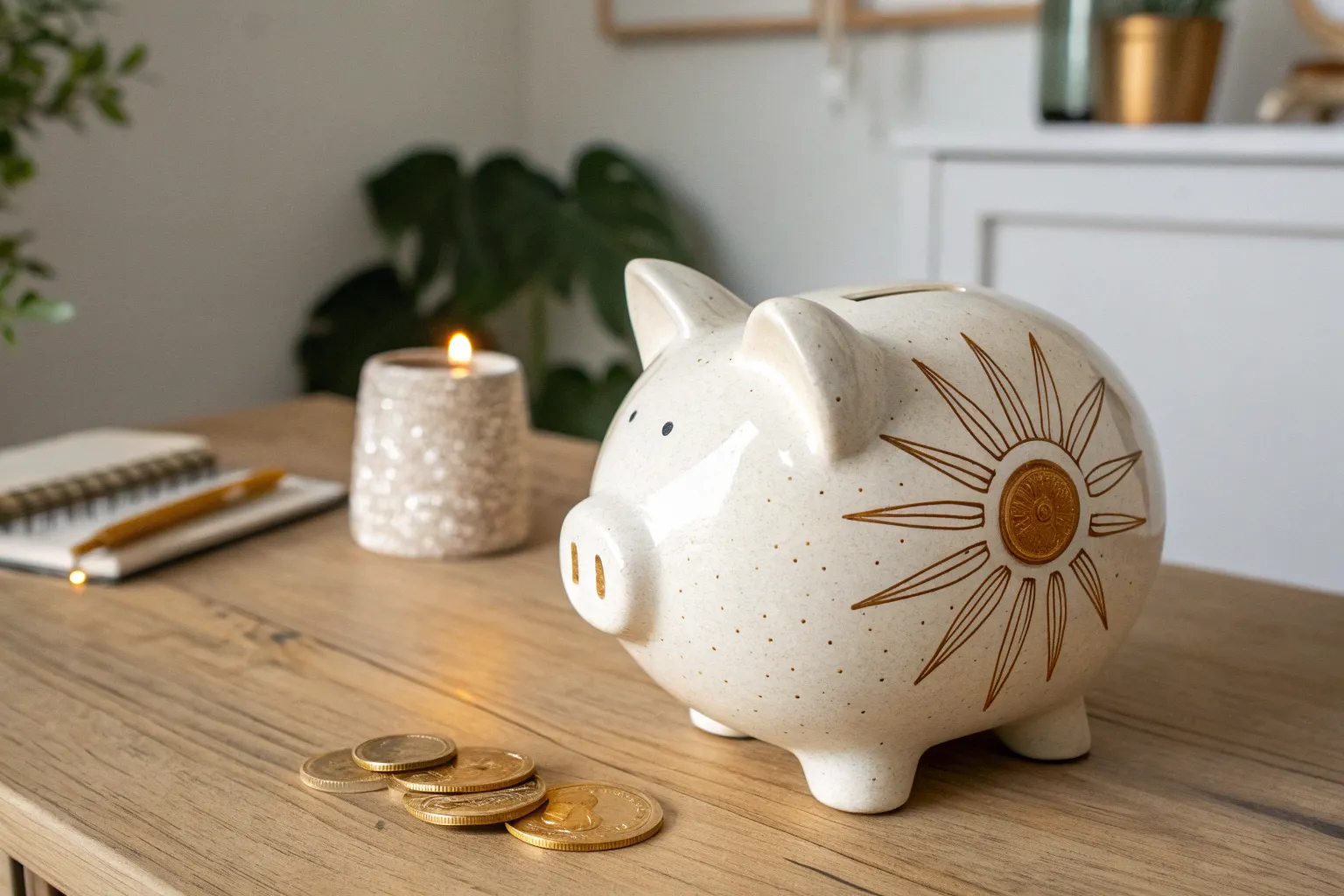
I love turning a plain piggy bank into a tiny 3D canvas that feels personal every time you drop in a coin. These piggy bank painting ideas are all about designs that wrap around those curves so your snout, ears, belly, and tail look intentional from every angle.
Classic Blush Pink With a Glossy Finish
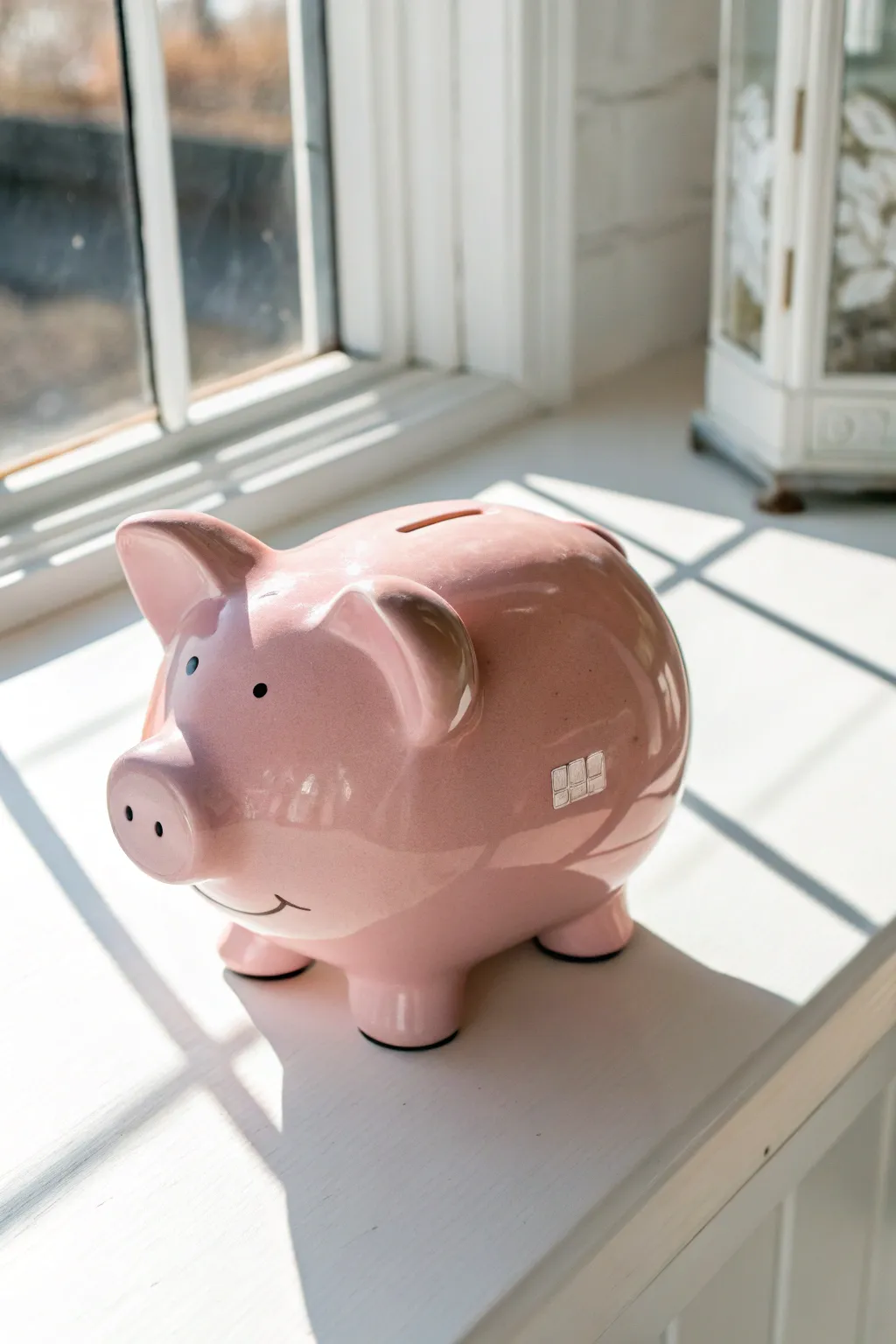
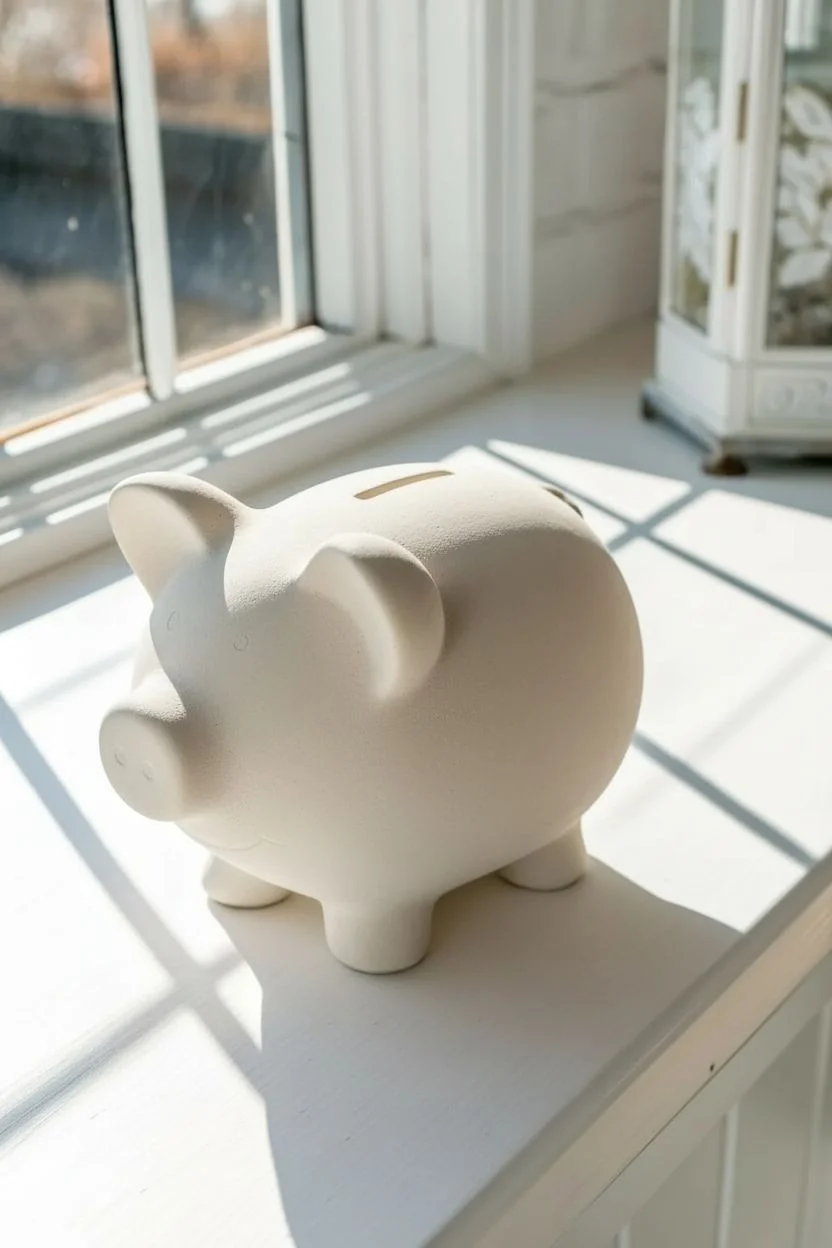
Sometimes nothing beats the classics, and this beautifully simple blush pink piggy bank is proof. With its high-gloss ceramic finish and minimalist features, it captures a nostalgic charm that fits perfectly in any modern nursery or shelf display.
Detailed Instructions
Materials
- Unfinished ceramic bisque piggy bank
- High-gloss acrylic paint (Blush Pink)
- Black acrylic paint or fine-point black paint pen
- Wide, soft synthetic paintbrush
- Small round detail brush
- High-gloss varnish or spray sealer (crucial for that glass-like shine)
- Fine-grit sandpaper (optional)
- Damp cloth
- Palette or paper plate
Step 1: Preparation
-
Clean and Prep:
Begin by wiping down your ceramic pig with a damp cloth to remove any dust or manufacturing residues. If there are any rough seams from the mold, lightly sand them smooth with fine-grit sandpaper and wipe clean again.
Smoother Brushstrokes
To eliminate brush marks in your glossy coat, mix a tiny drop of distinct ‘flow improver’ medium into your acrylic paint. It helps the paint level itself out as it dries.
Step 2: The Base Coat
-
First Pink Layer:
Load your wide soft brush with the blush pink paint. Apply a thin, even coat over the entire pig, starting from the belly and working your way up. Don’t worry if it looks streaky; coverage will improve with subsequent layers. -
Mind the Drying Time:
Let this first coat dry completely. This usually takes about 20-30 minutes for acrylics. If you rush this steps, you risk pulling up the first layer of paint. -
Second Pink Layer:
Apply a second coat of blush pink. Use long, smooth strokes to minimize brush marks. Watch for pooling paint around the ears and the coin slot, smoothing those areas out immediately. -
Assess Coverage:
Check the opacity once the second coat is dry. For this specific solid look, I often find a third thin coat is necessary to get that rich, uniform color without any ceramic showing through.
Step 3: Adding Personality
-
Map the Features:
Before painting the face, you can lightly mark the position of the eyes and smile with a pencil if you’re nervous about freehanding. Look at the reference: the eyes are wide-set, and the smile is a gentle, shallow curve. -
Painting the Eyes:
Using a small round detail brush or the tip of a paint pen, create two solid black dots for the eyes. Position them on the upper cheeks, slightly below the ear line. -
Adding Nostrils:
Paint two smaller black dots on the flat front surface of the snout. These should be spaced closer together than the eyes. -
The Smile:
Carefully paint a thin, curved black line for the mouth. Start from one side and pull the brush or pen smoothly across to avoid a shaky line. Keep it simple and relatively high up on the chin. -
Clean Up Edges:
If you made any mistakes with the black paint, wait for it to dry completely, then touch it up with a small dab of your blush pink paint.
Fixing Sticky Paint
If your pig feels tacky even after drying, you likely applied the layers too thickly. Let it sit in a dry, warm spot for a few days to fully cure the deep layers.
Step 4: The High-Gloss Finish
-
Prepare for Varnish:
Ensure all paint layers, especially the black features, are 100% dry. Sealing wet paint can cause smearing or cloudiness. -
Apply First Gloss Coat:
Using a clean soft brush or a spray gloss, apply your high-gloss varnish. If brushing, use long, even strokes to avoid introducing texture. -
Check Reflections:
Hold the pig up to a light source to check for missed matte spots. The goal is a uniform, wet-look shine across the entire surface. -
Dry and Repeat:
Allow the first layer of gloss to cure according to the bottle’s instructions. Apply a second coat for that ultra-reflective, ceramic-glaze appearance seen in the photo. -
Final Cure:
Set the piggy bank in a dust-free area to cure fully for at least 24 hours before handling or inserting any coins.
Now you have a shimmering classic piggy bank ready to guard your savings with style
Pastel Color-Blocked Feet, Ears, and Snout
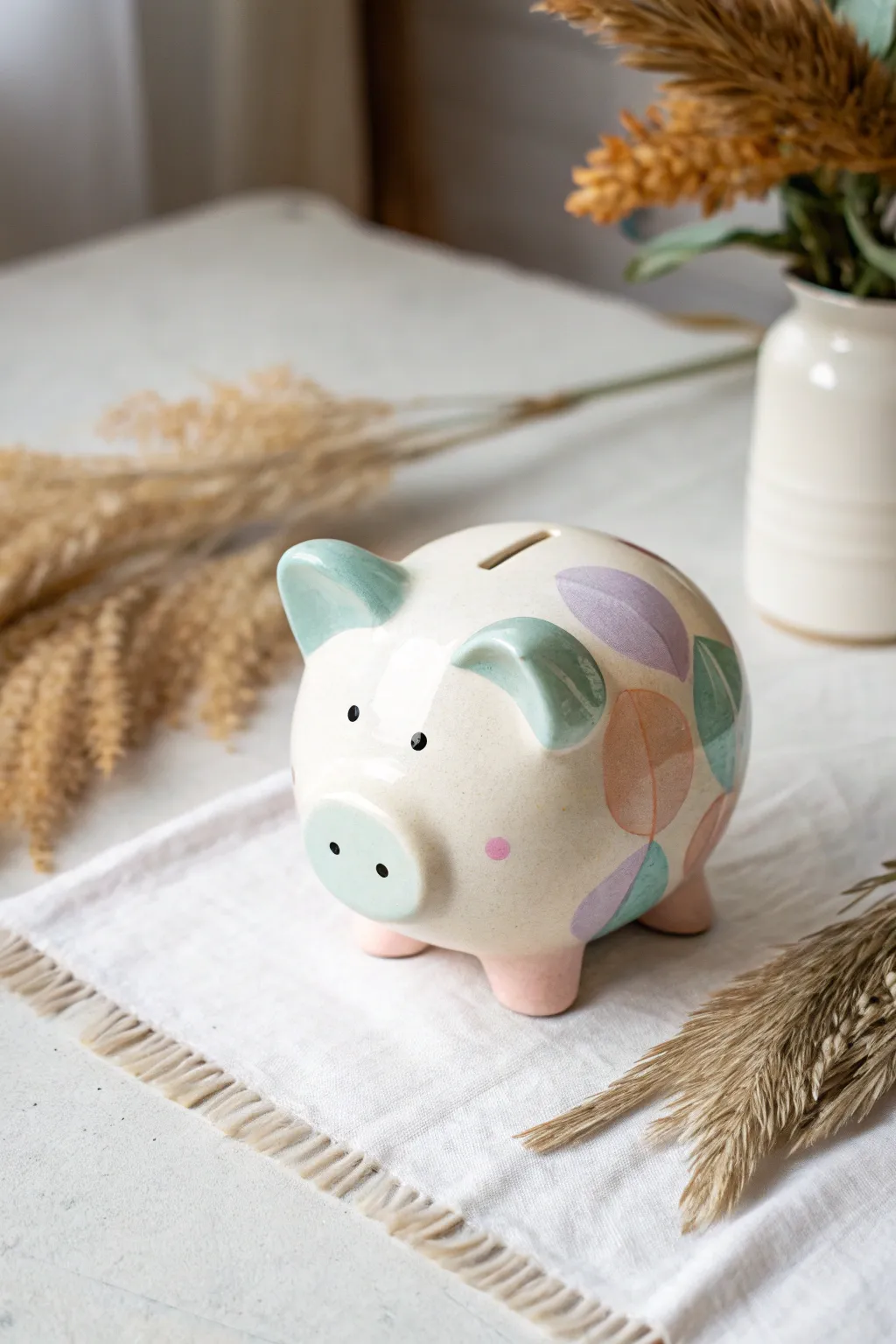
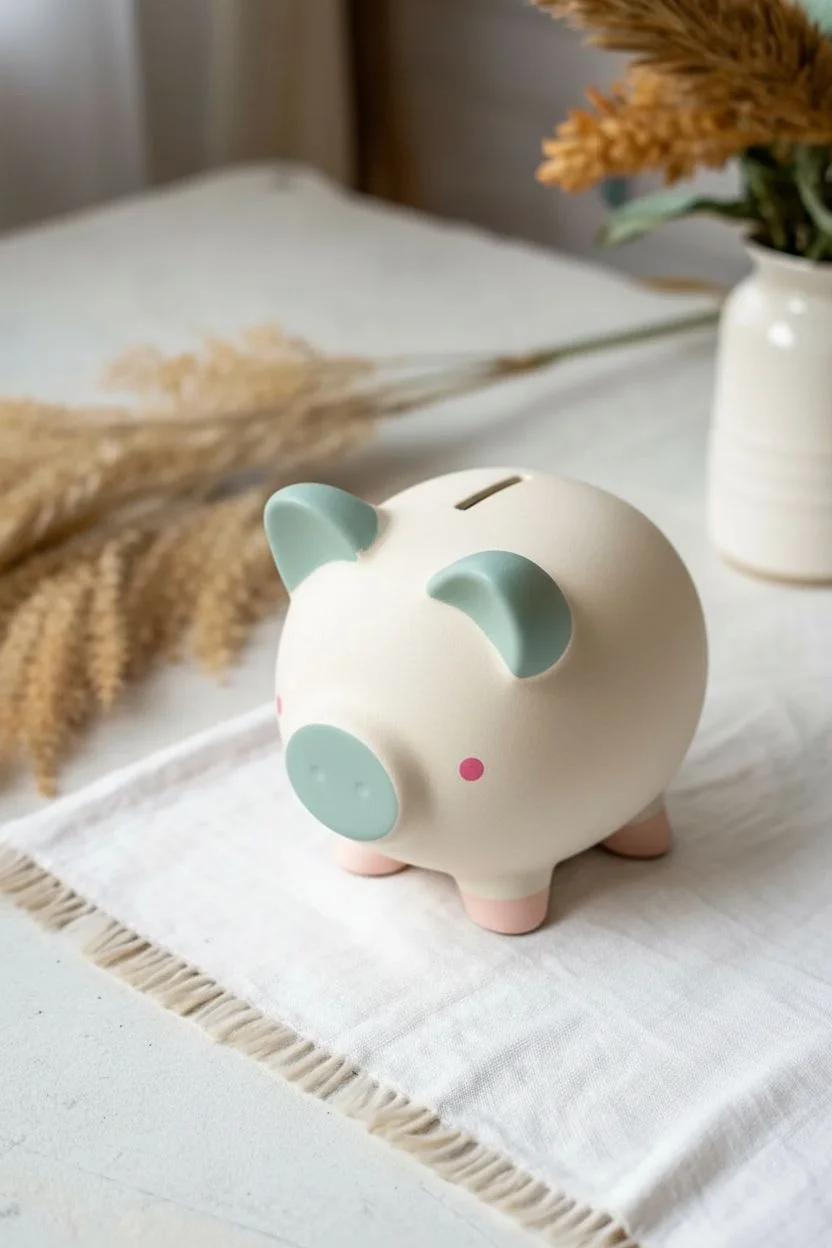
This charming design combines soft, color-blocked features with an airy, botanical pattern that feels fresh and modern. By painting just the extremities in muted pastels, you create a sweet visual anchor for the floating leaf motifs that dance across the body.
Step-by-Step
Materials
- Ceramic bisque piggy bank
- Acrylic paints (muted teal, soft pink, lilac, warm beige, coral, white)
- Glazing medium (or water for diluting)
- Medium flat brush (approx. #6 or #8)
- Small round detail brush (#1 or #2)
- Dotting tool or toothpick
- Palette for mixing
- Cup of water
- Clear acrylic sealant (glossy finish)
Step 1: Base & Features
-
Prep the surface:
Begin by wiping down your ceramic pig with a slightly damp cloth to remove any dust or oils. Let it dry completely before you start painting. -
Base coat application:
Mix a warm, creamy off-white shade using white with a tiny drop of beige. Apply a smooth, even coat over the entire pig using your flat brush. Let this dry, and apply a second coat if the ceramic texture is still showing through. -
Paint the snout:
Mix a soft, muted teal color (mint green with a touch of blue and white). Carefully paint the flat front surface of the snout with your round brush, keeping the edges clean and rounded. -
Block in the ears:
Using the same muted teal, paint the front-facing interior of both ears. Follow the natural sculptural curve of the ear to create a defined shape. -
Color the feet:
Switch to a soft pink shade. Paint all four hooves, extending the color slightly up the leg to create a ‘dipped’ look. I like to rest the pig on its back to make painting the feet easier without smudging. -
Add cheek details:
Dip a dotting tool or the handle end of a paintbrush into a bright pink or magenta paint. Place a single, perfect dot on each cheek to give the pig a rosy glow.
Clean Lines Hack
Use liquid latex masking fluid or artist tape around the base of the ears and snout before painting the accents. This guarantees a crisp edge without needing a unsteady hand.
Step 2: Leaf Patterning
-
Mix leaf colors:
Prepare three distinct colors for your leaves: a dusty purple (lilac), a warm coral-orange, and a soft sage green. Adding a little glazing medium here helps the paint flow transparently. -
Paint the first leaf shape:
Using the round brush, paint a simple almond shape using the dusty purple. Start near the back or side of the pig. Press down to widen the stroke in the middle and lift up to create a point. -
Add stem detail:
While the paint is still wet, use a toothpick or a very fine clean brush to gently scratch a line down the center of the leaf, revealing the cream base coat underneath. -
Continue the pattern:
Repeat this almond-leaf process with the coral and sage green paints. Scatter them randomly across the pig’s back and sides, varying their direction so they look like falling leaves. -
Overlap for depth:
Don’t be afraid to let a few leaves slightly overlap or touch. Because we thinned the paint slightly, these overlaps create beautiful secondary colors. -
Fill empty spaces:
Step back and look for any large gaps. Fill these with smaller leaves, ensuring the distribution feels balanced but organic.
Step 3: Finishing Touches
-
Define the eyes:
Using black paint and your smallest detail brush or a fine dotting tool, place two small dots for eyes just above the snout. -
Add snout nostrils:
Place two tiny black dots on the teal snout area for nostrils. Keep them centered and spaced evenly apart. -
Dry time:
Allow the entire project to dry for at least 24 hours. The thicker paint on the feet may take longer than the sheer leaves. -
Seal the artwork:
Apply a coat of glossy clear acrylic sealant. This protects the paint from scratches and gives the ceramic that professional, kiln-fired shine.
Make it Sparkle
Mix a tiny amount of iridescent mixing medium into your leaf colors. The leaves will look matte normal but will shimmer subtly when they catch the light.
Once sealed, your beautifully patterned piggy bank is ready to brighten up a shelf or help save for a rainy day
Playful Polka Dots Wrapped Around the Belly
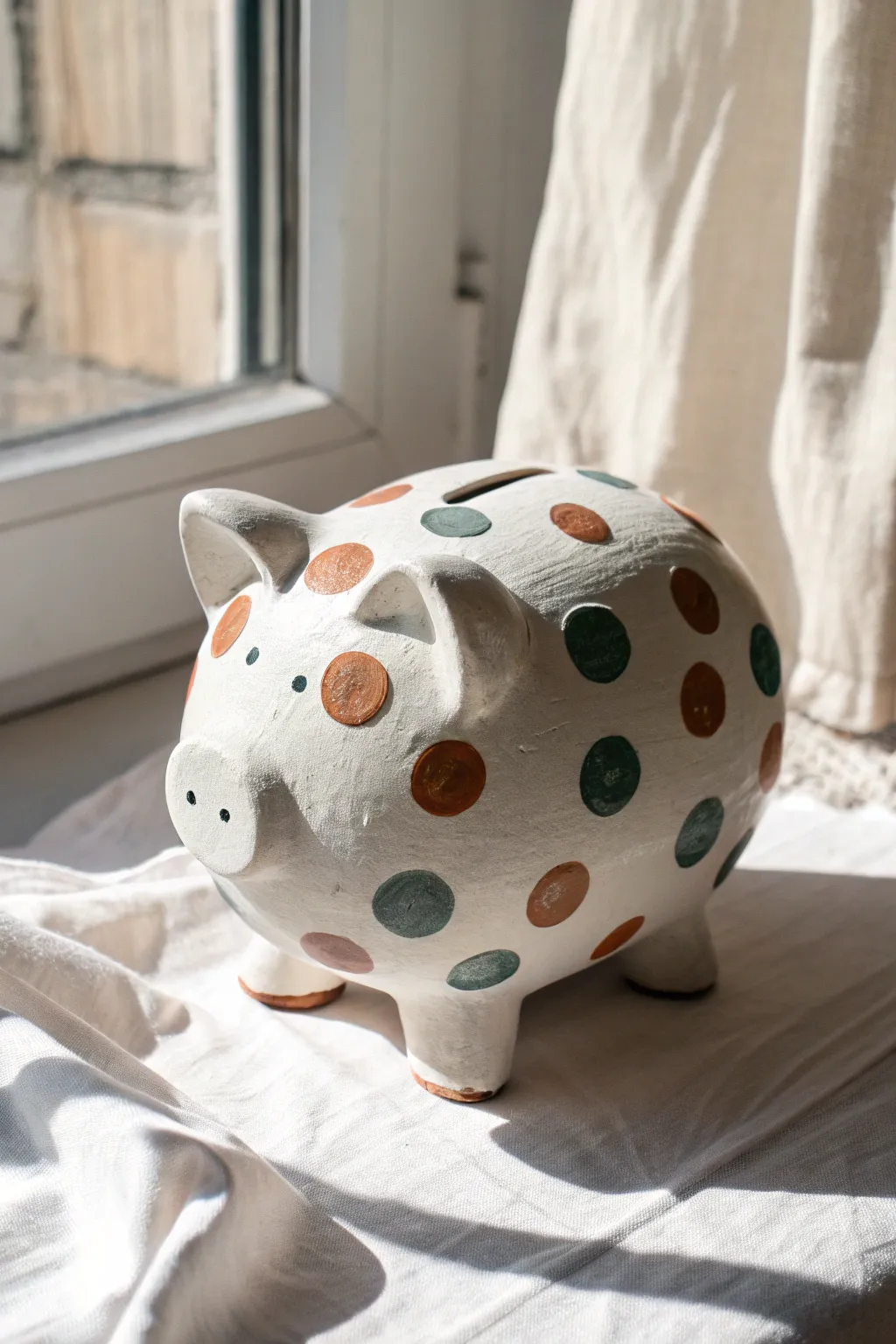
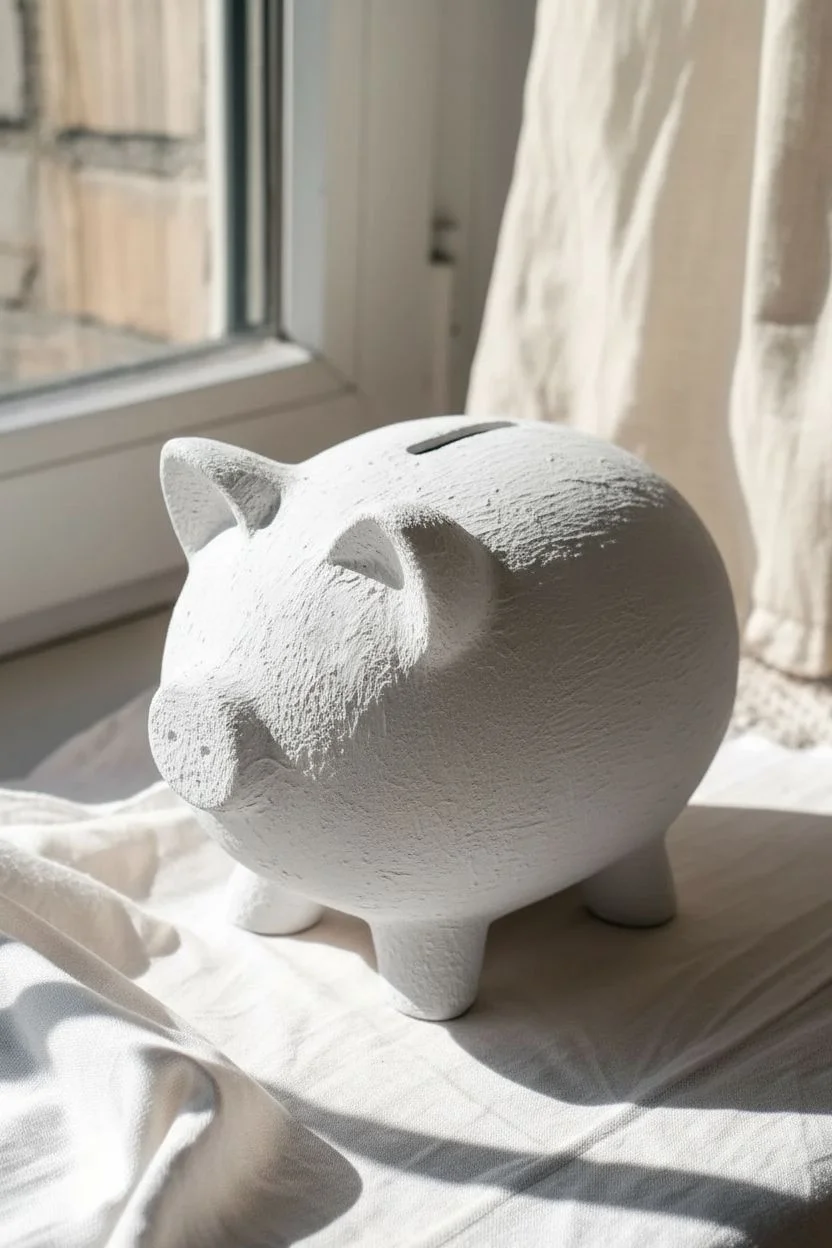
Transform a plain ceramic piggy bank into a charming piece of decor with this simple, playful design. Featuring alternating earthy tones of rust and teal on a textured white base, this project creates a cozy, hand-painted look perfect for a nursery or shelf display.
How-To Guide
Materials
- Unfinished ceramic piggy bank
- White acrylic paint (matte finish)
- Rust/Terracotta acrylic paint
- Muted teal/sage green acrylic paint
- Wide flat paintbrush (approx 1 inch)
- Small round paintbrush (size 4 or 6)
- Round foam pouncers (approx 0.75 inch) or a cork
- Palette or paper plate
- Cup of water and paper towels
- Matte finish spray sealant (optional)
Step 1: Preparing the Base
-
Clean surface:
Begin by wiping down the ceramic piggy bank with a slightly damp cloth to remove any dust or oils. Let it dry completely. -
First white coat:
Using your wide flat brush, apply a generous coat of white matte acrylic paint over the entire pig. Don’t worry about perfect smoothness; some brush texture adds to the rustic charm. -
Ear and leg coverage:
Ensure you get paint into the crevices around the ears, snout, and under the belly. Turn the pig upside down carefully to paint the bottom of the feet. -
Second layer:
Once the first coat is dry to the touch (usually 15-20 minutes), apply a second coat of white. This ensures the original ceramic color doesn’t peek through and provides a solid, opaque background. -
Create texture:
While the second coat is still slightly wet, I like to use a dryer brush to lightly stipple or cross-hatch the surface. This mimics the slightly rough, clay-like texture seen in the inspiration photo.
Uneven Circles?
Don’t stress if your dots aren’t perfect! If a circle looks messy, wait for it to dry, paint over it with your white base coat, and try again. The layers just add more texture.
Step 2: Planning the Dots
-
Visualize placement:
Before painting, look at your pig and mentally map out where the dots will go. You want them spaced relatively evenly but random enough to look playful. -
Load the rust color:
Pour a small amount of rust/terracotta paint onto your palette. If using a foam pouncer, dab it into the paint and offload excess on a paper towel to prevent globs. -
Stamping rust dots:
Press your pouncer or cork firmly onto the pig’s side to create your first set of dots. Aim for a scattered pattern, leaving plenty of white space between them for the second color. -
Hand-painting option:
If you don’t have a stamper, use the small round brush to hand-paint circles. The charm of this design is that the circles aren’t perfect geometric shapes, so freehanding works beautifully. -
Ears and nose:
Don’t forget to add a partial dot on the ears or near the snout for continuity.
Level Up: Coin Slot Detail
Make the coin slot pop by painting the inner rim with the rust color using a very fine detail brush. It adds a professional, finished quality to the top view.
Step 3: Adding Contrast
-
Load the teal color:
Clean your brush or grab a fresh pouncer. Load up the muted teal or sage green paint. -
Fill the gaps:
Place teal dots in the empty white spaces between the rust dots. Try to alternate them so two dots of the same color rarely touch. -
Refining edges:
Use your small round brush to touch up the edges of any dots that look too wispy. The goal is a solid circle, but slightly uneven edges are perfectly fine for this style. -
Overlap check:
Ensure the dots wrap fully around the curve of the belly and legs, disappearing underneath the pig naturally. -
Painting the eyes:
Use the handle end of a small paintbrush dipped in black paint (or a very dark grey) to dot two small eyes just above the snout. -
Nostril details:
Add two tiny vertical dashes or dots on the flat front of the snout for the nostrils.
Step 4: Finishing Touches
-
Dry time:
Allow the polka dots to dry completely. Since the paint is thicker here, give it at least an hour. -
Distressing (optional):
For an antique look, lightly sand a few random spots on the pig with fine-grit sandpaper to reveal the ceramic underneath, focusing on the ears or feet. -
Sealing:
To protect your work, take the pig outside and apply a light coat of matte spray sealant. This keeps the finish flat while protecting the paint from chipping. -
Final check:
Inspect the feet. If the bottom edges are rough, you can paint a thin rim of rust color around the base of each hoof for a grounded look.
Start saving your coins in style with this adorable, earthy decoration
Preppy Stripes That Follow the Curves
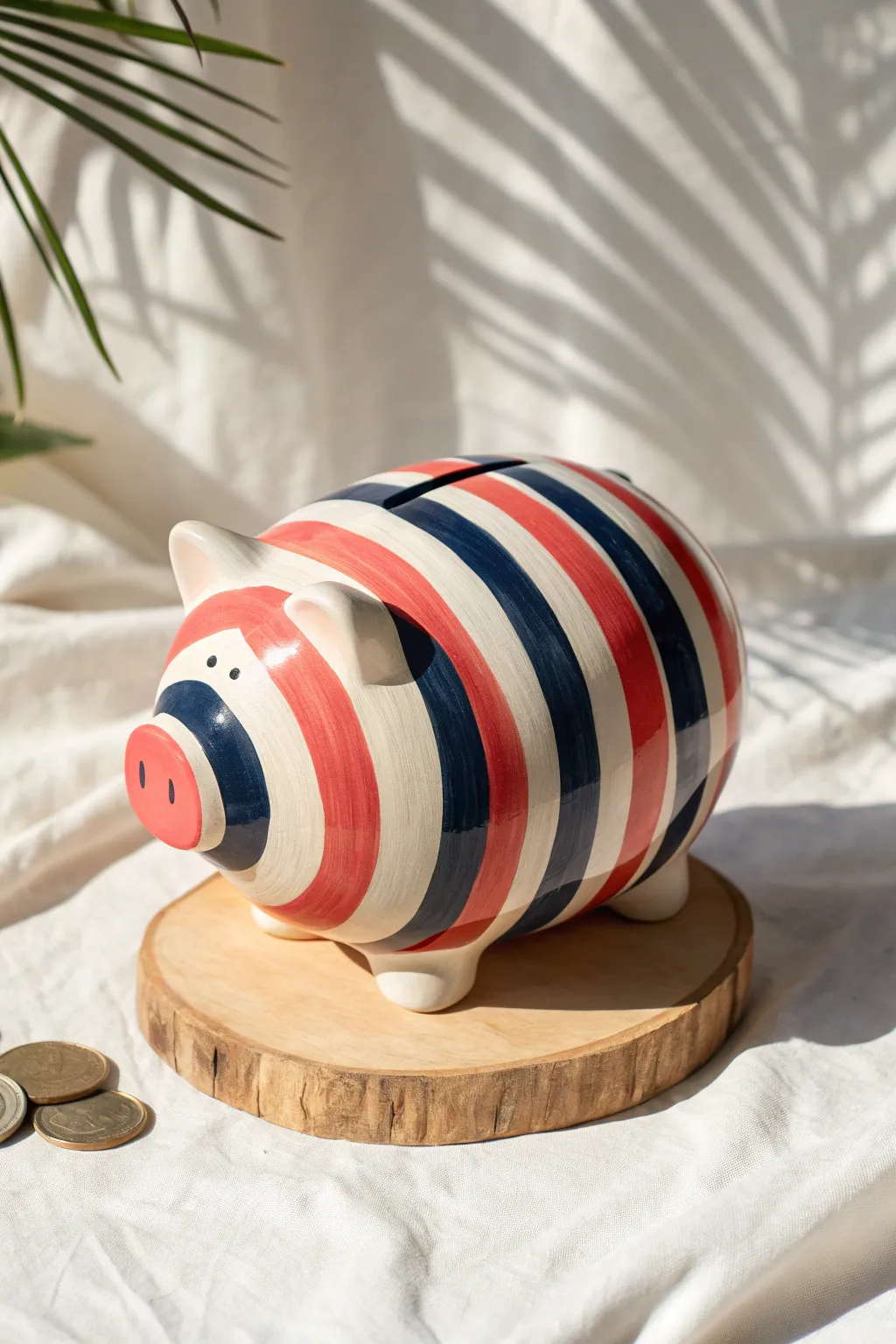
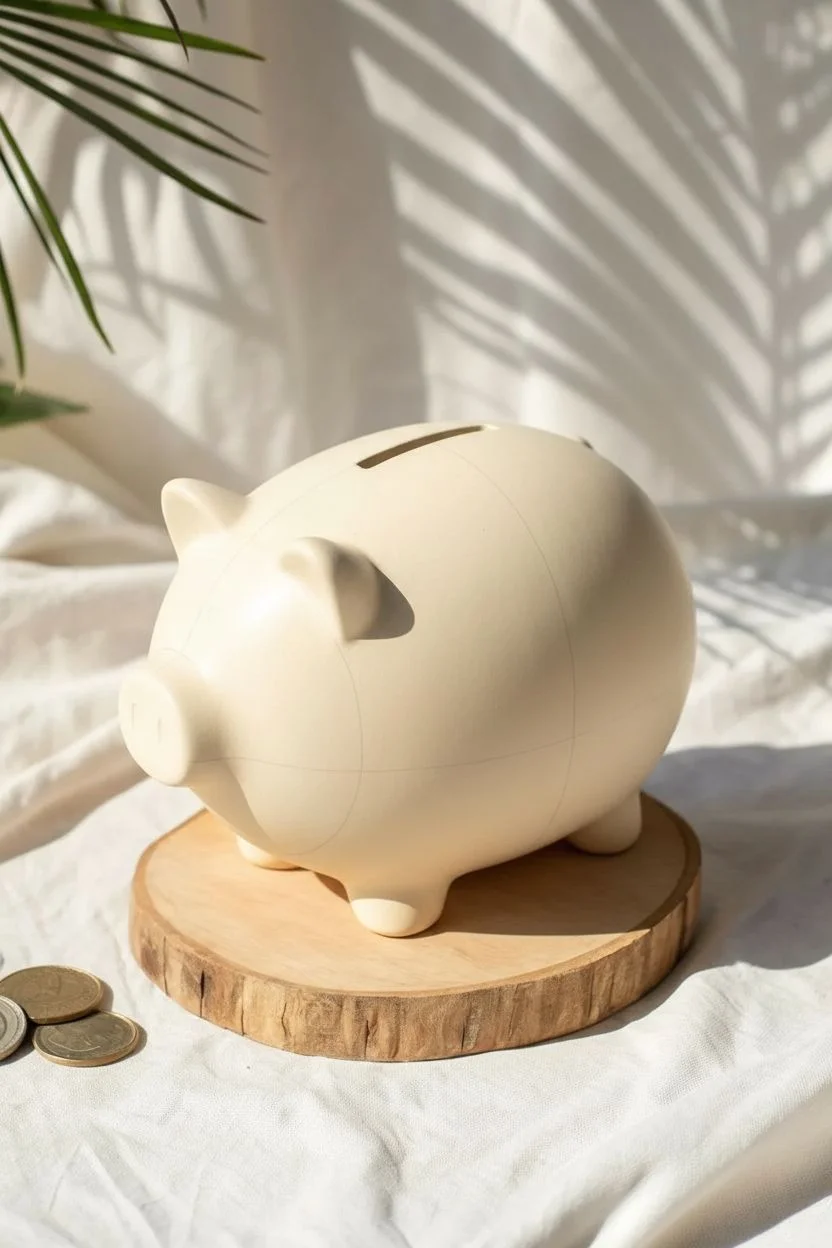
Give your savings a classic, preppy makeover with this striped piggy bank design that feels straight out of a seaside cottage. By letting the bold navy and coral bands follow the natural curves of the pig, you create a sophisticated look that is surprisingly organic and forgiving to paint.
Detailed Instructions
Materials
- Ceramic piggy bank (white or bisque)
- Acrylic paints: Navy Blue, Coral/Salmon Red, Cream/Off-White
- Soft synthetic flat brushes (medium and small sizes)
- Painter’s tape or skinny automotive masking tape (optional)
- Small round detail brush
- High-gloss varnish or sealant
- Palette for mixing
- Cup of water and paper towels
Step 1: Preparation & Base Coat
-
Clean the surface:
Before you start, wipe down the ceramic piggy bank with a slightly damp cloth to remove any dust or oils, ensuring the paint adheres properly. -
Mix the base color:
If your pig isn’t already the perfect shade of cream, mix white acrylic paint with a tiny drop of yellow ochre or brown to create a warm, vintage off-white hue. -
Apply the first base coat:
Using a wide, soft flat brush, paint the entire pig with your cream color. Don’t worry about finish perfection yet; just get the surface covered. -
Finish the background:
Once the first layer is dry to the touch, apply a second coat of cream to ensure solid, opaque coverage without streaks. Let this dry completely before moving on to the stripes.
Wobbly Lines?
If freehand painting is too hard, use flexible 1/4 inch automotive masking tape. It bends around curves much better than standard painter’s tape.
Step 2: Mapping the Stripes
-
Visualize the flow:
Study the curve of the pig’s body. The stripes shouldn’t be perfectly straight lines; they should bow slightly to hug the roundness of the belly and back. -
Mark the center line:
Using a pencil very lightly, sketch the first stripe right down the middle of the body. This will act as your anchor guide for the rest of the pattern. -
Sketch remaining sections:
Continue marking light pencil guidelines for alternating thick and thin stripes, radiating out from your center line towards the head and the tail. -
Handle the face carefully:
When you reach the face, let the lines curb around the ears and converge towards the nose, allowing the snout to remain a focal point.
Step 3: Painting the Design
-
Start with Coral:
Load a medium flat brush with your coral or salmon red paint. I like to start with this lighter color first as it’s easier to correct if it overlaps into the navy areas. -
Paint the red stripes:
Fill in the sections designated for red, using long, confident strokes that mimic the curve of the pencil lines. You can leave the nose unpainted for now. -
Paint the snout:
While you have the coral paint out, carefully paint the flat circle of the snout specifically, creating a cute pink nose effect. -
Switch to Navy:
Thoroughly rinse your brush or switch to a fresh one. Load it with deep navy blue paint. -
Fill the blue stripes:
Carefully paint the navy stripes in the remaining gaps. Use the edge of your flat brush to create crisp borders against the cream background and red stripes. -
Tidy the edges:
If your lines feel a bit wobbly, use a small detail brush dipped in the cream base color to clean up the edges and sharpen the stripe definition.
Make it Metallic
Swap the plain navy stripe for a metallic gold or silver paint to give the piggy bank a more glamorous, high-end decorative finish.
Step 4: Finishing Touches
-
Add face details:
Using your smallest round brush or a dotting tool, dip into black paint to add two small vertical ovals for the eyes and two tiny lines for the nostrils on the snout. -
Paint the coin slot:
Check the rim of the coin slot at the top; you may want to paint the inner edge navy or red to make it look finished. -
Let it cure:
Allow the pig to dry overnight. Acrylics dry fast, but thicker layers need time to fully harden before sealing. -
Seal for shine:
Apply a coat of high-gloss varnish over the entire project. This not only protects the paint from chipping but gives it that polished, store-bought ceramic look.
Place your stylish new bank on a shelf and watch your savings grow in style
BRUSH GUIDE
The Right Brush for Every Stroke
From clean lines to bold texture — master brush choice, stroke control, and essential techniques.
Explore the Full Guide
Sweet Floral Garland With Leafy Vines
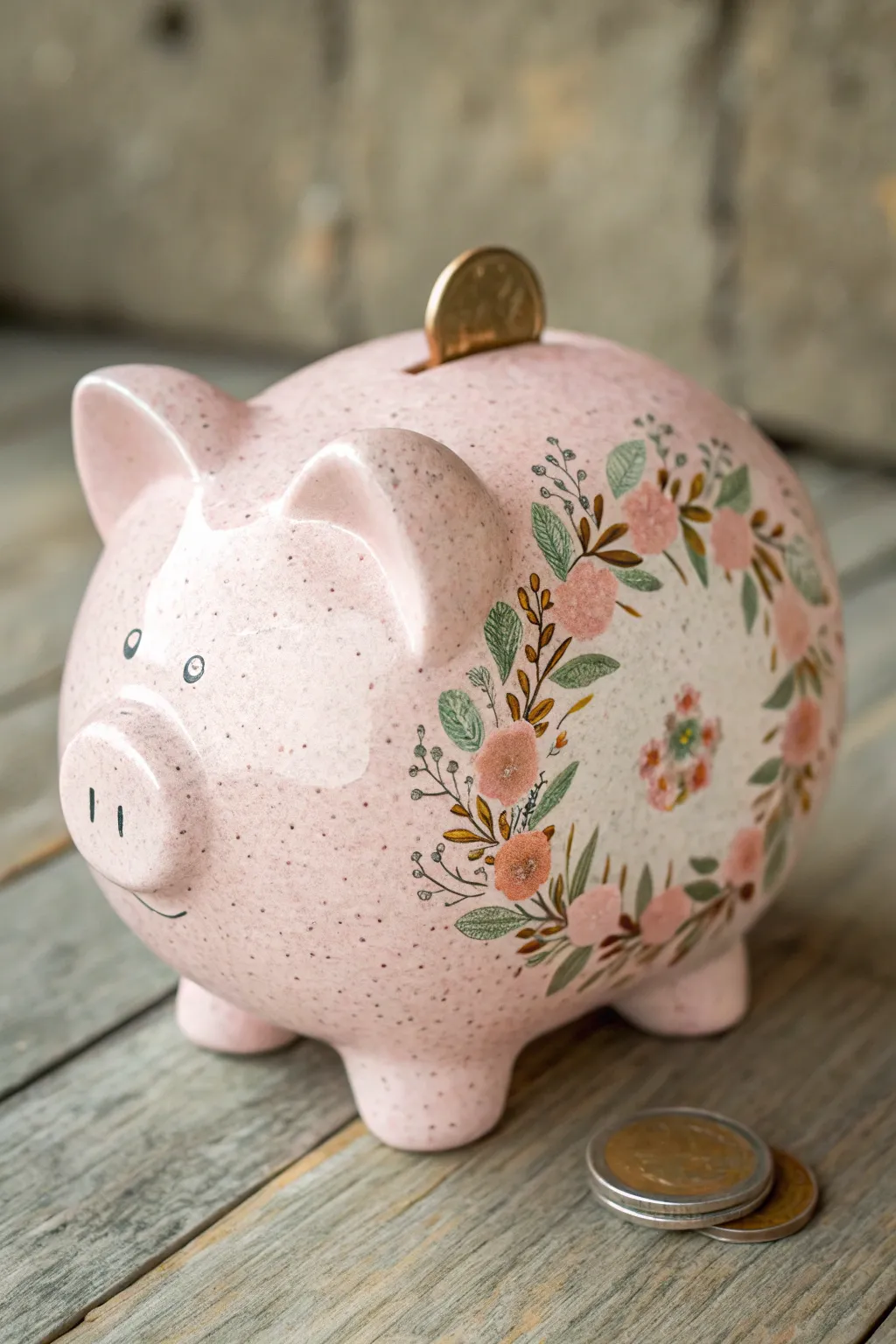
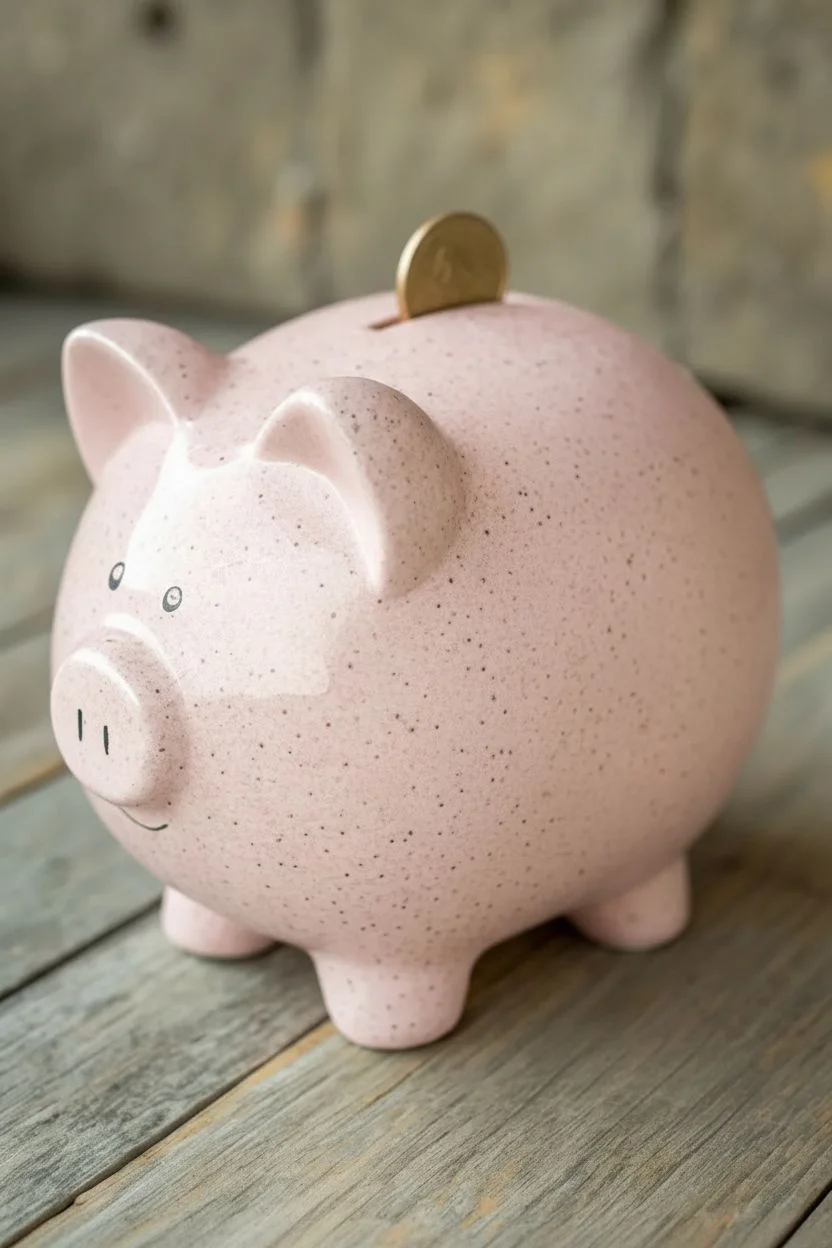
Transform a plain ceramic piggy bank into a whimsical keepsake with this delicate floral garland design. The soft pink speckled base and sweeping leafy vines create a sweet, timeless look perfect for a nursery or a thoughtful gift.
How-To Guide
Materials
- Ceramic piggy bank (unpainted bisque or primed white)
- Acrylic paints: Blush Pink, Dusty Rose, Sage Green, Olive Green, Burnt Umber, White, Black
- Soft bristle brushes: 1 inch flat brush, small round brush (size 2 or 4), fine liner brush (size 0 or 00)
- Old toothbrush (for speckling)
- Palette or paper plate
- Cup of water and paper towels
- Pencil
- Clear acrylic sealant spray (matte or satin finish)
Step 1: Base Coat
-
Prepare the Base Color:
Mix a generous amount of Blush Pink with a tiny drop of White to create a soft, creamy base color. Ensure you mix enough to cover the entire bank. -
Apply First Coat:
Using the 1-inch flat brush, paint the entire piggy bank with smooth, even strokes. Don’t worry if it looks slightly streaky; the second coat will fix that. -
Second Coat and Dry:
Once the first layer is dry to the touch, apply a second coat for full opacity. Let this cure completely for at least an hour. -
Create the Speckles:
Dilute a small amount of Burnt Umber or a darker pink with water until it’s ink-like. Dip an old toothbrush into this mixture, aim it at the bank, and run your thumb across the bristles to flick tiny speckles over the surface.
Paint Lifting?
If the base coat lifts while you paint details, the bottom layer wasn’t fully dry. Let it sit longer or use a hair dryer on a cool setting to speed up the process.
Step 2: Painting the Garland
-
Sketch the Design:
Lightly sketch a large circle or oval shape on the side of the pig using a pencil. This will serve as the guide for your floral wreath. -
Paint Main Vines:
With your fine liner brush and Burnt Umber paint, carefully trace over your pencil line with thin, organic strokes. Add small branching twigs extending outward and inward from the main circle. -
Add Large Blooms:
Creating the main flowers is simpler than it looks. Load your size 4 round brush with Dusty Rose and dab irregular, fluffy shapes along the vine. Don’t make them perfect circles; organic blobs look more natural. -
Paint Small Buds:
Using the same pink mixture, add smaller single dots at the ends of some of the vine branches to represent unopened buds. -
Add Leaves:
Switch to Sage Green. Use the round brush to press and lift, creating tear-drop shaped leaves along the vines. Vary the direction so some point up and some point down. -
Detail the Leaves:
For depth, I like to mix a little White into the green and paint fine veins on the larger leaves once the base green is dry. -
Highlight the Flowers:
Mix a lighter shade of pink and dab the centers of your large blooms to give them dimension and a ruffled petal effect. -
Add Decorative Sprigs:
Using the liner brush and black or dark brown paint, add very fine lines with tiny dots on the ends to fill in gaps between flowers, creating a ‘baby’s breath’ texture.
Add a Name
Use the empty space in the center of the floral wreath to paint a name or initials using a gold paint pen for a personalized touch.
Step 3: Finishing Touches
-
Paint the Face:
Using the fine liner brush and black paint, carefully draw two small circles for the eyes. Add a tiny white dot in each for a sparkle highlight. -
Nose and Smile:
Paint two vertical dashed lines on the snout for nostrils and a simple curved line for the smile. -
Seal the Project:
Allow the paint to cure for 24 hours. Take the bank outside and spray it with a clear acrylic sealant to protect your artwork from chipping.
Now you have a charming place to store your savings that looks lovely on any shelf
Bold Sunflowers as a Wraparound Mini Mural
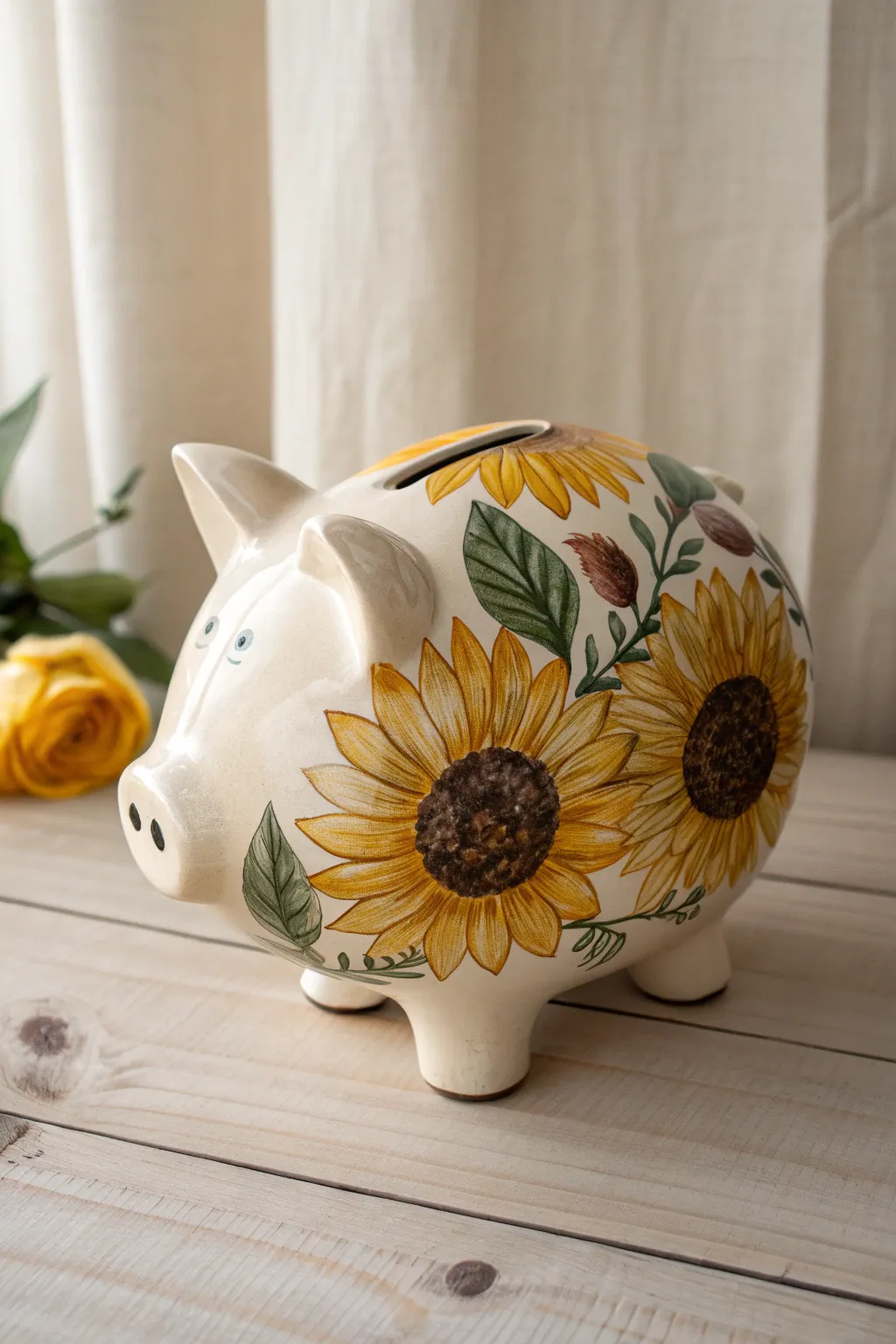
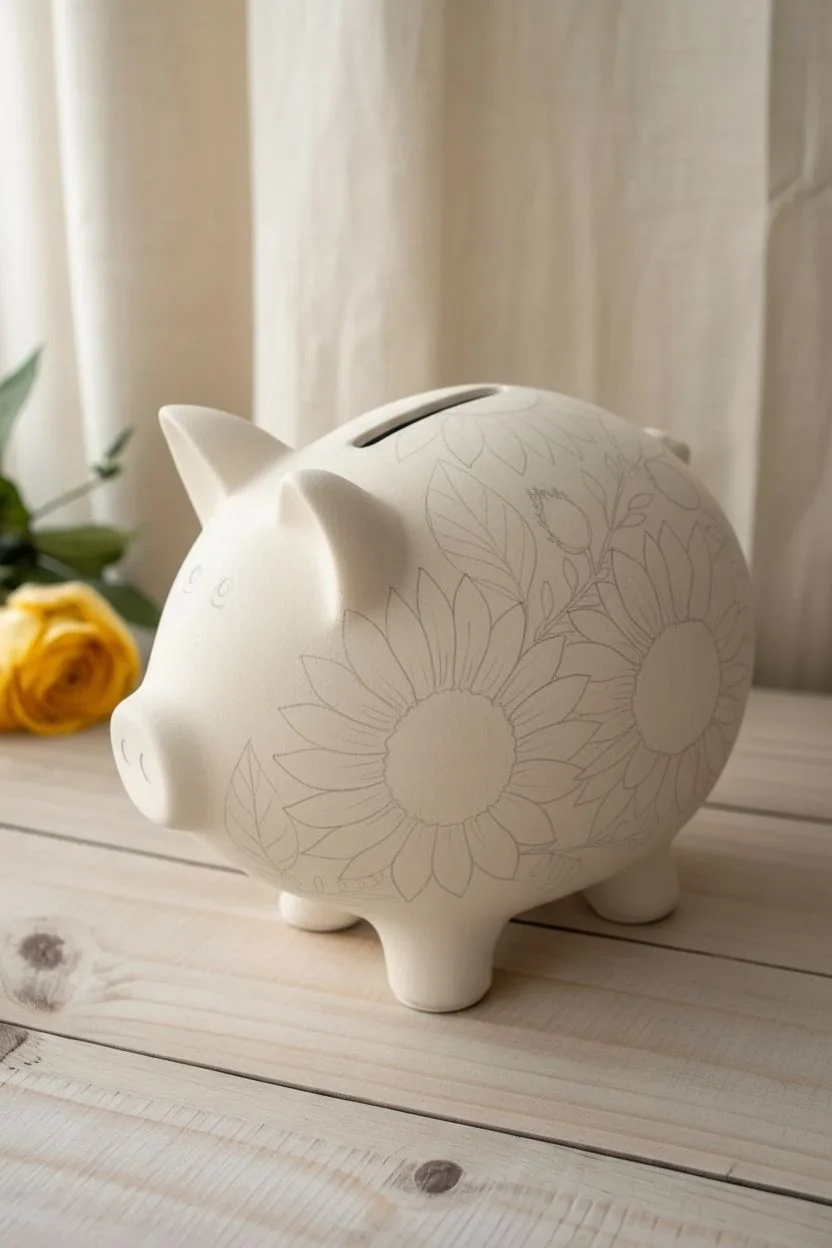
Transform a plain ceramic piggy bank into a botanical masterpiece featuring vibrant, oversized sunflowers. This project uses warm yellows and rich browns to create a wraparound mural effect that feels like a sunny garden on a shelf.
Step-by-Step
Materials
- Ceramic piggy bank (unglazed bisque or primed)
- Acrylic paints: Cream/Off-white (base), Golden Yellow, Ochre, Burnt Umber, Dark Brown, Olive Green, Hunter Green
- Gesso (optional, for priming)
- Wide flat brush (for base coat)
- Round brushes (sizes #2, #4, #6)
- Fine liner brush (size #0 or #00)
- Pencil (light H grade)
- High-gloss spray sealant or varnish
- Water cup and paper towels
- Palette or paper plate
Step 1: Base Coat & Layout
-
Prime and prep:
Begin by wiping down the piggy bank to remove any dust. If you are using raw bisque, apply a thin layer of gesso. Once dry, paint the entire surface with a warm Cream or Off-white acrylic paint. This provides a neutral, pottery-like background that lets the flowers pop. -
Apply a second coat:
Ceramics often absorb the first layer unevenly. Apply a second coat of the cream base to ensure full, opaque coverage. Let this dry completely—at least 30 minutes—so your pencil sketches won’t dig into wet paint. -
Map out the flower centers:
Using a light pencil, gently sketch large circles where you want your main sunflower heads to sit. Place one prominent bloom on the side flank and another partially wrapping around the back or top to create that ‘mural’ feel. -
Sketch the petals:
Draw the petals radiating outward from the centers. Don’t worry about making them perfect; vary the shapes slightly, with some overlapping others, to look natural. Ensure the petals extend close to the pig’s legs and ears for a full look. -
Add leaves and buds:
Fill the gaps between flowers by sketching large, pointed leaves and small, unbloomed buds on thin stems. This connects the separate flowers into a cohesive vine-like design.
Uneven Yellow Paint?
Yellow pigment is often naturally translucent. If your petals look streaky, apply a base coat of white solely on the petal shapes first, let dry, and then apply your yellow on top for vibrancy.
Step 2: Painting the Blooms
-
Block in the petals:
Load a #6 round brush with Golden Yellow. Fill in each petal, working from the center outward. I find that applying two thin coats here gives a much smoother yellow than one thick, gloopy layer. -
Add dimension with Ochre:
While the yellow is dry, mix a little Ochre with Golden Yellow. Use a #4 brush to paint subtle streaks at the base of each petal (near the center) and along the edges of the petals that underneath others. This creates shadow and depth. -
Highlight the tips:
Mix a tiny bit of white into your Golden Yellow. paint the very tips of the petals and the ‘upper’ petals that would catch the light. This simple step stops the flower from looking flat. -
Paint the centers:
Fill the large center circles with solid Burnt Umber. Don’t worry if the edge meets the yellow petals imperfectly; we will texturize this later. -
Stipple the seeds:
Once the brown base is dry, take an old, slightly frayed brush or a stiff stencil brush. Dip it in Dark Brown mixed with a touch of black. Dab, or ‘stipple,’ texture onto the center to mimic seeds. -
Add pollen details:
Clean your stippling brush and pick up a small amount of Ochre or Light Brown. Gently dab this lighter color just in the very middle of the seed-head, creating a rounded, 3D effect for the center.
Step 3: Leaves & Finishing Touches
-
Base the greenery:
Paint the leaves and stems using Olive Green. Use a smooth, flowing stroke for the stems to keep them looking graceful rather than stiff. -
Detail the veins:
Mix a darker Hunter Green. Using your fine liner brush, paint a central vein down each leaf and small branching veins extending to the edges. This adds that crucial botanical illustration style. -
Shade the leaves:
Add a wash of the darker green near the base of the leaves where they meet the stem. This grounds the foliage. -
Paint the pig features:
For the pig’s eyes, paint small white ovals, then add a blue iris and a black pupil. Don’t forget the tiny white reflection dot in the eye! Paint the nostrils with simple black ovals. -
Refine the outlines (optional):
If you want a sharper, more illustrative look, very lightly outline distinct petals and leaves with a watered-down brown paint and your finest liner brush. Keep the lines broken and organic, not solid cartoons. -
Seal the artwork:
Allow the piggy bank to cure for 24 hours. Finish by applying a high-gloss spray sealant. This creates that shiny, glazed ceramic look and protects your paint from chipping when coins are added.
Go 3D!
Before painting, use ceramic texture paste or puff paint to outline the center seeds and leaf veins. Once painted over, this adds tactile texture you can feel.
Enjoy watching your savings grow alongside your beautiful sunflowers

PENCIL GUIDE
Understanding Pencil Grades from H to B
From first sketch to finished drawing — learn pencil grades, line control, and shading techniques.
Explore the Full Guide
Bee-and-Honeycomb Piggy Bank Pattern
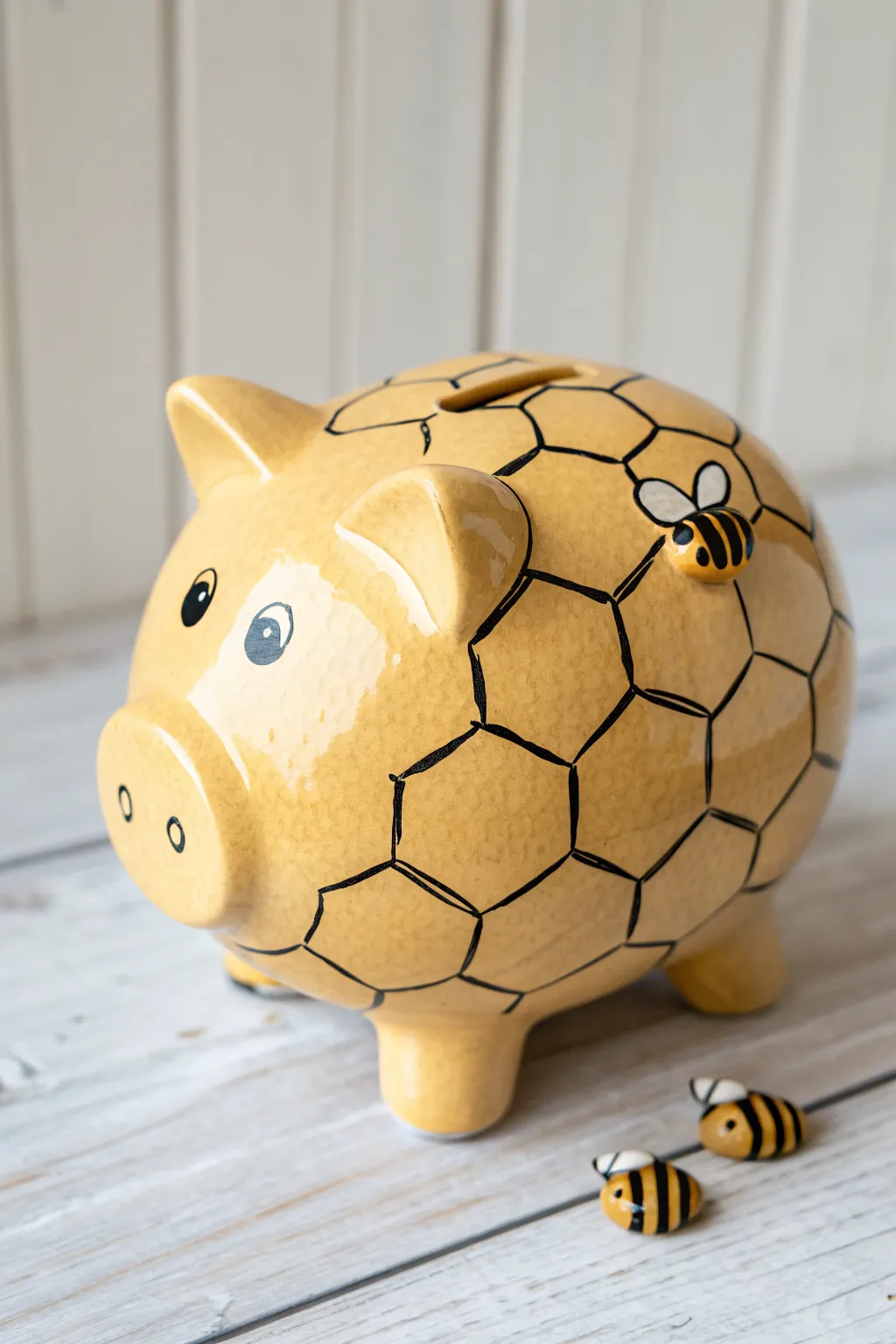
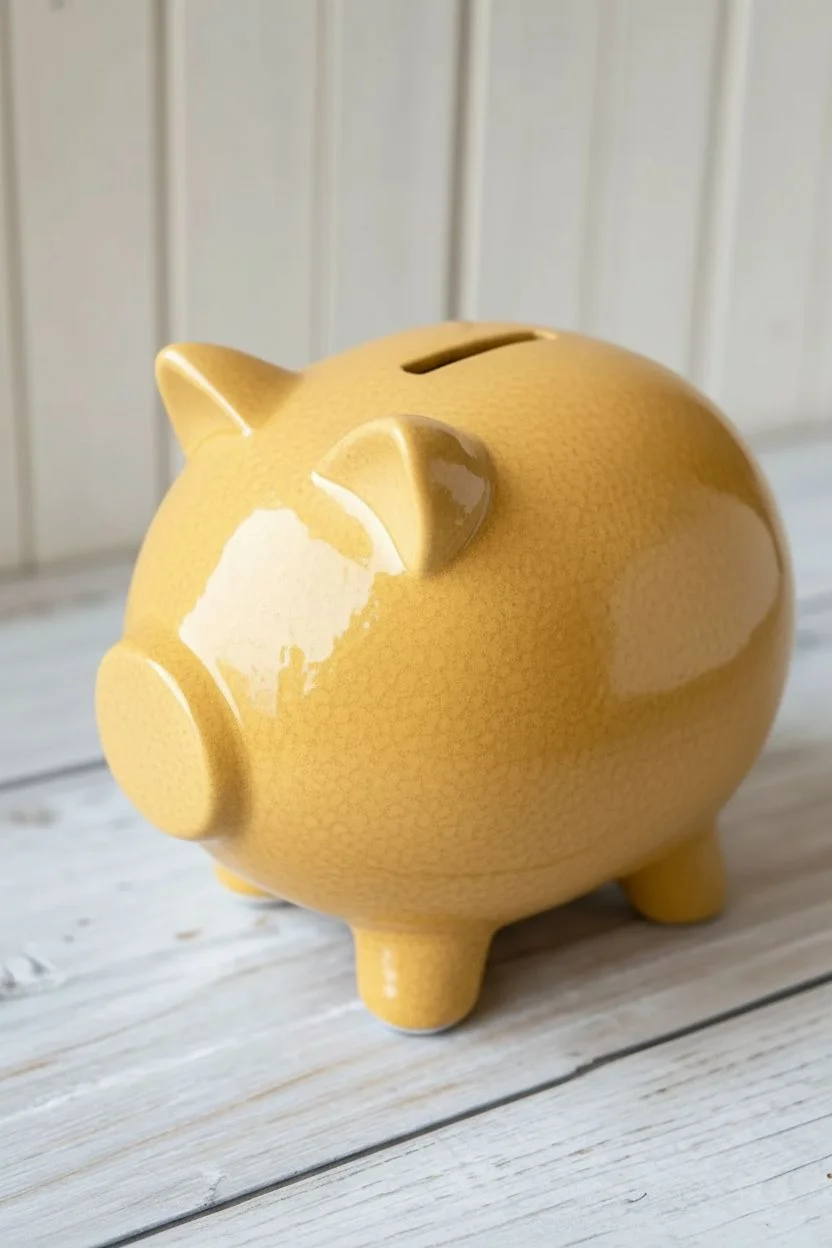
Transform a plain ceramic pig into a buzzing hive of activity with this golden honeycomb design. The warm yellow glaze and geometric hexagon pattern create a cheerful, modern look that’s perfect for saving up your sweetest treasures.
How-To Guide
Materials
- Unpainted ceramic piggy bank (bisque)
- Glossy yellow ceramic glaze (honey/goldenrod shade)
- Black outlining squeeze bottle or liner paint pen (ceramic compatible)
- White ceramic paint or glaze
- Small black ceramic bees (pre-made or sculpted from clay)
- Strong craft adhesive (E6000 or similar)
- Soft fan brush for base coat
- Fine detail brush
- Pencil
- Sealer or clear glaze (if using acrylics instead of kiln-fired glazes)
Step 1: Base Coating
-
Clean the surface:
Before you start painting, wipe down your ceramic pig with a slightly damp sponge to remove any dust or oils. This ensures the paint sticks perfectly. -
Apply the first yellow coat:
Using a soft fan brush, apply a smooth, even layer of the honey-yellow glaze over the entire pig. Don’t forget the bottom of the feet and under the chin. -
Build up color depth:
Let the first coat dry until it’s no longer shiny. Apply a second and possibly third coat to get that rich, deep yellow color shown in the photo. I usually find three thin coats work better than one thick loop. -
Paint the snout highlight:
If you want the snout to look slightly lighter like the reference, you can gently wipe away a tiny bit of glaze with a damp sponge or mix a drop of white into your yellow for just the nose area.
Hexagon Hack
Make a hexagon template from cardstock to trace around. It keeps your shapes uniform, especially on the flatter parts of the pig’s back.
Step 2: Creating the Grid
-
Plan the hexagons:
Once the yellow base is dry to the touch, use a pencil to lightly sketch your honeycomb pattern. Start near the back or the coin slot to anchor your design. -
Draw connected shapes:
Draw hexagons that share walls, interlocking them like a puzzle. It’s okay if they warp slightly around the curves of the pig; that gives it an organic feel. -
Outline in black:
Using a black outlining squeeze bottle or a very fine liner brush with black glaze, trace over your pencil lines. Keep your hand steady and the lines relatively thin. -
Connect the pattern:
Continue the pattern across the body, stopping when you reach the face area so the eyes and snout remain clear.
Step 3: Facial Features
-
Paint the eyes:
Using black paint and a small round brush, paint two solid oval shapes for the eyes. Position them wide apart to give the pig a sweet expression. -
Add eye details:
Once the black is dry, add a large white circle near the top of the eye (the iris) and a tiny white dot for a catchlight reflection. -
Detail the snout:
Use your black liner or brush to paint two small vertical ovals on the flat part of the nose for nostrils.
Add Golden Drips
Paint drips of “honey” coming from the coin slot or near the bees using a slightly darker, orange-toned yellow glaze for a 3D illusion.
Step 4: Finishing Touches
-
Paint the mini bees:
If your ceramic bees aren’t pre-painted, paint their bodies yellow, add black stripes, and paint the wings white. Let them dry completely. -
Glazing and Firing (or Sealing):
If using ceramic glazes, dip the entire pig in clear glaze (if required by your brand) or fire it in the kiln according to manufacturer instructions. If using acrylics, apply a high-gloss varnish now. -
Attach the main bee:
Once the pig is finished and fired (or sealed), take one of your small ceramic bees and apply a dot of strong adhesive to its underside. -
Position the bee:
Stick the bee onto the upper flank of the pig, perhaps angled as if it is crawling along the honeycomb lines. -
Create a scatter (optional):
If you have extra bees, you can leave them loose to display next to your bank or glue a second one near the feet for extra charm.
You have now created a buzz-worthy place to store all your hard-earned savings
Cow Spots for a Farm-Style Piggy Bank
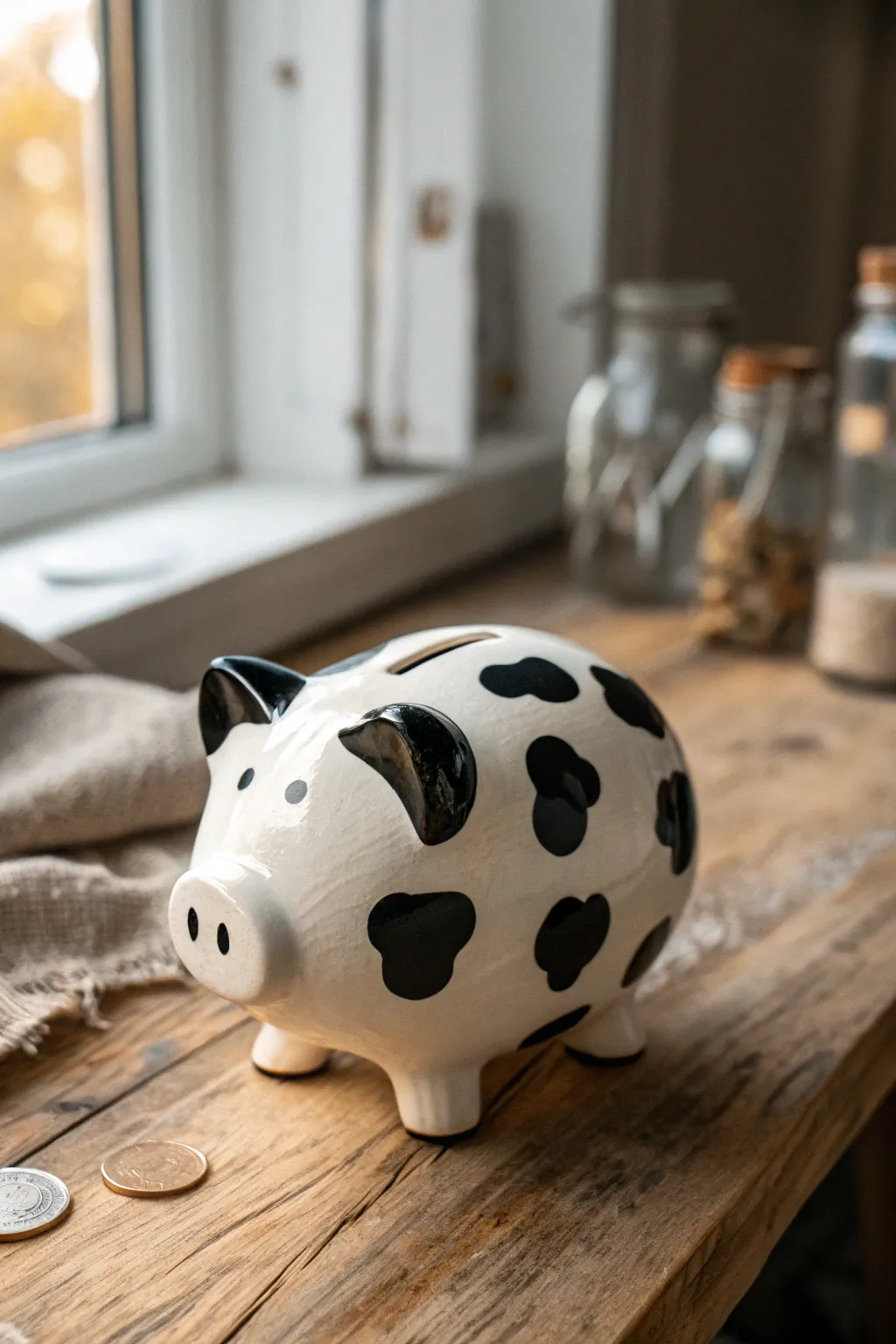
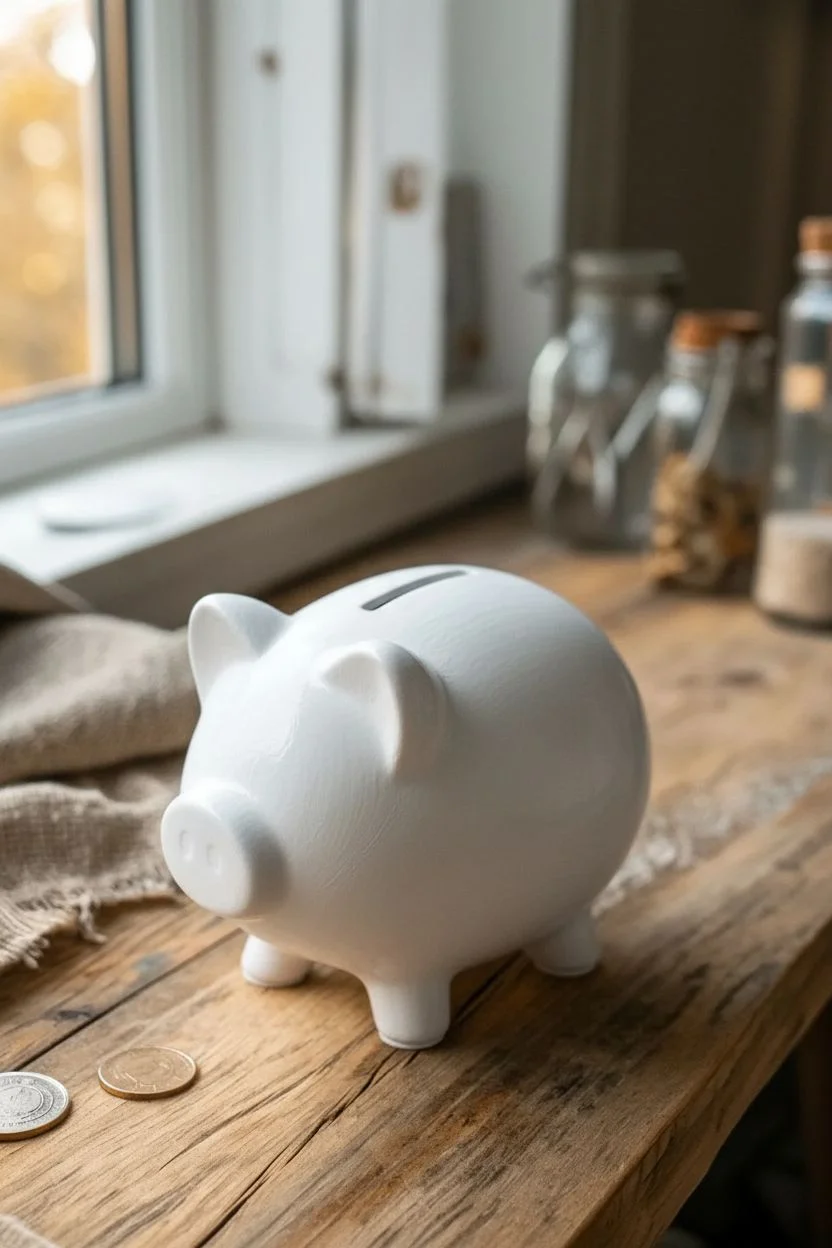
Transform a plain ceramic piggy into a farm-fresh friend with this adorable cow print design. The high-contrast black and white pattern is surprisingly forgiving to paint and brings a playful barnyard vibe to any shelf.
Detailed Instructions
Materials
- White ceramic piggy bank (unglazed or primed)
- White acrylic paint (high gloss or multi-surface)
- Black acrylic paint
- Medium flat paintbrush
- Small round paintbrush
- Pencil
- Gloss varnish or sealer (spray or brush-on)
- Palette or paper plate
- Water cup and paper towels
Step 1: Base Preparation
-
Clean surface:
Wipe down your ceramic bank with a damp cloth to remove any dust or oils that might prevent paint adhesion. -
First white coat:
Using the medium flat brush, apply an even coat of white acrylic paint over the entire piggy bank. -
Let it dry:
Allow the first coat to dry completely for about 20-30 minutes. Don’t rush this, or the next layer might lift the paint. -
Second white coat:
Apply a second layer of white paint to ensure full opacity, making sure the ceramic surface underneath is completely hidden.
Spot placement tip
Wrap spots around the legs and under the belly to create a realistic, continuous pattern rather than just viewing it from the side.
Step 2: Mapping the Spots
-
Drafting outlines:
Lightly sketch irregular, blob-like shapes all over the pig’s body using a pencil. -
Vary the sizes:
Make sure to draw some spots large and others small to mimic a natural cow hide pattern. -
Check spacing:
Step back and look at your spacing; ensure there is plenty of white space between the spots so it doesn’t look too crowded. -
Ear marking:
Mark the inside of the ears to be painted solid black, which gives the bank a distinct character.
Uneven edges?
If your black spots look shaky, outline them first with a black paint pen for crisp lines, then fill in with a brush.
Step 3: Painting the Details
-
Fill the spots:
Dip your small round brush into black acrylic paint and carefully fill in the outlines you sketched. -
Smooth edges:
I like to go back around the edges of the black spots to make them nice and smooth, avoiding jagged lines. -
Paint the ears:
Paint the entire inner and outer ear sections black, connecting them seamlessly to the head. -
Nose details:
Paint two small, vertical oval shapes on the snout to represent the cow’s nostrils. -
Eye details:
Using the tip of your smallest brush or a dotting tool, add two small black dots for eyes just above the snout. -
Touch ups:
Once the black paint is dry, use a tiny bit of white paint to clean up any accidental smudges on the white background.
Step 4: Finishing Touches
-
Dry time:
Let the entire project sit for at least an hour to ensure the thick black paint is fully cured. -
Seal the deal:
Apply a coat of gloss varnish over the entire bank to give it that shiny, ceramic-glaze look and protect the paint from scratching. -
Feet check:
Make sure the bottoms of the feet are dry and clean so the bank stands perfectly flat.
Now your farm-style savings bank is ready to start collecting coins for a rainy day


Confetti Speckles for an Easy Modern Look
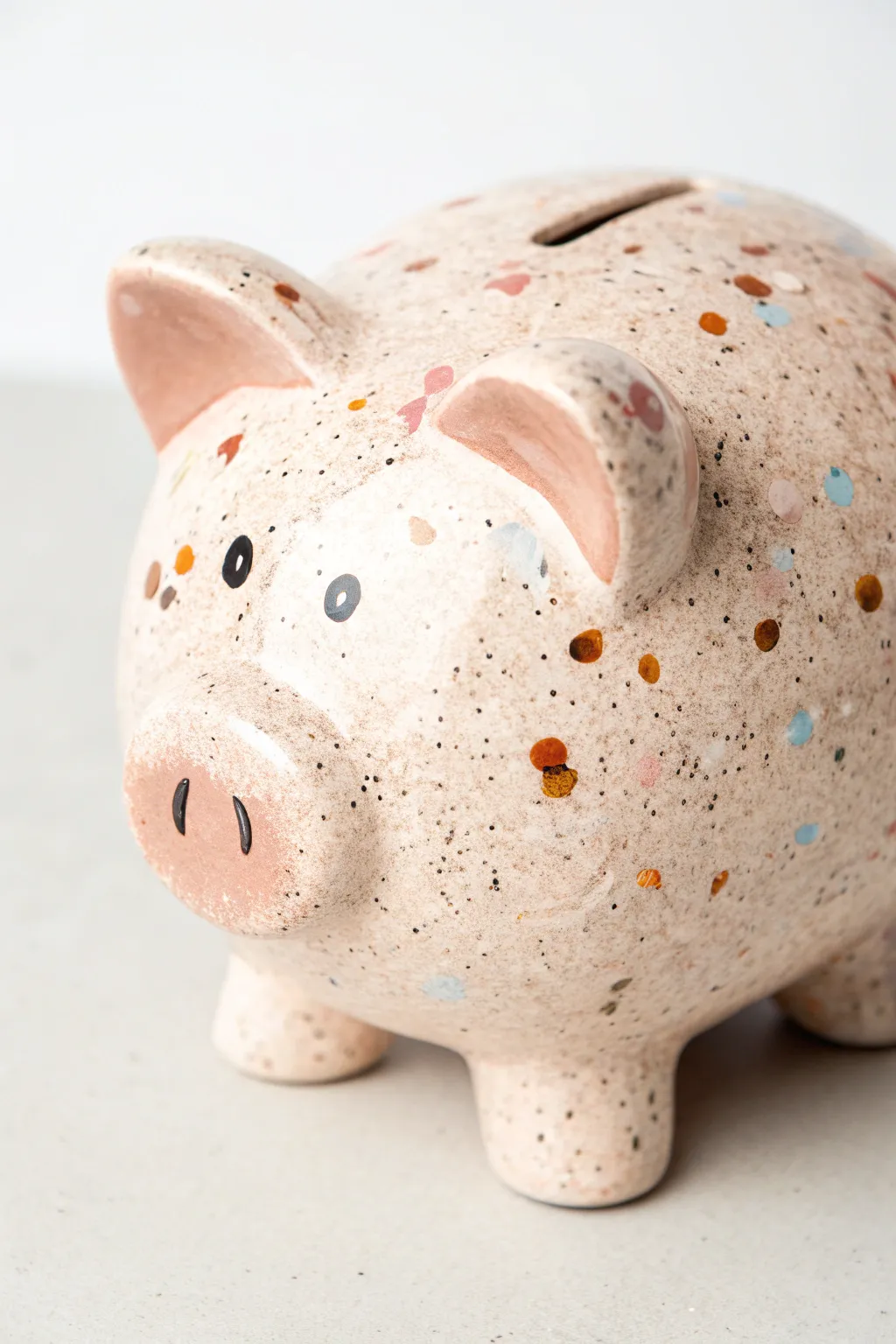

Transform a plain ceramic piggy bank into a modern art piece with this playful, terrazzo-inspired design. The combination of a warm, sandy base coat and scattered colorful flecks creates a chic look that fits perfectly in both nurseries and grown-up spaces.
How-To Guide
Materials
- Ceramic or bisque piggy bank
- Acrylic paints (creamy beige/sand, terracotta, burnt orange, mustard yellow, light blue, dusty pink, dark brown/black)
- Medium flat paintbrush
- Small round detail brush (size 1 or 2)
- Old toothbrush (optional for fine speckling)
- Palette or paper plate
- Water cup
- Paper towels
- Clear acrylic sealer spray (matte or satin finish)
Step 1: Preparation & Base Coat
-
Clean surface:
Wipe down your piggy bank with a damp cloth to remove any dust or oils. Let it dry completely before starting. -
Mix base color:
Create a warm, sandy base tone. If you don’t have a premixed beige, combine white with a small drop of brown and a tiny touch of yellow oxide. -
First layer:
Apply an even coat of your beige paint over the entire pig using the medium flat brush. Smooth out brushstrokes as you go. -
Dry and repeat:
Allow the first coat to dry for about 20 minutes. Apply a second coat to ensure full, opaque coverage, then let it dry fully.
Fixing Smudges
If you accidentally smear a wet confetti dot, wait for it to dry completely. Then, simply dab a bit of your base beige color over the mistake to erase it before trying again.
Step 2: Creating the Speckled Texture
-
Prepare splatter paint:
Dilute a small amount of dark brown or black paint with water until it has an inky consistency. -
Splatter technique:
Dip an old toothbrush into this watery mixture. Hold it near the pig and run your thumb across the bristles to flick tiny, fine speckles onto the surface. -
Control the spray:
Rotate the pig to get even coverage. These tiny dots mimic the look of natural stoneware clay. -
Wait for drying:
This step can be messy, so check your hands aren’t transferring wet paint. Let these fine speckles dry completely before moving on.
Metallic Pop
Swap one of the confetti colors for gold or copper leaf paint. A few shiny metallic speckles catch the light beautifully and give the piggy bank a high-end boutique feel.
Step 3: Adding the Confetti
-
Select palette:
Pour out small amounts of your accent colors: terracotta, burnt orange, mustard, light blue, and dusty pink. -
Paint larger dots:
Using your small round brush, start painting organic, slightly irregular circles and ovals. I like to start with the largest color—perhaps the terracotta—to anchor the design. -
Vary the sizes:
Paint some dots as small specks and others as larger, deliberate splotches about the size of a refined lentil. -
Layer colors:
Switch colors, washing your brush well between each. Add mustard yellow spots next, scattering them randomly. -
Fill the gaps:
Continue with light blue and dusty pink. Aim for a random distribution rather than a perfect pattern. -
Highlight the ears:
Don’t forget to paint the inside of the ears. A soft dusty pink or terracotta wash works beautifully here to add depth. -
Add darker accents:
Finally, take your dark brown or black paint on the tip of the small brush. Add a few deliberate, distinct dark spots among the colored ones for contrast.
Step 4: Finishing Touches
-
Paint the face:
Use the dark brown/black paint to carefully fill in the nostrils and paint simple, oval eyes. -
Eye details:
Once the black eye ovals are dry, you can add a tiny white dot for a highlight to bring the pig to life. -
Final drying:
Let the entire project sit for at least an hour, or until the thickest dots of paint are hard to the touch. -
Seal the work:
Take the bank to a well-ventilated area and spray it with a clear acrylic sealer. A matte finish best replicates the ceramic look in the photo.
Now you have a charming, custom piece ready to guard your savings with style
Marbled Swirls That Flow From Snout to Tail
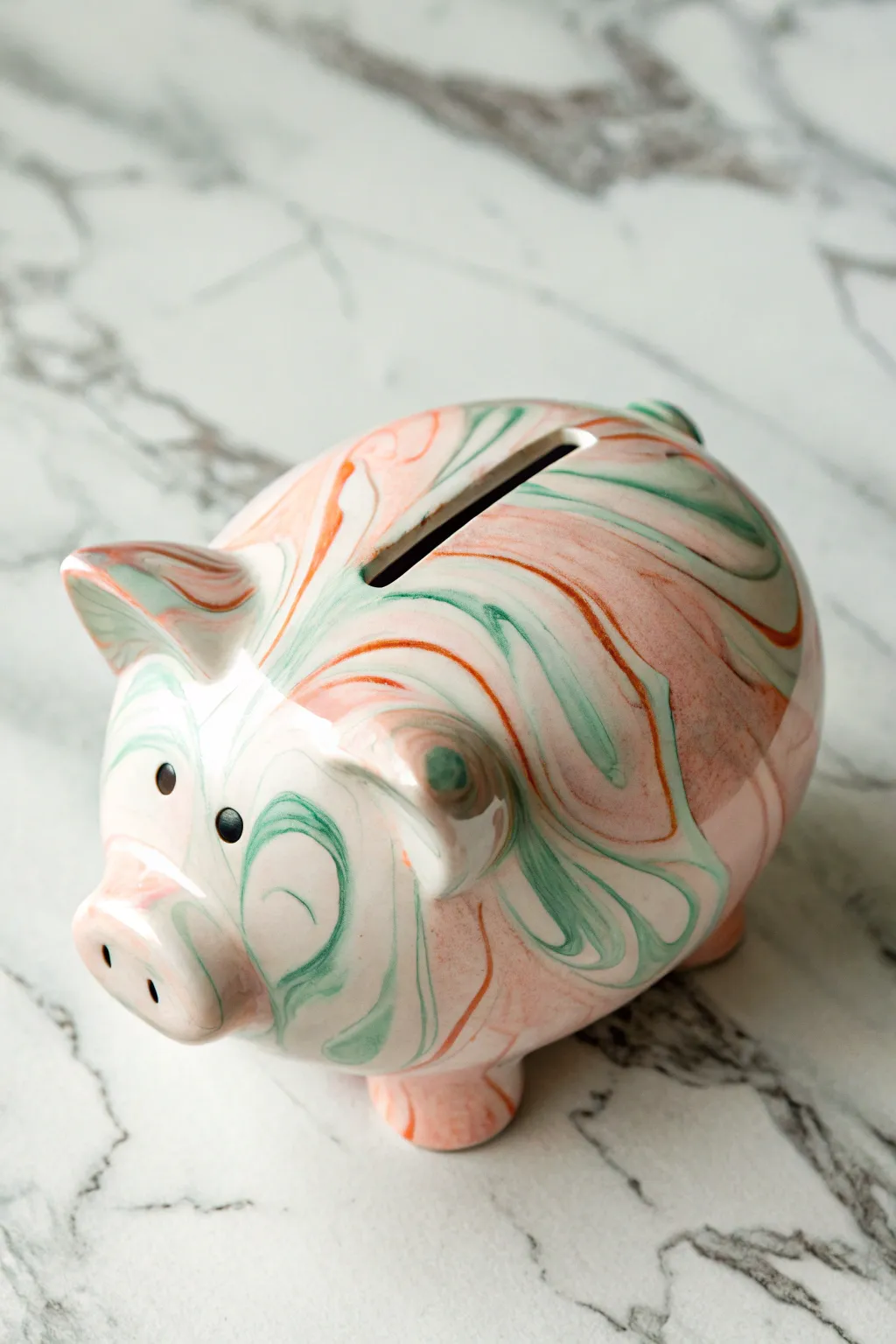
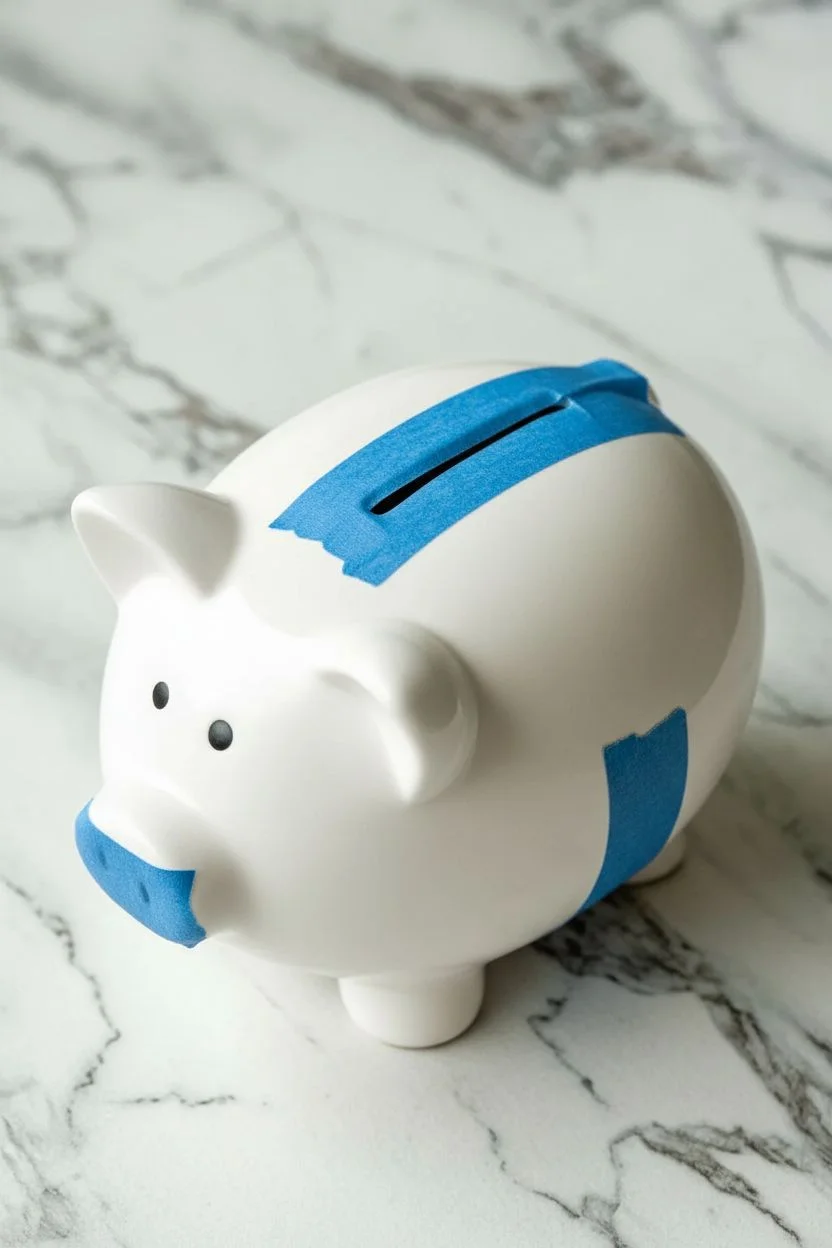
Transform a plain ceramic piggy bank into a fluid work of art with this mesmerizing marbling technique. The soft peach and green swirls wrap seamlessly around the form, creating a sophisticated, organic look that mimics high-end stone.
Step-by-Step Tutorial
Materials
- A clean, white ceramic piggy bank
- A plastic container deep enough to submerge the bank
- Enamel model paints (peach/salmon, sea green/teal, and white)
- Water (room temperature)
- A wooden stirring stick or skewer
- Cardboard or plastic drop cloth (for drying)
- Painter’s tape
- Clear acrylic gloss sealer spray
Step 1: Preparation
-
Prepare the surface:
Start by ensuring your ceramic piggy bank is completely clean and free of dust or oils. A quick wipe with rubbing alcohol on a paper towel works wonders to ensure the paint adheres properly. -
Protect the coin slot:
Cut a small strip of painter’s tape and securely cover the coin opening on the top. This keeps the inside clean and prevents water from flooding the interior during the dip. -
Seal the bottom stopper:
Check the rubber stopper on the belly. Ensure it is tightly inserted, or cover this area with tape as well to maintain a watertight seal. -
Set up the dipping station:
Fill your plastic container with room-temperature water. Leave about two inches of space at the top to account for displacement when you submerge the bank.
Step 2: Creating the Marble Effect
-
Add the first color:
Shake your peach or salmon enamel paint bottle vigorously. Open it and carefully drop about 5-6 drops onto the surface of the water. The paint should float and spread out. -
Layer the second color:
Immediately add your sea green or teal paint. Drop it directly into the center of the peach circles or scatter it around the edges of the floating paint layer. -
Swirl the pattern:
Take your wooden skewer or stick and very gently drag it through the floating paint. Do not overmix; you want distinct ribbons of color, not a muddy blend. -
Create flow lines:
Drag the stick in long, S-shaped curves to mimic the natural veins of marble stone. I usually pause here for just a second to let the pattern stabilize.
Water Temp Matters
Use room-temperature water. If the water is too cold, the enamel paint will seize up into hard clumps immediately. If it’s too hot, the paint skins over too fast.
Step 3: The Dip
-
Position the bank:
Hold the piggy bank firmly by the snout and the tail, or wherever you can get a good grip that won’t obscure the main side views. -
Submerge steadily:
Lower the bank into the water at a 45-degree angle. Move slowly but steadily down through the paint film. The paint will wrap around the ceramic surface instantely. -
Clear the surface:
Once the bank is fully submerged, blow gently on the water’s surface to disperse the remaining floating paint. This prevents a ‘double print’ when you pull the object back up. -
Remove from water:
Lift the bank out of the water quickly. Shake it very gently to remove excess water droplets, being careful not to touch the wet paint.
Paint Clumping?
If your paint sinks or clumps instead of spreading, your enamel paint is likely old or too thick. Try thinning it slightly with mineral spirits before dropping it.
Step 4: Finishing Touches
-
Initial drying:
Set the bank on a piece of cardboard or a drop cloth. Let it sit undisturbed for at least 1-2 hours until the surface feels tacky but dry to the touch. -
Remove tape:
Carefully peel away the painter’s tape from the coin slot and the bottom stopper. It is best to do this before the paint hardens completely to avoid chipping edges. -
Full cure:
Allow the project to dry fully overnight in a well-ventilated area. Enamel paints take longer to cure than water-based acrylics. -
Seal the design:
For durability and that shiny ceramic look, spray the entire bank with a clear acrylic gloss sealer. Apply one light coat, let dry, and follow with a second coat.
Once the sealer cures, your chic, modern keepsake is ready to start holding savings
Soft Ombre Gradient Across the Whole Pig
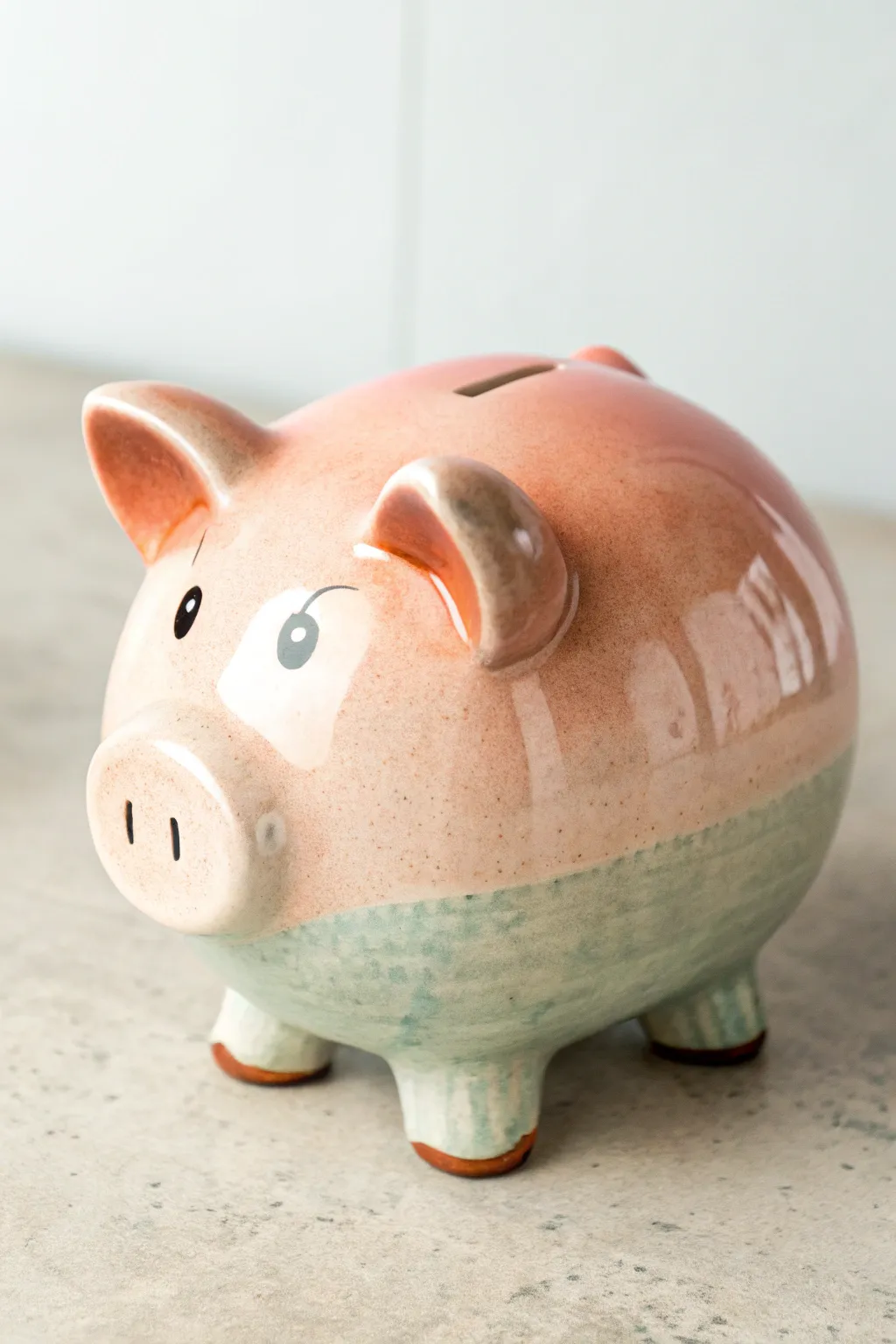

Achieve a trendy, high-end look with this soft ombre design that blends warm peach tones with cool sage green. The smooth gradient and glossy finish make this classic piggy bank feel like a modern piece of decor.
How-To Guide
Materials
- Ceramic piggy bank
- Acrylic craft paints (Peach, Sage Green, White)
- Wide flat brush (1 inch)
- Soft blending brush (1/2 inch)
- Small detail brush
- Black paint marker or fine liner brush
- Glossy clear acrylic sealer or spray varnish
- Palette or paper plate
- Cup of water and paper towels
Step 1: Base Coating
-
Clean surface:
Wipe down your ceramic piggy bank with a damp cloth to remove any dust or oils, ensuring the paint adheres properly. -
Mix the peach tone:
On your palette, mix a small amount of white into your peach paint to soften it slightly, aiming for a warm, salmon-pink hue. -
Paint the top half:
Using the wide flat brush, paint the upper portion of the pig with your peach mixture. Cover the ears, back, and face, stopping roughly halfway down the body. -
Mix the sage tone:
Prepare your green shade by mixing sage green with a touch of white or grey to get a muted, earthy tone. -
Paint the bottom half:
Apply the sage mixture to the legs and belly of the pig with a clean flat brush, painting upwards until you verify nearly meet the peach section.
Wet-on-Wet Blending
Keep a spray bottle of water handy. A tiny misting keeps acrylics wet longer, making that gradient blend much smoother.
Step 2: Creating the Ombre Blend
-
Prepare blending zone:
While both paints are still slightly wet (or by applying a fresh thin strip of each color where they meet), bring the colors together at the mid-line. -
Blend the seam:
Take your soft blending brush—slightly damp, not wet—and gently brush back and forth horizontally along the line where the peach and green meet. -
Feather the edges:
Work quickly to feather the peach slightly down into the green and the green slightly up into the peach to erase any hard lines. -
Dry and repeat:
Let this first layer dry completely. I find it usually takes two or three coats to get that solid, opaque look, so repeat the base coating and blending steps until you have full coverage.
Step 3: Details and Finishing
-
Paint the snout:
Using the small detail brush, paint the front of the nose with the peach mixture, ensuring the nostrils remain clear or are painted over to be redefined later. -
Fill the ears:
Paint the inner ears with a slightly darker version of your peach (add a tiny dot of red or brown) to create depth. -
Add the eyes:
Once the body is fully dry, use a black paint marker or fine brush to draw simple oval eyes on the face. -
Add eye highlights:
Dip the back end of a paintbrush into white paint and dot it onto the black eye ovals to create a ‘sparkle’ reflection. -
Define the nostrils:
Add two small vertical dashes on the snout using your black marker or detail brush for the nostrils. -
Gloss sealing:
To mimic the ceramic glaze look of the inspiration photo, apply two coats of high-gloss acrylic sealer over the entire pig. -
Final cure:
Allow the sealer to cure for at least 24 hours before handling or using the bank to ensure the finish remains hard and scratch-resistant.
Go Metallic
Swap the sage green for a metallic gold or copper paint on the bottom half for a chic, modern dip-dye effect.
Now you have a stylish place to stash your savings that looks great on any shelf
Rainbow Drip Paint Over a Clean Base Coat
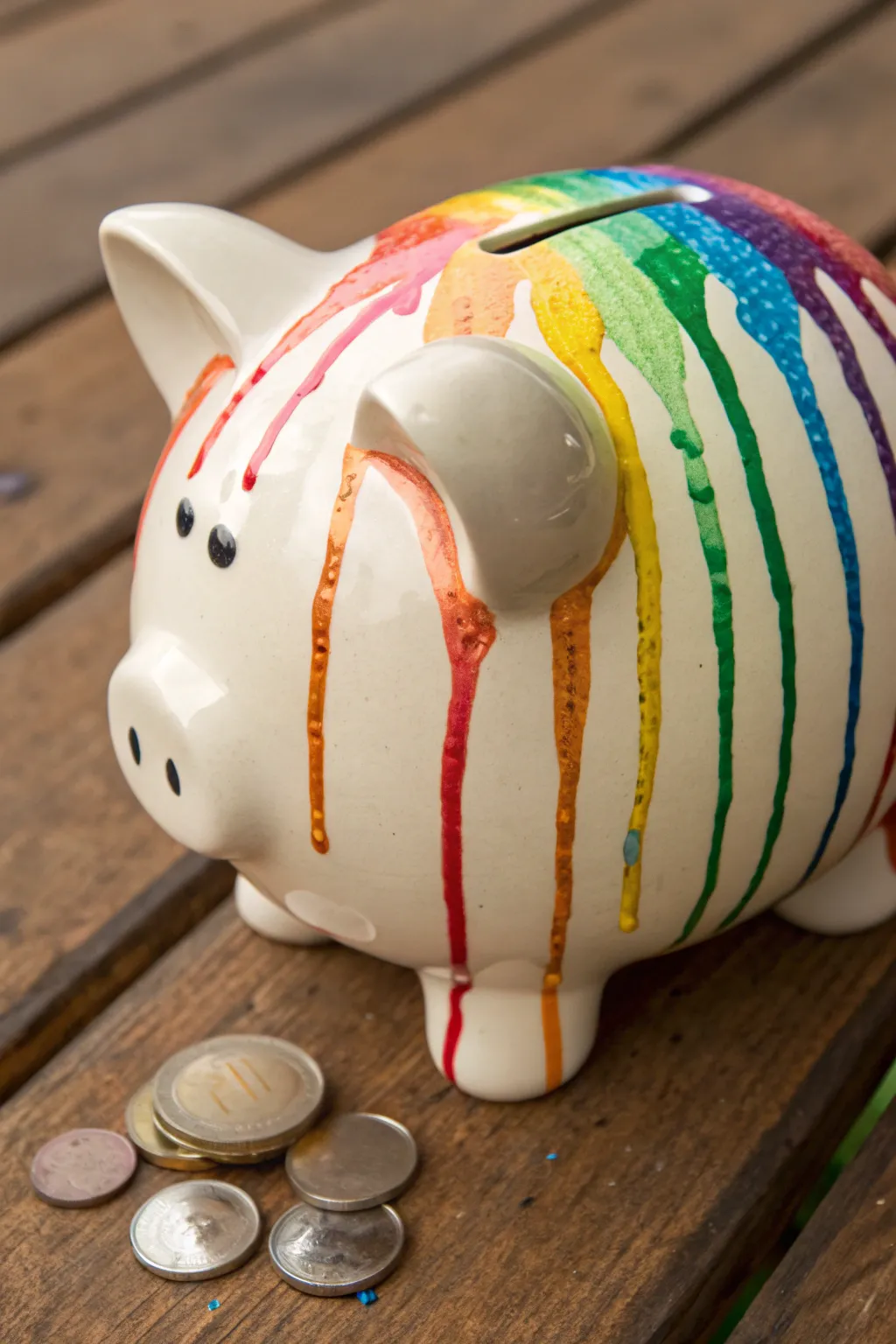
Transform a plain ceramic piggy bank into a vibrant spectrum of color with this controlled drip technique. The result is a striking contrast between the crisp white base and the organic, flowing lines of rainbow paint.
Step-by-Step Guide
Materials
- Ceramic piggy bank (white glaze)
- Acrylic paints (Red, Orange, Yellow, Green, Blue, Indigo, Violet)
- Pouring medium (or water for thinning)
- Small squeeze bottles or pipettes
- Rubbing alcohol
- Cotton pads
- Masking tape or painter’s tape
- Cardboard or drop cloth
- Small cups for mixing paint
- Clear acrylic sealant spray (glossy)
Step 1: Preparation and Cleaning
-
Set up your workspace:
Cover your working surface with cardboard or a heavy drop cloth, as this project involves dripping paint that can get messy. -
Clean the surface:
Wipe the entire piggy bank down with rubbing alcohol on a cotton pad. This removes oils and dust, ensuring the paint adheres properly to the glossy ceramic. -
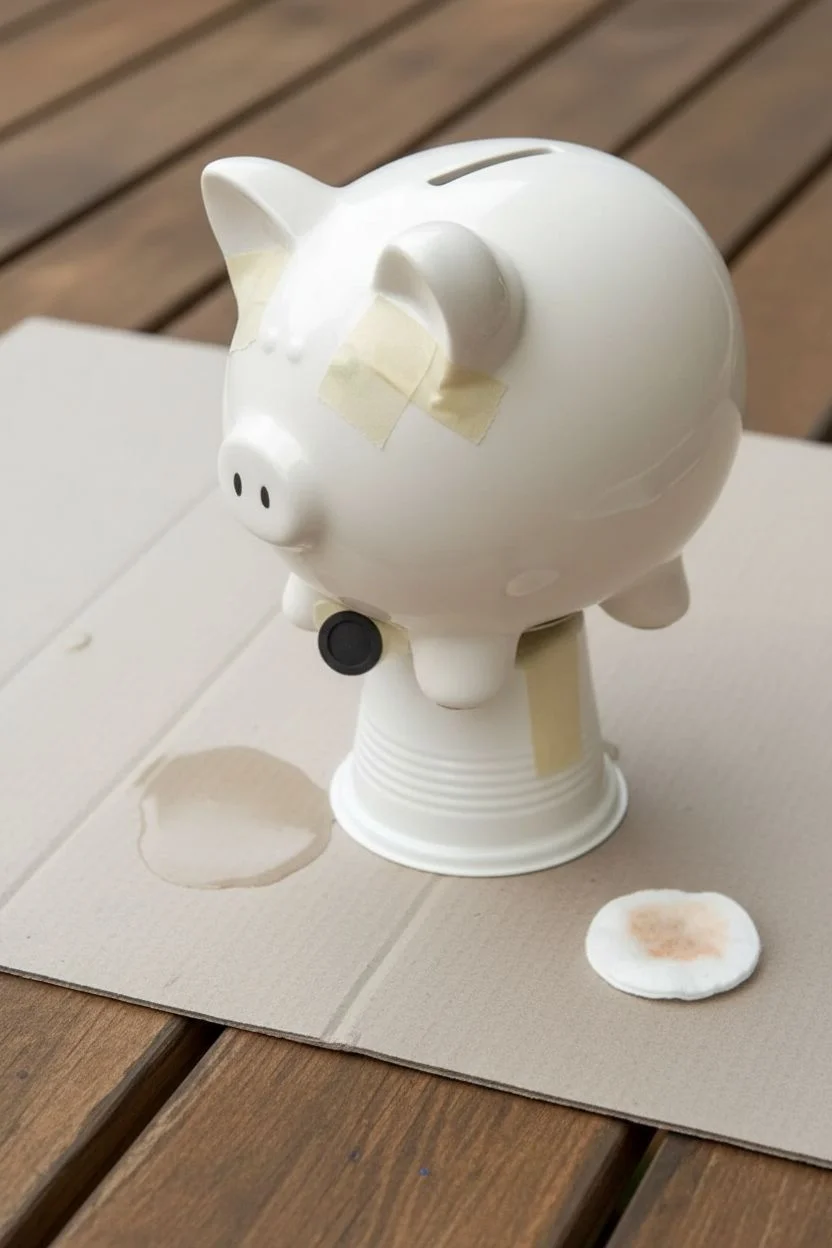
Protect the details:
Use small pieces of masking tape to cover the eyes or any other painted facial features you want to preserve. If the bank has a rubber stopper at the bottom, remove it for now. -
Stabilize the object:
Place the piggy bank on a slightly elevated surface, like an upside-down yogurt cup, so the paint can drip off the feet without pooling around the base.
Step 2: Mixing the Drip Paint
-
Prepare your colors:
Squeeze a small amount of each rainbow color (ROYGBIV) into individual small mixing cups. -
Add the medium:
Add pouring medium to each cup. A standard ratio is often 1 part paint to 1 part medium, but check your specific product instructions. -
Check consistency:
Stir thoroughly. The consistency should be fluid like warm honey—runny enough to drip down the side, but thick enough to hold its color without becoming transparent. -
Transfer to applicators:
Pour your mixed paints into small squeeze bottles for the best control. If you don’t have bottles, pipettes or even spoons can work if you have a steady hand.
Drip Too Slow?
If the paint stops halfway and won’t reach the bottom, your mixture is too thick. Add a few drops of water or more medium to your bottle and shake well before trying the next stripe.
Step 3: Creating the Rainbow Drips
-
Start with the coin slot:
Identify the coin slot at the top as your starting line. You will be applying paint adjacent to this opening. -
Apply the first color:
Starting with red (or violet, depending on your preferred direction), place the nozzle of the squeeze bottle right at the edge of the coin slot. -
Release the drip:
Squeeze gently to release a bead of paint. Let gravity take over as it travels down the curve of the pig’s back and side. -
Continue the spectrum:
Moving along the slot, switch to the next color (orange). Apply it close to the red drip but try not to let them touch immediately at the source to keep the colors distinct. -
Mind the ears:
When you reach the area around the ears, guide the paint carefully. You might need to start the drip slightly lower or tilt the bank slightly so the paint flows around the ear rather than pooling inside it. -
Adjust the flow:
If a drip stops halfway down, you can add a tiny bit more paint to the top of that specific stream to give it more momentum. -
Complete the rainbow:
Continue adding stripes—yellow, green, blue, indigo, violet—until the main body of the bank is covered in vertical stripes. -
Watch the bottom:
Allow the paint to drip all the way down to the feet. Use a paper towel to gently wipe away any large blobs forming on the very bottom of the hooves.
Pro Tip: Clean Lines
Keep a pack of cotton swabs handy. If two colors accidentally merge and get muddy at the top, quickly wipe the overlap away while wet and re-apply the clean color track.
Step 4: Finishing Touches
-
Dry thoroughly:
Let the piggy bank sit undisturbed for at least 24 hours. The thick drips take significantly longer to dry than a standard thin coat of paint. -
Remove tape:
Once the paint is fully dry to the touch, carefully peel off the masking tape from the eyes or other protected areas. -
Seal the artwork:
Take the bank to a well-ventilated area and apply a coat of clear glossy acrylic sealant. This protects the drips from chipping and unifies the sheen. -
Replace stopper:
Once the sealant is dry, pop the rubber stopper back into the bottom.
Now you have a cheerful, custom money-saver that brightens up any room
Galaxy Night Sky With Star Splatter


Transform a plain ceramic pig into a dreamy journey through the cosmos with this elegant galaxy design. The soft gradient shifts from deep midnight blues to ethereal purples, accented by crisp white constellations and a delicate spattering of stars.
How-To Guide
Materials
- Bisque or ceramic piggy bank (white base)
- Acrylic paints: Navy Blue, Deep Violet, Magenta, Black, Titanium White, Pale Pink
- Medium flat brush
- Small round brush
- Soft blending sponge or cosmetic wedge
- Fine detail liner brush
- Old toothbrush (for splattering)
- Palette for mixing
- Water cup and paper towels
- Gloss varnish or clear sealant spray
Step 1: Setting the Nebulous Base
-
Prepare the surface:
Begin with a clean, dry piggy bank. If your ceramic pig isn’t already white, apply a smooth base coat of white acrylic paint or primer to ensure the galaxy colors will pop brightly. -
Establish the horizon line:
Imagine a diagonal line separating the pig’s face from the galaxy body. Mix a soft, pale pink acrylic and paint the snout and face area. Feather the edge where the pink meets the white body so there isn’t a hard stop line. -
Start with the deepest space:
Using your sponge or flat brush, load up a deep Navy Blue mixed with a tiny drop of Black. Apply this to the rear and upper back of the pig, dabbing rather than stroking to create texture. This will represent the darkest parts of the universe. -
Introduce the violet hues:
While the navy is still tacky, pick up some Deep Violet on your sponge. Dab this color right next to and slightly over the edges of the navy sections. The goal is to create a seamless transition, so keep your sponge motion light and bouncy. -
Add magenta highlights:
Move lower down the pig’s body towards the belly and legs. Introduce Magenta into your sponge mix. Blend this into the violet areas. The colors should look like cloudy nebula gases swirling together. -
Create the face transition:
This is crucial for the specific look in the photo. As you approach the pale pink face area, lightly stipple the magenta and violet paint so it fades out gently. Don’t cover the entire face; let the galaxy emerge from behind the ears and sides. -
Paint the details:
Using a small brush, carefully paint the inside of the pig’s ears. I like to keep the inner ear pale gray or white to provide contrast against the dark galaxy ear backs. Paint the nostrils black. -
Refine the legs:
Notice the feet in the image remain light. Allow the galaxy colors to fade out just above the hooves, leaving them a natural ceramic color or painting them a soft sandy beige.
Too Much Water?
If your sponge blending turns muddy or gray, your sponge is likely too wet. Wring it out completely or use a dry sponge, relying only on the paint’s moisture to blend colors.
Step 2: Starlight and Constellations
-
Mix the star paint:
Prepare a small puddle of Titanium White paint. Thin it slightly with a few drops of water until it has an ink-like consistency. It needs to be fluid enough to splatter but thick enough to be opaque. -
Create the star splatter:
Dip an old toothbrush into your thinned white paint. Hold it about 6 inches from the pig’s darker ‘galaxy’ areas. Run your thumb across the bristles to flick a fine mist of white dots onto the surface. Practice on a paper towel first to control the spray. -
Add distinct stars:
Use the handle end of a small paintbrush or a dotting tool. Dip it into un-thinned white paint and place larger, deliberate dots randomly among the splatter. These serve as distant planets or bright stars. -
Paint the four-point stars:
Switch to your finest liner brush. Select a few of the larger white dots you just made. Carefully pull the paint outward from the center—up, down, left, and right—to create twinkling four-point star shapes. -
Draw larger celestial bodies:
Look for empty spaces in your dark blue zones. Paint a few classic five-point star shapes. Keep them crisp and sharp against the dark background. -
Let it cure:
Allow the paint to dry completely. Since the galaxy layers might be thick from sponging, give it a few hours. -
Seal the galaxy:
Once bone dry, apply a coat of gloss varnish or spray sealant. A glossy finish mimics the shine of glass and makes the colors look deeper and more vibrant.
Pro Tip: Depth Charge
For a 3D effect, mix a tiny bit of silver glitter paint into your final varnish coat only over the dark blue sections to make deep space truly sparkle.
Now you have a stunning celestial bank ready to guard your savings among the stars
Candy-Inspired Swirls and Sprinkles
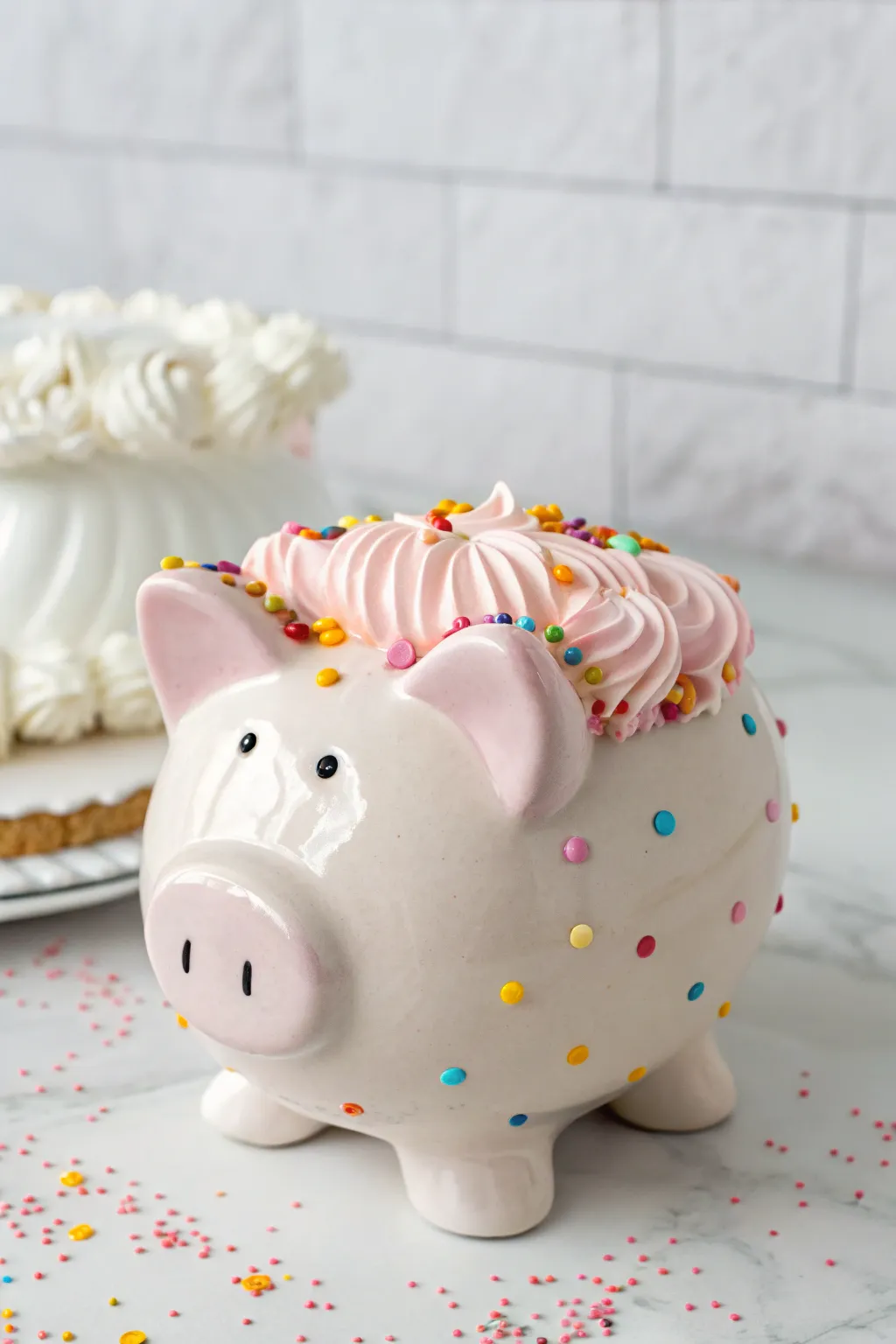
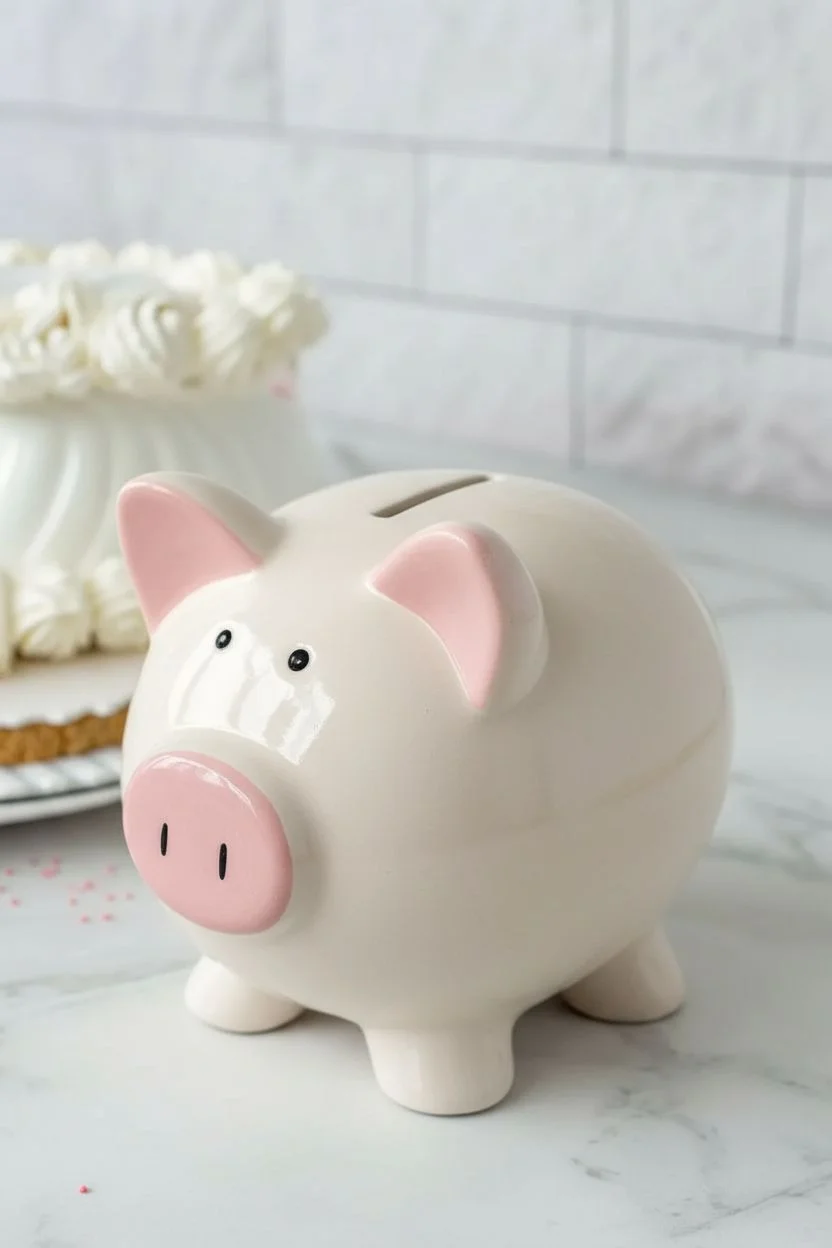
Transform a plain ceramic piggy bank into a sugary confection with this whimsical, candy-inspired design. Featuring faux frosting swirls and a confetti of colorful painted sprinkles, this project looks good enough to eat but is perfect for saving your pennies.
Detailed Instructions
Materials
- Plain ceramic piggy bank (creamy white or light beige)
- Acrylic paints: light pink, bright pink (magenta), yellow, blue, teal, orange, red, black, white
- Lightweight spackle or modeling paste
- Pastry bag
- Open star piping tip (large)
- Small round paintbrushes (sizes 0 and 2)
- Glossy varnish or sealant spray (optional)
- Palette for mixing paints
- Paper towels
- Cup of water
Step 1: Base Painting
-
Prepare the surface:
Wipe down your ceramic piggy bank with a damp cloth to remove any dust or oils. Let it dry completely before starting. -
Paint the snout:
Using a size 2 brush and light pink acrylic paint, carefully fill in the oval shape of the pig’s snout. Apply two thin coats for opaque coverage, letting the first coat dry before adding the second. -
Detail the snout:
Switch to a size 0 brush and black paint. Paint two small, vertical oval lines on the pink snout to create the nostrils. Keep your hand steady and use just the tip of the brush. -
Ear accents:
Paint the inner triangle of both ears using the same light pink shade you used for the snout. This adds a soft, realistic touch to the character. -
Bring the eyes to life:
With black paint and a small round brush, paint two solid black circles for eyes. Once the black paint is fully dry, use the handle end of a paintbrush dipped in white paint to dot a tiny highlight near the top of each eye.
Step 2: Confetti Sprinkles
-
Mix your colors:
Prepare a palette with small amounts of bright pink, yellow, blue, teal, orange, and red acrylic paints. You want vibrant, candy-shop colors for this step. -
Start dotting:
Dip the handle end of a medium paintbrush or a dotting tool into one color. Press it gently onto the pig’s body to create a perfect circle. I find starting with one color and scattering it randomly works best. -
Layering colors:
Repeat the dotting process with each color, wiping your tool clean between shades. Scatter the dots primarily on the lower half and sides of the pig, leaving the top back area clear for the frosting. -
Create variety:
Vary the spacing between dots—some can be close together while others drift apart, mimicking how real sprinkles would fall. -
Let it set:
Allow all the painted dots to dry completely. This is crucial so you don’t smudge your colorful work while handling the pig for the next phase.
Pro Tip: Lifelike Frosting
Add a tiny amount of white glue to your spackle mixture before piping. It helps prevent cracking as the thick swirls dry and adhere better to the sleek ceramic surface.
Step 3: Faux Frosting & Toppings
-
Tint the spackle:
Scoop about a cup of lightweight spackle or modeling paste into a bowl. Add a few drops of light pink acrylic paint and mix until you achieve a soft, strawberry-frosting hue. -
Prepare the piping bag:
Fit your pastry bag with a large open star piping tip. Fill the bag with your tinted pink spackle mixture. -
Practice your swirls:
Do a test swirl on a piece of cardboard to get a feel for the consistency. It should hold its shape just like real buttercream. -
Pipe the frosting:
Pipe generous swirls of the pink mixture onto the top of the piggy bank’s head and back. Use a circular motion to create rosettes and peaks that look fluffy and delicious. -
Add texture:
While the spackle is still wet, you can gently adjust any peaks with a toothpick if they look droopy, but usually, the natural piping texture looks best. -
Sprinkle the top:
Immediately while the ‘frosting’ is wet, carefully drop real crafting sprinkles or beads onto it. Alternatively, wait for it to dry and paint more dots on top later, but pressing small beads in now adds great dimension. -
Paint dry sprinkles:
If you opted to paint the top sprinkles, wait until the spackle is rock hard (usually overnight). Then, use your small brush to paint tiny dashes of color onto the ridges of the frosting swirls. -
Final drying time:
Let the entire project sit undisturbed for at least 24 hours to ensure the thick layer of spackle dries all the way through. -
Seal (Optional):
If desired, give the painted ceramic parts (avoiding the textured frosting) a light coat of glossy varnish to make the ‘ceramic’ look shine.
Level Up: Glossy Finish
Once the painted sprinkle dots are dry, add a drop of dimensional glaze or glossy accents on top of each dot. It makes them look like raised, shiny candy dragées.
Now you have a delightful spot to stash your sweets money that looks just as good as the treats you’re saving for
Personalized Name and Date in Hand Lettering
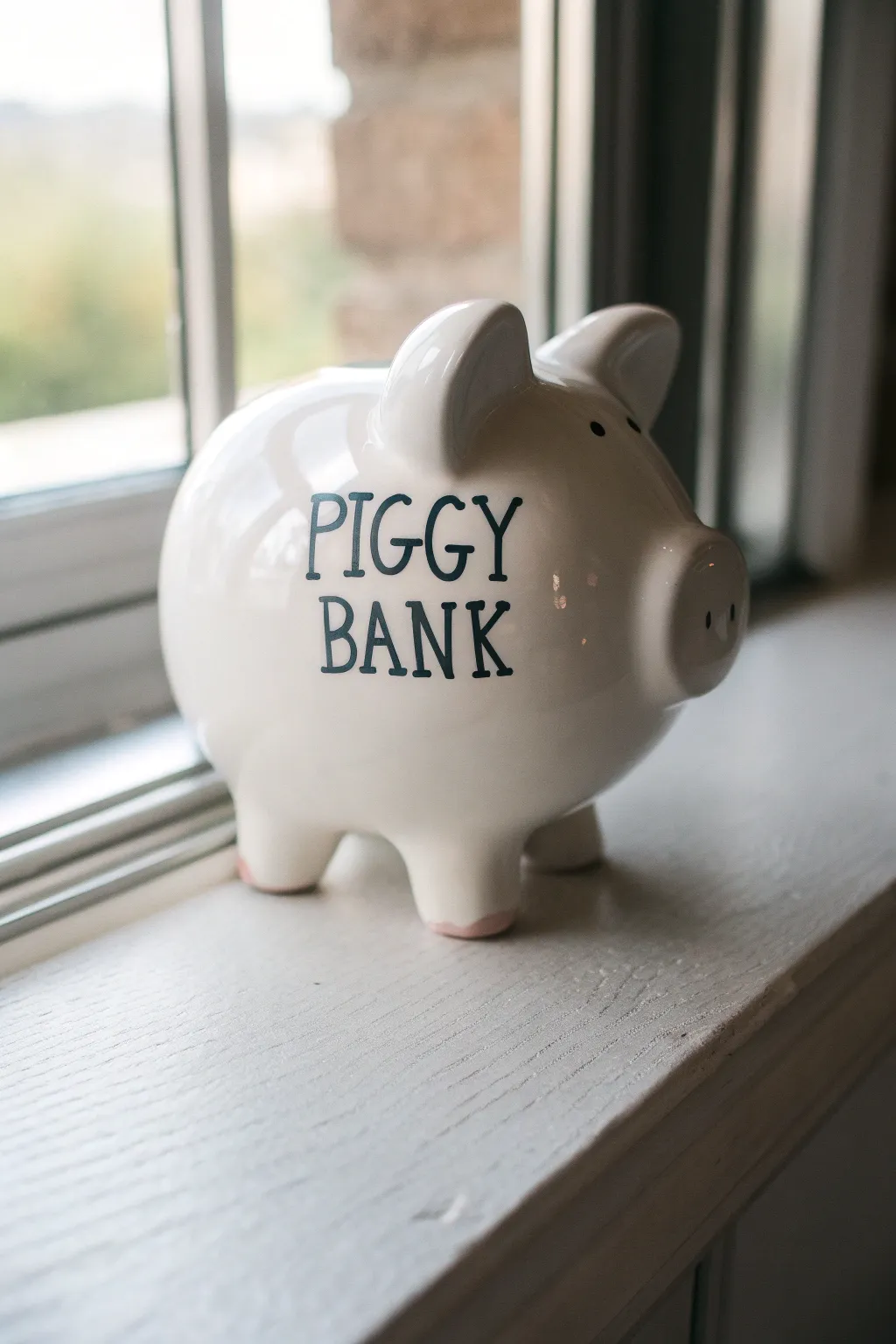
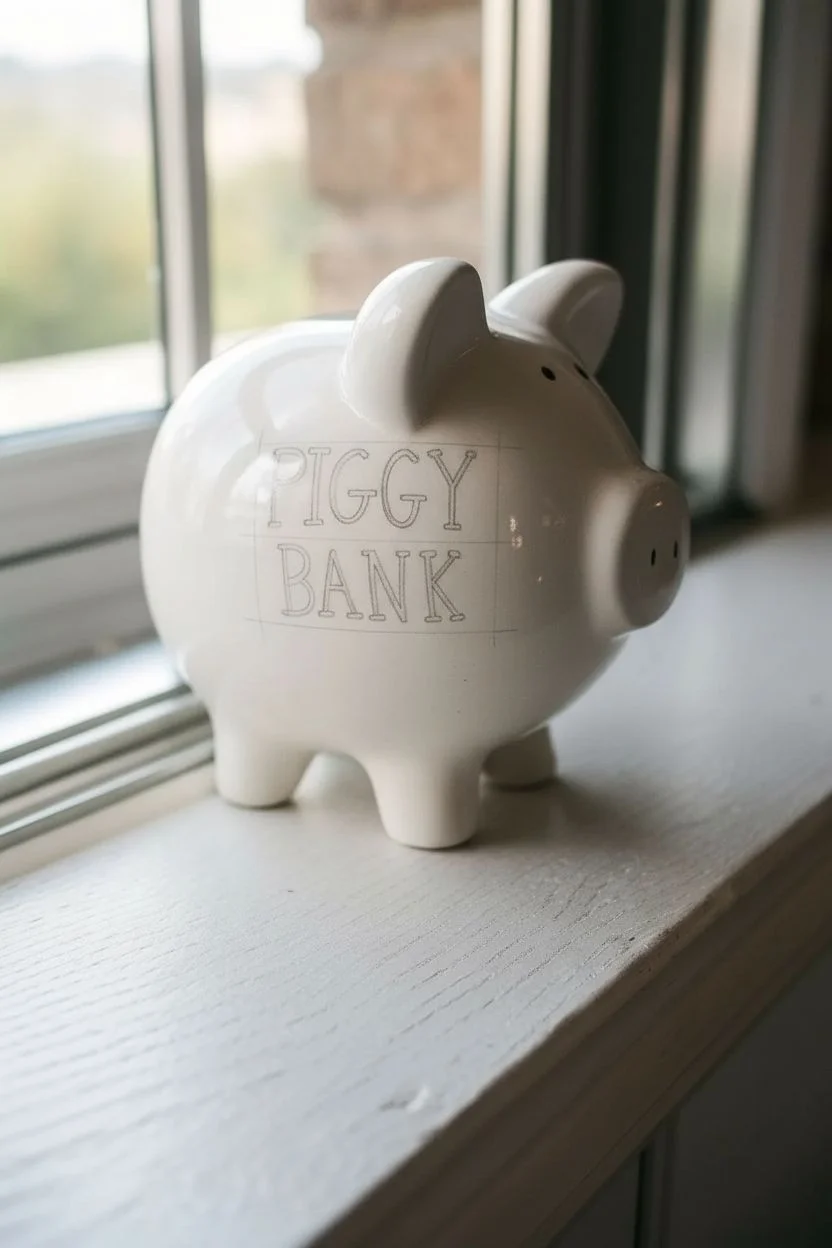
Create a timeless keepsake with this clean and sophisticated piggy bank design featuring bold serif lettering against a glossy white finish. This project focuses on achieving crisp, professional-looking text that transforms a plain ceramic shape into a charming decor piece.
Step-by-Step Guide
Materials
- White ceramic piggy bank (untreated or primed)
- Black porcelain or multi-surface acrylic paint
- Soft pink acrylic paint
- Fine liner brush (size 0 or 00)
- Small flat shader brush
- Pencil / Eraser
- Paper towels
- Rubbing alcohol
- Cotton rounds
- Glossy clear sealant (spray or brush-on)
- Optional: Graphite transfer paper
- Optional: Printed text template
Step 1: Preparation & Planning
-
Clean the Surface:
Before adding any paint, wipe the entire surface of the ceramic piggy bank with rubbing alcohol on a cotton round. This removes manufacturer oils or fingerprints that could prevent the paint from adhering properly. -
Map Out the Text Area:
Visualize where the text ‘PIGGY BANK’ will sit on the side of the pig’s body. You want it centered vertically between the back and belly, and horizontally between the shoulder and ham. -
Draft the Lettering:
Using a pencil, lightly sketch two parallel horizontal lines to serve as guides for your text height. Make them roughly 2-3 inches long, depending on the size of your bank. -
Sketch the Letters:
Lightly draw the words ‘PIGGY’ on the top line and ‘BANK’ on the bottom line. Aim for a serif style, adding small ‘feet’ to the tops and bottoms of the letters. If freehand sketching feels daunting, I sometimes print out the text in a font I like and use graphite transfer paper to trace it onto the ceramic. -
Refine the Spacing:
Step back and look at your pencil sketch. Ensure the letters are evenly spaced and the two words are centered relative to each other. Gently erase and adjust as needed until the composition looks balanced.
Step 2: Painting the Details
-
Load the Liner Brush:
Dip your fine liner brush (size 0 or 00) into the black porcelain paint. If the paint feels too thick, thin it very slightly with a drop of water to help it flow smoothly like ink. -
Outline the Stems:
Start by painting the main vertical strokes of each letter. Keep your hand steady and use the very tip of the brush. Don’t worry about the serifs (the little feet) yet; just get the main structure of the letters down. -
Add the Serifs:
Once the main strokes are defined, go back and carefully paint the small horizontal lines at the ends of the strokes to create the serif style. These should be delicate and slightly thinner than the main lines. -
Thicken and Fill:
Go over the vertical strokes again to thicken them slightly, giving the font more weight and prominence. Ensure the black coverage is solid and opaque. -
Clean Up Edges:
If you make a mistake or a line gets wobbly, quickly use a damp cotton swab or a clean, wet brush to wipe away the excess paint while it is still wet. -
Paint the Eyes:
Using the very tip of your liner brush or the handle end dipped in paint, add small black dots for the eyes. Position them high on the face near the ears. -
Detail the Snout:
Add two small vertical dashes or dots on the front of the snout for the nostrils. -
Initial Drying Time:
Let the black paint dry completely for at least an hour. You don’t want to accidentally smudge your crisp lettering while working on the next steps.
Wobbly Lines?
If your hand is shaking, rest your pinky finger on the pig’s surface (on a dry spot!) to stabilize your brush hand while painting the fine letters.
Step 3: Adding Accents & Finishing
-
Prepare the Pink Paint:
Squeeze out a small amount of soft pink acrylic paint. If the pink is too bright, you can tone it down with a tiny speck of white or beige. -
Highlight the Ears:
Use a small flat shader brush to paint the inner curve of the ears pink. Follow the natural sculptural line of the ear to make it look organic. -
Accent the Feet:
Flip the pig over gently or tilt it back so you can reach the hooves. Paint just the bottom pads of the feet with the soft pink color. -
Erase Guide Lines:
Once the black paint is 100% cure-dry (refer to your bottle instructions, sometimes this takes 24 hours), gently erase any visible pencil marks remaining around the letters. -
Apply Sealant:
To protect your handiwork, apply a coat of glossy clear sealant. If using a spray, do light coats to avoid drips. If brushing, use a soft bristle brush to apply a thin, even layer. -
Baking (Optional but Recommended):
If you used specific porcelain or oven-bake paints, place the piggy bank in a cold oven, turn it to the manufacturer’s specified temperature (usually around 300°F/150°C), and bake to cure the paint permanently.
Add a Personal Touch
Instead of ‘PIGGY BANK,’ customize the lettering with the recipient’s name, birth date, or a fun savings goal like ‘ADVENTURE FUND’ for a unique twist.
Now you have a charming, personalized vessel ready to be filled with coins and dreams.
Savings Goal Banner Painted Around the Belly
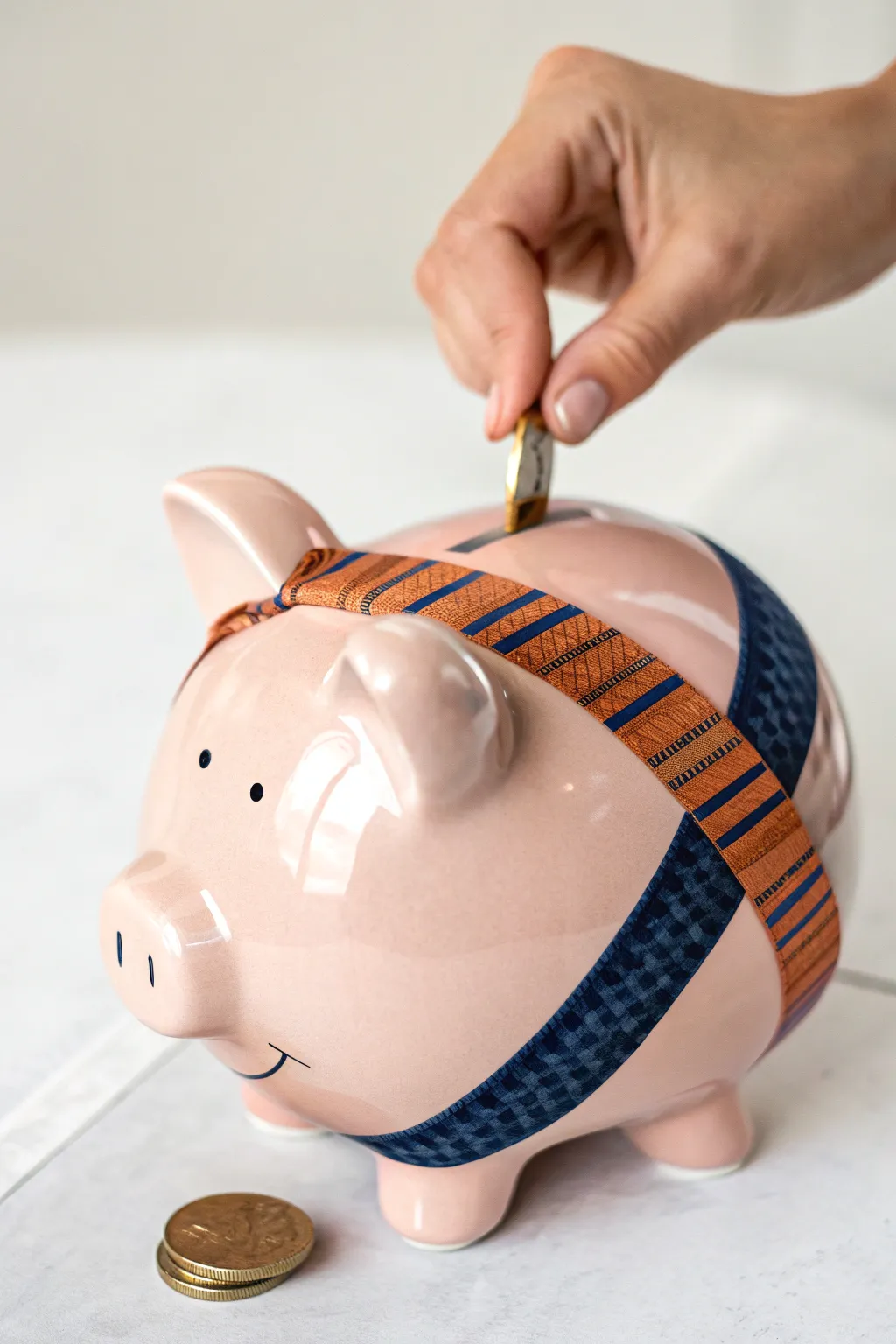
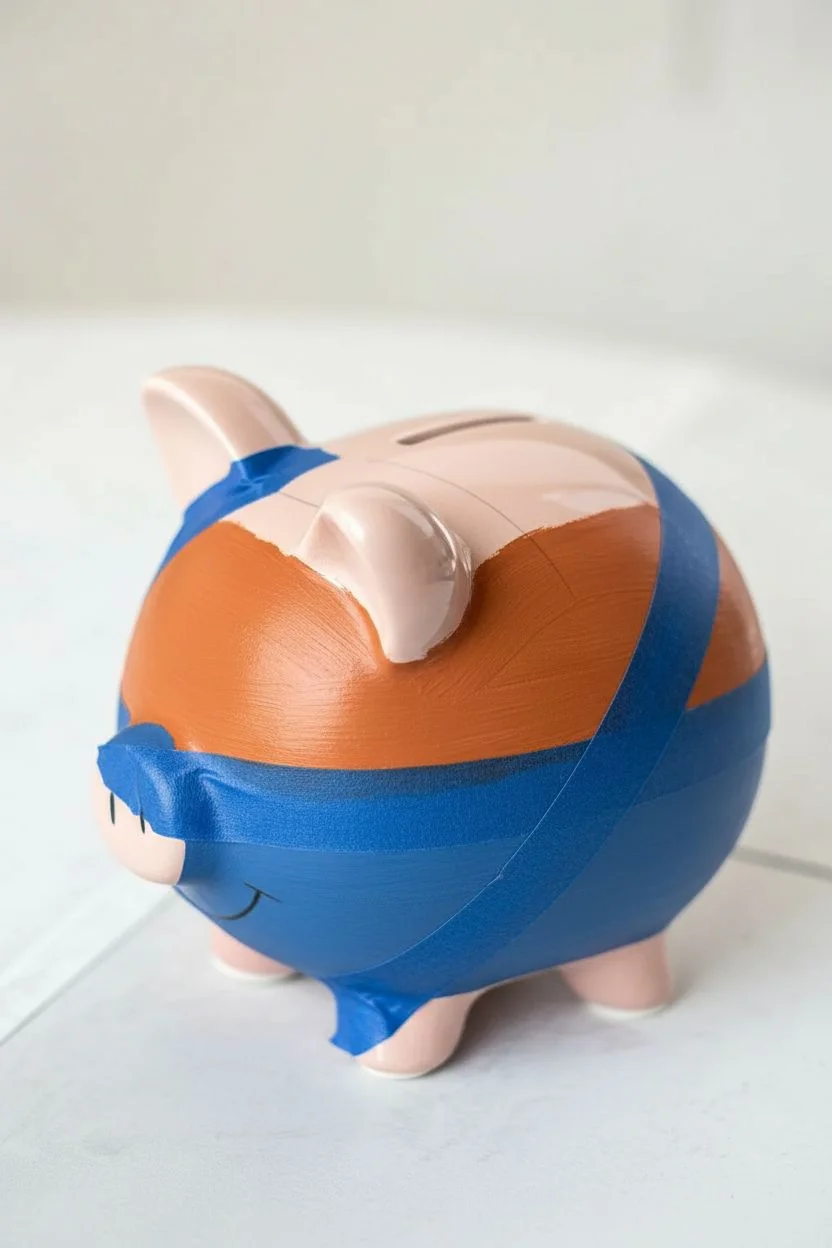
Give your classic piggy bank a sophisticated upgrade by painting a faux fabric belt wrapped snugly around its middle. This design combines a warm, textured orange stripe with a contrasting checkered blue bottom for a tailored, unique look.
Detailed Instructions
Materials
- Pink ceramic piggy bank
- Acrylic paints: Burnt Orange, Navy Blue, Dark Blue, Black, White (for mixing)
- Painter’s tape (low tack)
- Small flat brush (size 4 or 6)
- Fineliner brush (size 0 or 00)
- Glossy acrylic sealer spray
- Pencil and eraser
- Palette for mixing
- Ruler or soft measuring tape
Step 1: Planning and Base Coats
-
Clean the surface:
Before you begin, wipe down the ceramic piggy bank with a damp cloth or a little rubbing alcohol to remove any oils or dust. This ensures the paint adheres properly. -
Mark the belt borders:
Using a soft measuring tape and a pencil, lightly draw two parallel lines wrapping completely around the pig’s belly. The belt should be about 1.5 to 2 inches wide. I find sticking the tape measure down with a little masking tape helps keep it steady while tracing. -
Divide the belt:
Draw a diagonal line across the top of the belt area to simulate where the ‘fabric’ overlaps, then divide the belt horizontally into two distinct sections: an upper strip (about 2/3 of the width) and a lower strip (about 1/3). -
Tape the edges:
Apply painter’s tape along the outside edges of your pencil marks to protect the pink ceramic. Press the edges down firmly to prevent paint bleed. -
Paint the bottom section base:
Mix a medium blue using Navy Blue and a touch of white. Paint the lower horizontal section with this solid color. Apply two coats if necessary for full opacity, letting it dry between layers. -
Paint the top section base:
Paint the upper, wider section with Burnt Orange. If the paint looks streaky, don’t worry—the texture we add later will hide imperfections. Let this base coat dry completely.
Uneven Lines?
If your hand shakes while painting stripes, use thin strips of painter’s tape or washi tape to mask off the lines instead of free-handing them.
Step 2: Adding the Details
-
Draft the diagonal stripes:
Once the orange base is dry, use a ruler to lightly pencil in diagonal lines spaced evenly apart across the orange section. -
Paint the blue stripes:
Using your small flat brush and straight Navy Blue paint, carefully fill in the diagonal pencil lines. Keep your hand steady and rotate the pig as you go. -
Add texture to the orange:
To mimic the fabric weave seen in the image, take a nearly dry brush with a tiny amount of dark brown or black paint. Lightly whisk it over the dry orange areas between the blue stripes. This ‘dry brushing’ technique adds depth. -
Create the checkered pattern:
On the lower blue section, use your fineliner brush and Dark Blue paint (or Navy mixed with a little black) to paint a grid of small squares. This creates the checkered effect. -
Layer the checks:
Fill in alternating squares on your grid with the darker blue mix. The contrast doesn’t need to be extremely high; a subtle difference looks more like woven fabric. -
Define the separation:
With the fineliner and black paint, draw a very thin, crisp line separating the orange top section from the blue checkered bottom section.
Step 3: Finishing Touches
-
Seal the overlapping edge:
If you drew an overlap line earlier, outline this diagonal edge with a thin black line to create the illusion of dimension, making one end of the belt look like it is resting on top of the other. -
Remove the tape:
Wait until the paint is dry to the touch but not fully cured, then slowly peel away the painter’s tape at a 45-degree angle to reveal crisp edges. -
Clean up edges:
If any paint bled under the tape, use a damp cotton swab or a toothpick to gently scrape it away before it hardens completely. -
Protect the artwork:
Once the paint is fully cured (usually 24 hours), take the piggy bank to a well-ventilated area and apply a coat of glossy acrylic sealer. This protects the design from scratches when coins are dropped in.
Add a Buckle
Paint a square ‘buckle’ in gold or silver metallic paint where the two ends of the belt meet for an extra realistic accessory detail.
You now have a charmingly customized vessel ready to watch your savings grow
Faux Metallic Trim on Hooves, Ears, and Slot
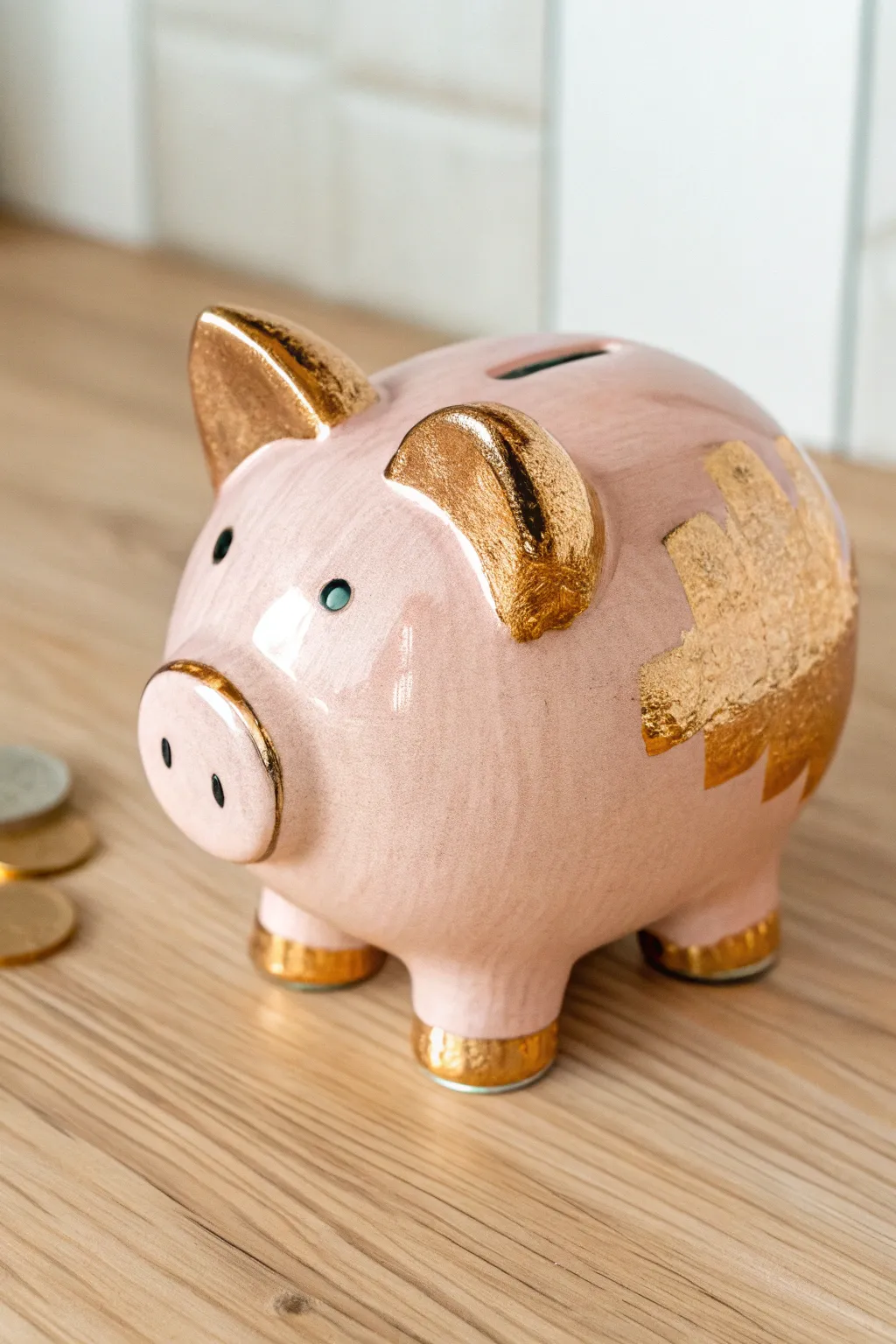

Transform a plain ceramic bank into a chic decor piece with the strategic application of gold leafing. This project combines a soft pink base with textured, metallic accents on the ears, hooves, and snout for a high-end boutique look.
Step-by-Step Tutorial
Materials
- Plain ceramic piggy bank
- Pale pink acrylic paint (gloss or satin finish)
- Gold leaf sheets
- Metal leaf adhesive sizing
- Soft synthetic paintbrushes (medium and fine)
- Stiff bristle brush (for burnishing)
- Painter’s tape (optional)
- Small sponge or foam brush
- Clear gloss sealer (spray or brush-on)
- Small cup for water
- Cotton swabs
Step 1: Preparation and Base Coat
-
Clean the Surface:
Begin by wiping down your ceramic piggy bank with a damp cloth to remove any dust or oils. Let it dry completely to ensure the paint adheres properly. -
Apply the Base Layer:
Using a soft synthetic brush or a foam sponge, apply a coat of pale pink acrylic paint over the entire bank. Long, even strokes work best here to minimize brush marks. -
Initial Drying:
Allow this first coat to dry for at least 20-30 minutes. It should be dry to the touch before proceeding. -
Second Coat for Opacity:
Apply a second layer of pink paint to ensure solid, opaque coverage. If your bank was originally a dark color, a third coat might be necessary. -
Full Cure:
Let the pink base coat cure fully, preferably for a few hours or overnight, so the gold leaf adhesive won’t lift the paint later.
Step 2: Applying the Adhesive Size
-
Target the Ears:
Using a clean, small brush, carefully apply the metal leaf adhesive sizing to the front and back of both ears. Follow the natural curve of the ear shape. -
Outline the Snout:
Paint a thin ring of adhesive around the flat end of the snout, creating a rim effect. Be steady-handed here to keep the circle even. -
Coat the Hooves:
Apply the adhesive to all four feet, extending up about a quarter of an inch from the bottom to create gilded ‘shoes’ for your pig. -
Create the Abstract Patch:
On the hindquarter of the pig, paint a rough, abstract patch of adhesive. I like to make jagged, uneven edges here rather than a perfect square to mimic the organic look in the photo. -
Wait for Tacky Stage:
This is crucial: Wait for the adhesive to turn from milky to clear and become tacky. This usually takes about 15-30 minutes depending on your brand of sizing. Do not rush this step.
Sticky Situation?
If the gold leaf pulls away when you try to burnish it, the adhesive wasn’t tacky enough or you applied the leaf too soon. Re-apply sizing and wait longer.
Step 3: Gilding and Finishing
-
Apply Gold Leaf to Ears:
Gently lift a sheet of gold leaf and lay it over the tacky ear. Use a soft, dry brush to press the leaf down into the adhesive. -
Gild the Details:
Repeat the process for the snout ring and the hooves, tearing smaller pieces of leaf to fit these areas to avoid waste. -
Patch Application:
Lay a larger sheet over the abstract patch on the rear. Don’t worry about wrinkles; texture adds to the charm of this design. -
Let it Set:
Allow the gold leaf to sit on the adhesive for about an hour to ensure a strong bond. -
Burnish the Gold:
Take your stiff bristle brush and vigorously rub over the gold areas in circular motions. This removes the excess non-adhered leaf and polishes the gold that remains. -
Clean Up Edges:
If any gold leaf stuck to areas you didn’t intend, use a damp cotton swab to gently rub it away. -
Painting the Eye:
Use a fine liner brush and black paint to add a small dot for the eye and two oval dots for the nostrils. Add a tiny speck of white or teal to the eye for a highlight. -
Seal the Project:
Once everything is dry, apply a clear gloss sealer over the entire pig, or just over the gold areas, to prevent the metal leaf from tarnishing over time.
Clean Lines Hack
For the hooves and snout, use a small strip of washi tape to mask off the pink area before applying the adhesive size. Peel it off while the size is wet.
Now you have a stylish and shimmering place to stash your spare change
Mermaid Scale Texture Along the Back and Sides
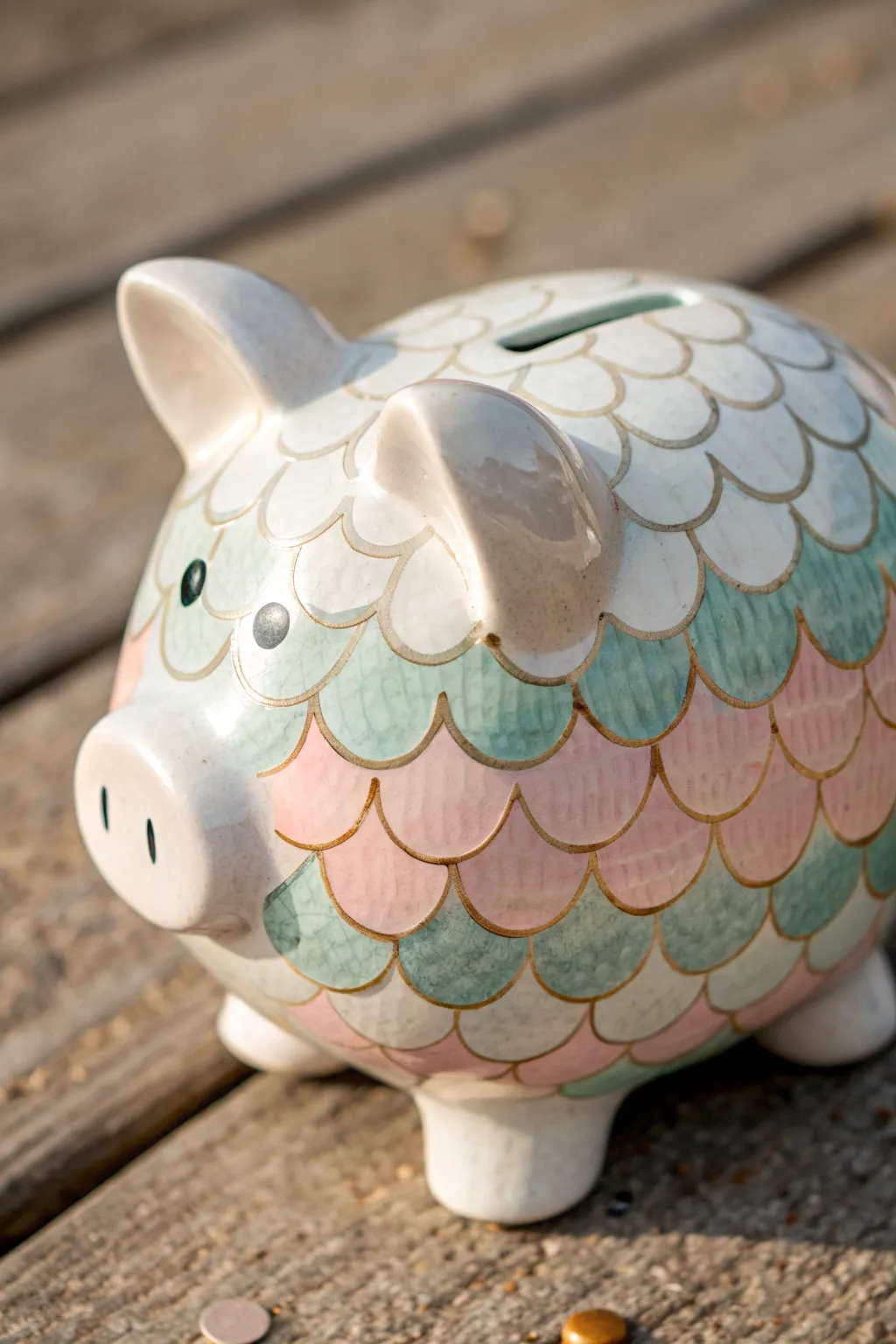

Transform a plain ceramic piggy bank into an aquatic treasure with this elegant mermaid scale pattern. Using soft pastels and metallic gold lining, you’ll create a textured, high-end look that mimics glimmering fish scales.
Step-by-Step
Materials
- Plain white ceramic piggy bank
- Ceramic paints (Soft Pink, Mint Green, Cream/White)
- Gold paint marker (fine tip) or gold relief outliner
- Small flat shader brush
- Fine liner brush
- Pencil (light H grade)
- Glazing medium (optional, for translucency)
- Gloss varnish or clear sealer
Step 1: Preparation & Base Coat
-
Clean surface:
Begin by wiping down your ceramic piggy bank with a damp cloth to remove any dust or oils. Let it dry completely. -
Apply base color:
Paint the entire pig with a coat of creamy white or very pale off-white ceramic paint. This ensures a uniform background for the translucent scales. -
Dry properly:
Allow the base coat to dry fully according to the paint manufacturer’s instructions before starting the detailed work.
Steady Hand Trick
Rest your pinky finger on a dry part of the pig while using the gold marker. This acts as an anchor, giving you much smoother curves than hovering your hand.
Step 2: Drafting the Scales
-
Mark the center:
Start at the top of the pig’s back, right near the coin slot. Lightly mark a center vertical line with your pencil to help keep your pattern symmetrical. -
First row sketch:
Sketch the first row of U-shapes (scallops) starting from the top. Keep them roughly the size of a thumb tip. -
Offset pattern:
For the second row, position the bottom of each ‘U’ directly between the two scallops above it. This brick-lay or offset pattern is crucial for the mermaid scale look. -
Cover the body:
Continue sketching these rows down the sides of the pig. Don’t worry about the legs or face yet; just establish the main body pattern. -
Curve with the form:
As you move down the rounded belly, let your U-shapes widen slightly to follow the curve of the pig.
Glitter Glam
Before the final varnish dries, sprinkle a tiny pinch of iridescent fine glitter over the wet sealer on the pink scales for extra magical sparkle.
Step 3: Painting the Scales
-
Mix your colors:
Prepare your palette with Mint Green, Soft Pink, and Cream. I like to mix a tiny drop of glazing medium into these to verify the color stays soft and slightly watercolor-like. -
Plan the gradient:
Decide on a loose pattern. The reference image uses alternating bands of mint, white, and pink, but they blend softly rather than being rigid stripes. -
Paint the mint sections:
Using your small flat brush, fill in the scales designated for green. Use downward strokes to fill the ‘U’ shape. -
Paint the pink sections:
Rinse your brush and fill in the pink scales. If a wet pink edge touches a wet green edge, let them bleed slightly for a natural transition. -
Leave white spaces:
Leave several rows or individual scales painted only with the cream color, particularly near the top and around the face. -
Face details:
Paint the snout a solid cream or very pale pink. Add two simple black vertical dashes for nostrils and solid black circles with white highlight dots for eyes.
Step 4: Gilding the Edges
-
Outline the scales:
Once the color layers are bone dry, take your gold paint marker or relief outliner. Carefully trace over your pencil lines to create the defined gold scallop edges. -
Connect the lines:
Ensure the points where the scales meet are connected cleanly. The gold line should look like a continuous wire mesh over the colors. -
Detail the ears:
Run a gold line along the edge of the ears. Paint the inner ear a soft beige or taupe color. -
Add crackle (optional):
If you want the vintage pottery look shown in the photo, you can use a fine liner brush to paint very faint, jagged grey lines inside the scales to mimic ceramic crazing. -
Seal the work:
Finish with a high-gloss spray varnish to protect the paint and give it that shiny, fired-ceramic appearance.
Now you have a whimsical, custom vessel ready to guard your coins in style
Have a question or want to share your own experience? I'd love to hear from you in the comments below!