
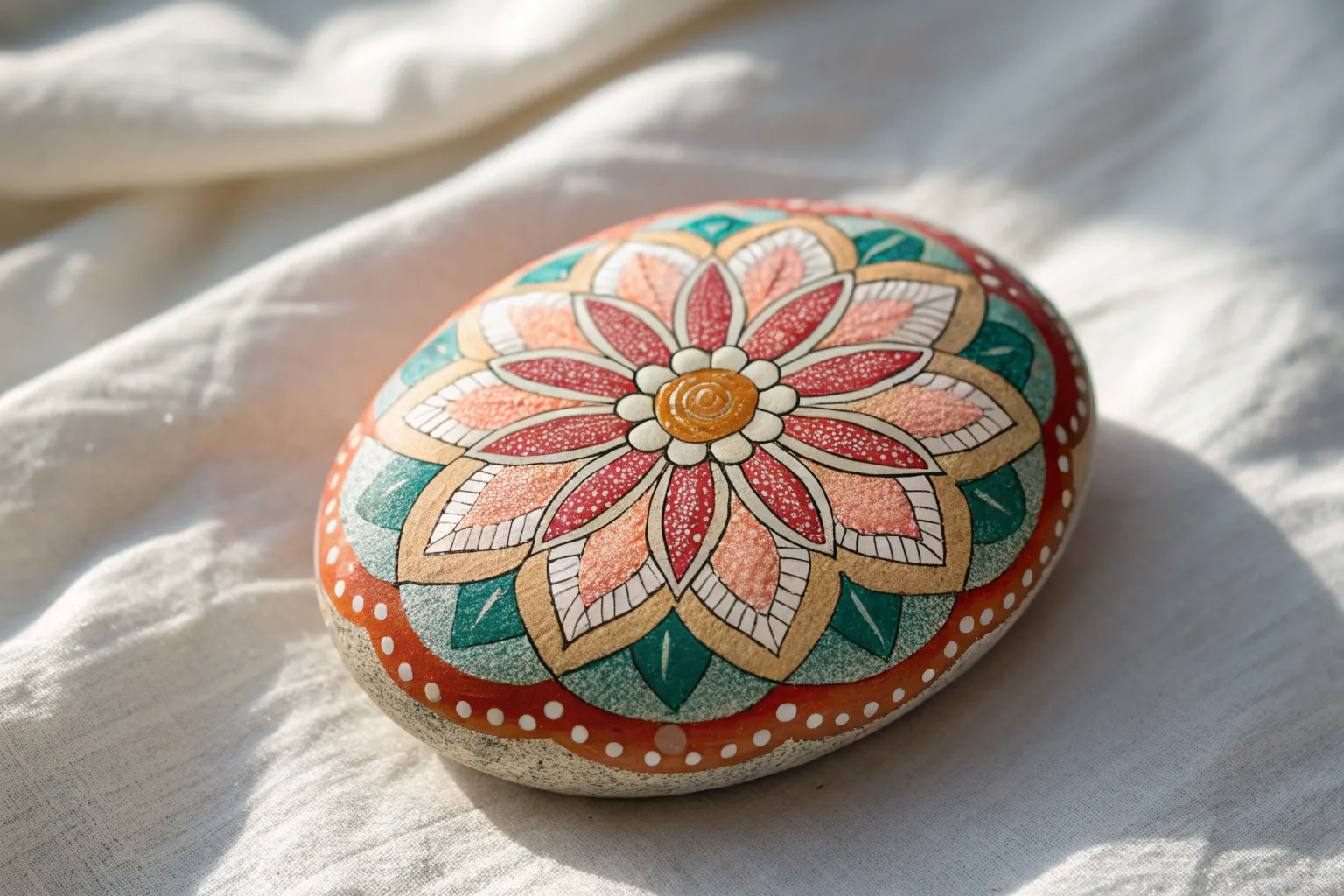
Rock painting is one of my favorite ways to turn an ordinary afternoon into something colorful and oddly relaxing. If you’ve got a handful of smooth stones and a little curiosity, you’re already halfway to a tiny gallery of painted rocks you’ll want to display everywhere.
Simple Hearts and Love Notes

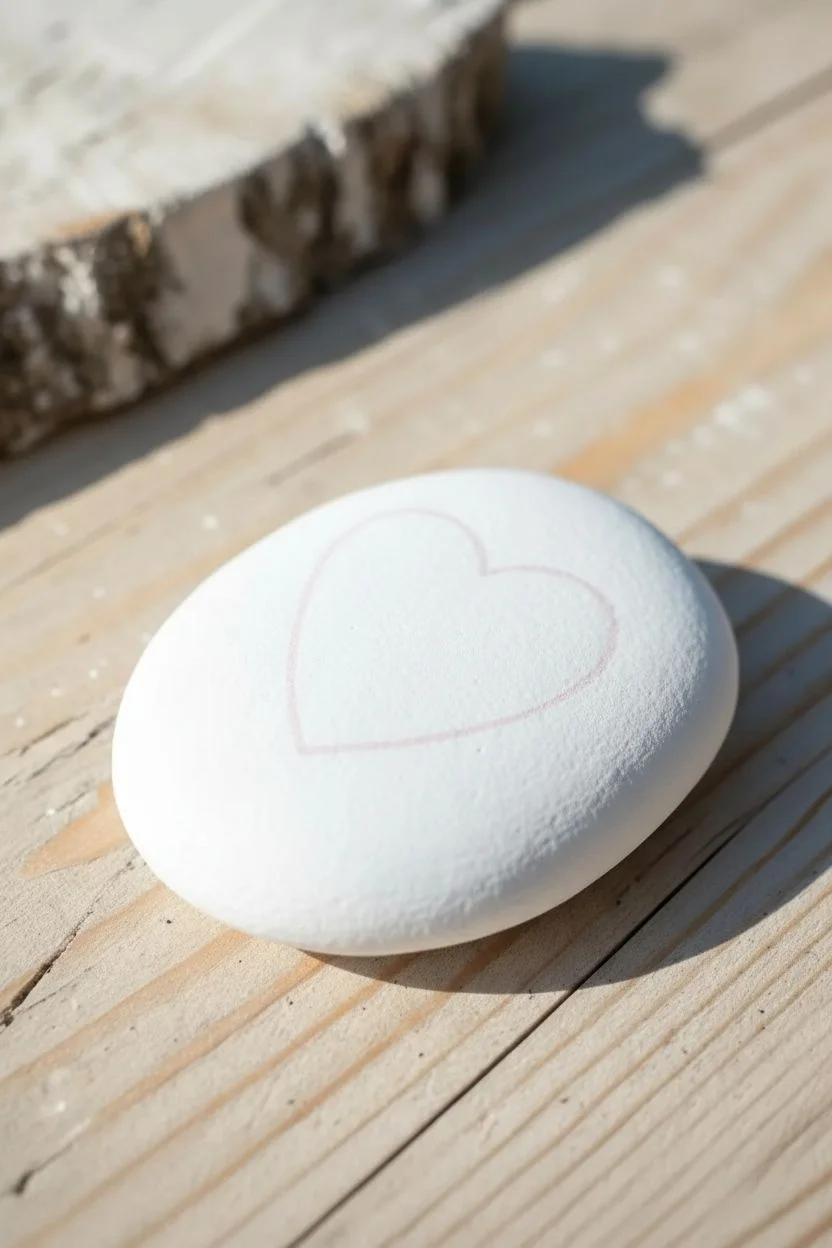
This sweet and simple design combines a classic red heart with delicate botanical elements for a modern rustic look. The bright white polka dots add a playful touch, making this stone painting perfect for Valentine’s Day or just to show someone you care.
Step-by-Step
Materials
- Smooth, oval river rock (flat surface is best)
- White acrylic paint or gesso
- Red acrylic paint
- Fine point black paint pen (0.5mm or 0.7mm)
- Small fine-line paintbrush
- Dotting tool or toothpick
- Matte or pencil-finish clear sealant spray
Step 1: Base and Shape
-
Clean your canvas:
Begin by scrubbing your stone with warm soapy water and letting it dry completely to ensure the paint adheres properly. -
Prime the surface:
Apply a base coat of white acrylic paint or gesso to the top surface of the stone. Depending on the opacity of your paint, you may need a second coat once the first is dry to get a solid, creamy background. -
Outline the main heart:
Once the white base is fully dry, lightly sketch a large, tilted heart shape in the center using a very light pencil touch or thinned red paint.
Ink Smudging?
Paint pens can smear if sealed too quickly. Let the black ink cure overnight before spraying, or apply a very thin layer of Mod Podge first as a barrier.
Step 2: Filling with Color
-
Paint the red heart:
Using your red acrylic paint and a small brush, carefully fill in the heart shape. Aim for smooth, even strokes. -
Dry and repeat:
Allow the first layer of red to dry. Red pigment is often translucent, so I usually apply a second coat to make the color truly vibrant and opaque. -
Add the mini heart:
At the bottom left point of the main heart, paint a tiny secondary red heart that looks like it’s tucked into the future vine wreath.
Step 3: Adding Details
-
Create the polka dots:
Dip a dotting tool or the tip of a toothpick into white paint. Gently press dots onto the red heart in a random or grid pattern. -
Dot the tiny heart:
Add just one single, tiny white dot to the center of the miniature heart at the bottom. -
Start the vine outline:
Switch to your fine point black paint pen. Draw a thin black line outlining the main red heart to give it a crisp edge. -
Draw the main stems:
Draw two long, curved lines on either side of the heart, starting from the bottom near the mini-heart and curling upward towards the top, creating a wreath shape. -
Add the leaves:
Along these black stems, draw small, simple loop shapes for leaves. Keep them evenly spaced and facing outward from the heart. -
Connect the bottom:
Draw small stems connecting the mini-heart to the main vine structure so it feels integrated into the wreath. -
Add top accents:
At the very top opening of the wreath, add two tiny red dots and a few small black dashed lines or tick marks for extra botanical flair.
Make it Personal
Instead of polka dots inside the heart, use a white gel pen to write a name, a date, or a short word like ‘Love’ or ‘Hope’ in cursive.
Step 4: Finishing Touches
-
Check your lines:
Look over your black ink work. If any lines look too faint, carefully retrace them once the first layer of ink is dry. -
Let it cure:
Allow the entire stone to dry for at least an hour to ensure the thickest paint dots are solid all the way through. -
Seal the artwork:
Spray the stone with a clear matte sealant. Use light, sweeping motions to avoid making the ink run.
Place this charming stone on a desk or windowsill to add a little handmade love to your day


Rainbow Stripes and Color Bands

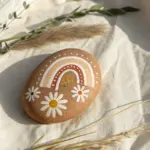
This project transforms a simple white river stone into a modern art piece featuring clean, crisp bands of color. The design uses negative space effectively, allowing the natural beauty of the rock to frame a vibrant, arching rainbow.
How-To Guide
Materials
- Smooth, light-colored river rock (oval shape works best)
- Painter’s tape or Washi tape (low tack)
- Acrylic paints (Red, Orange, Yellow, Green, Blue, Indigo/Violet)
- Small flat brush
- Fine detail brush
- Sealant (matte or satin finish)
- Palette or small dish for mixing
- Water cup and paper towels
Step 1: Preparation
-
Clean the surface:
Begin by thoroughly washing your rock with soap and water to remove any dirt or oils. -
Dry completely:
Let the stone dry fully in the sun or use a hair dryer to speed up the process; paint won’t adhere well to damp stone. -
Inspect the canvas:
Examine your rock to find the smoothest side with the most pleasing shape to serve as your top surface.
Tape Trick
If freehanding lines is hard, tape every single line! It takes longer because each line must dry first, but it guarantees straight edges.
Step 2: Creating the Guide
-
Mental mapping:
Visualize where your rainbow arc will sit; it should follow the natural curve of the stone but stay centered. -
Taping the first edge:
Place a strip of painter’s tape across the rock to mark the outer left edge of your first red stripe. -
Taping the opposite edge:
Place a second strip of tape leaving a gap about 1/4 inch wide; this gap will be your first painted stripe. -
Pressing down:
Firmly rub the edges of the tape down with your fingernail to prevent paint from bleeding underneath.
Fixing Bleeds
Paint bled under the tape? Wait for it to dry, then gently scratch the excess paint off with a toothpick or craft knife for a clean edge.
Step 3: Painting the Stripes
-
First stripe (Red):
Load your small flat brush with red acrylic paint. -
Painting technique:
Paint within the taped gap, using light strokes that start on the tape and move inward to avoid pushing paint under the edge. -
Remove tape immediately:
Carefully peel back the tape while the paint is still wet to ensure a crisp, clean line. -
Wait for drying:
Allow this first red stripe to dry completely before attempting to add the next color. -
Gap for white space:
For this specific design, we aren’t painting the colors touching each other; you will freehand the subsequent lines next to the first one. -
Second stripe (Orange):
Using a steady hand and a detail brush, paint an orange line parallel to the red one, leaving a tiny sliver of bare rock in between. -
Consistency check:
Try to keep the width of this stripe consistent with the first one. -
Third stripe (Green):
Clean your brush thoroughly and pick up green paint, applying the next parallel line. -
Fourth stripe (Blue):
Continue the pattern with a deep blue stripe, maintaining that gentle curve that mimics the rock’s shape. -
Fifth stripe (Yellow/Gold):
Add a bright yellow or gold stripe next. -
Final stripe (Red/Brown):
Finish the sequence with a final reddish-brown or terra cotta stripe to anchor the design.
Step 4: Finishing Touches
-
Clean up edges:
If any lines look wobbly, use a damp toothpick to gently scrape away excess paint before it fully cures. -
Let it cure:
Allow the entire rock to dry for several hours or overnight. -
Sealing the work:
Apply a thin coat of matte or satin sealant to protect the paint without making the rock look unnaturally shiny.
Place your finished stone on a windowsill or desk to add a subtle splash of color to your day
Cute Ladybug Rocks
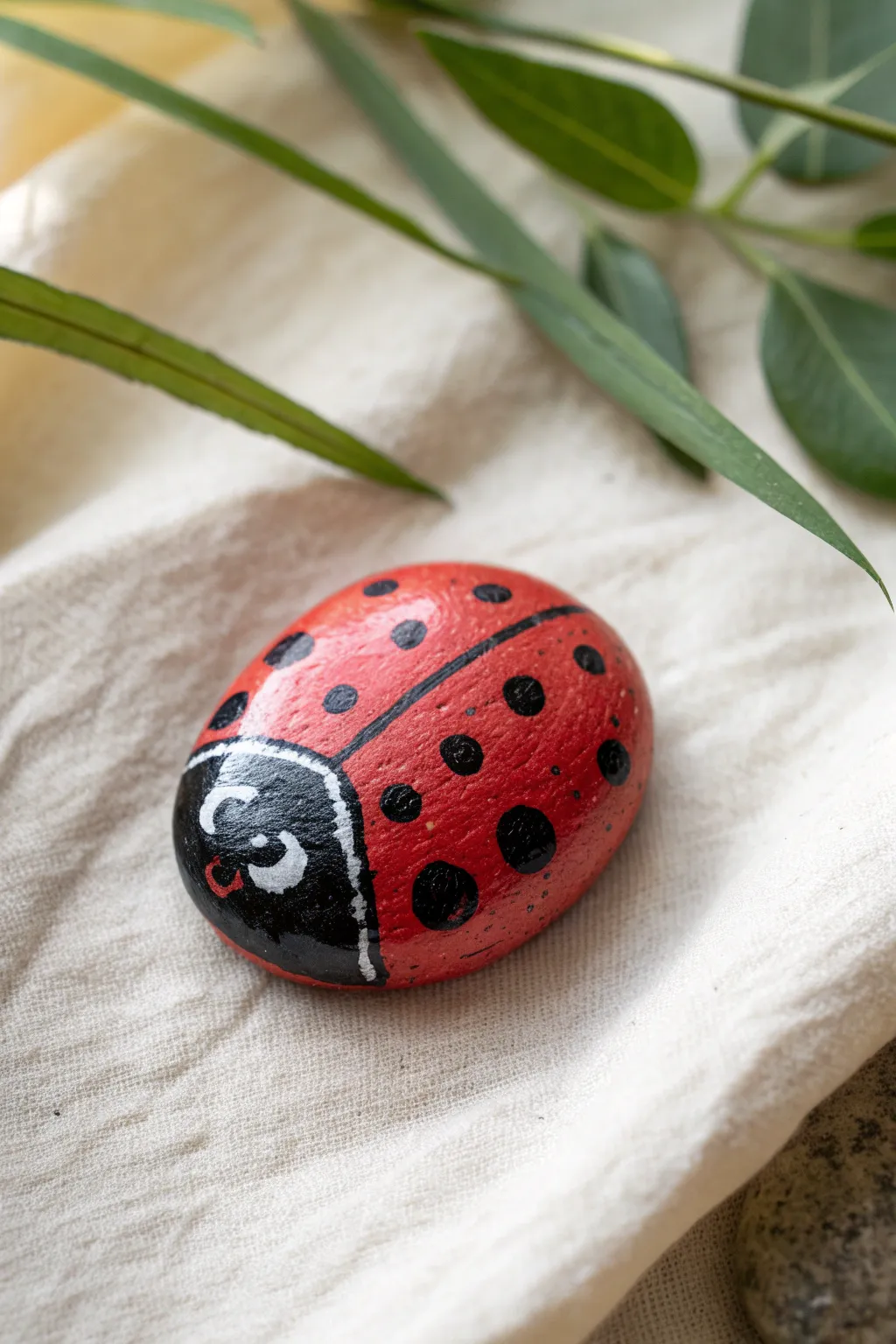
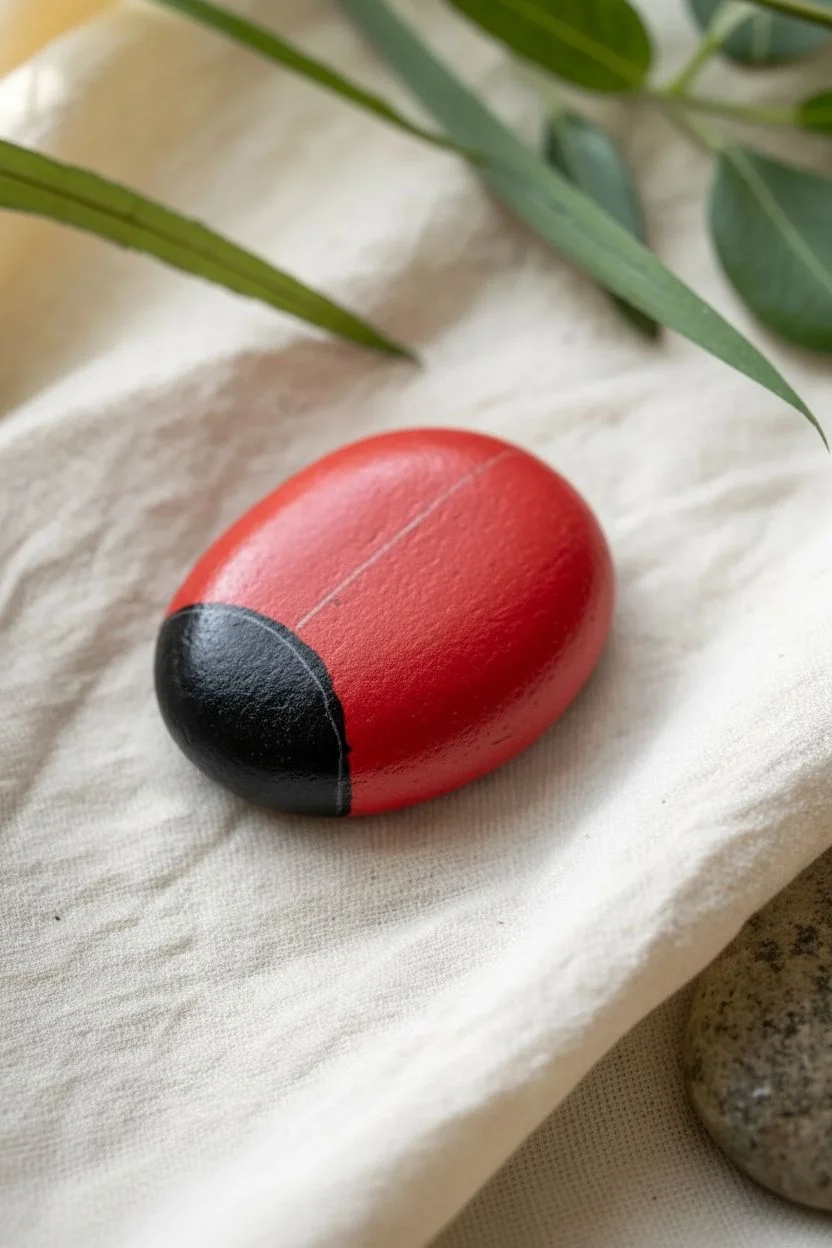
Bring your garden walkway or windowsill to life with this charming little ladybug rock. It features a brilliant red shell, bold black spots, and expressive painted eyes that give it a friendly personality.
Step-by-Step Guide
Materials
- Smooth, oval-shaped river rock
- Acrylic paint (bright red, black, and white)
- Flat paintbrush (medium size)
- Fine detail paintbrush or liner brush
- Pencil
- Water cup and paper towels
- Spray sealer or varnish (glossy)
Step 1: Base Coating
-
Clean the surface:
Begin by washing your rock thoroughly with soap and water to remove any dirt or grit. Let it dry completely before starting, as moisture can prevent the paint from adhering properly. -
Sketch the outline:
Using a pencil, lightly draw a curved line across the front third of the rock to separate the head from the body. You don’t need a ruler; a gentle freehand curve looks more organic. -
Paint the body red:
Load your medium flat brush with bright red acrylic paint. Fill in the larger bottom section of the rock, painting right up to your pencil line. Don’t worry about the head area yet. -
Fix coverage:
If the rock’s natural color shows through the red paint, let the first coat dry for about 15 minutes and apply a second coat for a solid, vibrant finish. -
Paint the head black:
Switch to clean black paint. Carefully fill in the smaller top section of the rock to create the ladybug’s head. Paint slightly over the pencil line to ensure a crisp edge where it meets the red.
Step 2: Adding Details
-
Draw the center line:
Once the red paint is dry to the touch, use your fine detail brush and black paint to draw a singular line down the center of the red body, starting from the head and going to the tail. -
Paint larger spots:
Using the same black paint, create several large, round spots on either side of the center line. I find that varying the placement slightly makes it look more natural. -
Add smaller dots:
Fill in the empty red spaces with smaller black dots. You can use the handle end of a paintbrush dipped in paint to stamp perfect small circles. -
Paint the collar:
With a clean detail brush and white paint, carefully draw a thin, curved line separation right where the black head meets the red body. This ‘collar’ defines the face. -
Create the eyes:
Paint two white ovals or curved shapes on the black head area. These will serve as the background for the eyes. -
Define the pupils:
Inside the white eye shapes, add small black pupils. You can shape them like small Cs or dots depending on the expression you want. -
Add a mouth:
If there is room near the bottom of the black head, add a tiny splash of red or a small curved line for a smiling mouth.
Perfect Circles
For perfectly round spots without a brush, dip the eraser end of a pencil or a Q-tip into black paint and press it straight down onto the rock.
Step 3: Finishing Up
-
Let it cure:
Also the paint to dry completely. Since there are layers of black over red, give it at least an hour to ensure no moisture is trapped underneath. -
Seal the rock:
Take the rock outside or to a well-ventilated area. Apply a clear gloss spray sealer. This protects the paint from weather if you place it outdoors and gives the bug a shiny, shell-like appearance.
Make a Family
Find rocks of graduating sizes to create a whole family of ladybugs. Paint the smallest rocks orange or yellow for variety in your garden bed.
Now you have a durable little friend to brighten up your potted plants or hide in the garden
Daisy and Wildflower Rocks
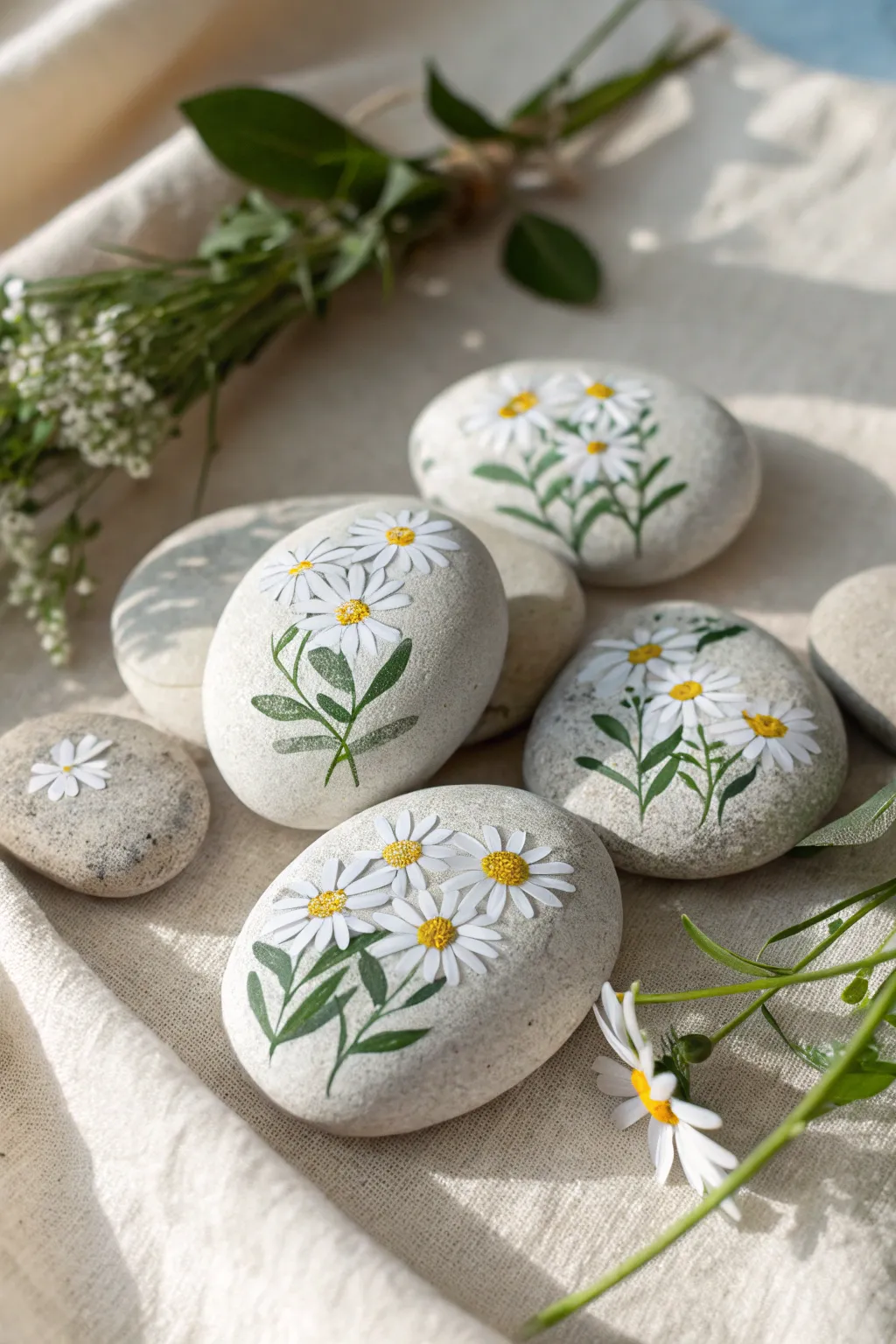
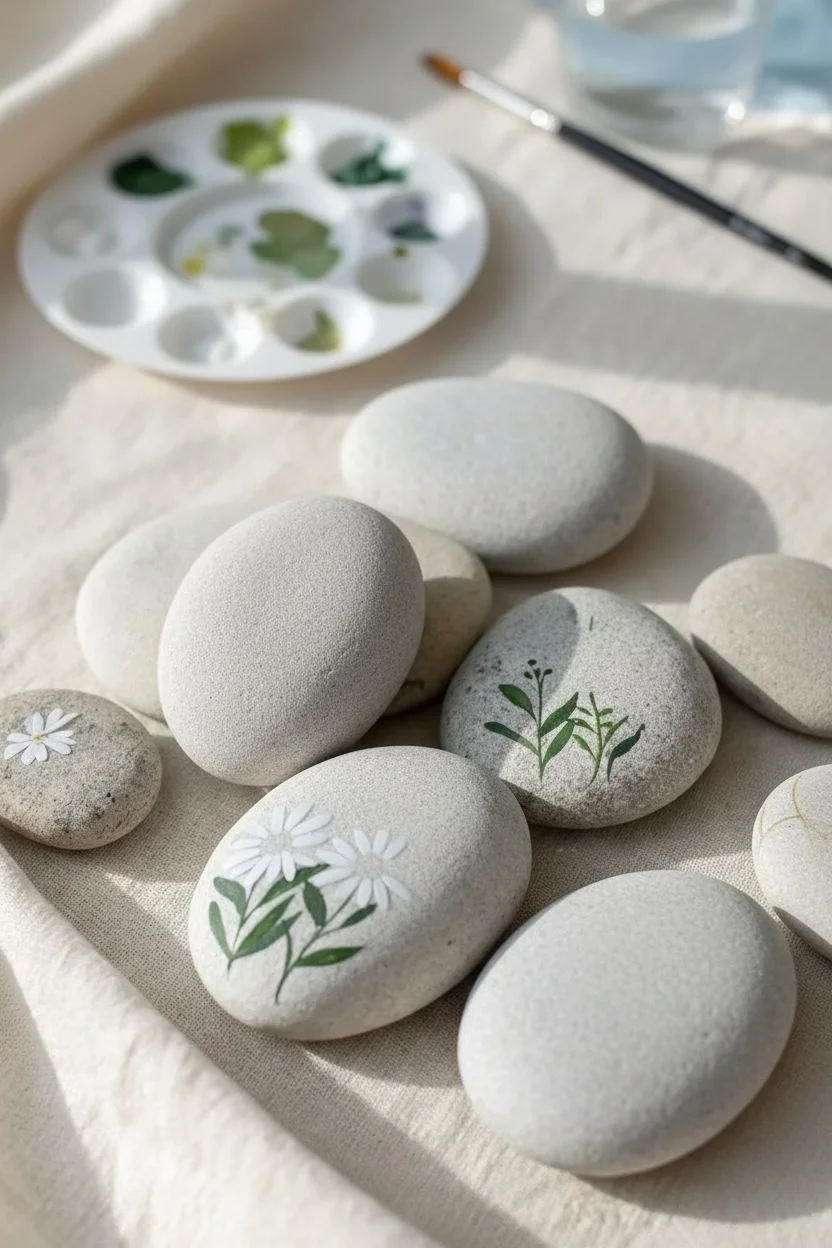
Bring the effortless charm of a summer meadow indoors with these beautifully painted daisy rocks. The design relies on clean strokes and contrasting textures to make the petals pop against the natural, smooth surface of river stones.
Step-by-Step
Materials
- Smooth, flat grey river stones (medium to large size)
- White acrylic paint (high opacity)
- Yellow acrylic paint (golden yellow or ochre)
- Green acrylic paint (olive, hunter, and a lighter leaf green)
- Small flat brush (size 2 or 4)
- Detail liner brush (size 00 or 000)
- Medium round brush
- Dotting tool or toothpick
- Matte finish sealant spray
- Palette
- Water cup and paper towels
Step 1: Preparation & Base Work
-
Stone Selection:
Choose stones that are exceptionally smooth and relatively flat. A light to medium grey color works best as a neutral background that mimics the photo. -
Cleaning:
Wash your rocks thoroughly with warm soapy water and a scrub brush to remove any dirt or oils. Let them dry completely, ideally in the sun to ensure no moisture remains in the pores. -
Planning the Layout:
Visualize where your flower clusters will sit. Aim for groupings of two or three blooms per rock to keep the composition balanced but natural.
Uneven Coverage?
If the white paint looks streaky or translucent, let it dry fully and apply a second coat. Don’t overwork wet paint or it will lift the layer below.
Step 2: Painting the Foliage
-
Mixing Greens:
Mix a small amount of hunter green with a touch of olive to create a natural, earthy stem color. Avoid using straight tube green, as it can look artificial. -
Mapping Stems:
Using your detail liner brush, paint thin, slightly curved lines radiating from the bottom center of the rock upwards. These serve as the anchors for your flowers. -
Adding Leaves:
With the same liner brush, paint long, slender leaves attaching to the stems. Vary the pressure: start light, press down to widen the leaf, and lift up to create a sharp point. -
Adding Depth:
While the green is still slightly wet, pick up a tiny bit of lighter green or yellow on your brush tip and sweep it over the tops of a few leaves to simulate sunlight hitting the foliage.
Textured Tips
For realistic centers, sprinkle fine yellow glitter or embossing powder onto the wet yellow paint before it dries for actual sandy texture.
Step 3: Creating the Daisies
-
Petal Consistency:
Ensure your white paint is creamy but not watery. You need high opacity to cover the grey stone. I find adding a tiny drop of water helps flow without losing coverage. -
First Petal Layer:
Using a small flat brush, paint the primary petals. Press the brush down flat near the stem tip and pull outward, lifting as you go to shape the petal. -
Building the Bloom:
Rotate the stone as you work around the center point, creating a starburst shape. Don’t worry if the petals aren’t perfectly uniform; nature is imperfect. -
Layering for Fullness:
Once the first layer of white is dry, paint a second layer of petals in the gaps between the first ones to create a lush, full flower head. -
Small Buds:
On some rocks, paint smaller, simpler petal clusters near the top to represent buds that haven’t fully opened yet.
Step 4: Details & Finishing
-
Yellow Centers:
Mix golden yellow with a speck of brown or orange to deepen the tone. -
Applying the Center:
Dip a dotting tool or the back of a paintbrush into the yellow mix and place a firm dot in the center of each daisy. -
Texturing the Center:
Before the yellow dries, tap it gently with a dry toothpick or small stippling brush to roughen the surface, giving it that fuzzy pollen texture. -
Final Cleanup:
Check for any stray paint marks. A damp q-tip works wonders for erasing mistakes on unsealed stone. -
Drying Time:
Allow the rocks to dry completely for at least 24 hours. The thick centers take longer to cure than the petals. -
Sealing:
Spray a light coat of matte sealant over the rocks. Avoid glossy sprays if you want to maintain the natural, rustic look shown in the reference image.
Place these charming rocks in a sunny windowsill or scattered on a garden table to enjoy blooms that last all year
BRUSH GUIDE
The Right Brush for Every Stroke
From clean lines to bold texture — master brush choice, stroke control, and essential techniques.
Explore the Full Guide
Sunny Smiles and Happy Faces

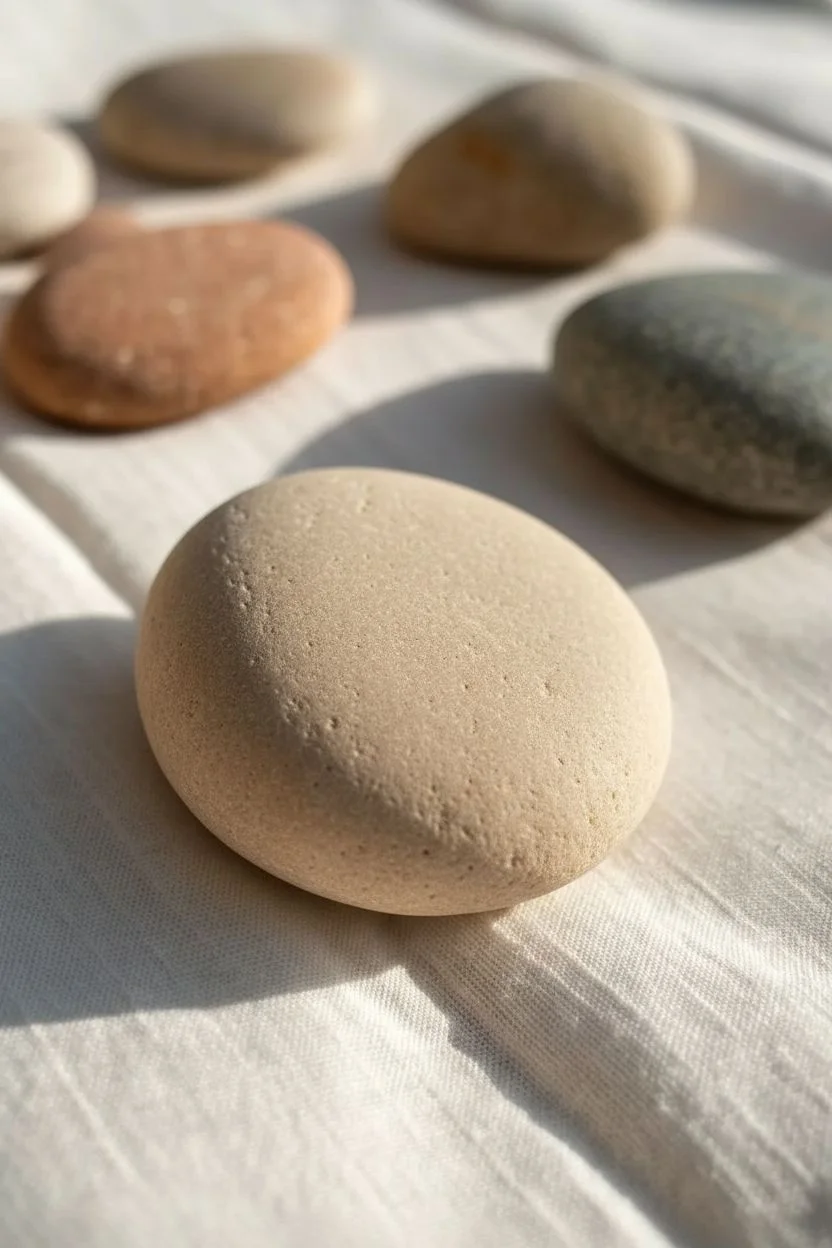
Sometimes the simplest designs bring the most joy, and this cheerful little pebble is proof. With just a few quick strokes on a smooth, beige stone, you can create a beaming face that is sure to brighten anyone’s day.
Step-by-Step Tutorial
Materials
- Smooth, round river rock (beige or light tan)
- Black acrylic paint pen (fine tip) OR fine liner brush and black acrylic paint
- White acrylic paint pen (extra fine tip) or a toothpick
- Matte spray sealer or varnish
- Mild soap and water
- Pencil (optional)
Step 1: Preparation
-
Cleaning the Canvas:
Before you begin, wash your rock thoroughly with mild soap and water to remove any dirt or oils. -
Drying Time:
Let the stone dry completely in the sun or use a clean cloth; moisture can prevent the paint from adhering properly. -
Positioning:
Find the smoothest, flattest side of your rock to serve as the face. -
Optional Sketching:
If you’re nervous about freehanding, lightly sketch the placement of the eyes and mouth with a pencil.
Uneven Surface?
If your pen skips over bumpy textures, switch to a fine liner brush with slightly thinned acrylic paint to flow into the crevices better.
Step 2: Drawing the Features
-
Outline the Eyes:
Using your fine-tip black paint pen, draw two vertical ovals near the top center of the rock. -
Spacing Check:
Keep the ovals relatively close together but not touching, leaving room for a nose in between. -
Filling In:
Carefully fill in both ovals with the black paint, ensuring solid, opaque coverage. -
The Tiny Nose:
Place a very small single dot right in the center, slightly below the level of the eyes. -
Drawing the Smile:
Start the mouth by drawing a wide, U-shaped curve. I like to start from the center bottom and work my way up the sides to keep it symmetrical. -
Cheek Accents:
Add character by drawing two small tick marks on the outside of each eye, slanting slightly upwards like whiskers. -
Adding Smile Lines:
At the ends of the smile curve, add a tiny, subtle tick mark on the right side to give the mouth a little extra dimple effect.
Step 3: Finishing Touches
-
Wait for It:
Allow the black paint to dry completely. This is crucial so the white highlights don’t turn gray. -
Adding Life:
Take your extra-fine white paint pen (or a toothpick dipped in white paint) and add a small white dot in the upper right or left corner of each eye. -
Seal the Deal:
Once all paint works are totally dry, take the rock outside and apply a light coat of matte spray sealer. -
Final Cure:
Let the sealer cure according to the bottle instructions before handling your new friend.
Rosy Cheeks
Make it cuter by dry-brushing a tiny amount of pale pink powder blush or diluted pink paint on the cheeks for a soft, blushing effect.
Place your happy rock on a desk, in a garden, or hide it for a stranger to find and share a smile
Kind Words and Quote Rocks
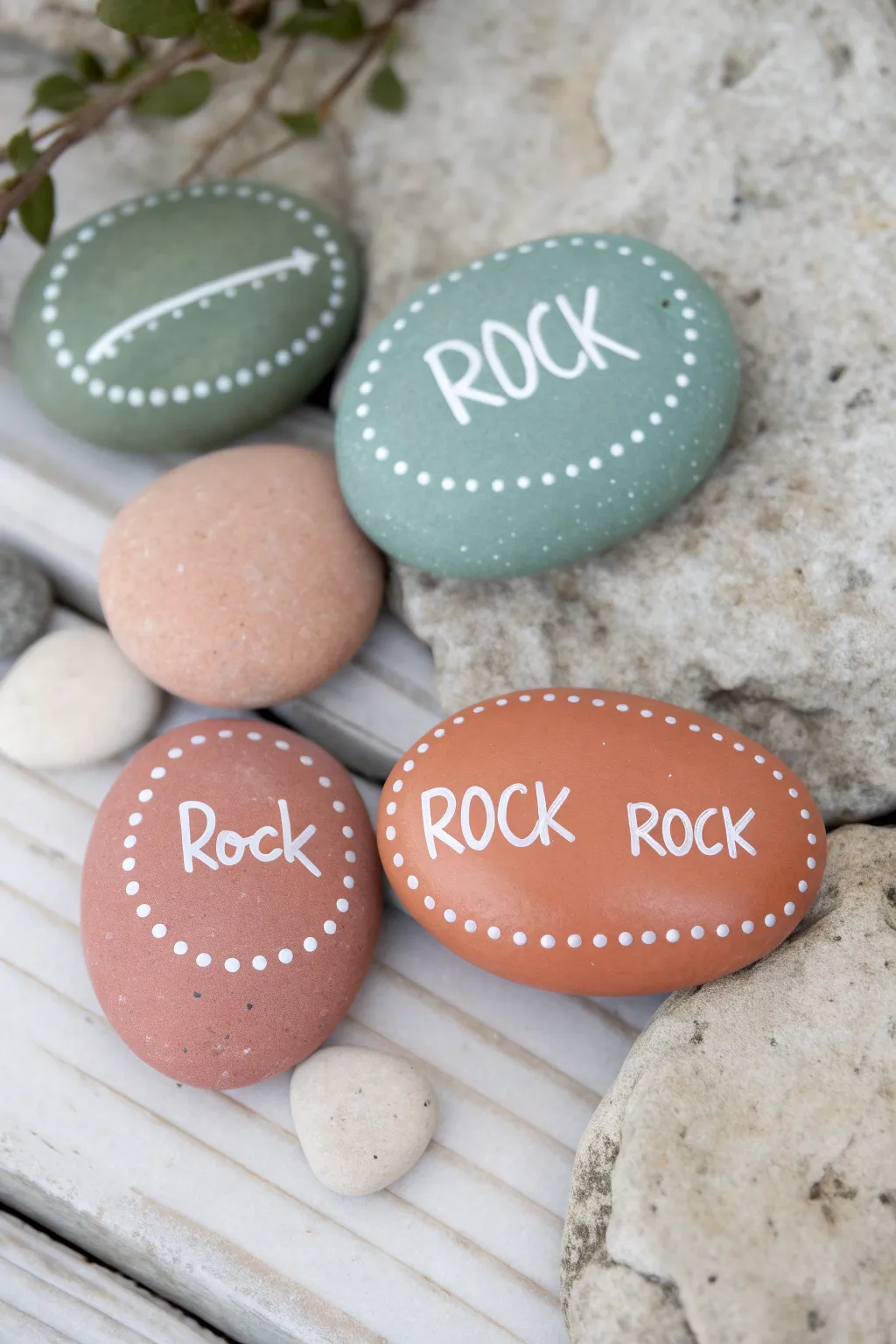
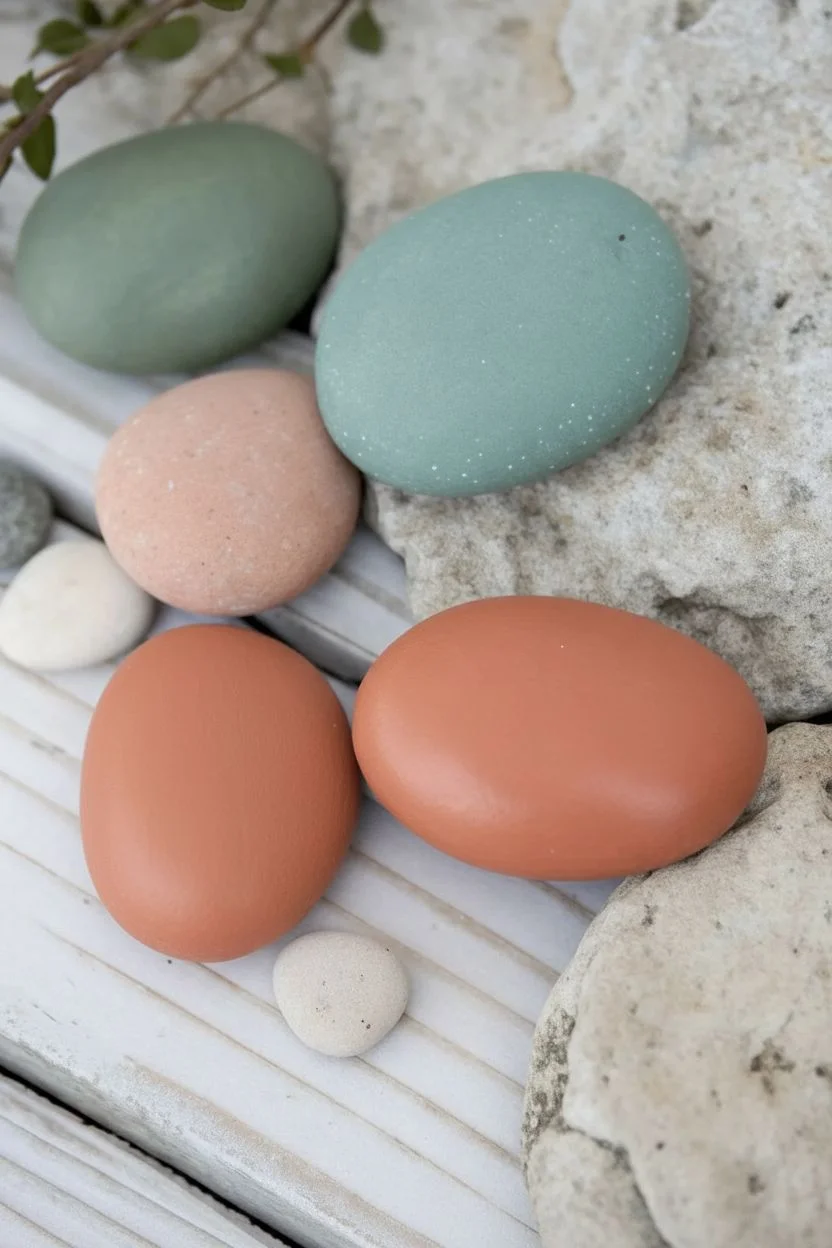
Embrace a touch of humor and minimalist style with these literal painted stones. Featuring soft, muted earth tones and crisp white lettering, these rocks make charming paperweights or subtle garden decor.
How-To Guide
Materials
- Smooth, flat river rocks (various sizes)
- Acrylic craft paints (Sage Green, Terracotta, Peach/Light Clay)
- White acrylic paint pen (fine tip/0.7mm)
- Medium flat paintbrush (size 6 or 8)
- Matte spray sealant or clear varnish
- Water cup and paper towels
- Palette or paper plate
Step 1: Base Coating
-
Clean the canvas:
Before starting, ensure your rocks are completely clean. Wash them with warm soapy water and scrub away any dirt or grit with an old toothbrush. Let them dry fully in the sun or with a cloth. -
Mix your palette:
Prepare your acrylic paints on a palette. For this specific look, aim for dusty, natural shades. You might need to mix a tiny drop of white or grey into your green and orange paints to mute them down if they are too vibrant. -
Apply the first coat:
Using your flat paintbrush, paint the entire top surface of the rock. Don’t worry about perfect opacity yet; the goal is just coverage. -
Paint the edges:
Extend the paint down the sides of the rock. You don’t necessarily need to paint the very bottom that touches the table, but painting slightly underneath the curve gives a cleaner finished look. -
Dry and repeat:
Allow the first layer to dry for about 15-20 minutes. It should be dry to the touch. Apply a second coat to ensure the color is solid and opaque, hiding the natural stone color beneath. -
The third coat option:
Some lighter colors, like the peach, might require a third thin coat. Check for any streakiness and touch up as needed, then let the rocks cure completely for at least an hour.
Paint Pen Patches
If your white paint pen splatters or you make a typo, let it dry completely. Then, use a small detail brush to paint over the mistake with your base rock color.
Step 2: Lettering & Details
-
Prime the paint pen:
Shake your white fine-tip paint pen vigorously. Press the nib down on a scrap piece of paper until the paint flows smoothly. Do not press directly on the painted rock until you are sure there are no globs. -
Practice the text:
To match the playful style, practice hand-lettering the word ‘ROCK’ on paper first. Try variations: all caps with slightly uneven heights, or a casual mixed-case script. -
Center the lettering:
Position your hand steadily on the table. Write your chosen text in the center of the painted area. For the larger terracotta rock, write ‘ROCK’ twice in a line. -
Thicken the lines:
Go over your letters a second time to brighten the white. I find that slightly thickening the downstrokes of the letters gives them a more finished, typographic appearance. -
Start the border:
Begin adding the decorative border. Use the same white paint pen to gently tap dots in an oval shape, following the contour of the rock but leaving some space from the edge. -
Spacing the dots:
Try to keep the space between each dot consistent. If you are nervous, do four ‘anchor’ dots at the top, bottom, left, and right first, then fill in the gaps between them. -
Create the arrow variation:
For the green rock with the arrow design, draw a straight line through the center instead of text. Add a simple triangle head at one end and three small ticks at the other for fletching. -
Add arrow details:
Add small perpendicular ticks along the arrow’s shaft to resemble measurements or stitching. -
Final border check:
Wait for the ink to dry for a few minutes. Check your dotted borders; if any dots look faint, tap them again with the pen to make them pop.
Go Glossy
While the image shows a matte finish, using a high-gloss Mod Podge or resin topcoat can make the rocks look like polished ceramic or hard candy.
Step 3: Sealing
-
Prepare for sealing:
Ensure the white paint pen is 100% dry. If it’s even slightly wet, the sealant can smear your lettering. -
Apply varnish:
In a well-ventilated area, spray a light, even coat of matte sealant over the rocks. This protects the paint from chipping and keeps the colors true. -
Final cure:
Let the sealant dry according to the can’s instructions before handling or placing your new art pieces.
Place these cheeky stones on a bookshelf or gift them to a friend as a solid reminder of your appreciation

PENCIL GUIDE
Understanding Pencil Grades from H to B
From first sketch to finished drawing — learn pencil grades, line control, and shading techniques.
Explore the Full Guide
Classic Mandala Dot Rocks
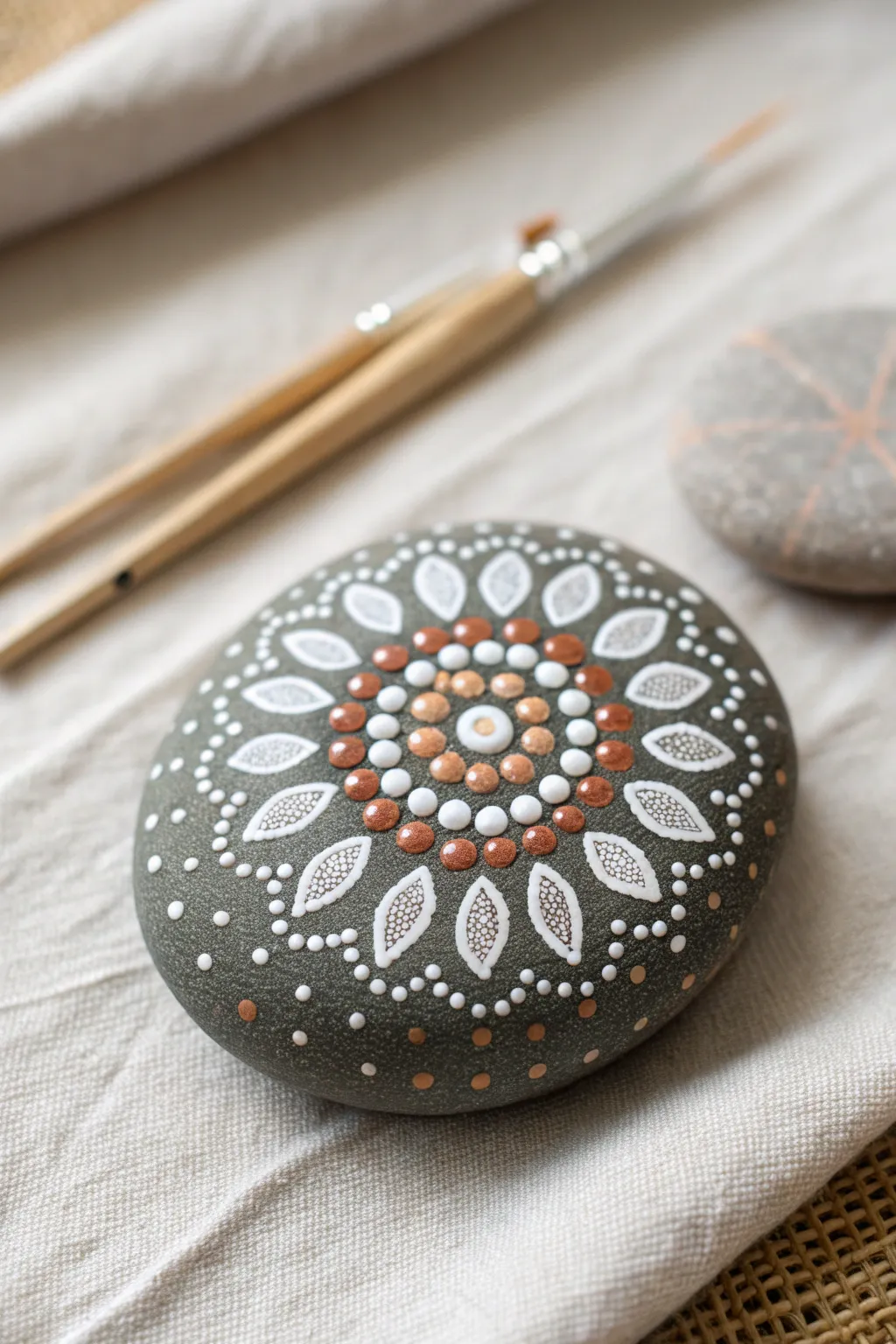
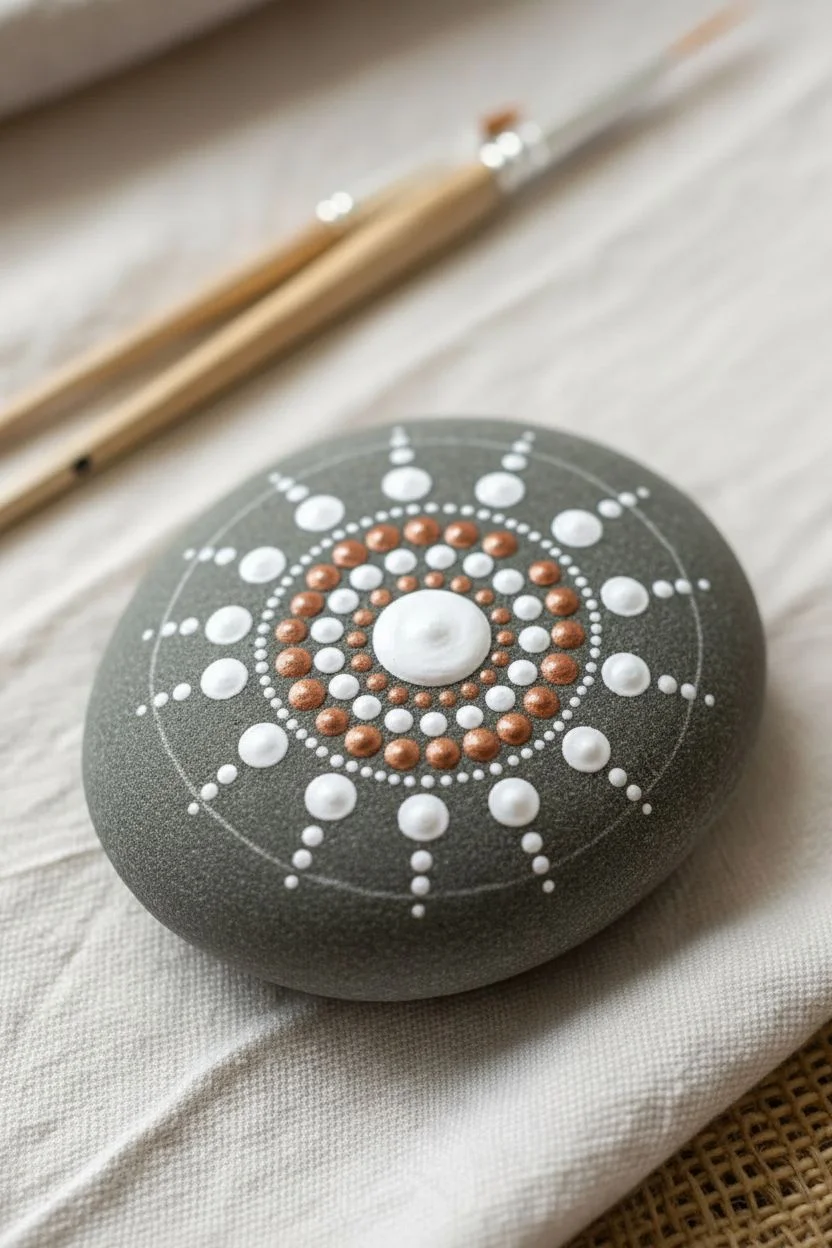
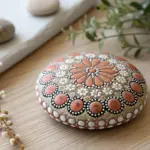
This elegant stone features a soothing palette of crisp white and warm metallic bronze against a natural grey background. The design combines traditional dotting with delicate stippled petal shapes for a sophisticated, lace-like effect.
Step-by-Step Guide
Materials
- Smooth, round grey river rock (approx. 3-4 inches)
- Acrylic paint: Titanium White
- Acrylic paint: Metallic Bronze or Copper
- Set of dotting tools (various sizes)
- Stylus tool or very fine liner brush (for petals)
- Pencil or white chalk pencil
- Compass or circle variety stencil (optional)
- Matte or satin varnish
Step 1: Preparation & Center
-
Clean the canvas:
Start by washing your stone with soap and water to remove any dirt or oils. Let it dry completely. If the surface is rough, you can lightly sand it, but this design works brilliantly on a naturally smooth river rock. -
Find the center:
Ideally, locate the center of your rock. Use a white chalk pencil or regular pencil to mark a small ‘X’. If you want perfect symmetry, lightly sketch a few concentric guide circles using a compass or circle stencil. -
The central dot:
Using a large dotting tool or the back of a paintbrush, dip into Titanium White paint. Place a single, bold white dot right on your center mark. Allow this to tack up slightly before moving on. -
First bronze ring:
Switch to a smaller dotting tool. use the Metallic Bronze paint to place a ring of small dots immediately surrounding the central white dot. Try to keep them touching the white center just slightly for a cohesive look. -
Inner white ring:
Using a tool slightly larger than the previous one, add a ring of white dots around the bronze layer. Space them evenly; you should fit roughly 8-10 dots in this circle depending on your tool size.
Step 2: Expanding the Pattern
-
Bronze accents:
Dip a medium-sized tool into the bronze paint. Place a dot in the ‘valley’ between each of the white dots from the previous row. This technique of placing dots in the gaps creates the expanding mandala geometry. -
Second bronze layer:
Using the same tool size and color, place another bronze dot directly above each bronze dot you just painted, moving outward radially. -
White spacing dots:
Take a smaller tool and white paint. Place a small ‘walking’ dot in the spaces between the outer bronze dots to fill the gaps and maintain the circular shape. -
The feature ring:
Now for a bold layer. Use a larger tool with bronze paint to create a prominent ring of dots. These should be larger than all previous layers. Ensure they are spaced evenly so the pattern remains circular.
Paint Consistency Pro-Tip
If your white petal outlines are jagged, your paint is too thick. Add water one drop at a time until the paint has an inky consistency that flows smoothly from the liner brush.
Step 3: The Petal Ring
-
Drafting the petals:
Around your large bronze ring, you can lightly sketch petal shapes with your chalk pencil if you aren’t confident freehanding them. They should radiate outward like a sunflower. -
Outlining in white:
Using your finest stylus tool or a 000 liner brush, load up thinned Titanium White paint. Carefully drag the paint to outline each petal shape. The lines should be crisp and meet at a sharp point at the top. -
Stippling the fill:
This is the unique texture part. Instead of filling the petals with solid color, use a needle tool or very fine point to create rows of tiny white micro-dots inside the petal outlines. This creates a mesh or lace effect. -
Anchor dots:
Once the petals are dry, place a medium-sized bronze dot at the base of each petal, nestled between the petal and the previous ring of dots.
Creative Level Up
Try a ‘top dot’ technique by placing tiny white dots on top of the largest dry bronze dots (or vice versa) to add 3D dimension and extra height to the texture.
Step 4: Outer Border & Finish
-
Framing dots:
Using a small tool and white paint, create a chain of small dots that outline the upper curve of each petal. I find this really helps separate the petal layer from the background stone. -
Outer confetti:
Switch back to your bronze paint. Add widely spaced, small dots scattered around the outer edge of the mandala borders, fading out toward the edges of the rock. -
Final micro-details:
Look closely at the center white dot you started with. If it’s dry, add a tiny bronze dot in its exact center to create a ‘bullseye’ look. -
Erase guidelines:
Once the paint is thoroughly dry (give it at least an hour), use a damp Q-tip or a soft cloth to gently wipe away any visible chalk or pencil guidelines. -
Varnishing:
Protect your work with a coat of varnish. For this natural stone look, a matte or satin finish is preferable to high gloss, as it preserves the organic feel of the river rock.
Place this serene stone on your desk or in a garden nook for a moment of daily zen
Easy Geometric Pattern Rocks
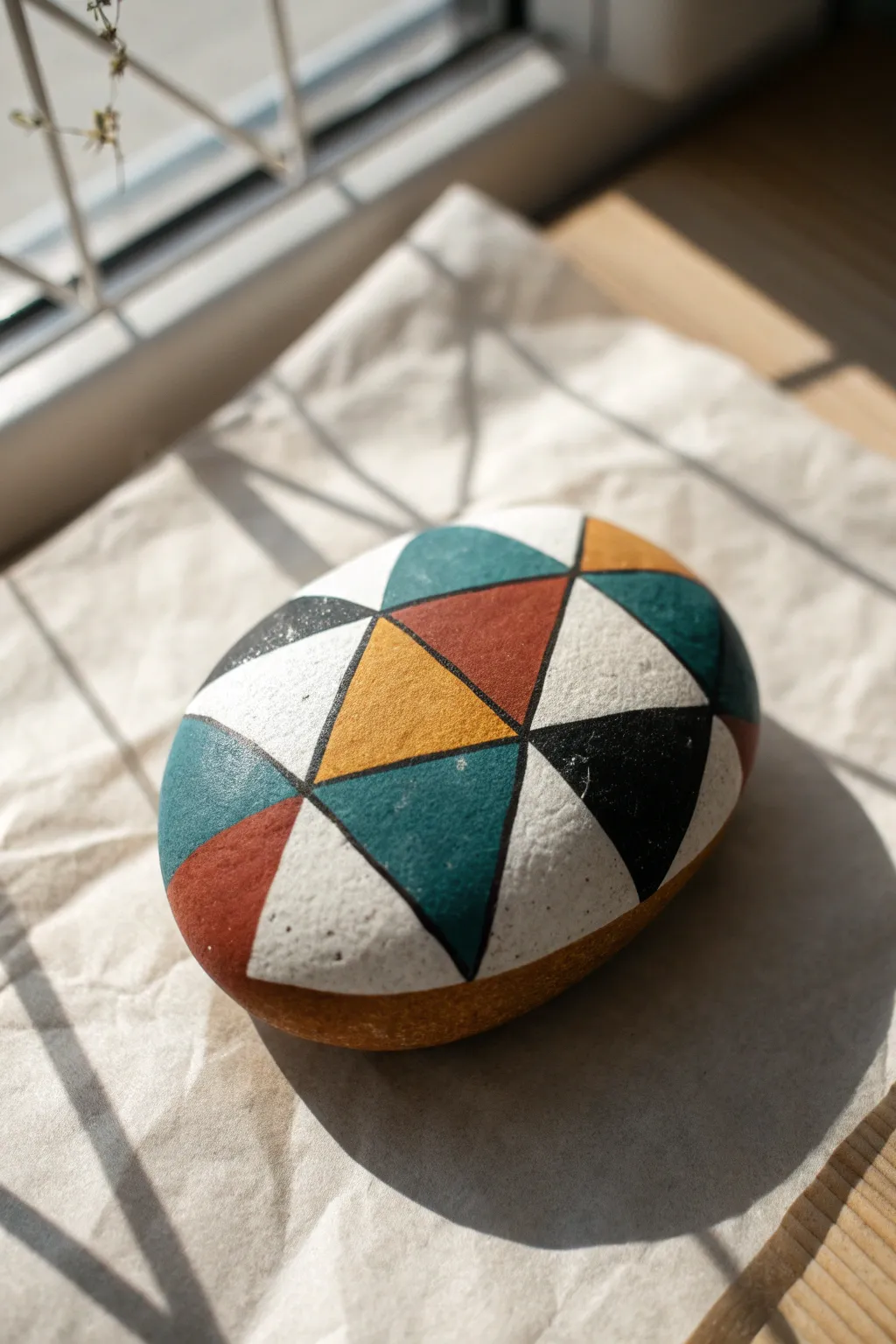
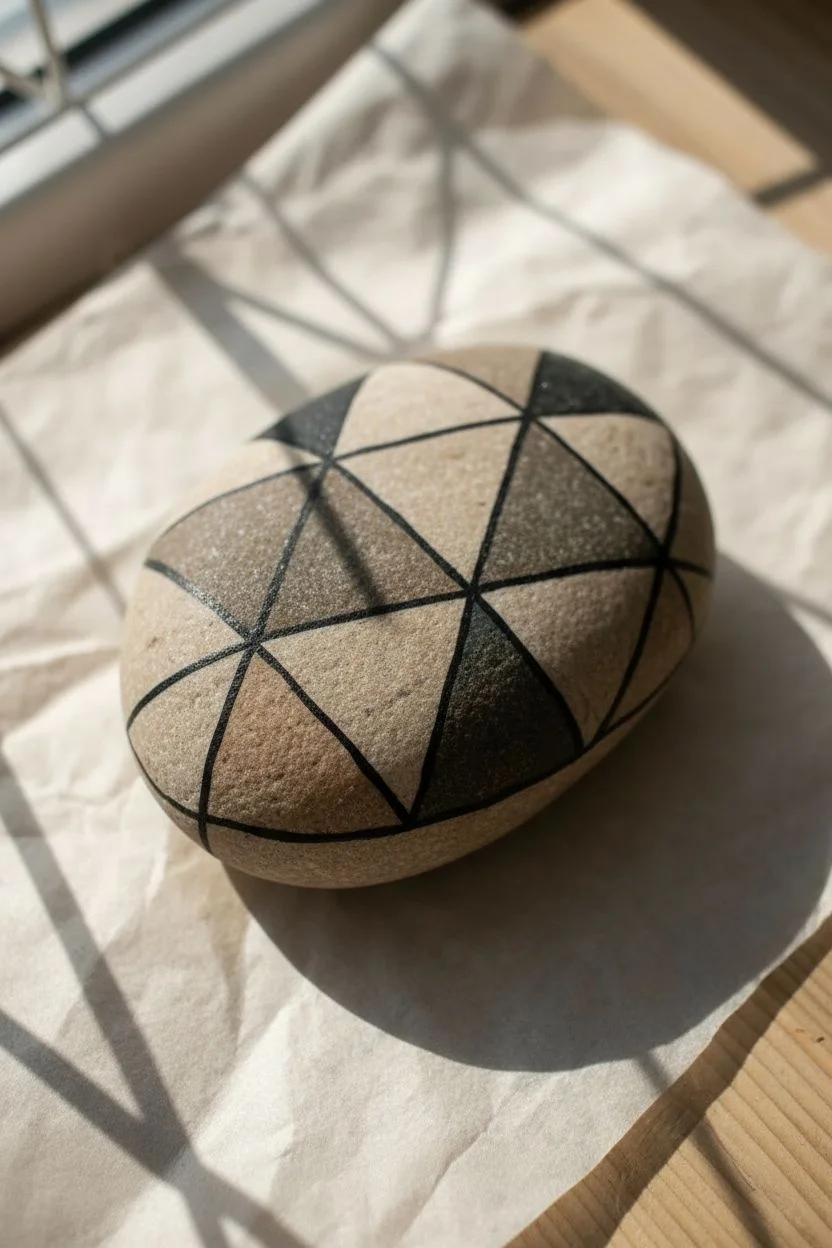
Transform a simple smooth stone into a striking piece of modern art with this geometric design. The clean lines and earthy palette of teal, rust, ochre, and black create a sophisticated mosaic effect that looks beautiful on any desk or shelf.
How-To Guide
Materials
- Smooth, oval-shaped river rock (approximately palm-sized)
- Acrylic paints (White, Teal/Dark Turquoise, Rust/Terracotta, Ochre/Mustard Yellow, Black)
- Pencil
- Fine point black paint marker (0.7mm or similar)
- Small flat synthetic paintbrush
- Small round synthetic paintbrush
- Spray varnish or sealant (matte or satin finish)
- Palette or paper plate
- Cup of water and paper towels
Step 1: Preparation & Base Outline
-
Clean the surface:
Begin by thoroughly washing your rock with soap and water to remove any dirt or oils. Let it dry completely before starting, as moisture will prevent the paint from adhering properly. -
Sketch the grid:
Using a pencil, lightly draw a grid of triangles across the top surface of the rock. Start by drawing a few intersecting diagonal lines to create ‘X’ shapes, then connect them horizontally. -
Refine the shapes:
Adjust your pencil lines so you have a pleasing arrangement of various triangles. Don’t worry about perfect symmetry; a slightly organic feel works well with the natural shape of the stone. -
Outline with marker:
Go over your pencil lines with a fine point black paint marker. This creates the ‘lead’ look of a stained glass window and gives you clear boundaries for painting.
Step 2: Filling with Color
-
Plan your palette:
Decide where each color will go. Aim to separate identical colors so two red triangles rarely touch. Leaving several triangles white creates negative space that makes the colors pop. -
Apply the white:
Start by painting selected triangles with white acrylic paint. You may need two thin coats to get a solid, opaque coverage, especially if the rock is dark. -
Paint the ochre:
Using a small flat brush, fill in the yellow/ochre triangles. I find that painting carefully along the black lines first and then filling the center helps keep the edges crisp. -
Add the rust tones:
Switch to your rust or terracotta paint. Fill in the designated sections, ensuring the paint doesn’t pool in the corners. Smooth strokes work best here. -
Introduce the teal:
Paint the remaining colored triangles with the teal or dark turquoise shade. This cool tone balances the warmth of the rust and yellow beautifully. -
Incorporate black accents:
Select one or two key triangles to paint solid black. Ideally, place these near the edge or center to anchor the design visually. -
Let it dry:
Allow the paint to dry fully. Acrylics dry quickly, so 10-15 minutes should be sufficient.
Crisp Lines Secret
If you struggle with shaky hands, try using thin strips of washi tape to mask off the triangles as you paint them. It takes longer but guarantees razor-sharp edges.
Step 3: Final Details
-
Re-outline:
Once the paint is completely dry, re-trace the grid lines with your black paint marker. The painting process often obscures the original lines, and this step cleans everything up for a sharp finish. -
Check for gaps:
Look closely at the edges where the paint meets the black lines. If you see tiny gaps of raw stone showing through, use your finest brush to carefully touch them up. -
Clean up stray marks:
If you slipped outside the lines, you can correct it by painting over the mistake with the neighboring color or thickening the black line slightly. -
Seal the artwork:
Take the rock outside or to a well-ventilated area. Apply a light coat of spray varnish. A matte finish keeps the stone looking natural, while satin gives it a slight sheen.
Metallic Accent
Swap out the black outline for a gold or silver paint pen. The metallic shimmer adds a luxe feel and looks incredible against the matte stone texture.
Place your finished geometric rock on a windowsill where the sunlight can highlight the rich colors


Owl Rocks Using Simple Shapes


Transform ordinary smooth stones into a charming pair of owls using basic geometric shapes and simple linework. These woodland friends feature expressive eyes and textured feathers, making them a perfect beginner-friendly project that looks surprisingly polished.
Step-by-Step Guide
Materials
- Two smooth, oval or round river rocks (one slightly larger than the other)
- Acrylic paints (White, Dark Brown, Black, Orange, Light Grey)
- Fine detail brush (size 0 or 00)
- Small flat brush (size 2 or 4)
- Dotting tool or toothpick
- Pencil for sketching
- Clear matte or satin sealant spray
Step 1: Planning and Base Coats
-
Clean your canvas:
Begin by scrubbing your chosen rocks with warm, soapy water to remove any dirt or oils. Let them dry completely, as moisture will prevent the acrylic paint from adhering properly. -
Sketch the outline:
Using a pencil, lightly sketch the main shapes onto the stones. Draw a large oval for the belly area, a curved line at the top for the head cap, and large circles for the eyes. -
Paint the belly:
Mix a very small amount of black with white to create a soft light grey (or use white directly if you prefer high contrast). Fill in the large belly oval on the larger owl. For the smaller owl, you can leave the belly natural stone color or paint it a very faint grey. -
Define the head:
Paint the top ‘cap’ section of the head with dark brown paint. Create a widow’s peak shape in the center that points down toward where the beak will be. -
Add the wing base:
On the sides of the rocks, paint curved teardrop shapes using the same dark brown to represent the folded wings. Let these base layers dry completely before moving on.
Oops! Shaky Lines?
If brush outlining feels too difficult, swap the fine liner brush for an ultra-fine tip black Posca marker or permanent ink pen for steady control.
Step 2: Facial Features
-
Paint the eyes:
Using your white paint and a small round brush, fill in the large eye circles. You may need two coats to get a solid, opaque white against the stone. -
Outline the features:
Load a fine detail brush with thinned black paint or use a black paint pen. Carefully outline the white eye circles to make them pop. -
Add the pupils:
Paint medium-sized black circles inside the white eyes. Placing them closer to the center creates a focused look, while slightly crossed eyes can look sillier. -
Spark of life:
Dip the very tip of a toothpick or detail brush into white paint and add a tiny dot in the upper right corner of each pupil to create a reflection. -
Paint the beak:
Between the eyes, paint a small, inverted triangle using bright orange paint. Outline this triangle with your fine black liner for definition.
Step 3: Feathers and Details
-
Detail the head cap:
Dip a dotting tool or the back of a paintbrush into white paint. Add a row of small dots along the top curved edge of the brown head section. -
Add belly feathers:
On the light grey belly of the larger owl, use dark grey or thinned black paint to paint small ‘U’ shapes in rows. These represent the layered chest feathers. On the smaller owl, use white dots for a softer texture. -
Texture the wings:
Mix a creamy beige or light brown. Using a fine liner brush, paint diagonal strokes on the brown wings to simulate primary feathers. -
Draw the feet:
Near the bottom of the painted belly, draw two simple stick-figure feet using black paint. A vertical line with three spreading toes works perfectly. -
Final clean up:
Check for any smudges or uneven lines. You can gently scrape away mistakes on bare stone with a toothpick once dry, or paint over them. -
Seal the deal:
Once absolutely dry, take the rocks outside and spray them with a clear matte sealant to protect your work from chipping and weather.
Make It a Family
Create a whole parliament of owls by varying the stone sizes and experimenting with different feather colors like slate blue or rusty red.
Set your finished stone owls in a potted plant or on a garden ledge to keep watch over your home
Bee and Butterfly Garden Rocks
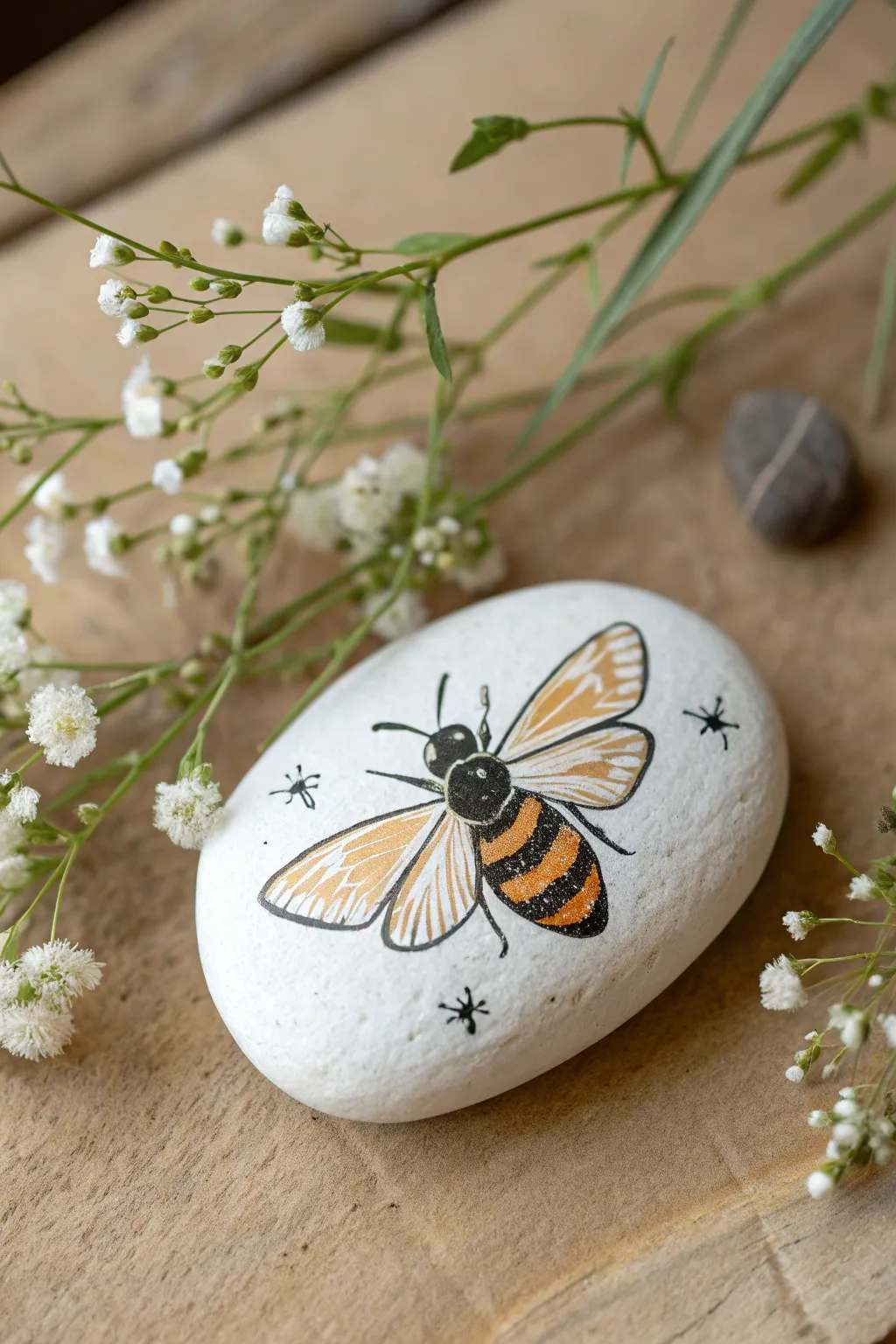
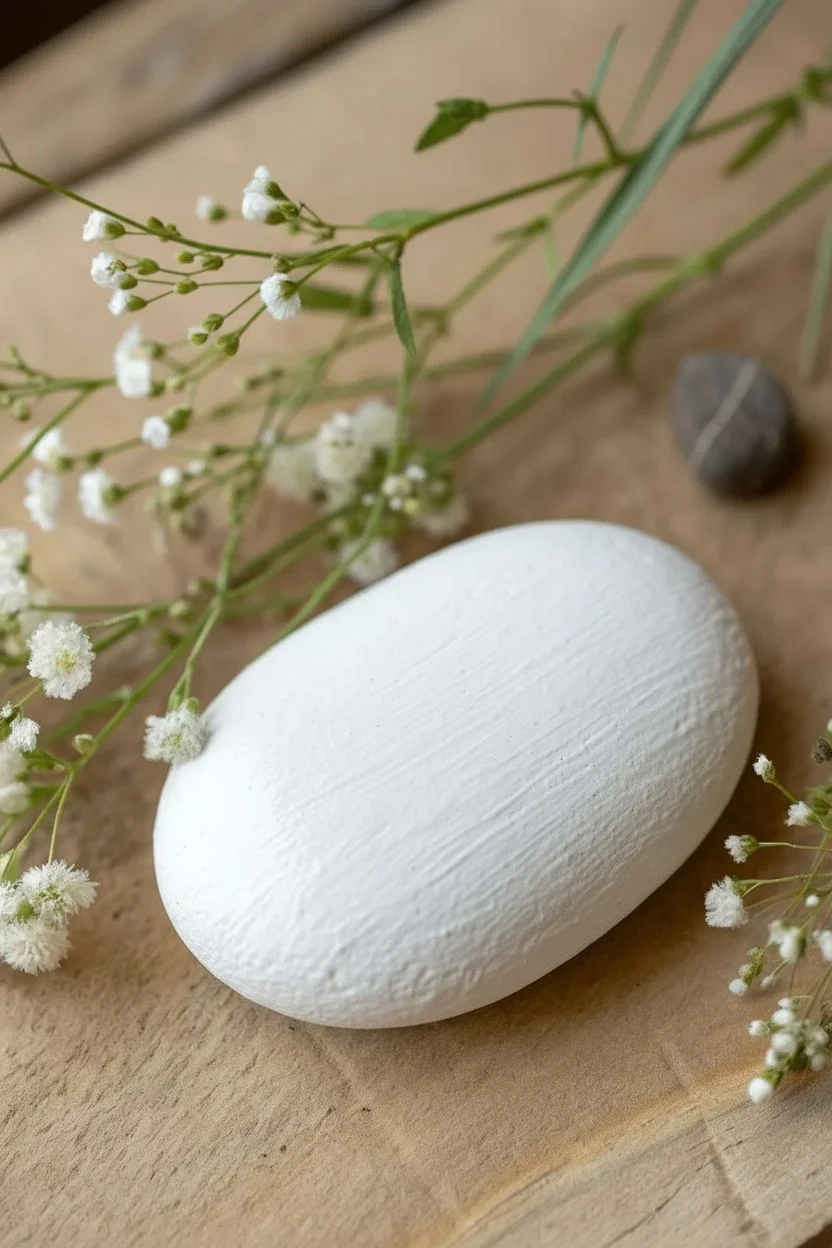
This elegant bee design transforms a simple river rock into a delightful garden accent with its crisp black lines and warm honey-gold wings. The combination of opaque white background and detailed brushwork creates a stunning, graphic look that feels both natural and artistic.
How-To Guide
Materials
- Smooth, white river rock (the flatter the better)
- White acrylic paint (heavy body or multi-surface)
- Black fine-point paint pen (Posca or similar)
- Golden yellow acrylic paint
- Orange acrylic paint
- Fine-point detail brush (size 00 or 0)
- Small flat brush (size 4 or 6)
- Pencil for sketching
- Clear matte or satin sealant spray
Step 1: Base Preparation
-
Clean the canvas:
Start by scrubbing your river rock with warm soapy water and a stiff brush to remove any dirt or oils that might prevent the paint from sticking. -
Dry thoroughly:
Let the rock dry completely under the sun or with a hairdryer; porous stone holds moisture, which can ruin your paint layers later. -
Apply the white base:
Using your flat brush, paint the top surface of the stone with white acrylic paint. You want a solid, opaque background, so don’t be afraid to apply a second coat once the first is dry.
Step 2: Painting the Bee Body
-
Sketch the outline:
Lightly trace the basic oval shape of the bee’s thorax and abdomen, plus the tear-drop shapes for the wings, using a pencil right on the dried white paint. -
Paint the thorax:
Using black paint or your paint pen, fill in the upper circle (thorax) of the bee. Leave a tiny sliver of white/transparent space near the neck to suggest separation if you like. -
Create the stripes:
For the abdomen, alternate painting thick curved stripes of golden yellow mixed with a tiny drop of orange for warmth. I find this mix gives that perfect honey color. -
Add black bands:
Once the yellow is dry, paint thick black bands between the yellow stripes, curving them slightly downward to emphasize the roundness of the bee’s body. -
Texture the black:
While looking closely at the reference, use the very tip of your black pen or brush to dab tiny dots along the edges where black meets yellow to simulate fuzziness.
Ink Bleeding?
If your black marker bleeds into the yellow paint, the yellow wasn’t fully dry. Wait longer between colors, or use a tiny bit of clear craft sealer over the yellow before drawing lines.
Step 3: Designing the Wings
-
Outline the wings:
Use your fine liner pen to draw the four wing shapes: two large upper wings stretching out, and two smaller lower wings tucked slightly beneath. -
Fill with translucent gold:
Water down your golden-yellow paint slightly to create a glaze. Fill in the top half of the wings, fading out to nothing as you reach the bottom tips for a transparent effect. -
Add wing veins:
Carefully draw white or very pale cream lines over the colored parts of the wings to represent the delicate vein structure. Keep these lines whisper-thin. -
Define the edges:
Go back over the outer perimeter of the wings with your black liner to make them pop against the white stone background.
Wing Transparency
To get perfectly ‘gossamer’ wings, mix a drop of glazing medium into your yellow paint. It makes the color transparent without making the paint runny like water would.
Step 4: Final Details
-
Draw legs and antennae:
Add the front antennae curving outward from the head. Then, draw the delicate legs: two pointing forward, two middle legs, and two back legs extending from the thorax. -
Add sparkle details:
Draw three small asterisk-style stars around the bee using the black fine liner. These whimsical ‘sparkles’ fill the negative space beautifully. -
Highlight the body:
Place a tiny white dot or curved line on the black thorax and the black stripes of the abdomen to create a shiny, 3D highlight. -
Clean up:
Check for any stray pencil marks and gently erase them, or touch up the white background paint if you smudged anything. -
Seal the artwork:
Once the paint is fully cured (give it at least 24 hours), spray the entire rock with a clear matte or satin sealant to protect it from weather.
Place your finished bee rock near some blooming flowers to add a permanent pollinator to your garden patch
Ocean Creatures on Smooth Stones
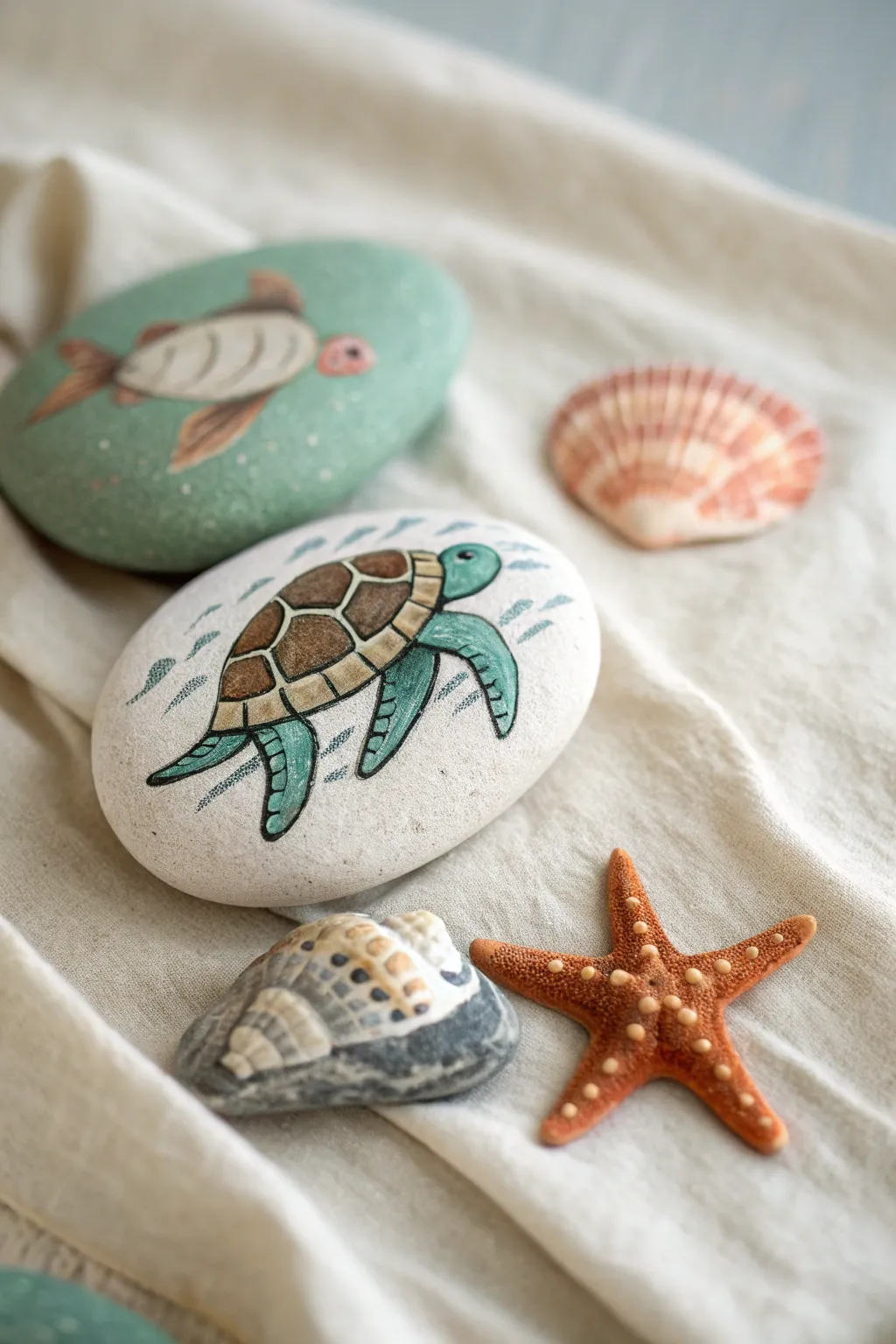
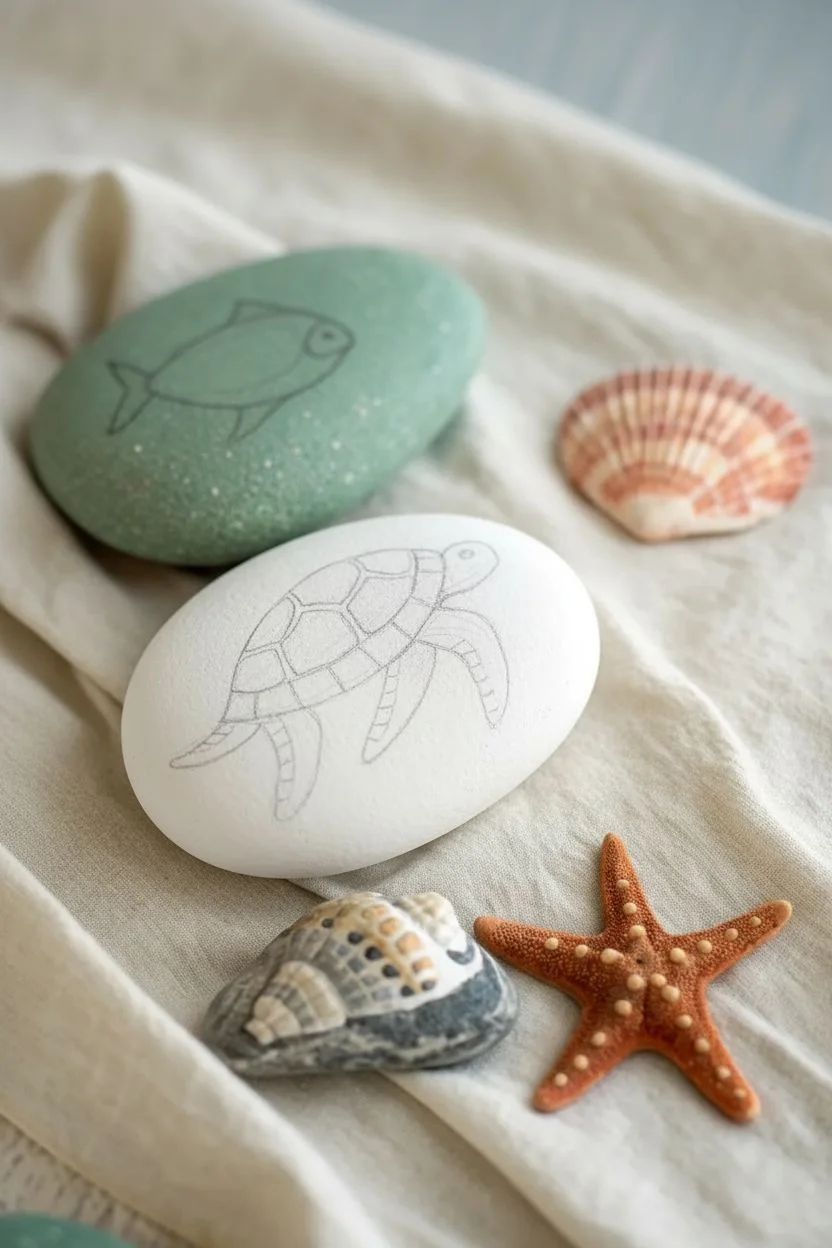
Capture the calm of the ocean with these delightful hand-painted stones featuring a swimming sea turtle and a drifting fish. The smooth, rounded surface of river rocks provides the perfect natural canvas for these detailed yet accessible marine illustrations.
Step-by-Step Tutorial
Materials
- Smooth, flat oval river stones (approx. 3-4 inches)
- Acrylic paints (Titanium White, Phthalo Green, Burnt Umber, Yellow Ochre, Black, Coral/Salmon)
- Fine liner brush (size 0 or 00)
- Small flat brush (size 4)
- Pencil and eraser
- Palette or small plate
- Cup of water and paper towels
- Matte or satin acrylic varnish
Step 1: Preparing the Base
-
Clean the canvas:
Wash your stones thoroughly with soap and water to remove any dirt or oils. Let them dry completely, ideally in the sun. -
Prime the white stone:
For the turtle rock, apply a base coat of Titanium White. You might need two layers to get a solid, opaque finish. Let each layer dry fully before adding the next. -
Prime the green stone:
For the fish rock, mix Phthalo Green with a generous amount of Titanium White and a tiny dot of Burnt Umber to create a muted sea-foam green. Paint the entire surface of the second stone with this mixture. -
Sketching the outlines:
Once the base coats are bone dry, lightly sketch your designs with a pencil. For the turtle, draw a large oval shell slightly tilted, with flippers and a head. For the fish, sketch a simple oval body and tail fin.
Brush Control Pro Tip
For ultra-thin outlines, thin your black acrylic paint with a drop of water until it has an ink-like consistency. This helps the paint flow smoothly off the liner brush without dragging.
Step 2: Painting the Sea Turtle
-
Base color for the shell:
Mix Burnt Umber with a touch of White to get a medium brown. Fill in the shell area, carefully staying within your pencil lines. -
Painting the skin:
Mix Phthalo Green, a little White, and a tiny bit of Yellow Ochre for a teal-green skin tone. Paint the head and all four flippers using your small brush. -
Shell details:
Using a lighter tan (White + Yellow Ochre + touch of Brown), paint the border of the shell and the lines separating the scutes (the plates on the shell). -
Skin texture:
Switch to your fine liner brush. Darken your teal mix slightly and add small dots or lines on the top of the head for texture. -
Outlining the turtle:
With black paint thinned slightly with water, carefully outline the entire turtle, the shell plates, and the flipper edges. Precision helps here, so take your time. -
Adding movement:
Using the same teal-green from the skin but thinned down, paint small, dashed ‘motion lines’ around the flippers to make it look like the turtle is swimming.
Step 3: Painting the Fish
-
Body base:
On the green stone, paint the fish body with an off-white or cream color. Leave the tail and fins unpainted for now. -
Adding fins:
Use a Coral or Salmon color mixed with a little brown to paint the tail and side fins. Feather the paint out slightly so it looks somewhat translucent. -
Fish details:
Outline the fish body and fins with a delicate brown line. Add curved lines inside the body for scales and straight lines on the tail for fin texture. -
The eye:
Paint a small Coral circle for the eye socket, then add a black dot for the pupil and a tiny white speck for a highlight. -
Background bubbles:
Dip the non-brush end of your paintbrush into white paint and dot random ‘bubbles’ around the fish on the green background for an underwater effect.
Level Up: 3D Shell
Try painting a third rock to look like the spiral shell in the photo. Use layers of grey, white, and tan, focusing on creating shadows between the spirals to mimic a 3D effect.
Step 4: Finishing Touches
-
Final check:
Look over both rocks for any smudges or areas that need a touch-up. I like to sharpen the black outlines one last time if they got covered by other colors. -
Sealing the work:
Once the paint is cured (usually after 24 hours), apply a coat of matte or satin varnish to protect your art from chipping and fading.
Display your new ocean friends together on a shelf or scatter them in your garden for a hidden sea-themed surprise
Seasonal Halloween Rock Characters


Bring the spirit of Halloween to your windowsill with this adorable quartet of painted characters. Featuring a classic Jack Skellington, a friendly pumpkin, and two cheeky ghosts, these rocks rely on simple shapes and bold outlines for a charmingly rustic look.
Detailed Instructions
Materials
- Smooth river rocks (various shapes: round, oval, egg-shaped)
- Air-dry clay or a pumpkin-shaped rock
- Acrylic paints (White, Black, Orange, Teal, Red)
- Fine detail paintbrush (00 or 0 size)
- Flat paintbrush (medium size)
- Black paint pen or permanent marker (fine tip)
- Matte or glossy sealant spray
- Cup of water and paper towels
Step 1: Prepping the Canvases
-
Select your stones:
Choose rocks that naturally fit the characters. A round, flat stone works best for Jack Skellington, while slightly elongated or egg-shaped stones are perfect for the ghosts. -
Clean and dry:
Wash the rocks thoroughly with soapy water to remove any dirt or oils. Let them dry completely, preferably in the sun, to ensure the paint adheres properly. -
Shape the pumpkin:
If you can’t find a pumpkin-shaped rock, mold a small piece of air-dry clay into a flattened sphere. Use a sculpting tool or toothpick to press vertical grooves into the sides for ribs and add a tiny stem on top. Let it cure fully according to package instructions.
Clean Lines Hack
Make shaky hands steady by resting your pinky finger on the dry part of the rock while painting details. This anchors your hand for precision work.
Step 2: Base Coats
-
Paint the white characters:
Using your flat brush, coat the Jack Skellington rock and the larger ghost rock with white acrylic paint. You may need two to three thin coats for solid coverage, letting each layer dry in between. -
Paint the teal ghost:
Coat the smaller, possibly smoother rock with a bright teal or mint green paint. This adds a nice pop of unexpected color to the traditional Halloween palette. -
Base coat the pumpkin:
Paint the clay pumpkin (or pumpkin rock) with a vibrant orange acrylic. Ensure you get the paint into the grooves you created. Paint the stem a contrasting teal to match the small ghost. -
Check opacity:
Hold the rocks up to the light to check for streaks. If you can see the dark stone underneath, apply one final base coat and allow it to dry completely before starting facial details.
Glow Up
Swap the standard white paint for glow-in-the-dark acrylic on the ghosts and Jack Skellington for a surprise that appears when the lights go out.
Step 3: Jack Skellington
-
Outline the eyes:
On the round white rock, lightly sketch two large, slanted oval eyes using a pencil. They should take up a significant portion of the face. -
Fill in the eyes:
Use black acrylic paint and a detail brush to carefully fill in the eye shapes. I like to do the edges first and work my way inward for a cleaner line. -
Add the nostrils:
Paint two small, vertical slits for the nose holes, placed closely together between the bottom edges of the eyes. -
Stitch the mouth:
Draw a long, curved line across the bottom of the face for the mouth. Using your finest brush or a paint pen, add small vertical hatch marks all along the line to create the stitched look.
Step 4: The Friendly Ghosts
-
Detail the white ghost:
On the egg-shaped white rock, paint two small black circles for eyes on the upper half. Add tiny, curved eyebrows above them for expression. -
Add the ghost’s mouth:
Paint a small, U-shaped mouth in black. once dry, add a splash of red paint inside the lower part to look like a tongue. -
Highlight the eyes:
Dip the non-brush end of your paintbrush into white paint and dot a tiny spec of white onto the black pupils of the white ghost to bring it to life. -
Detail the teal ghost:
Keep this one simple. Paint two triangle eyes and a triangle nose/mouth in black to mimic a classic jack-o’-lantern face but on a ghost body.
Step 5: The Pumpkin & Finishing
-
Draw the pumpkin face:
Using black paint or a marker, draw classic triangle eyes on the orange pumpkin. Add a smaller triangle nose. -
Paint the grin:
Create a wide, snaggle-toothed grin below the nose. Fill it in with solid black. -
Seal the deal:
Once all paint is completely bone-dry (wait at least an hour), take the rocks to a well-ventilated area and spray them with a clear sealant to protect your spooky artwork from chipping.
Arrange your finished rocks on a slate board or scatter them around your porch for a festive touch
Mini Landscape and Sunset Rocks
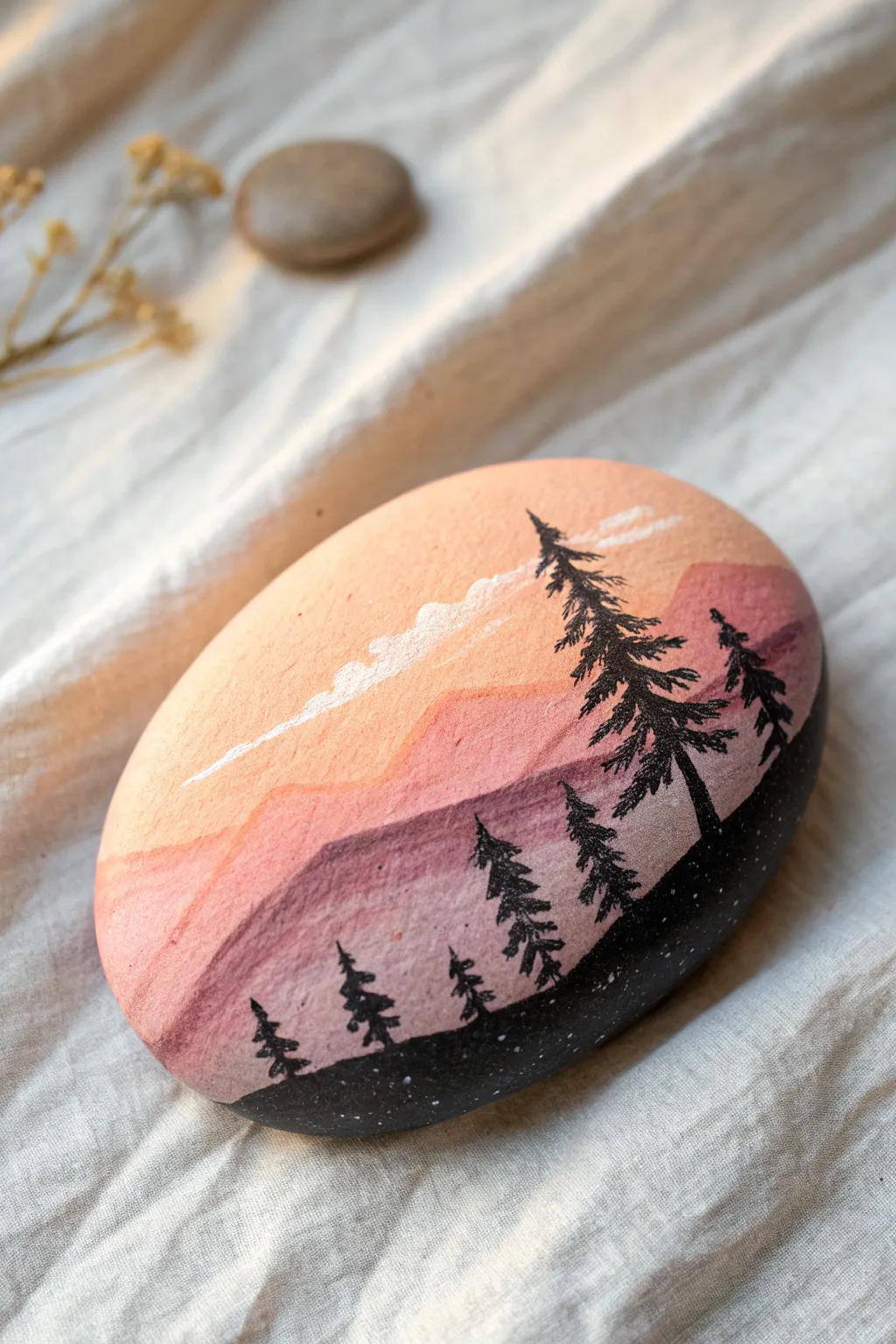
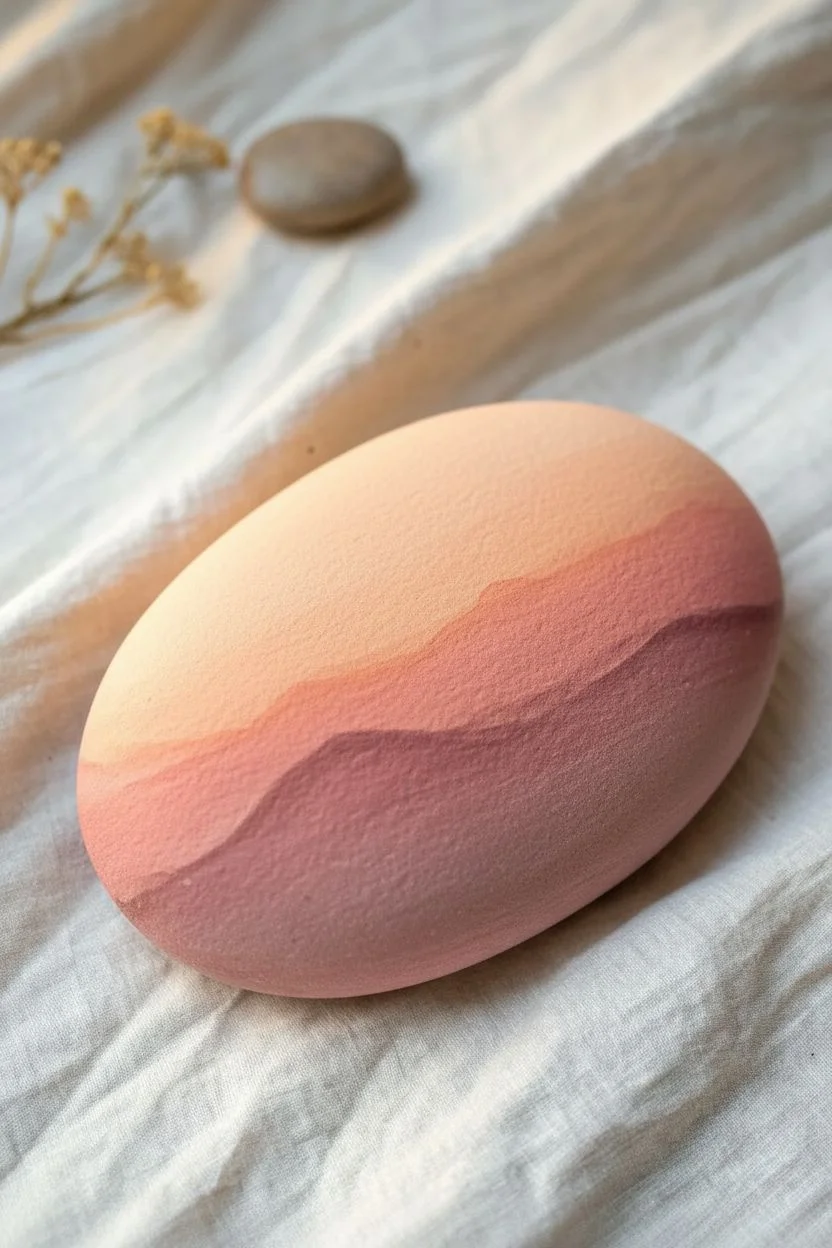
Capture the serene beauty of twilight with this smooth, gradient-filled landscape. By layering soft oranges and pinks behind stark black silhouettes, you’ll transform a simple garden stone into a tiny, hand-held mountain vista.
Step-by-Step
Materials
- Smooth, oval-shaped river rock (cleaned and dried)
- Acrylic paints: white, light peach, coral pink, mauve/dusty rose, black
- Flat shader brush (small)
- Fine liner brush (size 00 or 000)
- Palette or small dish for mixing
- Cup of water and paper towels
- Matte spray varnish or sealant
Step 1: Setting the Sky Gradation
-
Base coat prep:
Begin by washing your rock thoroughly with soap and water to remove any dirt or oils. Once completely dry, paint a solid base coat of white acrylic over the top surface. This step is crucial because the soft pastel colors we will use need a bright background to pop properly. -
Mixing the sky tone:
On your palette, mix a generous amount of white with a tiny drop of light peach. You want a very pale, creamy orange color. -
Applying the upper sky:
Using your flat brush, paint the top third of the rock with your pale peach mixture. Keep your brush strokes horizontal and smooth to mimic the atmosphere. -
Blending the transition:
While the peach paint is still wet, introduce a slightly darker coral pink just below it. Gently brush back and forth where the two colors meet to create a soft, seamless blend. If the paint dries too fast, I like to dampen the brush slightly to reactivate it. -
Adding the horizon glow:
Continue painting downward, adding a touch of mauve or dusty rose to your mixture for the lower sky area. Ensure the gradient flows naturally from the light top to the darker bottom section where the mountains will sit.
Step 2: Painting the Mountain Layers
-
First mountain range:
Mix a distinctly darker shade of pink using your dusty rose and a tiny dot of black. Use your flat brush to paint a jagged, mountainous silhouette across the middle of the rock. -
Filling the mid-ground:
Fill in the area below this silhouette line with the mauve mixture. Don’t worry about the bottom edge being perfect, as it will be covered by the foreground later. Let this layer dry completely. -
Adding atmospheric clouds:
Using a very small detail brush and pure white paint, dab a thin, broken line of clouds diagonally across the upper sky. Keep the paint thin so it looks wispy rather than solid.
Muddy colors?
If your sunset gradient looks brown instead of vibrant, clean your brush thoroughly between color shifts. Use fresh water so the dark mauve doesn’t tint your pale peach sky.
Step 3: Silhouette Details
-
Foreground base:
Switch to pure black acrylic. Paint a curved hill shape at the very bottom of the rock, covering the lower edge of your mauve mountain layer. This grounds the composition. -
Starting the trees:
Using your finest liner brush, paint thin vertical lines rising from the black hill. These will be the trunks of your pine trees. Vary the heights to create interest, placing the tallest tree on the right side. -
Adding branches:
Starting at the top of a trunk, use quick, short flicking motions to create branches. Keep the top very narrow and gradually widen the branches as you move down the trunk to create a triangular Christmas tree shape. -
Refining the foliage:
Work your way through all the trees. For the smaller trees in the distance, use very minimal detail—just jagged squiggles—suggesting foliage without overworking them. -
Stippling the ground:
Take a moment to tap your black brush lightly along the base of the trees where they meet the ground. This texture makes the hill look grassy instead of perfectly smooth. -
Adding stars:
Dip a stiff brush or a toothbrush into slightly watered-down white paint. Carefully flick the bristles to spray tiny speckles over the black foreground and the very bottom of the sky to mimic stars or fireflies.
Sharp tree tips
For the finest pine needles, slightly water down your black paint until it has an ink-like consistency. This helps the paint flow off the liner brush smoothly without clumping.
Step 4: Finishing Touches
-
Final drying:
Allow the rock to sit undisturbed for at least an hour. The black paint is thicker and takes longer to cure than the background layers. -
Sealing the art:
Once fully dry to the touch, apply a matte spray varnish. Hold the can about 10 inches away and spray in light, even coats to protect your landscape from chipping.
Place your finished piece on a desk or shelf as a calming reminder of the great outdoors
Galaxy Sky Rock Painting
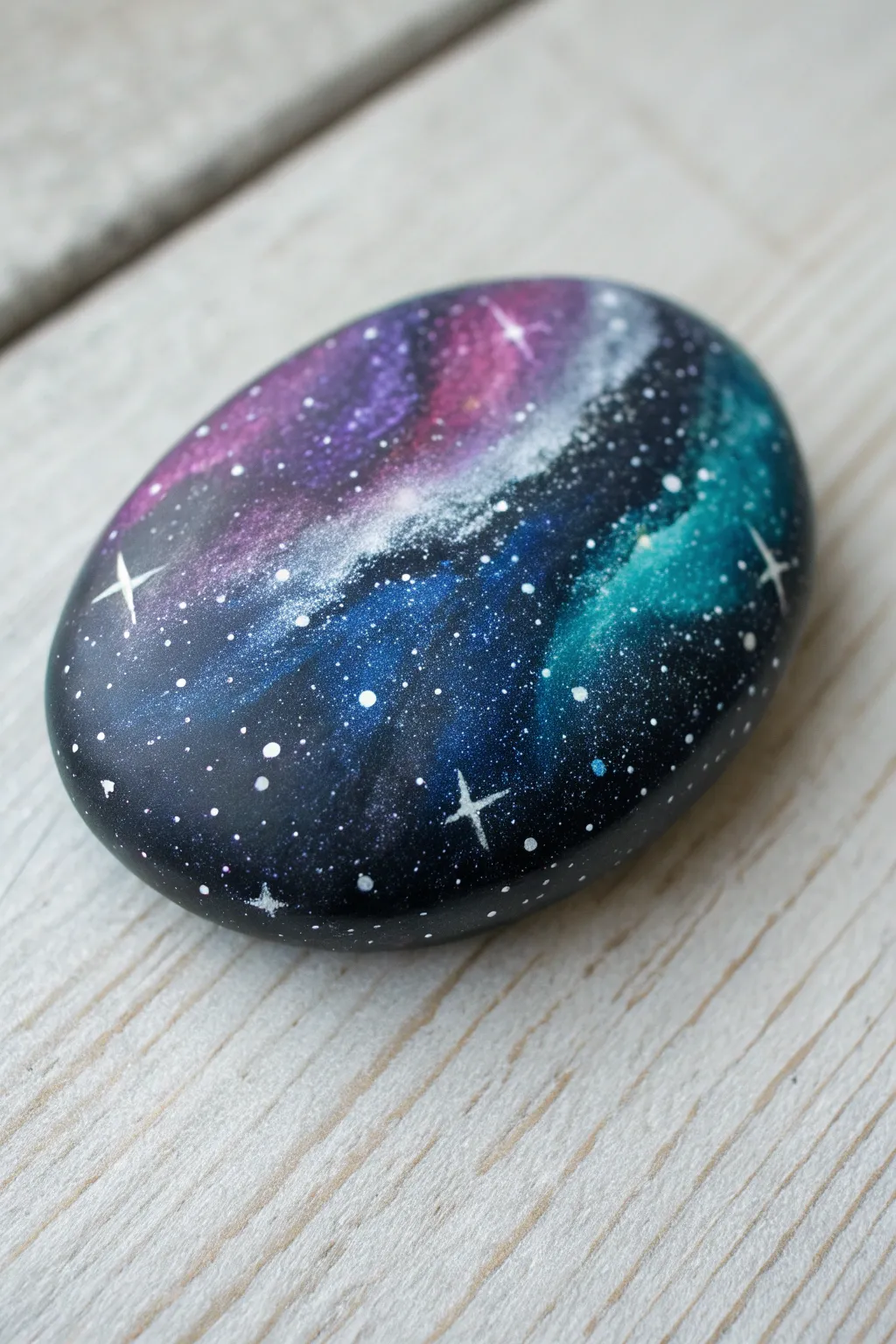
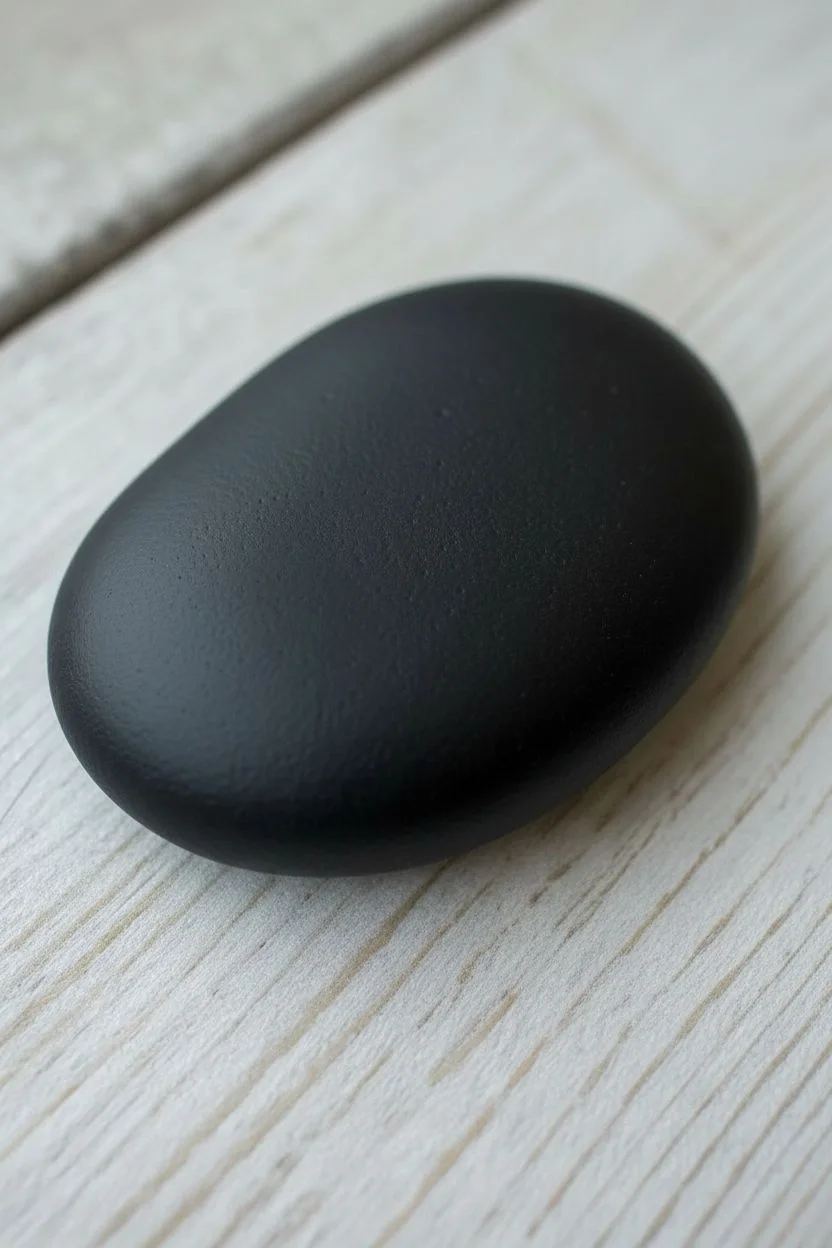
Capture the mysteries of the universe on a smooth river stone using simple blending techniques. This striking galaxy design combines deep cosmic blues and purples with bright nebulas to create a piece that feels deep and magical.
How-To Guide
Materials
- Smooth, oval river stone
- Black acrylic paint (base coat)
- Acrylic paints: Dark Blue, Purple, Magenta, Teal/Cyan, White
- Small kitchen sponge or makeup wedge
- Fine detail paintbrush (size 0 or 00)
- Wide flat brush (for base)
- Old toothbrush (optional for stars)
- Glossy varnish or resin sealant
- Palette or paper plate
Step 1: The Dark Void
-
Prepare your canvas:
Begin by washing your stone thoroughly with soap and water to remove any dirt or oils. Let it dry completely before starting. -
Base coat application:
Using your wide flat brush, paint the entire top surface of the rock black. Depending on the opacity of your paint, apply a second coat to ensure no grey stone shows through. -
Dry time is key:
Allow the black base to dry fully. If you rush this step, the cosmic colors you add later will turn muddy instead of staying vibrant.
Step 2: Nebula Formation
-
Prepare your sponges:
Cut your sponge into small, manageable cubes. You will want a fresh surface for each color family to keep the hues distinct. -
Start with deep blue:
Dab a small amount of dark blue paint onto a sponge piece. Blot most of it off on your palette until the texture is airy, then gently sponge a diagonal swath across the center of the rock. -
Adding purple depth:
Take a fresh sponge piece with purple paint. Dab this over parts of the blue and extend it outwards slightly, creating soft, cloud-like shapes. Keep the edges ragged and irregular. -
Brightening with magenta:
While the purple is still slightly tacky, sponge small hits of magenta into the center of the purple areas. This creates a glowing core effect. -
The cyan drift:
On the opposite side or adjacent to your blue swath, sponge on the teal or cyan color. I like to blend this slightly into the black void to make it look like fading gas clouds. -
Highlighting the clouds:
Mix a tiny drop of white into your cyan or magenta. Lightly dab this new lighter shade into the very center of your colored clouds to give them dimension. -
The milky way strip:
Using a very dry sponge with a tiny amount of white paint, drag a faint, smoky line through the center where the colors meet, suggesting a dense band of stars.
Muddy Colors?
If your nebula looks grey or muddy, let the black base dry longer. Also, ensure you dab off excess paint from the sponge onto paper before touching the rock
Step 3: Starlight and Shine
-
Creating the starfield:
Water down a small amount of white paint so it is inky. Dip an old toothbrush or stiff brush into it. -
Flicking the stars:
Hold the brush over the rock and run your thumb across the bristles to flick tiny speckles of paint onto the surface. Test on paper first to control the spray. -
Painting hero stars:
Load your fine detail brush with pure, undiluted white paint. Choose 3-5 spots on the rock to paint larger, specific stars. -
Adding the twinkle:
For the largest stars, paint a simple cross shape with long thin tapered lines. Add a tiny dot in the center where the lines cross for intensity. -
Diverse sizes:
Use the tip of your brush (or a toothpick) to add medium-sized white dots randomly among the spray to create variety in star distances. -
Final drying phase:
Let the entire painting dry completely. This might take longer than usual because of the layered sponging. -
Sealing the universe:
Finish with a coat of high-gloss varnish or resin. This step is crucial as it makes the black background richer and the colors pop vibrantly.
Add Depth
Mix a tiny amount of glitter into your varnish or use a holographic topcoat for a subtle shimmer that changes as you hold the rock in the light
Now you have a piece of the cosmos right in the palm of your hand
Rock Painting That Follows the Stone Shape
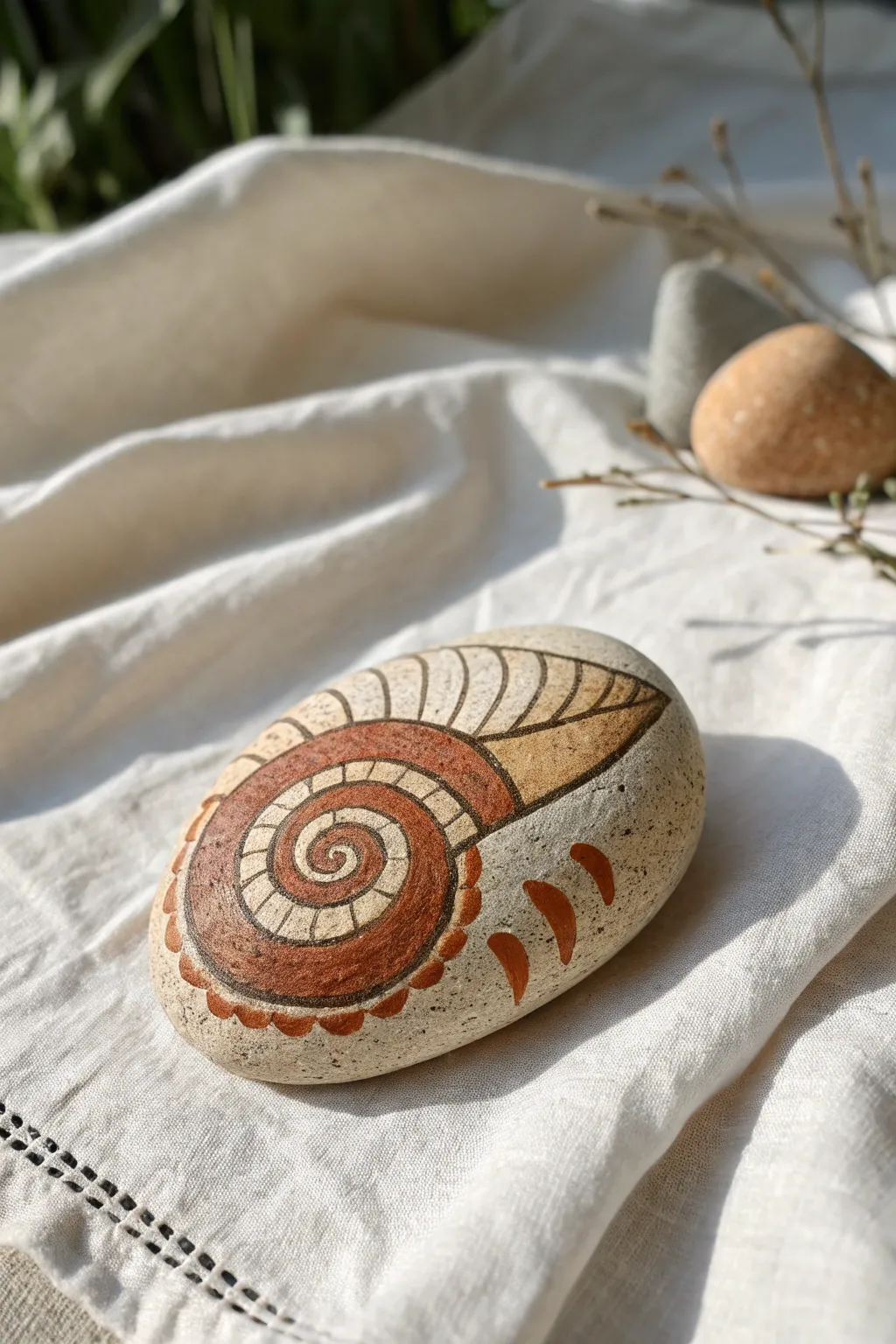
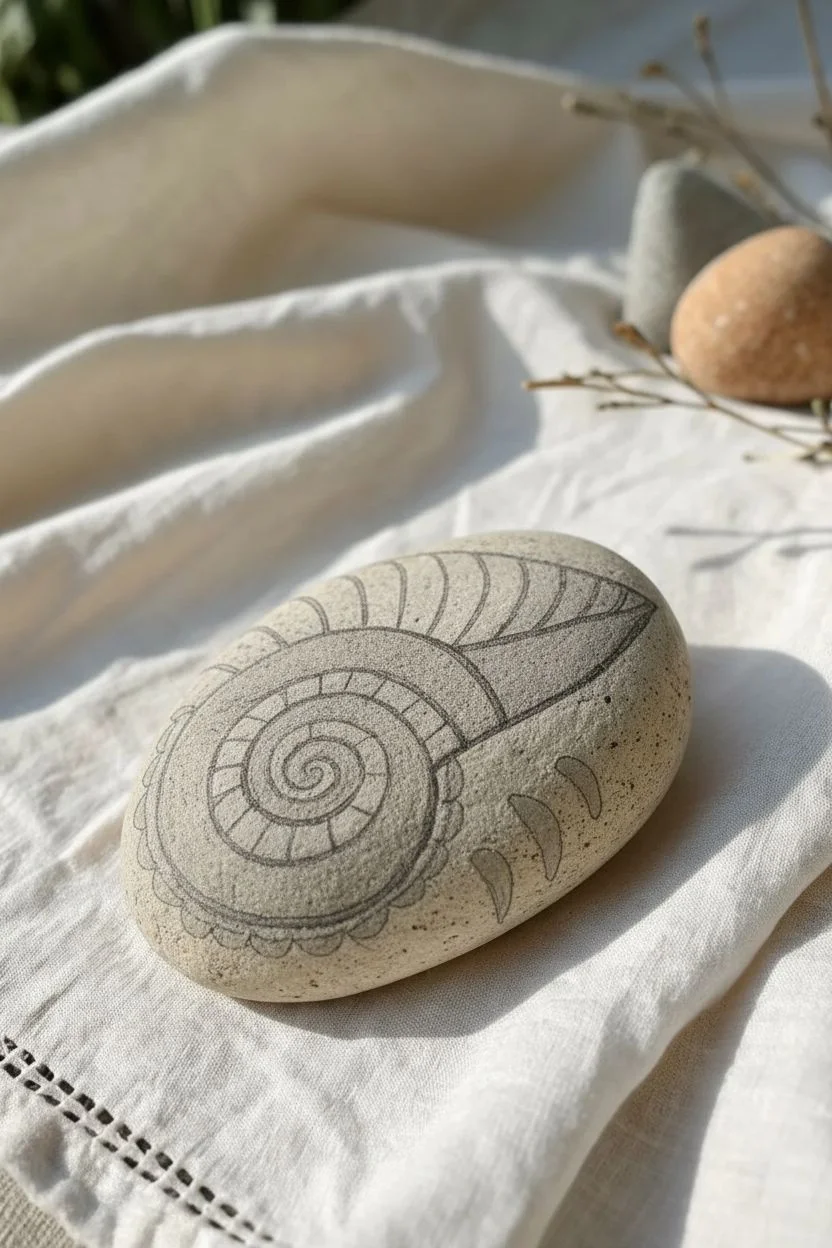
Embrace the natural contour of your rock with this elegant nautilus shell design. Using the stone’s own smooth shape enhances the illusion of a fossilized spiral, blending earthy browns and creams for a timeless look.
Step-by-Step Guide
Materials
- Smooth, oval-shaped river stone (light beige or grey)
- Pencil and eraser
- Fine liner pens (black, waterproof, 0.3mm or 0.5mm)
- Acrylic paints (rust red/terracotta, light sandy brown, cream/white)
- Small round paintbrushes (size 0, 1, and 2)
- Palette or mixing dish
- Matte or satin varnish sealer
Step 1: Sketching the Shape
-
Find the flow:
Hold your stone and observe its natural curve. You want the main spiral of the shell to sit on the rounded ‘belly’ of the stone, with the fan shape extending towards the flatter end. -
Draft the spiral center:
With a pencil, lightly draw a small circle just off-center to the left. This will be the heart of your spiral. -
Expand the shell:
From that central circle, continue the line outward in a widening spiral motion, mimicking a snail or nautilus shell. -
Add the segments:
Draw curved lines horizontally across the spiral to create the segmented chambers of the shell. -
Draw the upper fin:
Sketch a large, leaf-like shape extending from the top right of the spiral. Add curved internal lines that fan out within this section. -
Create the decorative border:
Around the bottom curve of the main spiral, sketch small semi-circles (scallops) to create a decorative edge. -
Add floating accents:
To the right of the main design, lightly sketch three floating comma or crescent shapes that follow the curve of the stone.
Ink Smudging?
If your pen ink drags or skips over the acrylic paint, the paint might still be slightly damp. Wait an extra 15 minutes, or ensure you are using a slightly textured matte paint rather than glossy.
Step 2: Painting and Inking
-
Base coat the red spiral:
Mix a rust red or terracotta acrylic paint. Carefully fill in the main spiral band, leaving every other segment unpainted for now. -
Second coat:
Applying a second thin layer of the rust color ensures opaque coverage without brush strokes showing. -
Painting the fan:
Switch to a diluted sandy brown or beige. Paint the large upper fan section. I like to keep this layer slightly translucent so the stone’s texture peeks through. -
Filling the accents:
Use the rust red paint to fill in the scalloped border at the bottom and the three floating crescent shapes on the right. -
Brightening the segments:
Mix a cream or off-white paint. Fill in the remaining empty segments of the main spiral to create a contrasting pattern. -
Outline the main shapes:
Once the paint is completely dry, take your black fine liner pen. Trace over your main pencil lines to define the spiral and fan shapes. -
Add texture lines:
Inside the rust-colored spiral segments, draw thin, curved parallel lines with the pen to simulate texture. -
Detail the center:
Draw tiny concentric swirls or a tight spiral right in the center ‘eye’ of the shell using the fine liner. -
Inking the upper fan:
Outline the internal sections of the upper fan shape. Add delicate hatching or shading lines near the base of the fan to give it depth. -
Final clean-up:
Check for any stray pencil marks and gently erase them, being careful not to rub the fresh ink too hard. -
Seal the artwork:
Apply a coat of matte or satin varnish to protect the paint and ink from chipping.
Metallic Accent
For a magical touch, re-trace the black contour lines with a generic metallic gold gel pen. It catches the light beautifuly when the stone is turned.
Your ancient-looking fossil stone is now ready to be displayed on a shelf or used as a unique paperweight
Glow-In-The-Dark Night Rocks
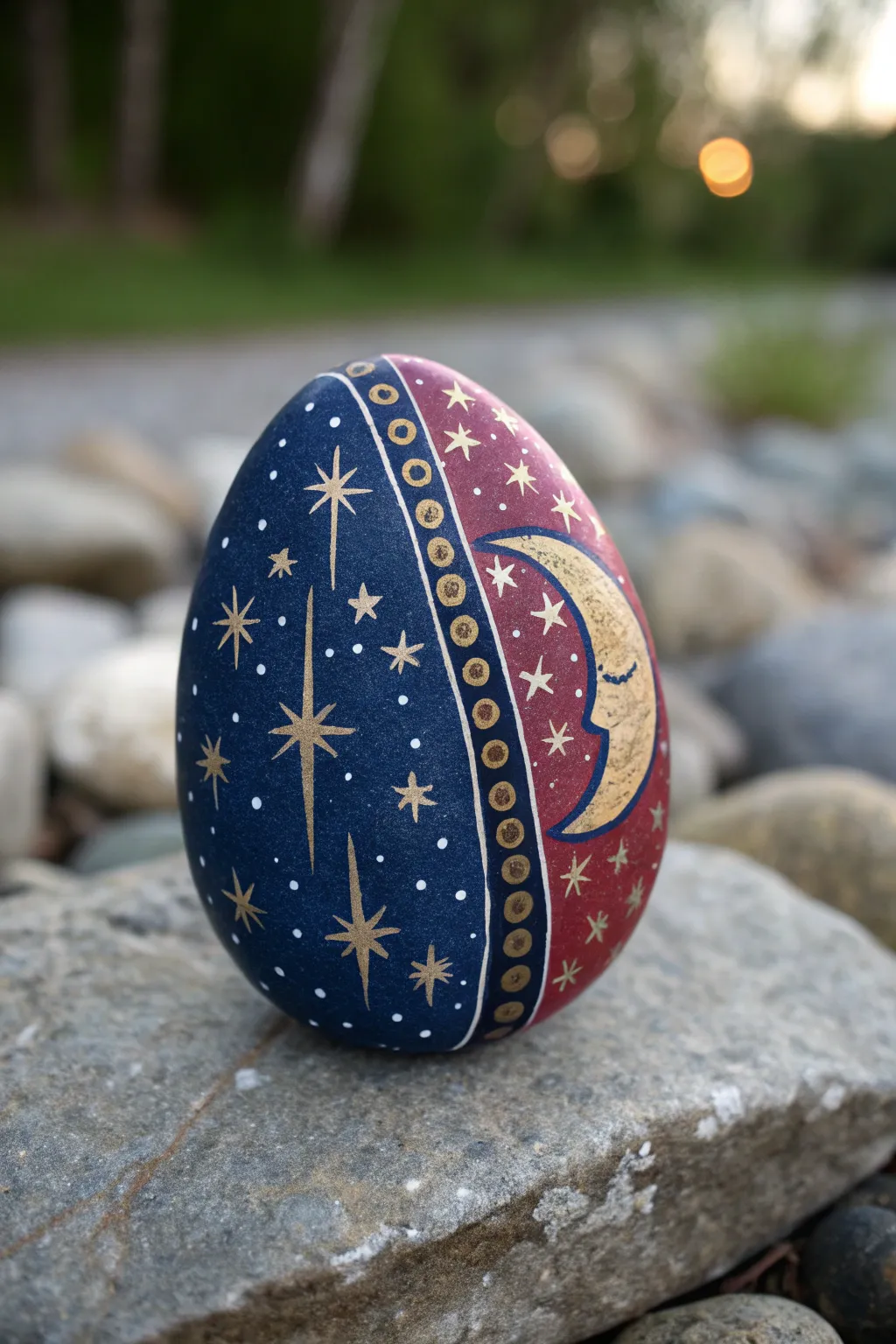
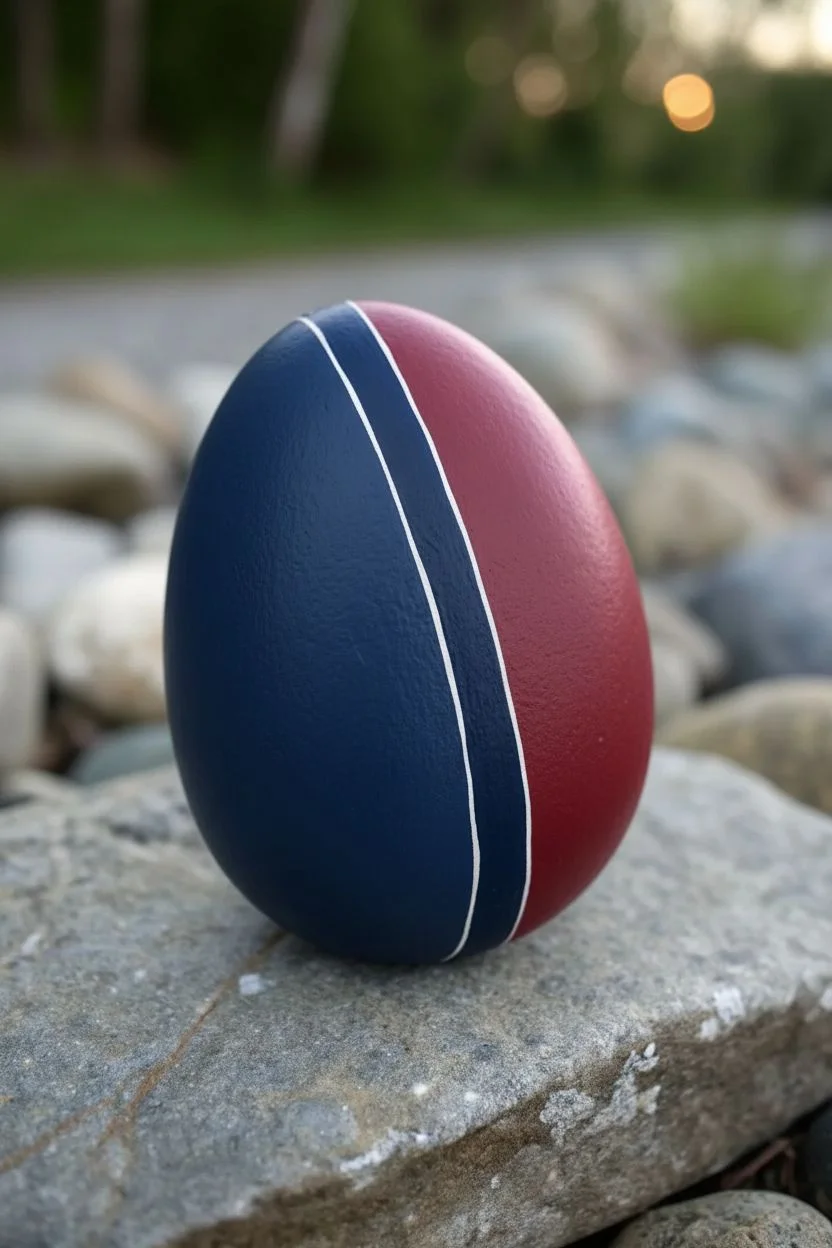
Bring the magic of the midnight sky to earth with this beautifully divided celestial rock. Featuring a deep blue starry night on one side and a warm, moonlit crimson sky on the other, this piece uses metallic golds to create a truly enchanting finish.
Detailed Instructions
Materials
- Smooth, egg-shaped rock (clean and dry)
- Acrylic paints: Navy Blue, Deep Red/Burgundy, Metallic Gold, White
- Glow-in-the-dark acrylic paint (optional top coat)
- Fine detail brushes (size 0 and 00)
- Medium flat brush
- Pencil for sketching
- Dotting tool or toothpick
- Clear sealant spray (matte or gloss)
Step 1: Base Blocking
-
Prepare surface:
Ensure your rock is scrubbed clean of any dirt or oils and fully dry before starting. -
Sketch the divider:
Using a pencil, lightly draw a curved line vertically down the center of the rock to separate the two zones. -
Paint the night side:
Paint the left side of the divider with a rich navy blue acrylic. You may need two coats for opaque coverage. -
Paint the moon side:
Paint the right side with a deep red or burgundy acrylic paint, being careful to keep a clean edge against the pencil line. -
Create the border:
Once dry, paint a distinct, thick band over the dividing line using the same navy blue, or a slightly lighter shade to make it stand out. -
Outline the border:
Use a very fine brush and white paint or a white paint pen to draw thin lines on either side of the center blue band to sharpen the separation.
Wobbly Lines?
If your long star lines are shaky, try resting your pinky finger on the dry part of the rock for stability while you pull the brush.
Step 2: Golden Details
-
Sketch the moon:
On the red side, lightly sketch a large crescent moon shape with a profile face (nose, closed eye, lips). -
paint the moon:
Fill in the moon shape with metallic gold paint. This often requires 2-3 layers to get that solid, shiny look. -
Moon features:
Once the gold is dry, use your finest brush and a tiny amount of dark blue or black to outline the sleepy eye and mouth. -
Border decoration:
dip the back of a paintbrush or a large dotting tool into gold paint and stamp a row of circles down the center of the blue dividing band. -
Add inner dots:
I like to wait for the gold circles to dry, then add a tiny dot of the dark blue paint back into the center of each gold circle for a ring effect.
Step 3: Starry Sky
-
Paint large stars:
Using your fine liner brush and gold paint, create large four-pointed stars on the blue side. Draw a long vertical line crossed by a shorter horizontal line. -
Star variety:
Add smaller five-pointed stars or simple ‘x’ stars scattered around both the blue and red sections. -
Tiny dot details:
Use a toothpick or small dotting tool to add tiny white specks on the blue side to represent distant stars. -
Glow accent:
If you want the glow-in-the-dark effect mentioned in the intro, carefully paint over the white dots and the gold moon with a layer of glow medium. -
Seal the work:
Allow the rock to dry overnight, then spray with a clear sealant to protect your celestial masterpiece from chipping.
Make it Shine
Mix a tiny pinch of gold glitter into your sealing varnish for an all-over sparkle that catches the light.
Place your finished rock in a sunny spot to charge up the glow paint for a nighttime surprise
Hidden Message Scratch-Reveal Rocks
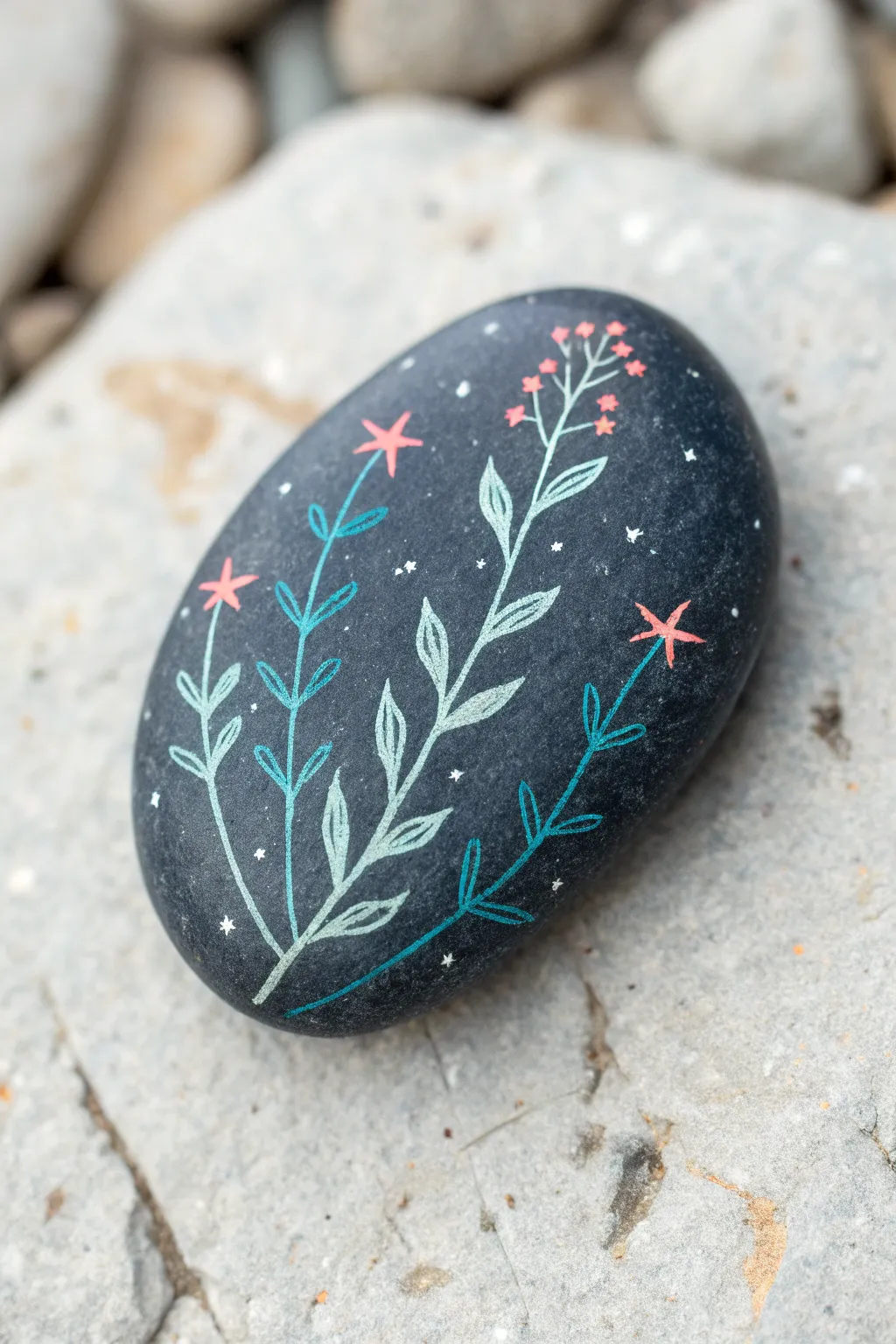
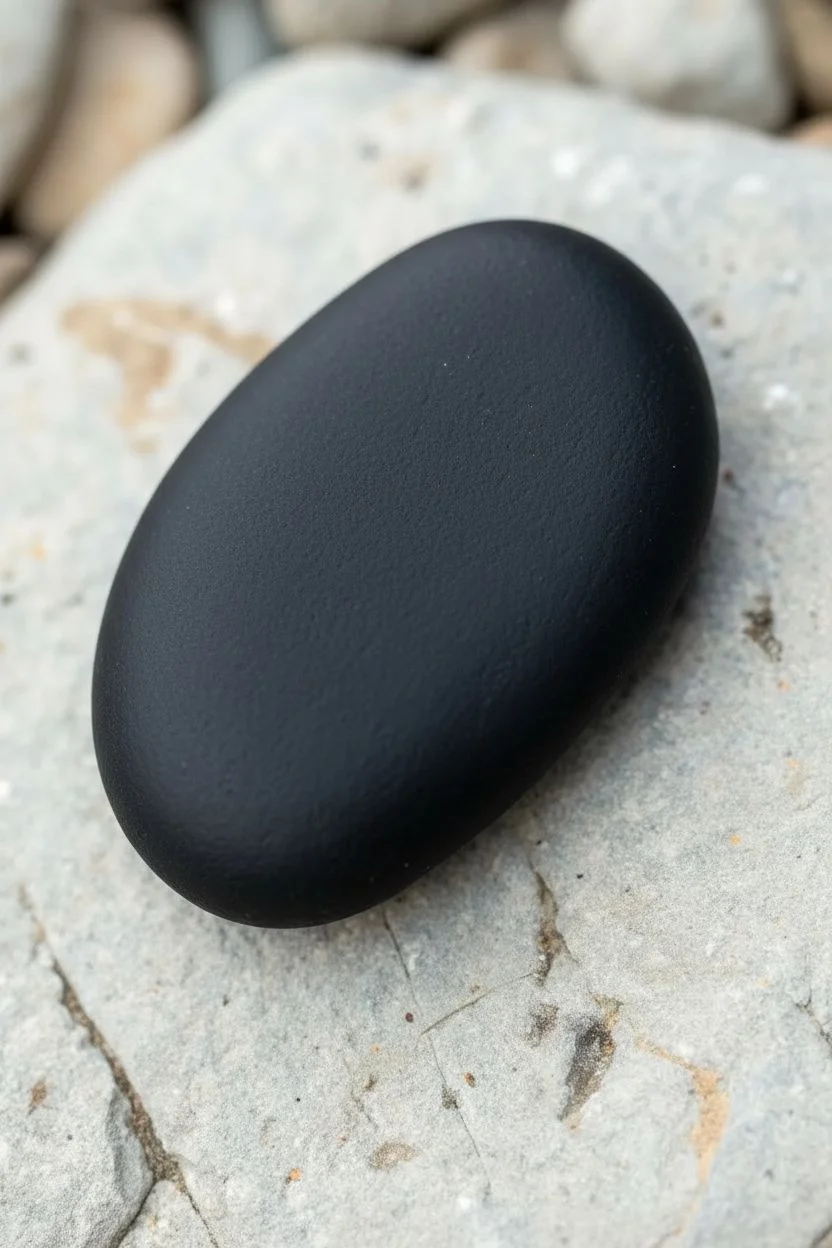
Transform a smooth river rock into a whimsical night garden scene with this elegant botanical design. The contrast of delicate pastel foliage and coral stars against a deep charcoal background creates a magical, dreamy effect that is surprisingly simple to achieve.
Step-by-Step
Materials
- Smooth, oval river rock (dark grey or black is ideal)
- Black acrylic paint (matte or satin finish)
- Titanium White acrylic paint
- Teal or light turquoise acrylic paint (or paint pen)
- Sage or light green acrylic paint (or paint pen)
- Coral or salmon pink acrylic paint (or paint pen)
- Fine detail brushes (size 0 and 00)
- Fine-point white Posca pen or gel pen (optional)
- Spray sealer (matte or gloss)
- Water cup and paper towels
Step 1: Base Preparation
-
Clean the surface:
Begin by washing your stone thoroughly with soap and water to remove any dirt or oils. Let it dry completely before starting, as moisture trapped inside can ruin the paint later. -
Apply the dark background:
While the natural stone is dark, painting a solid base coat ensures the colors pop. brush on a layer of dark charcoal or black acrylic paint over the entire top surface. Let this dry fully, then add a second coat for complete opacity.
Step 2: Painting the Foliage
-
Draft the central stem:
Using your sage green paint and a fine liner brush, paint a slightly curved central stem starting from the bottom third and reaching towards the top center. Keep your hand light to maintain a thin line. -
Add central leaves:
Along this central stem, paint opposing pairs of elongated, pointed leaves. I like to press the brush down slightly at the base of the leave and lift as I pull outward to create a natural taper. -
Paint the left stem:
Load your brush with the teal or turquoise color. Draw a second stem curving distinctively to the left side, slightly shorter than the central one. -
Detail the left leaves:
Add small, simple off-shoots or tiny leaves to this teal stem. Keep these leaves smaller and less detailed than the central ones to create visual variety. -
Create the right-side stem:
Using the same teal color, paint a third stem curving to the right. Make this one branch off lower down on the rock, creating an asymmetrical balance. -
Finish the teal foliage:
Add the small leaves to this right-hand stem, mirroring the style of the left side but allowing the placement to feel organic and random. -
Add the delicate upper sprig:
Switch back to a very pale sage or mix a little white into your green. Paint a very fine, branching sprig at the very top right, looking almost like a wildflower stem.
Brush Control Tip
For the finest lines on stems, thin your acrylic paint slightly with water until it has an ink-like consistency. It will flow much smoother.
Step 3: Adding Blooms and Stars
-
Paint the large stars:
Using the coral or salmon pink paint, create five-pointed stars at the ends of the main stems. These don’t need to be perfect geometric stars; a hand-drawn look adds charm. -
Add the tiny buds:
On the delicate upper sprig, dab tiny dots of the coral paint to represent small berries or flower buds. -
Highlight the leaves:
Mix a tiny amount of white into your sage green. Use your finest brush to add a very thin line down the center of the largest leaves for dimension. -
Add the starry background:
Using pure white paint or a white gel pen, dot tiny ‘stars’ into the open black spaces. Vary the pressure to create different sized dots. -
Create tiny sparkles:
Select a few of the larger white dots and carefully draw tiny cross-hatches over them to turn them into twinkling stars.
Trembling Hand?
If you struggle with steady lines, rest your pinky finger on the dry part of the rock while painting to anchor your hand.
Step 4: Finishing Touches
-
Dry completely:
Allow the stone to sit undisturbed until the thickest parts of the paint are fully dry to the touch. -
Seal the artwork:
Take the rock to a well-ventilated area and apply a light coat of spray sealer. This protects the delicate line work from scratches and fading.
Place your finished stone in a garden planter or on a desk to enjoy a little piece of the night sky during the day
Have a question or want to share your own experience? I'd love to hear from you in the comments below!