
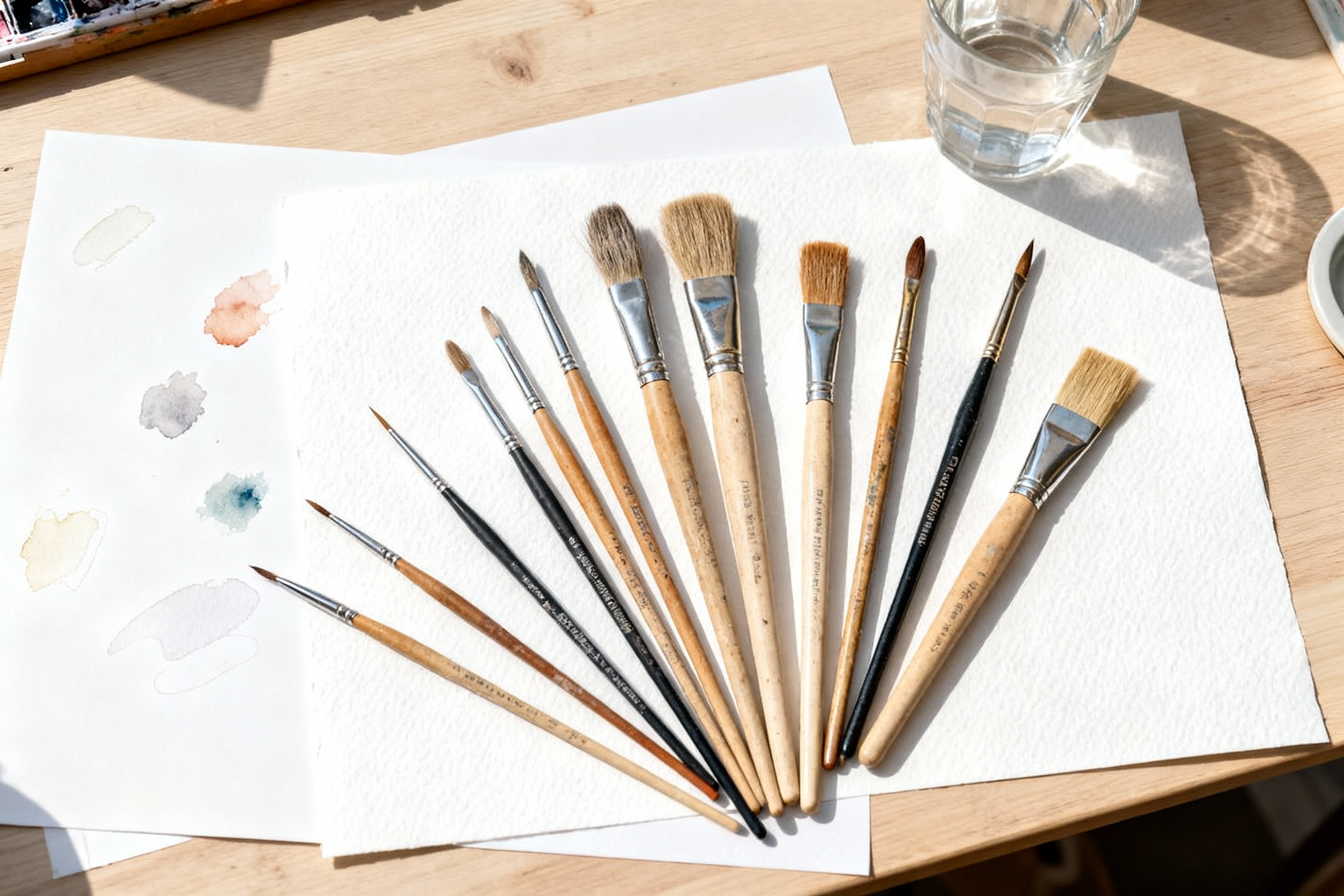
Every brushstroke begins with a choice. The instrument you hold in your hand shapes not only the physical appearance of your work, but also the entire experience—whether painting feels effortless or frustrating, whether colors blend like silk or resist every attempt at harmony. I’ve learned that understanding brushes is as fundamental as understanding color itself.
Understanding Brush Anatomy
Before selecting a brush, it helps to know what you’re looking at. Every brush consists of three essential parts: the bristles or fibers, the ferrule (the metal band holding them together), and the handle. The ferrule is more important than many realize—brushes with more crimps (indentations in the metal) provide sturdier construction that withstands regular use. When examining a brush, look at how densely the fibers are packed and how they taper toward the tip. These details determine whether a brush will hold a subtle wash or create bold, textured marks.
The handle length matters more than you might think. Watercolor painters traditionally use short handles because they work closely with their paper, often sitting upright at a table. Oil and acrylic painters typically prefer longer handles, which allow standing further back to view the entire composition. This practical difference reflects how each medium behaves and how artists naturally work with them.

Brush Shapes: Form Follows Function
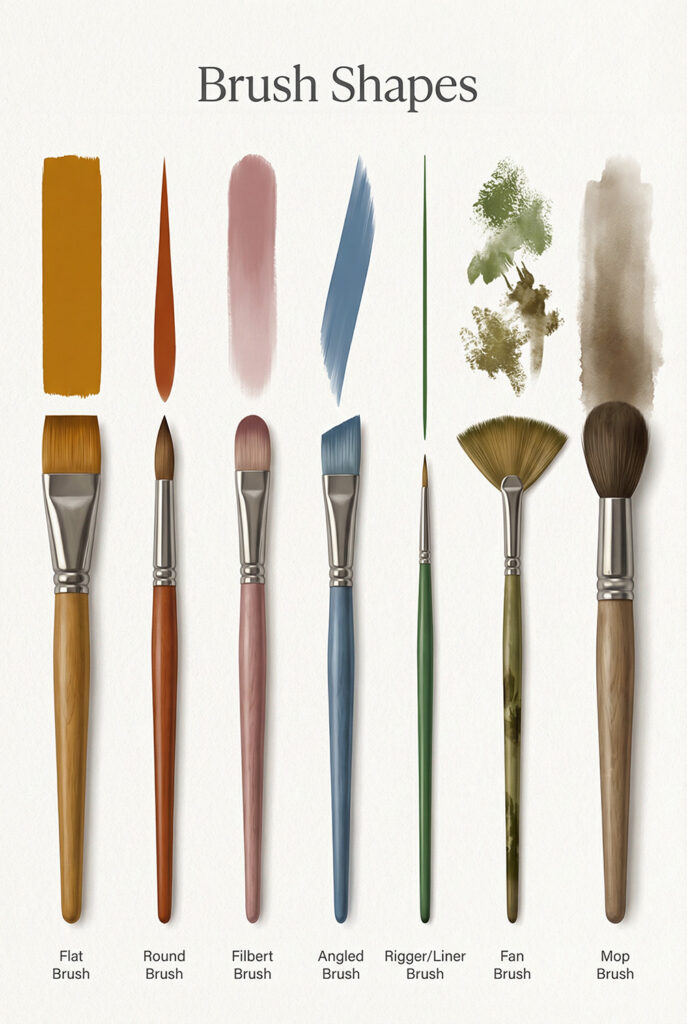
Flat Brushes: The Workhorses

Flat brushes possess rectangular heads with straight edges, offering the broadest coverage of any shape. Their defining strength is the ability to create bold, confident strokes while maintaining sharp, clean edges—making them essential for geometric designs, blocking in large color areas, and building structure. When turned sideways, the edge delivers fine lines. This versatility explains why flat brushes appear in nearly every professional artist’s collection.
Use flat brushes for:
- Blocking in backgrounds and underpainting
- Creating architectural or structured forms
- Establishing bold directional strokes
- Painting edges and geometric boundaries
Round Brushes: Organic Versatility

A round brush’s tapered, circular shape allows it to navigate between detailed work and broader applications with surprising grace. The same brush can render delicate leaf veins or fill in a flower petal, depending on pressure and loading. Many professional painters favor rounds precisely because they eliminate the need to switch brushes constantly when moving between detail and coverage work.
Round brushes excel at:
- Capturing organic, flowing forms (foliage, flowers, water)
- Creating varied line weights through pressure changes
- Detail work that still requires color-carrying capacity
- Lifelike rendering of natural subjects
Filbert Brushes: The Bridge Between Extremes

A filbert combines the best characteristics of flat and round brushes—it has a flat profile with rounded edges, creating an oval footprint. Artists have relied on this shape for centuries, from Old Masters to contemporary painters. The rounded edges prevent harsh lines while still providing decent coverage, making filberts invaluable for soft blending, portraiture, and landscape work where smooth transitions matter.
The filbert shines when you need to:
- Achieve soft, subtle color transitions
- Blend edges without visible brushstrokes
- Paint organic forms with softer contours
- Create both broad strokes and refined details in one movement
Angled and Beveled Brushes: Precision Tools
These brushes feature a slanted head, either flat or rounded, that allows you to reach tight corners and create diagonal lines with precision. The angled design means the same brush can switch from thick to thin strokes with a simple rotation of your wrist. This makes them particularly valuable for architectural elements, geometric patterns, and controlled short strokes.
Angled brushes work well for:
- Reaching into corners and tight spaces
- Creating diagonal and varied-direction strokes
- Geometric and architectural designs
- Layering and blending at unique angles
Rigger and Liner Brushes: The Detail Specialists
These long, thin brushes hold their paint in a fine point, making them non-negotiable for precise line work, calligraphy, and intricate detailing. The extended bristles allow you to carry paint continuously along a line without constant reloading—a huge advantage when creating fine branches, hair strands, or decorative elements.
Deploy rigger brushes for:
- Fine-line work and delicate details
- Creating flowing, continuous strokes
- Hair, branches, and organic line work
- Precise outlines and architectural details
Mop and Fan Brushes: Texture Specialists
Mop brushes are large, soft, rounded brushes that hold enormous quantities of water and paint, making them essential for expansive washes. Fan brushes, with their distinctive open, semi-circular shape, create unique textural effects perfect for suggesting foliage, grass, and atmospheric texture.
These shapes are invaluable for:
- Large-scale washes in watercolor
- Creating soft, blended backgrounds
- Texture work (grass, foliage, water movement)
- Covering substantial areas quickly


The Fiber Question: Natural vs. Synthetic

This decision profoundly affects both your results and your budget. The bristle material determines how your brush holds paint and water, responds to pressure, cleans, and ages.
Synthetic Fibers: The Modern Standard
Synthetic brushes are manufactured from nylon, polyester, or taklon—materials that mimic natural hair while offering distinct advantages. For acrylic painters specifically, synthetic brushes are non-negotiable. Acrylic paint is highly alkaline; it strips natural hair of its protective oils and causes fibers to become brittle and break. This chemical incompatibility means a natural-hair brush used with acrylics will deteriorate rapidly, often becoming unusable within weeks.
Beyond chemistry, modern synthetic fibers offer remarkable durability. They demonstrate approximately 92% bend recovery compared to 88% in horsehair, and they show fatigue resistance of 95-98% compared to as little as 10% in natural fibers. This means synthetic brushes maintain their shape through countless uses and resist splitting and fracturing.
Synthetic bristles excel with:
- Acrylic paints (essential)
- Mixed media work
- Frequent use and rough handling
- Budget-conscious purchasing
- Easy cleanup with soap and water
One caveat: synthetic fibers have smooth surfaces that don’t hold thin, watery paint as effectively as natural hair. This matters most when painting watercolors where you need pigment to stay put on the paper surface rather than flowing freely.
Natural Fibers: Traditional Quality
Kolinsky sable (from the Siberian mink) represents the gold standard for natural brushes, prized for softness, water-holding capacity, and responsive spring. Hog bristle, the most durable natural option, provides excellent stiffness and paint-carrying ability, making it ideal for thick impasto work in oils. Other natural options include squirrel hair (very soft) and goat hair (moderate stiffness).
Natural brushes cost significantly more—often 3-5 times the price of synthetic equivalents—but they offer tactile qualities synthetic brushes cannot perfectly replicate. The rough surface of natural hair grips pigment and controls flow in ways that matter deeply to artists working with watercolor or oils at professional levels.
Natural fibers are essential for:
- Watercolor painting (superior pigment control)
- Oil painting (excellent paint holding, impasto work)
- Achieving traditional, painterly textures
- Artists who prioritize handling and feel

Matching Brush to Medium
Different paints have different personalities, and your brush choice must accommodate each.
Acrylic Painting: Synthetic Superiority
This is non-negotiable: acrylics require synthetic brushes. The paint’s alkalinity damages natural hair irreversibly. Beyond chemistry, though, your synthetic choice should match your paint thickness.
- Heavy body acrylics: Use stiff polyester brushes with good snap. Thicker paint requires more “push” to move, so bristles need firmness to maintain control.
- Fluid and open acrylics: Softer nylon synthetic brushes provide better glide and smoother applications without resistance.
- Multi-surface work: Mixed media projects benefit from having several synthetic brushes in varying stiffness levels.
Watercolor: The Natural Advantage
Watercolor painters traditionally prefer natural hair because the rough, scaly surface of animal fibers holds thin, watery paint more effectively than smooth synthetic filaments. When you load a round sable brush with water and pigment, the paint sits on the paper surface where you place it. With synthetics, the paint tends to flow more freely, making color control more challenging for the watercolor techniques of wet-on-wet work.
That said, modern synthetic alternatives have improved substantially. If natural brushes strain your budget, a quality synthetic round or mop brush works adequately, particularly for looser, more experimental techniques. Many successful watercolor painters working today use exclusively synthetic brushes.
Key watercolor considerations:
- Round brushes hold maximum water for juicy marks
- Soft brushes allow layering without disturbing previous layers
- Size selection matters greatly (#8 rounds for detail, #12-16 for medium work)
Oil Painting: Flexibility in Materials
Oil painters enjoy flexibility; both natural and synthetic brushes perform acceptably. Natural hog bristle remains the preferred choice for thick impasto work because of its superior paint-carrying capacity and stiffness. Professional oil painters often maintain bristle brushes exclusively for heavy work and reserve softer brushes (sable or soft synthetic) for fine details and glazing.
Oil paint itself doesn’t damage natural hair the way acrylic does, so durability isn’t a concern. Your choice here is mostly about technique preference and budget.
Gouache: The Middle Path
Gouache occupies a unique middle ground—thicker than watercolor but more forgiving than acrylic. Synthetic brushes work beautifully, but unlike acrylics, you want slightly softer synthetics with good spring rather than stiff bristles. Interestingly, cheaper watercolor brushes often perform better than premium ones because they tend to be firmer and less absorbent, providing better control for gouache’s thickness.
Many gouache painters prefer:
- Soft to medium-stiff synthetic brushes
- Watercolor brushes labeled for mixed media
- “Springy” bristles that hold thicker paint effectively
Essential Brush Techniques and the Right Tools
Understanding technique helps you select the precise brush for your intended effect.
Dry Brushing: Building Texture and Depth
Dry brushing applies minimal paint to an almost-dry brush, creating scratchy, smoky, or scrubbed effects. The technique works across all mediums—watercolor, acrylic, oil, and ink. The key is understanding that the texture of your brush matters enormously.
Use a coarse, stiff brush for defined, visible brushmarks. Switch to a soft brush when you want a lighter, dusty, cloud-like effect. The pressure you apply is equally critical—barely touch the surface; the paint should graze rather than press. Light contact deposits minimal color, requiring multiple passes to build coverage, but this layering is precisely what creates visual depth.
Dry brush works best on:
- Textured surfaces (rough paper, canvas, wood)
- Building highlights over previous layers
- Creating atmospheric effects (fog, haze, dust)
- Depicting worn, weathered, or rough textures
- Landscape and environmental detail work
Blending: Soft Transitions Between Colors
Creating seamless color transitions requires understanding how different brushes behave. Filbert brushes excel at blending because their rounded edges prevent harsh lines while their flat profile provides coverage. Angled brushes can blend colors at various angles, adding dimensional interest. The key to successful blending is water management—add just enough water to keep paint workable without making it transparent.
For acrylic painters: water is essential for blending. Add it gradually; too much water compromises color vibrancy and makes paint transparent. For oil painters: slow drying times naturally encourage blending. Use soft sable or synthetic brushes, and let the paint’s inherent flow work for you.
Wet-on-Wet Work: Controlled Chaos
Watercolor and gouache painters frequently work wet-on-wet, where paint flows into damp paper or existing wet paint. Round brushes are ideal for this technique because their shape allows them to hold substantial amounts of water while still delivering controlled marks. The water distribution within round brushes creates juicy, flowing applications perfect for atmospheric effects.
Load your brush fully with water and pigment, then touch it to wet paper. The paint will migrate, but its spread is somewhat predictable with experience. This technique requires softer brushes that won’t disrupt underlying layers and plenty of water to activate the pigment.
Stippling: Precise Texture Through Repetition
Stippling uses the brush tip to dab repeatedly, creating texture and tone through accumulated dots rather than brushstrokes. Use fairly stiff-bristled brushes for this work—the bristles’ resistance to splaying creates more defined dots. Small rounds and detail brushes work well; mop brushes create softer, broader dot patterns.
Stippling is particularly effective for:
- Building foliage texture
- Creating fabric texture
- Optical mixing (placing dots of color that blend visually)
- Fine detail work in small areas
Line Work and Fine Details
Creating consistent, precise lines demands rigger or liner brushes. Their extended bristles hold enough paint for continuous strokes without constant reloading—a crucial advantage when rendering hair, branches, or decorative elements. Hold the brush vertically for the finest lines; angle slightly to create varied width.
Practical brush-selection guide for specific marks:
| Desired Effect | Best Brush | Technique |
|---|---|---|
| Bold, flat strokes | Flat brush | Full load, firm pressure |
| Fine lines | Rigger brush | Vertical hold, minimal pressure |
| Soft blending | Filbert brush | Circular scrubbing motion |
| Textured surfaces | Dry brush | Light pressure, minimal paint |
| Large washes | Mop brush | Full load, sweeping motion |
| Organic forms | Round brush | Varied pressure, curved strokes |
| Atmospheric effects | Soft synthetic | Light touch, multiple passes |
| Geometric precision | Angled brush | Firm pressure, defined edges |
Caring for Brushes: Investment Protection
A quality brush costs money—often substantial money if you eventually invest in natural-hair options. Proper care extends the life of your brushes dramatically, transforming them from disposable tools into reliable partners in your practice.
Immediate Cleaning: The Critical First Step
Clean brushes within hours of use, never leaving them sitting with dried paint. This prevents paint from creeping up the ferrule (where bristles meet metal), a problem that’s nearly impossible to reverse.
For acrylic paints:
- Rinse thoroughly under warm running water
- Work soap (use a brush cleaner product or mild dish soap) through the bristles, paying special attention to the heel where paint accumulates
- Rinse completely until water runs clear
- Reshape bristles if necessary while wet
- Allow to air-dry horizontally or bristles-up
For oil paints:
- Wipe excess paint onto a rag or paper towel
- Clean in mineral spirits or linseed oil (the traditional method)
- Wipe again thoroughly
- Follow with mild soap and warm water
- Allow complete air-drying
For watercolor and gouache:
- Rinse under cool water immediately
- Clean gently with soap
- Reshape while damp
- Store upright to dry
The Essential Foundation
For acrylic painting, acquire:
- One medium flat brush (½ to ¾ inch) for general coverage
- One round brush (sizes 5-8) for detail and mixed work
- One small angled brush (⅜ inch) for details and corners
- One rigger or liner (size 1-2) for fine work
For watercolor, add:
- One large round (size 12-16) for washes
- One small round (size 5-8) for detail
- One mop brush (½ inch or larger) for expansive washes
- One rigger for fine lines
For gouache or mixed media:
- Duplicate your acrylic set
- Add one additional medium flat for textural work
Where to Start
Quality matters—avoid the absolute cheapest options with obvious defects—but budget-conscious purchasing is sensible. Winsor & Newton Cotman series brushes offer excellent synthetic-brush value, as do mid-range offerings from established manufacturers. Your local art supply store staff can guide you; their recommendations reflect practical experience with what actually works.

Have a question or want to share your own experience? I'd love to hear from you in the comments below!